
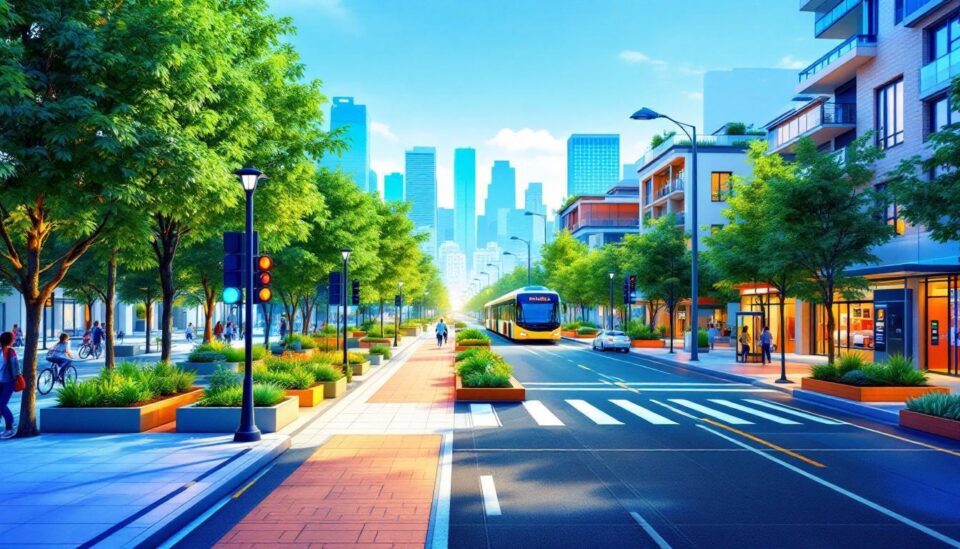
Cities are failing their residents when infrastructure ignores human needs. We at Global Positive News Network believe hopeful innovations for cities must prioritize care-connecting people, protecting the environment, and building systems that work for everyone.
This blog post explores three proven approaches: green infrastructure that heals our surroundings, community-centered design that strengthens bonds, and technology that serves people first.
Green Infrastructure That Works
Green infrastructure isn’t a luxury-it’s essential infrastructure that reduces costs while improving lives. Cities across the globe are discovering that strategic placement of parks, water systems, and renewable energy directly lowers operating expenses and resident mortality rates. Manchester’s approach of stitching together green and blue assets into walkable corridors transforms neighborhoods through fabric-first thinking. Nature-based solutions in streets and public spaces cool overheated areas, manage stormwater runoff, and raise property values simultaneously. Research from Stanford’s King Center on Global Development shows that proximity matters: housing designed near existing neighborhoods preserves social networks while reducing transport costs, and these same principles apply to green space access. When residents live within walking distance of parks, mental health outcomes improve measurably, and heat-related deaths drop significantly in cities that prioritize tree canopy and permeable surfaces.
Cooling Cities Without Massive Investment
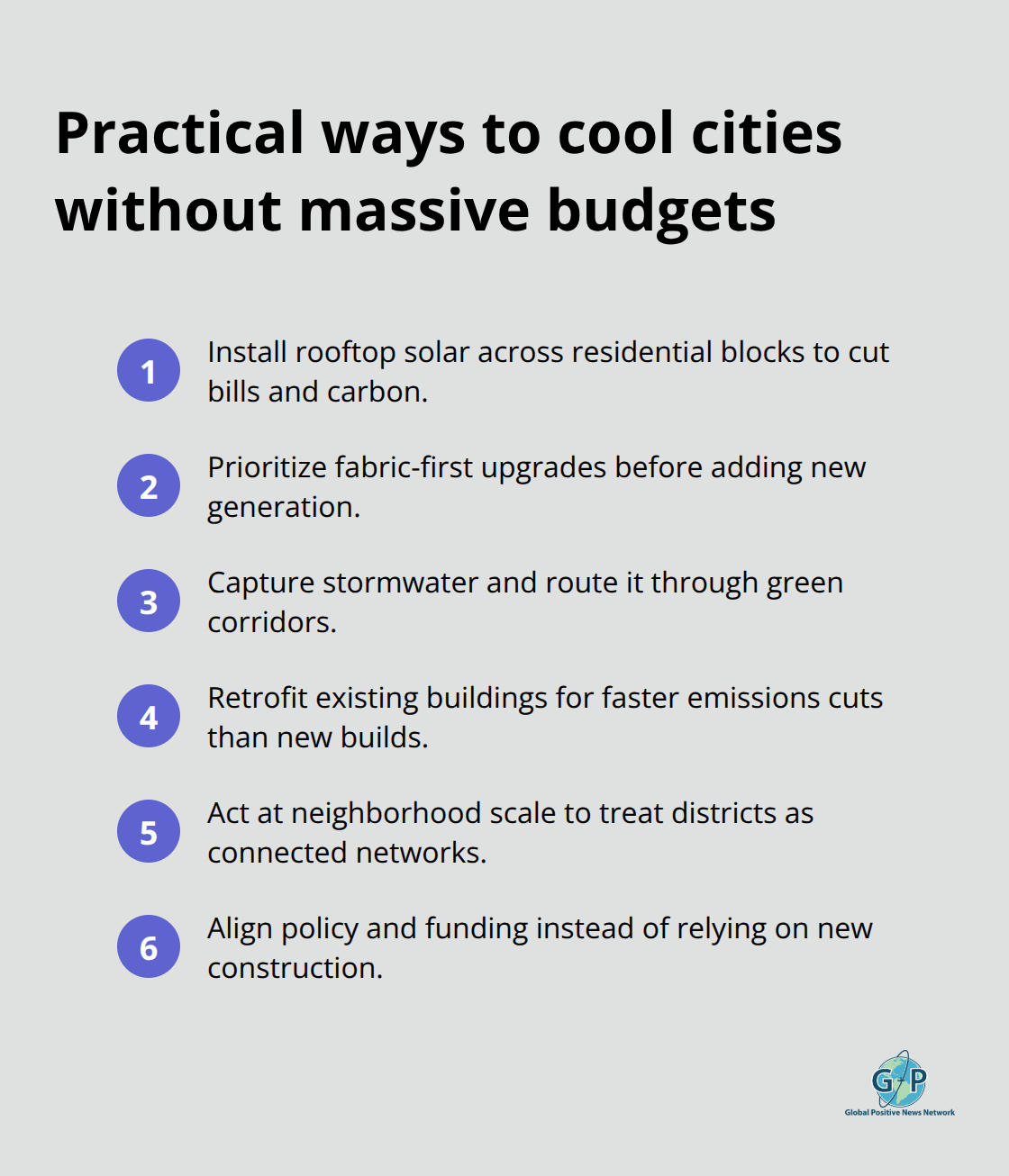
Cities can reduce urban heat without massive budgets. Rooftop solar across residential blocks accelerates decarbonization while lowering energy costs for households. Zero-bill streets demonstrate how fabric-first upgrades-insulation, airtightness, high-performance windows-combined with shared energy systems across terraces lower costs and increase comfort without requiring new construction. Water management systems that capture stormwater and channel it through green corridors address ecosystem health while reducing flooding that disproportionately affects low-income neighborhoods. The World Bank reports that 4.4 billion people currently live in cities, with urban populations expected to nearly double by 2050, concentrated heavily in Africa and South Asia. This explosive growth demands practical solutions: retrofitting existing buildings delivers faster carbon reductions than building new ones, and neighborhood-scale action treats urban areas as interconnected networks rather than isolated buildings, enabling scalable decarbonization. Policy and funding alignment matter-relying on new construction alone won’t reach 2050 net-zero targets.
Energy and Water Systems That Strengthen Communities
Shared energy models and community-managed water systems reduce bills while building local resilience through resource pooling. Biophilic design integrates living systems into urban form to improve wellbeing and resilience in everyday environments. Infrastructure functions as care when it combines energy, water, waste, and health services within social and public realms. Cities that implement fabric-first upgrades before adding generation or other interventions maximize efficiency and demonstrate measurable results within months, not years. Practical climate actions today-not just long-term plans-begin delivering healthier cities now.
These tangible shifts in how cities manage their physical systems create the conditions for stronger human connections. The next section explores how community-centered design transforms these infrastructure improvements into spaces where people actually want to gather, connect, and build relationships.
Community-Centered Design That Strengthens Social Bonds
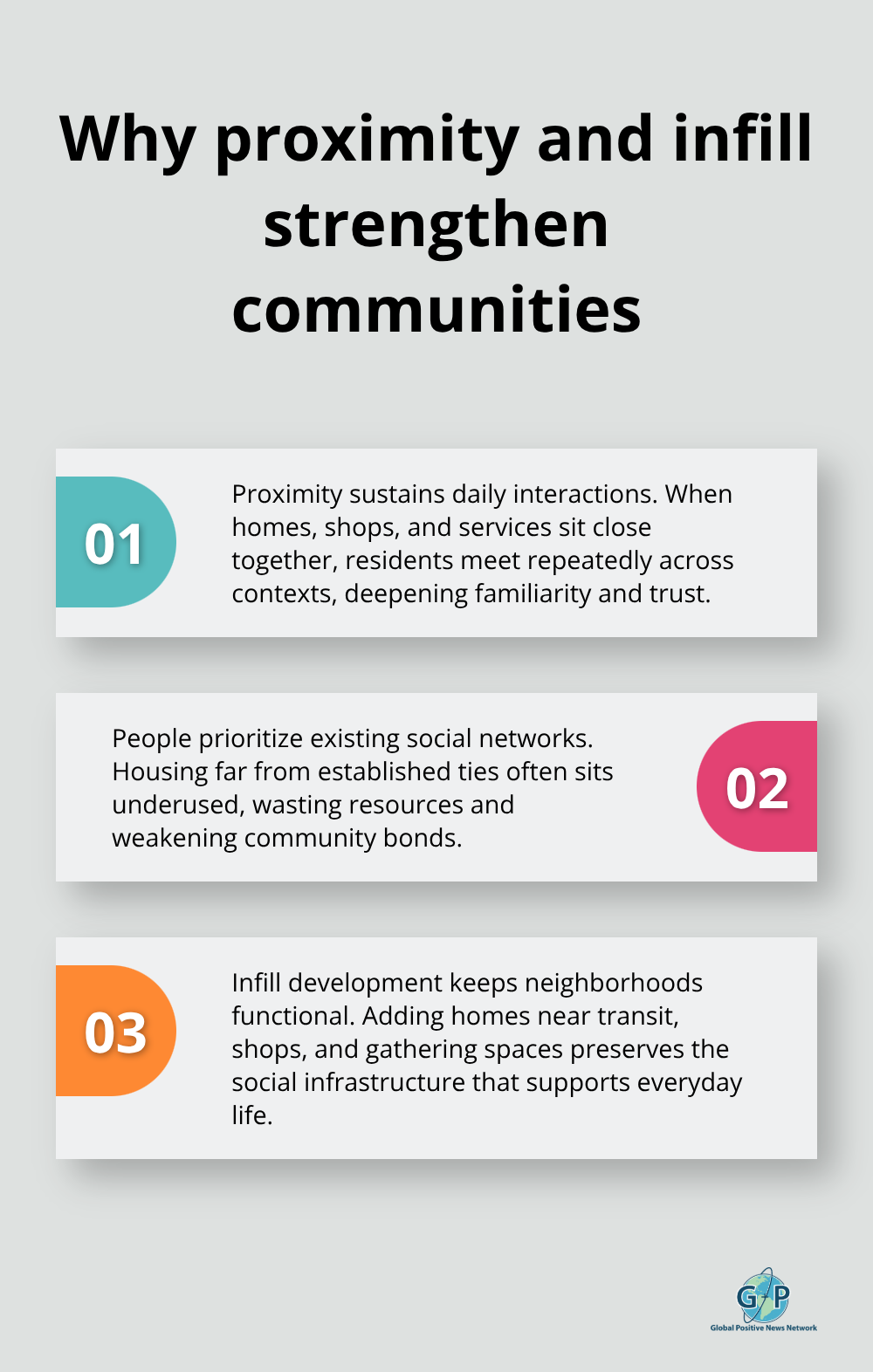
Mixed-use neighborhoods where residents live, work, and gather in the same area create stronger social bonds than single-purpose zones. When housing sits adjacent to shops, offices, and services, people encounter each other repeatedly across different contexts, building the familiarity that strengthens community ties. Research from Stanford’s King Center on Global Development tracked residents in Addis Ababa and found that proximity to existing neighborhoods during housing allocation predicted whether families would actually move into new units. This reveals a hard truth: people prioritize staying near their social networks and established relationships over accessing new amenities. Cities that ignore this reality waste both money and opportunity through isolated housing projects. Instead, infill development that adds housing within walkable distance of existing shops, transit stops, and gathering spaces preserves the social infrastructure that makes neighborhoods function.
Lagos demonstrates this principle through its housing shortage, where combining indigenous construction techniques with modern prefabrication creates culturally acceptable housing that fits into existing neighborhood fabrics rather than replacing them entirely.
Public Spaces That Enable Real Civic Life
Public spaces function as care infrastructure only when they’re designed for actual use, not just aesthetics. New York City’s Open Restaurants initiative showed streets as dynamic spaces where people gathered, and subsequent research on Care Streets revealed that inclusive design must accommodate mental health and neurodiversity considerations alongside physical accessibility. This means water fountains, accessible bathrooms, seating areas, and clear sightlines matter more than sculptural installations. New York’s LinkNYC deployment expanded digital access while providing device charging and emergency connection buttons in underserved neighborhoods, proving that infrastructure investments can serve multiple needs simultaneously. Participatory budgeting in New York’s city council districts funds community-driven street projects directly chosen by residents, ensuring public realm improvements match actual neighborhood priorities rather than planner assumptions. The Dar es Salaam Bus Rapid Transit study conducted with the World Bank documented how infrastructure proximity affects low-income residents’ earnings and housing costs, showing that transit access isn’t luxury but economic necessity. Cities implementing this approach see measurable increases in foot traffic, local business revenue, and reported feelings of safety when streets prioritize pedestrian comfort through weather protection, lighting, and active ground-floor uses.
Access That Includes Everyone
Accessibility extends beyond wheelchair ramps to encompassing mental health needs, sensory sensitivities, and language access. Barcelona’s We Protect Schools model prioritizes traffic calming near schools and retirement communities, reducing speeds that disproportionately harm vulnerable populations. Street stewardship programs that empower smaller neighborhood organizations rather than centralizing all maintenance under municipal departments create accountability at the community level. New York’s Street Ambassador program expanded participation across language fluency, childcare availability, and design knowledge, removing barriers that prevent low-income residents from shaping the public realm. Field offices in each community district sustain ongoing engagement beyond initial design phases, ensuring streets respond to changing needs. When cities allocate permanent funding for bathrooms, water access, and multi-use street furniture rather than treating these as temporary installations, they signal that meeting basic human needs ranks as infrastructure priority, not afterthought.
Technology Meets Community Needs
These infrastructure investments create the foundation for technology to amplify human connection rather than replace it. Smart systems that improve service delivery work best when communities help design them, ensuring digital tools actually connect residents to resources they need. Data-driven planning that incorporates resident feedback produces more equitable outcomes than top-down approaches, because neighborhoods understand their own priorities better than distant planners do. The next section explores how technology serves people first, turning infrastructure investments into systems that strengthen rather than isolate urban communities.
Technology Supporting Neighborhoods First
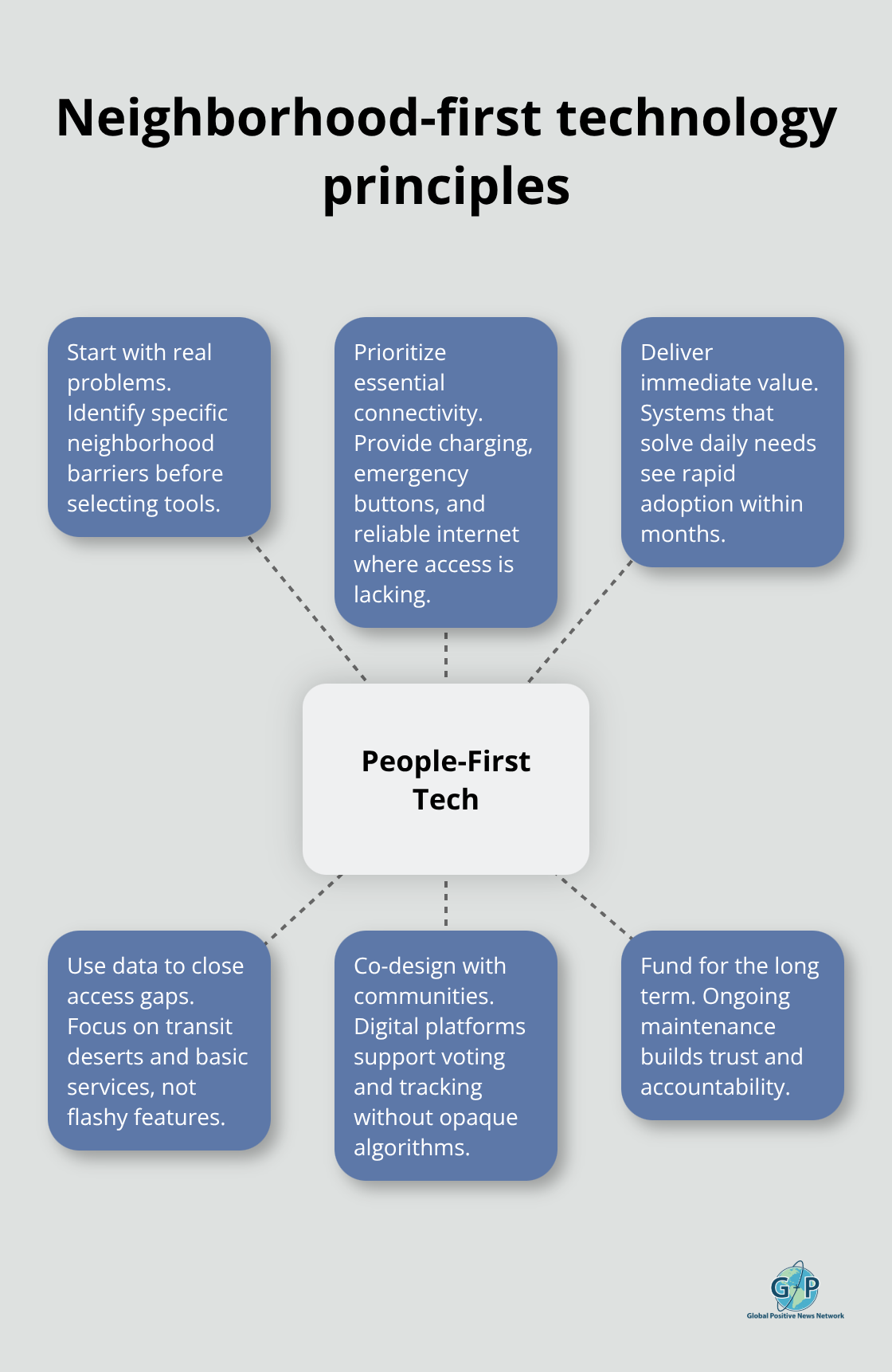
Technology in cities fails when designers build systems first and ask residents what they need later. Successful smart city implementations start backwards: identify what specific problems neighborhoods actually face, then deploy tools that solve them. New York’s LinkNYC program illustrates this approach. Rather than installing generic digital kiosks, the city prioritized device charging, emergency connection buttons, and internet access in underserved neighborhoods where residents lacked reliable connectivity. This meant technology addressed real barriers to economic participation and safety, not theoretical future needs. Cities implementing similar neighborhood-first technology see measurable adoption within months because residents recognize immediate value.
Solving Real Problems, Not Theoretical Ones
The contrast matters: cities that deploy smart parking systems or traffic optimization without addressing transit deserts for low-income residents waste money on solutions that benefit commuters while ignoring those who cannot afford cars. Data from the Dar es Salaam Bus Rapid Transit study, conducted with the World Bank, showed that transit access directly affects low-income residents’ earnings and housing costs. When cities use data to identify these gaps, they can deploy technology that actually closes them. Smart systems work best when they reduce friction for people already struggling with basic access rather than optimizing systems for those with existing advantages.
Digital Tools That Connect to Real Resources
Digital tools connecting residents to actual resources matter more than flashy applications. Accessible bathrooms located through digital maps, water fountains marked in neighborhood apps, and community fridges advertised via text message represent practical technology deployment. Barcelona’s traffic calming systems near schools use data collection to identify dangerous intersections, then implement physical changes informed by resident feedback rather than assumptions. This approach treats residents as data sources rather than data subjects.
Community Leadership in System Design
Cities that involve neighborhood organizations in designing these systems, rather than imposing solutions from planning departments, see faster adoption and better outcomes. Participatory budgeting in New York allocated funding directly to community-chosen street projects across city council districts, with residents voting on priorities they understood intimately. Technology supporting this process meant digital platforms for voting and project tracking, not surveillance systems or algorithmic decisions made without transparency. When cities commit long-term funding to maintain these systems rather than treating them as temporary pilots, residents trust that investments reflect genuine commitment to their neighborhoods. This trust becomes infrastructure itself, enabling communities to organize around shared priorities and hold officials accountable.
Final Thoughts
Cities thrive when infrastructure prioritizes care over convenience. The hopeful innovations for cities we’ve explored throughout this post share one essential principle: systems work best when they’re designed around what residents actually need, not what planners assume they want. Manchester’s green corridors, New York’s participatory budgeting, and Addis Ababa’s housing research all demonstrate that listening to communities produces better outcomes than imposing solutions from above.
Real cities are already proving this works. Barcelona reduced traffic deaths near schools by involving residents in identifying dangerous intersections before implementing changes. Lagos combines traditional building methods with modern prefabrication to create housing that fits existing neighborhoods rather than replacing them. Dar es Salaam’s transit system showed that infrastructure access directly improves low-income residents’ earnings and housing stability. These functioning systems deliver measurable improvements in health, economic opportunity, and community connection.
The cities leading this shift treat infrastructure as care-bathrooms and water fountains matter as much as energy systems, residents shape technology design rather than receiving imposed apps, and communities preserve social networks when building housing. We at Global Positive News Network believe these stories deserve attention because they show what’s possible when communities organize around shared priorities. Your city can start today by asking residents what they actually need, then building systems that deliver it.
Having a hard day?
The 2 Minute Hope Reset is a short free guide with three small practices for the days that feel heavy. Two minutes each, nothing to keep up with.
Get the free guideExplore more positive news:
Enjoying stories like this?
Global Positive News Network is reader-supported. If you’d like to support the mission, you can visit the Official GPNN store.