

Technology is reshaping how we tackle humanity’s biggest challenges. From renewable energy cutting carbon emissions to AI coordinating disaster relief, innovations are delivering measurable results in communities worldwide.
At Global Positive News Network, we’ve identified the most promising tech for hopeful futures-and the real obstacles standing in the way. This post maps both the breakthroughs and the practical steps needed to scale them globally.
Where Technology Delivers Real Results Today
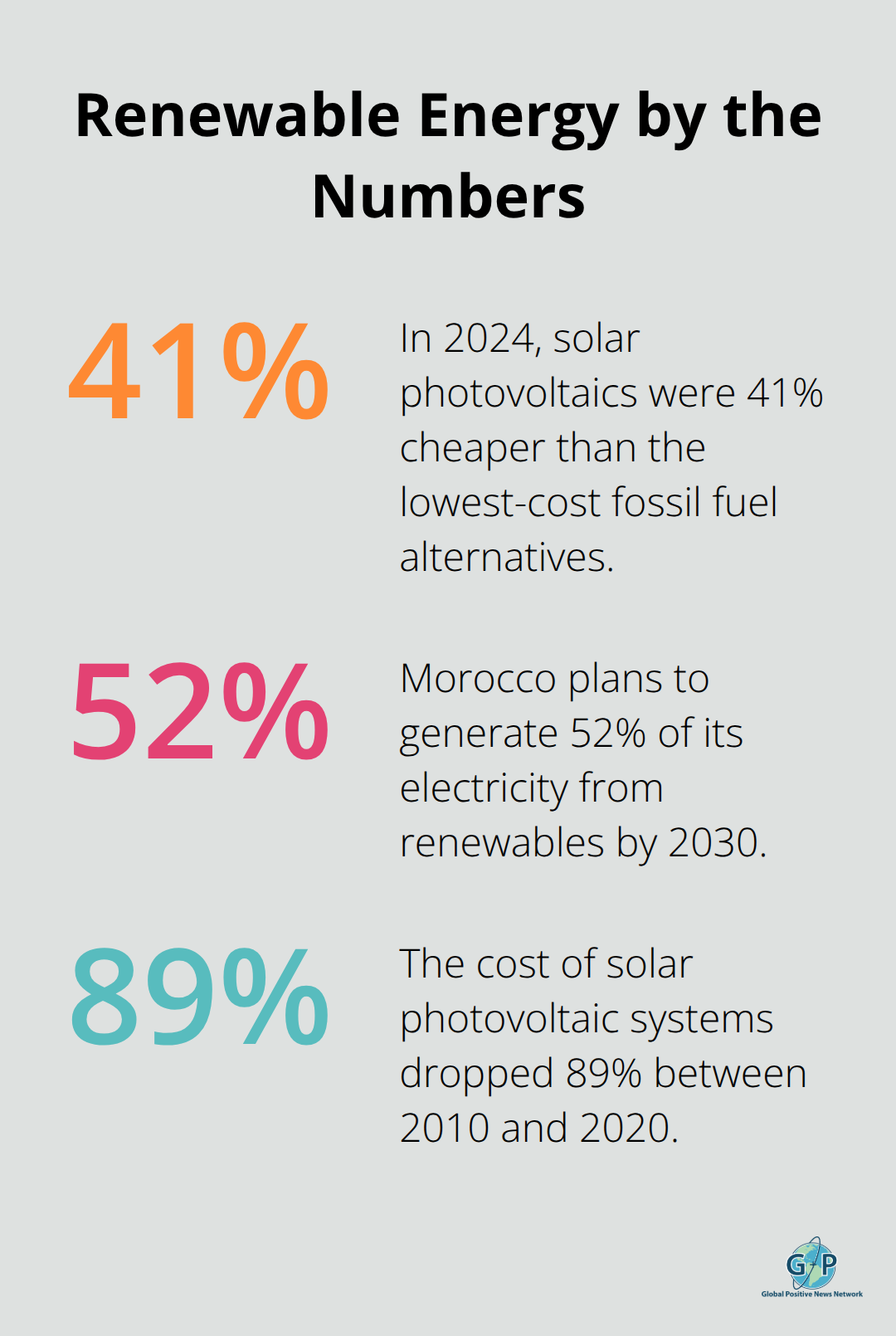
Renewable energy installations cut carbon emissions at scale. Solar capacity worldwide reached 1,423 gigawatts by the end of 2023, according to the International Energy Agency, and this growth directly reduces reliance on fossil fuels in communities from rural India to suburban America. Costa Rica generated 98.7% of its electricity from renewable sources in 2023, proving that high-penetration renewables work in practice, not theory. The cost of solar photovoltaic systems dropped 89% between 2010 and 2020, making deployment faster and cheaper than ever. Governments and utilities now face a concrete choice: renewable infrastructure saves money while cutting emissions.
Mobile Health Apps Close Medical Access Gaps
Mobile health applications already close gaps in medical access. Kaiser Permanente reported that telemedicine visits increased from under 1% of all visits in early 2020 to 38% by late 2021, and this shift persisted because patients and clinicians found real value in remote monitoring. MedInclude, a health-tech app developed with support from Waterloo’s GreenHouse incubator, translates and voices medical information for patients and families in multiple languages, directly improving health literacy and enabling informed decision-making for people who face language barriers. The app addresses a concrete problem: patients without English fluency often skip care or misunderstand treatment instructions.
Educational Platforms Reach Underserved Populations
Educational platforms reach populations that traditional schools cannot. Online learning expanded dramatically during COVID-19, and evidence shows it works when designed for accessibility. Platforms now offer offline-first design so learners in areas with poor connectivity can download content and study without constant internet access. Teachers in underserved regions report that digital tools let them personalize instruction to individual students, something impossible in overcrowded classrooms with limited resources.
Hybrid Funding Models Enable Health-Tech Growth
Health-tech innovators cannot wait for perfect government funding. MedInclude succeeded because it combined grants with social enterprise revenue, proving that mission-driven companies can fund growth without compromising accessibility. The model works: charge hospitals and health systems for integration while keeping the app free for patients. This approach removes the false choice between impact and sustainability.
Renewable Energy Economics Favor Rapid Deployment
Renewable energy now undercuts fossil fuels on cost in most markets. In 2024, solar photovoltaics were 41% cheaper than the lowest-cost fossil fuel alternatives, while onshore wind projects offered comparable savings. Morocco’s Noor Ouarzazate Solar Complex produces electricity cheaper than coal-fired alternatives, and Morocco plans to generate 52% of its electricity from renewables by 2030.
Communities that invest early in solar and wind infrastructure lock in lower energy costs for decades while reducing grid vulnerability to fuel price spikes. The financial incentive and the climate incentive point the same direction.
Accessibility Determines Platform Success
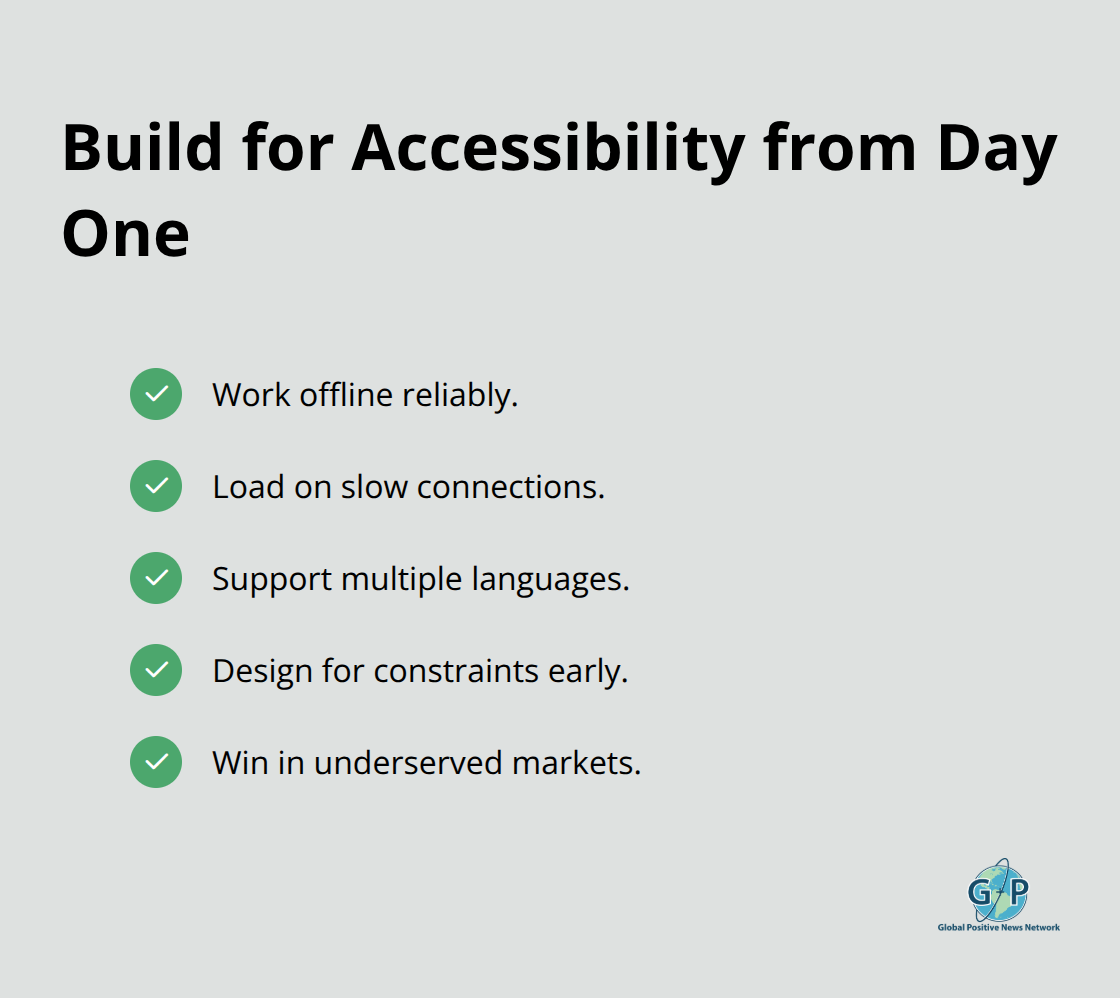
Educational platforms succeed when they work offline, load on slow connections, and support multiple languages from day one. Platforms that treat accessibility as an afterthought fail in underserved markets. The ones that build for constraint from the start reach the populations that need them most and gain a competitive advantage because they operate in places competitors ignore.
These early wins in health, energy, and education reveal a pattern: technology that solves real problems at lower cost spreads fastest. The next challenge lies in scaling these solutions beyond pilot programs and into systems that reach billions of people worldwide.
How Technology Coordinates Crisis Response at Scale
AI Systems Accelerate Disaster Relief
AI systems now coordinate disaster relief faster than traditional hierarchies can respond. When floods hit Pakistan in 2022, AI-powered platforms helped aid organizations map affected areas, predict where resources would be needed next, and route supplies to isolated communities before conventional assessments could identify them. The system processed satellite imagery, weather data, and real-time reports from the ground simultaneously, cutting response time from days to hours. In disasters, delays cost lives. Organizations deploying AI for disaster response report that predictive models reduce waste by identifying genuine need rather than sending aid based on assumptions.
The technology works best when paired with local teams who understand terrain and community trust. AI provides speed and pattern recognition, but ground teams provide legitimacy and cultural knowledge. Nonprofits testing these systems find that combining automated triage with human judgment produces faster, more accurate aid distribution than either approach alone.
Blockchain Platforms Build Donor Trust
Transparency in charitable giving removes a major barrier to donor trust. Blockchain-based platforms now let donors track donations from their bank account to the specific project receiving funds, seeing exactly how much reaches beneficiaries versus administrative costs. GiveDirectly uses this approach for cash transfers in East Africa, publishing transaction records that show recipients received the full amount promised.
Traditional charities often lose 15-30% of donations to overhead, but transparent systems that publish real-time spending data attract donors willing to fund operations openly rather than hiding costs. Donors increasingly demand proof that their money reaches intended recipients, and blockchain technology delivers that proof at scale.
IoT Devices Prove Conservation Works
IoT devices monitoring environmental conservation projects generate concrete proof that interventions work. Wildlife protection programs in Kenya now deploy camera traps and acoustic sensors connected to cloud platforms that track animal populations, detect poaching attempts in real time, and alert rangers within minutes. Conservation organizations using these networks report 40% reductions in poaching incidents in protected areas compared to traditional monitoring approaches.
The data becomes currency for funding-donors see measurable outcomes rather than promises, and organizations competing for grants now need documented impact rather than compelling stories. This shift rewards solutions that actually work over solutions that sound good. Technology that proves its results at lower cost wins resources and spreads. Technology that cannot demonstrate impact, regardless of potential, struggles to scale.
These innovations in disaster response, charitable transparency, and environmental monitoring share a common trait: they replace assumptions with evidence. The next challenge lies in how organizations actually implement these tools-and what happens when technology meets the messy reality of institutional resistance and resource constraints.
What Actually Stops Social Tech from Scaling
Funding gaps and broken access patterns block most social tech from reaching the communities that need it most. Pilot projects succeed because they operate under ideal conditions with dedicated teams and flexible budgets. Real deployment happens in resource-constrained environments where infrastructure fails, connectivity drops, and institutional inertia slows adoption. Organizations that acknowledge these friction points upfront and build workarounds into their models scale successfully. Those that treat scaling as a funding problem rather than a systems problem plateau quickly.
Funding Models Must Match Implementation Reality
Grant funding alone cannot sustain social tech at scale. Most foundations fund innovation and pilots, then expect projects to become self-sustaining within three to five years. This timeline works for software that generates direct revenue but fails for health apps serving low-income patients or educational platforms in regions without digital advertising markets. Organizations that succeed combine multiple revenue streams: government contracts for implementation, hospital payments for integration, corporate sponsorships, and modest user fees for higher-income segments.
MedInclude demonstrates this approach in practice. The app remains free for patients but generates revenue from health systems integrating it into their workflows, creating sustainability without abandoning accessibility. Organizations combining multiple revenue sources at different scales reach more people and operate more sustainably. The funding conversation must shift from asking how to fund social impact to asking which revenue combinations let impact organizations operate independently of donor cycles.
Connectivity Determines Technology Adoption
Digital divides are not primarily about device access anymore. Smartphones exist in most regions globally. The actual barrier is consistent, affordable connectivity. Organizations deploying educational or health technology in areas with limited connectivity face a choice: build for offline-first functionality or accept that most users cannot access the service reliably.
Platforms designed with offline capability from inception-allowing users to download content, work without internet, then sync when connected-reach populations that online-only platforms miss entirely. This design approach costs more upfront but reaches markets competitors ignore. Rural broadband expansion programs in developed nations and satellite internet initiatives in remote regions are slowly closing this gap, but meaningful change requires years, not months. Social tech organizations cannot wait for infrastructure to improve. They must build products that work within current constraints while advocating for better connectivity.
Pilot Success Does Not Predict Implementation Scale
The gap between pilot outcomes and real-world deployment destroys more social tech projects than funding shortages do. Pilots work because teams are small, motivated, and directly accountable to results. At scale, the same technology encounters organizational resistance, insufficient training, competing institutional priorities, and staff turnover that disrupts continuity.
A health app piloted with three clinics and 500 patients cannot simply multiply to 50 clinics and 50,000 patients using the same implementation approach.
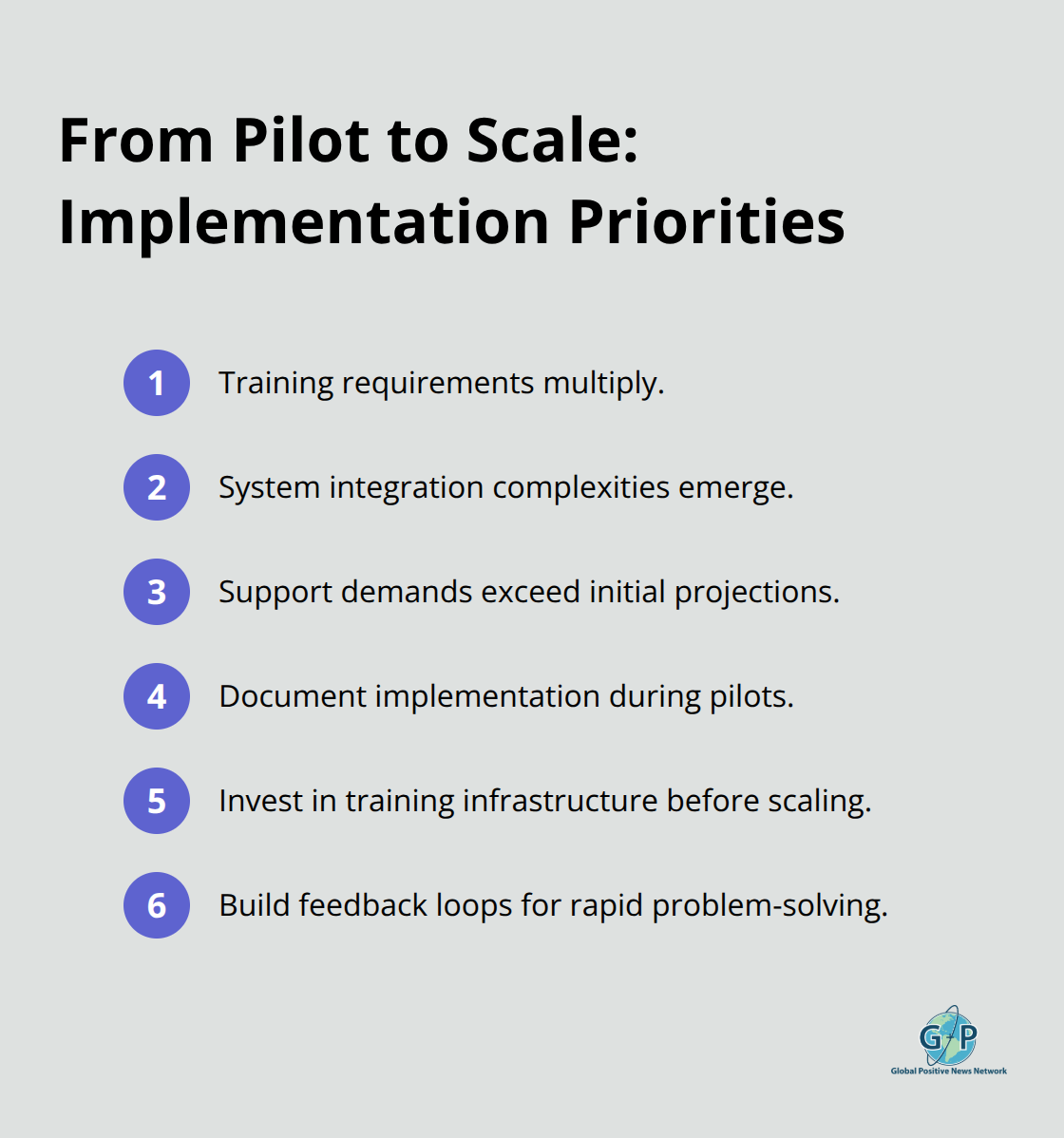
Training requirements multiply. System integration complexities emerge. Support demands exceed initial projections. Organizations that document their implementation process during pilots, invest in training infrastructure before scaling, and build feedback loops that surface problems quickly move from pilot to scale. Those that expect adoption to follow naturally from a successful pilot typically encounter collapse at 10-20% of intended scale. The scaling question is not whether the technology works but whether the organization can sustain implementation quality across dozens of locations with different staff, infrastructure, and institutional cultures.
Final Thoughts
Technology alone does not create positive change. The innovations we’ve examined-renewable energy systems cutting emissions, mobile health apps closing medical gaps, AI coordinating disaster relief, blockchain enabling transparent giving, and IoT devices proving conservation works-succeed because they solve real problems at lower cost than existing alternatives. Communities adopt them willingly, not because organizations mandate them. This pattern reveals what tech for hopeful futures actually requires: solutions that address genuine needs, work within current constraints, and generate evidence of impact that attracts funding and institutional support.
Individuals and organizations can participate by supporting solutions that work in practice, not just in theory. Fund organizations combining multiple revenue streams rather than chasing perpetual grants. Advocate for connectivity infrastructure in underserved regions while supporting technology designed for offline functionality today. Document implementation challenges during pilots so scaling becomes systematic rather than chaotic, and share stories of tech that actually improves lives instead of speculative possibilities.
We at Global Positive News Network believe technology’s greatest power lies in amplifying human capability and expanding access to opportunity. The innovations reshaping social sectors today prove that hopeful futures are being built now by teams combining technical skill with deep understanding of community needs. Your participation-whether through funding, implementation, or advocacy-determines whether these solutions reach the billions of people who need them most.

Having a hard day?
The 2 Minute Hope Reset is a short free guide with three small practices for the days that feel heavy. Two minutes each, nothing to keep up with.
Get the free guideExplore more positive news:
Enjoying stories like this?
Global Positive News Network is reader-supported. If you’d like to support the mission, you can visit the Official GPNN store.