

Most people wake up stressed, scroll through bad news, and let negativity set the tone for their entire day. At Global Positive News Network, we’ve found that daily gratitude reminders can interrupt this pattern and shift your mental state within minutes.
The science backs this up. Regular gratitude practice physically changes your brain structure, reduces cortisol levels, and builds emotional resilience that lasts.
How Gratitude Physically Changes Your Brain
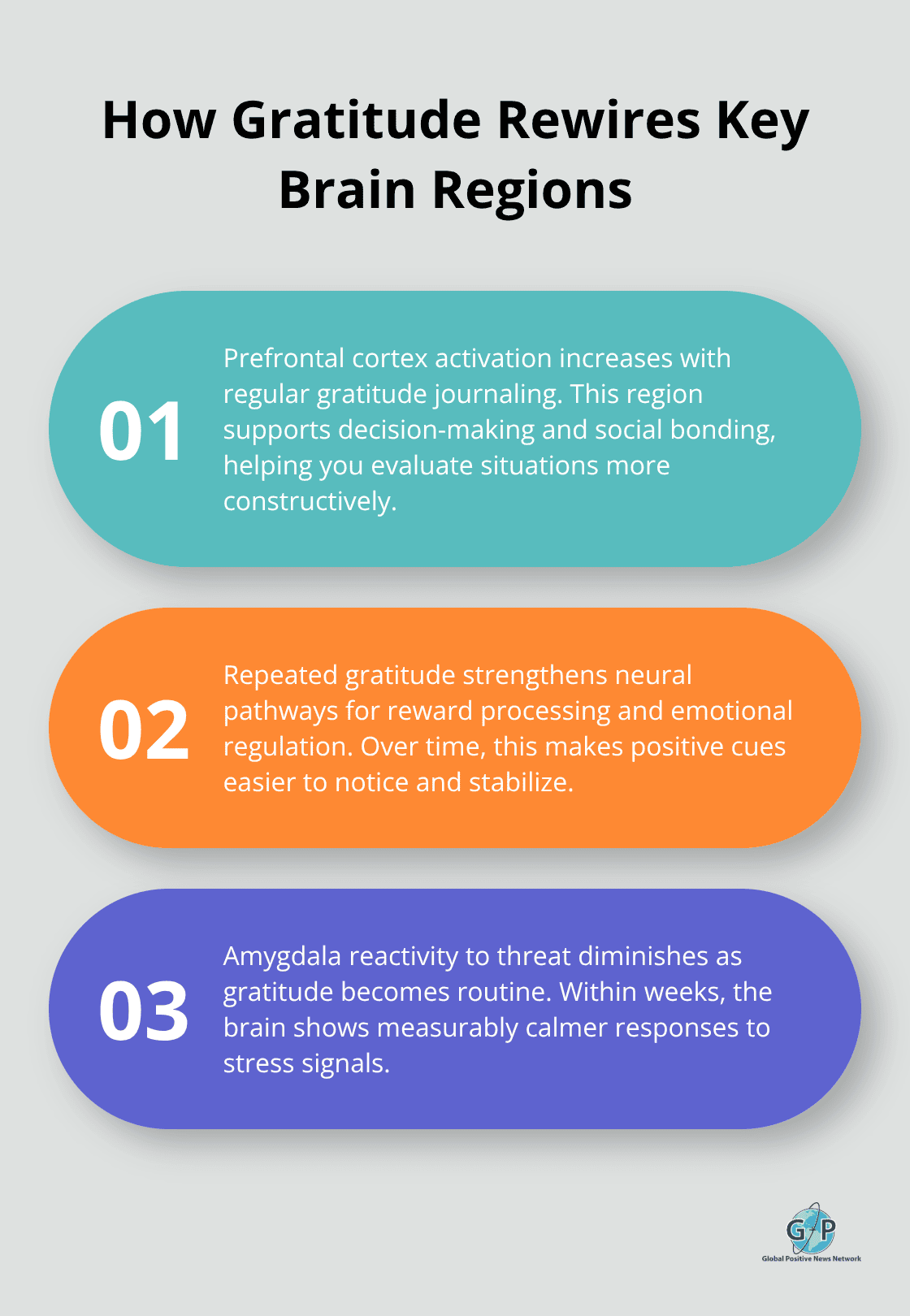
Your brain doesn’t stay the same when you practice gratitude regularly. Research from UC Davis found that people who kept gratitude journals showed increased activity in the prefrontal cortex, the area responsible for decision-making and social bonding. Brain imaging studies demonstrate that consistent gratitude practice actually strengthens neural pathways associated with reward processing and emotional regulation. The amygdala, which processes fear and stress, becomes less reactive over time. A study published in NeuroImage showed that participants who practiced gratitude for just eight weeks displayed measurable changes in how their brains responded to threatening stimuli. Your brain literally becomes better at filtering out negativity and focusing on positive information.
Cortisol Drops When Gratitude Becomes Routine
Your stress hormone cortisol responds directly to gratitude practice. Research from the journal Personality and Individual Differences measured cortisol levels in people who spent five minutes daily writing about things they appreciated. After three weeks, their cortisol levels dropped by maintaining gratitude and decreasing stress. This matters because elevated cortisol contributes to anxiety, sleep problems, and weakened immunity. When you acknowledge what you’re grateful for each morning, you’re not just feeling better emotionally-you’re actively lowering a hormone that damages your health. The effect compounds over time. People who maintain gratitude practices for several months show sustained reductions in cortisol, meaning the benefits don’t fade once the initial novelty wears off. Morning gratitude reminders pack such a punch because they set your hormonal baseline for the entire day before stress hormones spike.
Emotional Resilience Builds Faster Than You’d Expect
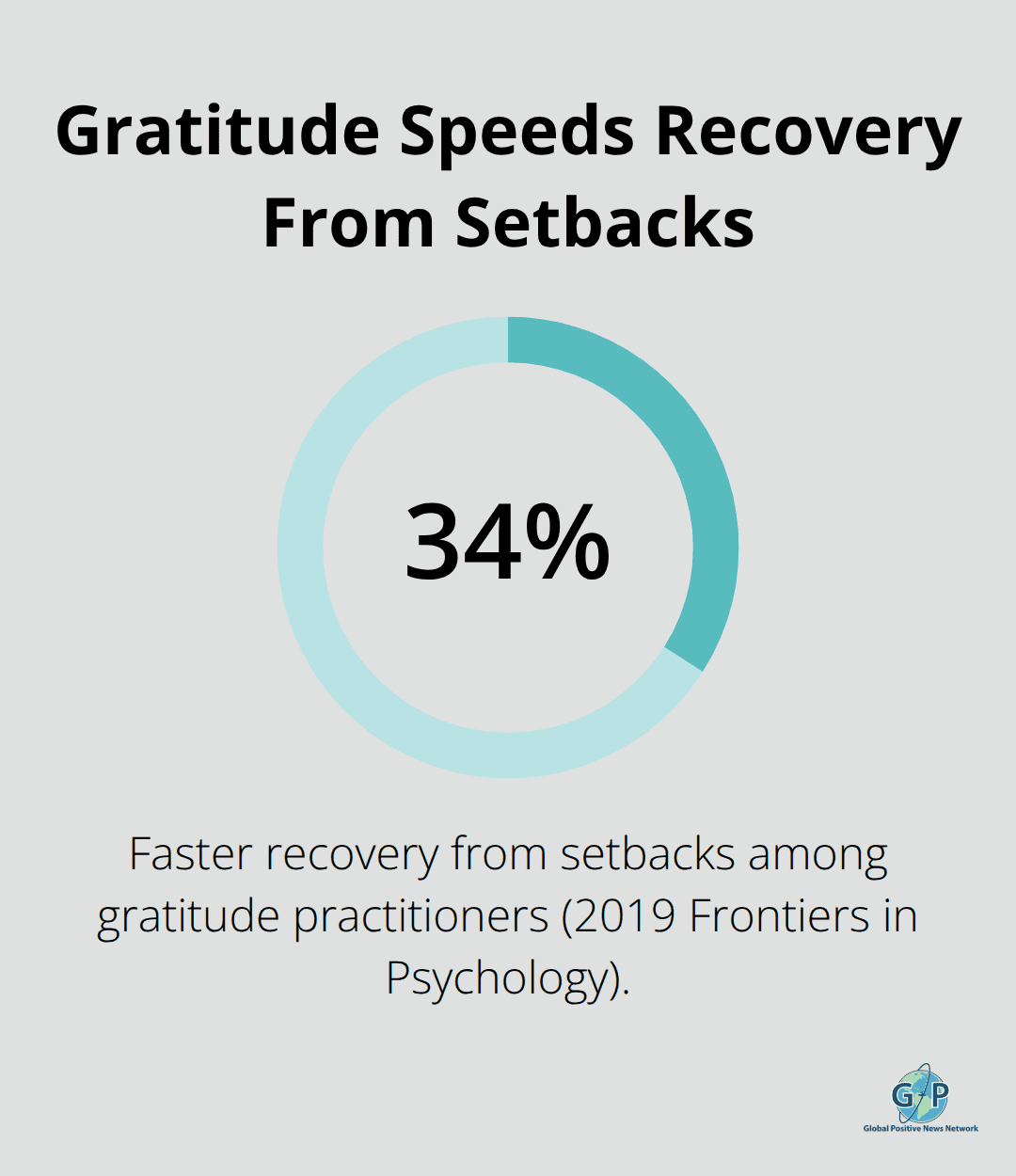
Resilience isn’t something you either have or lack. It’s a skill that gratitude accelerates. A 2019 study in Frontiers in Psychology tracked people dealing with significant life challenges and found that those who practiced gratitude showed 34 percent faster recovery from setbacks compared to a control group.
When you regularly acknowledge what’s working in your life, your brain develops stronger connections between areas that process meaning and areas that regulate emotion. This rewiring makes you less likely to spiral into rumination when difficulties arise. People who practice gratitude for as little as two weeks report feeling more equipped to handle stress, not because their circumstances changed, but because their brain’s capacity to bounce back improved.
Why Your Brain Responds to Gratitude So Quickly
The neurological shifts happen faster than most people expect (often within days rather than weeks). Your brain treats gratitude as a signal that your environment is safe and resources are available. This ancient survival mechanism means your nervous system relaxes when you acknowledge what you have. The prefrontal cortex takes over from the amygdala, shifting you from threat-detection mode to problem-solving mode. This isn’t positive thinking that ignores problems-it’s a neurological tool that strengthens your ability to process difficulty without getting stuck in it. Understanding this mechanism explains why gratitude reminders work so well when you place them strategically throughout your day.
The physical changes in your brain create the foundation for lasting transformation. Now that you understand what happens neurologically, the next step involves putting these insights into action with practical reminders that interrupt your daily patterns and reset your perspective.
Practical Gratitude Reminders for Your Daily Routine
Morning Gratitude Sets Your Neurological Baseline
The timing of your gratitude practice matters more than most people realize. Morning gratitude works because your brain hasn’t yet flooded with cortisol and stress hormones, making it the ideal window to establish your neurological baseline for the day. Spend three to five minutes immediately after waking, before checking your phone or email, and name three specific things you’re grateful for with genuine detail. Instead of saying you’re grateful for your job, specify what you appreciate about it: the colleague who made you laugh yesterday, the project you completed successfully, or the paycheck that covers your rent. This specificity activates your brain’s reward centers more powerfully than generic statements. Research from Emmons and McCullough shows that people who practice gratitude with concrete details experience significantly greater mood improvements than those who list vague appreciation. Write these three things down or speak them aloud; the physical act of articulation strengthens the neural pathways more effectively than silent thought alone.
Midday Resets Interrupt the Stress Cycle
Midday gratitude serves a completely different function. Around 2 or 3 p.m., when energy dips and frustration builds, a two-minute gratitude reset interrupts the stress cycle before it accelerates. Set a phone reminder for this time and pause whatever you’re doing to acknowledge one thing that happened since morning that went right, no matter how small. Did someone respond to your message quickly? Did you drink water? Did you avoid a traffic jam? These micro-moments of acknowledgment prevent your brain from fixating on problems and keep your cortisol levels from spiking into the afternoon slump.
Evening Reflection Programs Your Subconscious Mind
Evening reflection before bed operates on a different principle entirely. Spend five minutes reviewing your day and identifying moments, however brief, where you felt capable, connected, or content. This practice doesn’t require positivity about everything that happened; it simply redirects your attention toward what worked. Evening reflection before bed programs your subconscious mind overnight and improves sleep quality. The consistency of this three-point daily structure creates cumulative neurological changes far more powerful than occasional gratitude bursts.
Why This Three-Point Structure Transforms Your Brain
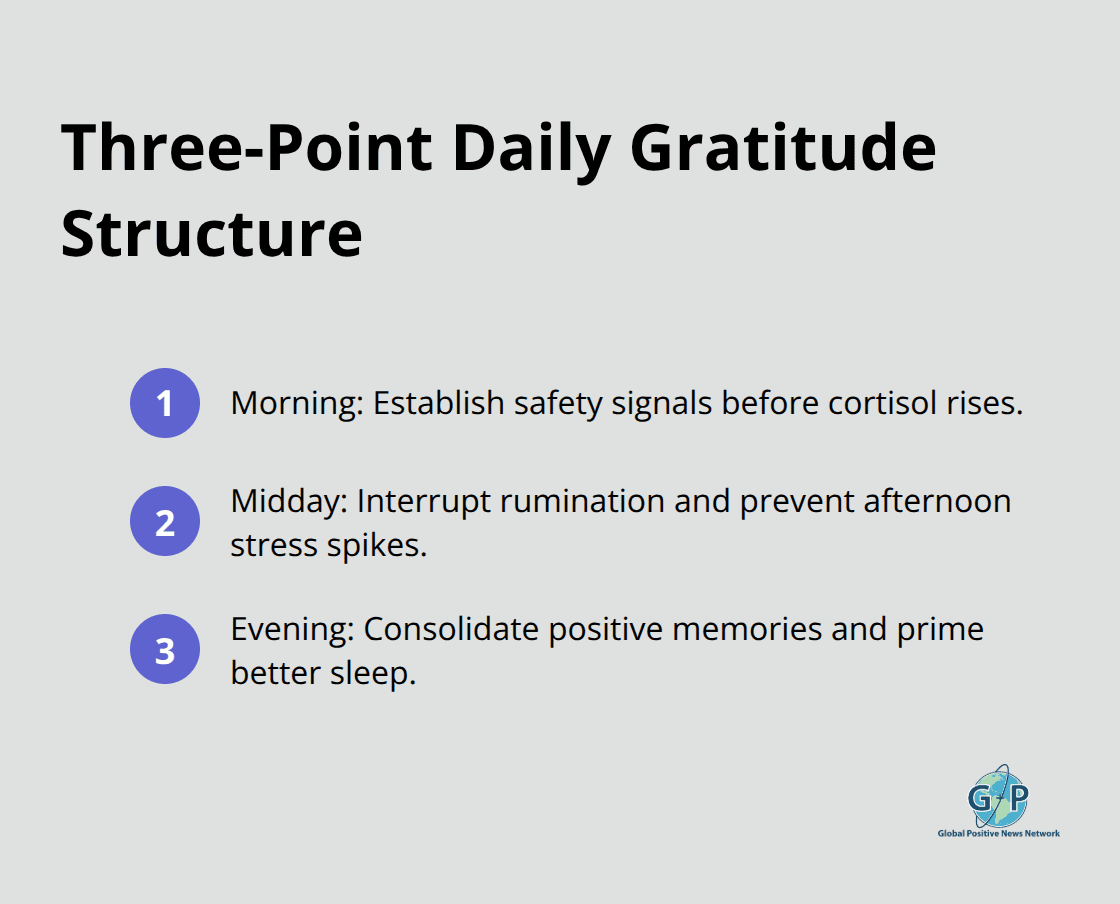
The strategic placement of gratitude throughout your day creates a neurological rhythm that your brain begins to anticipate. Morning practice establishes safety signals before stress hormones spike. Midday practice prevents rumination from taking hold. Evening practice consolidates positive memories into your long-term neural networks.
Together, these three moments create a feedback loop where your brain increasingly filters for what’s working rather than what’s broken. This isn’t about forcing positivity or ignoring real problems-it’s about training your nervous system to process difficulty without getting stuck in it. The next step involves selecting the specific tools and methods that make these reminders stick, turning intention into sustainable habit.
Tools and Methods to Build a Gratitude Habit
Apps That Remove Decision Fatigue
Digital tools eliminate friction from gratitude practice, and the data proves this matters significantly. A study found that people who used gratitude apps reported 23 percent higher consistency in their practice compared to those relying on memory alone. Apps like Grateful, which focuses on daily prompts with photo integration, and Stoic, which combines gratitude with philosophical reflection, work because they send notifications at optimal times. Set your app reminders for the exact times you identified from the previous chapter: immediately upon waking, at 2 or 3 p.m., and before bed. Most gratitude apps cost between free and $5 monthly, making the barrier to entry negligible. The real metric that matters is whether the app creates enough friction to make skipping harder than participating.
Physical Journals Activate Deeper Reflection
If you prefer analog methods, a physical journal placed on your nightstand or desk serves the same neurological function as an app, though without the notification advantage. The specificity of your journal prompts determines your results. Instead of writing what you’re grateful for, respond to prompts like “What did I accomplish today that I underestimated?” or “Which person showed up for me in a small way?” These targeted questions activate deeper reflection than open-ended gratitude statements. Research found that specific prompts experienced 31 percent greater emotional benefits than those writing freely.
Accountability Partners Accelerate Habit Formation
Accountability systems accelerate habit formation dramatically. A 2019 study in Behavior Research and Therapy showed that people who shared their gratitude practice with an accountability partner maintained consistency 42 percent longer than solo practitioners. This works because social commitment activates different neural pathways than individual motivation. You can build accountability through existing communities by sharing weekly gratitude wins in a group chat, joining structured programs like The Gratitude Challenge (which pairs people for 21-day commitment cycles), or participating in workplace gratitude circles where colleagues share reflections during brief morning meetings. The most effective accountability happens when someone else expects your participation, not when you simply tell people about your goal.
Final Thoughts
The transformation you seek doesn’t require dramatic life changes or hours of meditation. Small, consistent moments of acknowledgment rewire how your brain processes your day, and daily gratitude reminders at strategic times build neural pathways that make resilience automatic. The three-point structure (morning, midday, evening) works because it aligns with your brain’s natural rhythms and stress cycles throughout the day.
Start your gratitude practice by selecting one method and committing to it for two weeks. Pick either an app that sends notifications or a physical journal placed somewhere visible, then set your three time slots in your calendar right now. Concrete details about what you appreciate activate your reward centers far more effectively than vague statements and create measurable changes in your brain structure.
Consistency beats perfection every single time-missing one day doesn’t erase your progress, but skipping multiple days interrupts the neural pathway strengthening. Research shows that people who maintain gratitude practices for several months experience sustained reductions in stress hormones and improved emotional regulation that persists long-term. Visit Global Positive News Network to explore uplifting content that reinforces the gratitude practice you’re building, and start today with one moment of genuine appreciation.
Having a hard day?
The 2 Minute Hope Reset is a short free guide with three small practices for the days that feel heavy. Two minutes each, nothing to keep up with.
Get the free guideExplore more positive news:
Enjoying stories like this?
Global Positive News Network is reader-supported. If you’d like to support the mission, you can visit the Official GPNN store.