Belonging isn’t accidental. It’s built through thoughtful design, intentional community building, and spaces that welcome everyone.
We at Global Positive News Network believe the most vibrant communities share something in common: they’ve engineered connection into their physical and social fabric. This blog post breaks down the concrete strategies that transform ordinary spaces into places where people genuinely feel they matter.
How Physical Space Shapes Who Feels Welcome
Open Layouts That Invite Connection
The layout of a space determines whether people naturally gather or retreat. Open floor plans with minimal barriers between areas increase spontaneous interaction by making it easier for people to see and approach one another. Rigid, compartmentalized spaces with walls and closed doors signal exclusion before anyone speaks. Flexible furniture that moves easily-tables on wheels, stackable chairs, modular seating-allows groups to reconfigure spaces for different activities without needing permission or specialized staff. Fixed furniture sends the opposite message: this space is designed for one purpose only, and you fit it or you don’t.
Light and Plants Transform the Atmosphere
Natural light matters more than aesthetics alone. Research from the American Psychological Association shows that access to natural light improves mood, focus, and sense of well-being. Windows positioned to provide views outside, skylights, and glass partitions instead of solid walls all increase light penetration. When natural light isn’t available, full-spectrum lighting that mimics daylight reduces eye strain and seasonal mood dips.
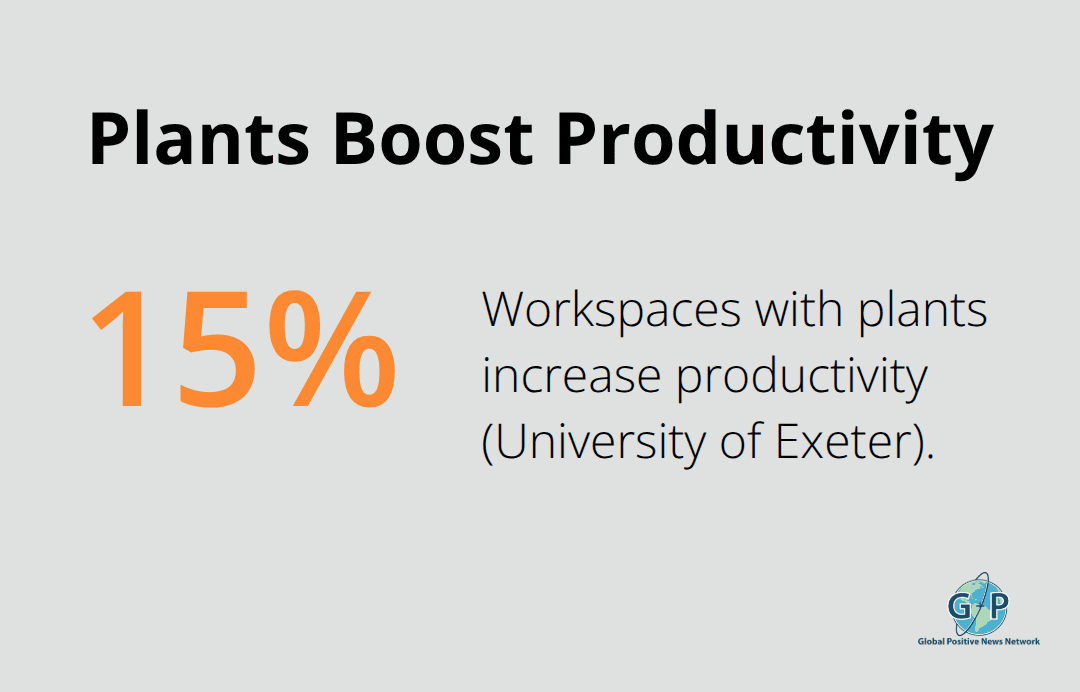
Greenery works as a practical tool, not decoration. Studies from the University of Exeter found that workspaces with plants increase productivity by 15 percent and reduce stress markers in participants. Plants placed at eye level in conversation areas create focal points that draw people together.
Low-maintenance options like pothos, snake plants, and philodendrons survive in varied light conditions and require minimal upkeep.
Seating Arrangements That Encourage Dialogue
Comfortable seating arranged for conversation rather than observation changes behavior. Theater-style seating with everyone facing forward discourages dialogue. Clusters of seating facing inward-chairs arranged in circles or small groups-invite people to talk. Seating heights matter: stools and low chairs allow people of different abilities to sit comfortably, while uniform high tables exclude wheelchair users and people of short stature.
Temperature and Sound Control
Temperature control is overlooked but essential. Spaces that are too cold or too hot drive people away within minutes. Adjustable heating and cooling, or at minimum multiple zones with different temperatures, accommodates the fact that people have different thermal needs. Acoustic design prevents spaces from becoming overwhelming. Hard surfaces like concrete and tile bounce sound around and create noise that exhausts people. Soft materials-carpets, upholstered furniture, fabric wall panels-absorb sound and make conversation possible. This is why libraries and cafes with soft furnishings feel more inviting than those with hard, reflective surfaces.
These physical elements form the foundation, but spaces remain empty without the activities and experiences that bring people together. What happens inside these thoughtfully designed rooms determines whether belonging actually takes root.
How Belonging Grows Through Regular Connection
Weekly Rhythms Build Stronger Bonds
Spaces remain empty without the activities and people who fill them. Regular activities give people reasons to show up repeatedly, and repetition builds the relationships that transform strangers into community members. Craft groups that meet weekly at libraries or community centers exemplify this principle. Members don’t just learn skills; they develop bonds through consistent interaction. A group that gathers every Tuesday at the same time creates predictability that allows people to plan their lives around belonging. When you know exactly when and where to find your people, you actually show up.
Research from the Journal of Community Psychology shows that participants in regular community groups report higher feelings of belonging than those in sporadic events. The consistency matters significantly here: a monthly gathering generates less connection than a weekly one. Monthly events feel like occasions; weekly meetings feel like home. The difference lies in what repetition does to relationships-it transforms them from transactional to genuine.
Service Projects Align Purpose With Connection
Service projects amplify belonging because they combine regular meetings with shared purpose. When a group volunteers together at a food bank every other Saturday, members work toward something larger than themselves while strengthening ties with each other. This alignment of external purpose with internal connection separates meaningful communities from social clubs. People invest more deeply when they know their effort matters beyond the group itself.
Volunteer work also creates natural conversation starters and shared accomplishments. A group that packs meals together, builds homes, or cleans parks talks differently than one that simply socializes. The work itself becomes the foundation for connection.
Reciprocal Teaching Prevents Burnout
Mentorship within community spaces works best when it flows in multiple directions. Traditional mentor-mentee relationships assume expertise moves downward, but the most connected groups practice reciprocal teaching where everyone shares knowledge. In craft communities, a skilled knitter teaches a beginner while that beginner teaches the group about sustainable yarn sourcing. Peer support programs thrive on this principle too. A person six months into recovery from addiction offers concrete wisdom to someone just starting; that person benefits from helping, not just receiving.
Formal peer support training exists through organizations like the Certified Peer Specialist program, which trains individuals to provide support based on lived experience. When groups intentionally rotate who teaches, who leads, and who learns, they prevent the burnout that comes from fixed roles. A study from the American Journal of Community Psychology found that communities with reciprocal support structures report higher retention rates than hierarchical models.
Practical Steps for Rotating Leadership
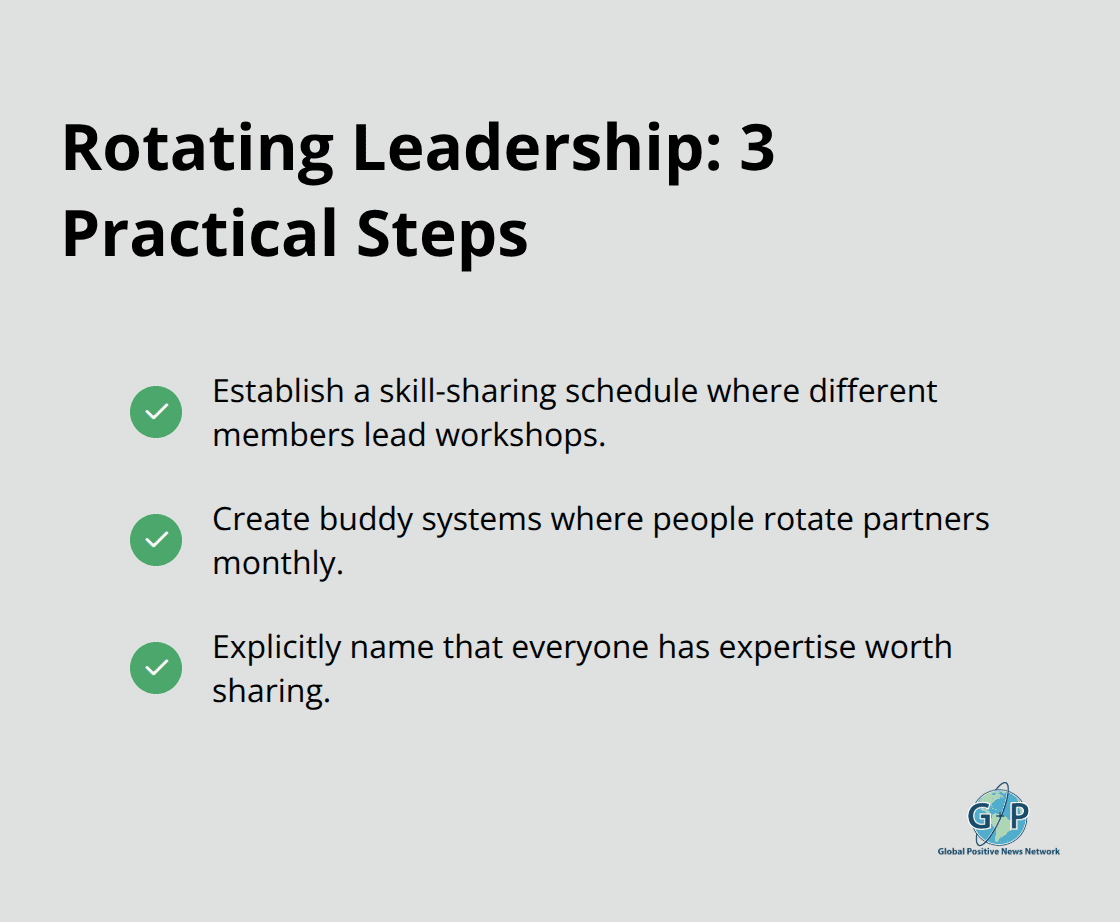
The implementation is straightforward. Establish a skill-sharing schedule where different members lead workshops. Create buddy systems where people rotate partners monthly. Explicitly name that everyone has expertise worth sharing.
This transforms belonging from something a few leaders create for others into something everyone actively builds together.
These regular rhythms and reciprocal structures create the foundation for connection, but they only work when spaces actively welcome people who look, think, and live differently. The next section explores how to design communities that genuinely include everyone.
Creating Inclusive Environments Where Everyone Belongs
Accessibility as Foundation, Not Afterthought
Accessibility isn’t an afterthought that gets added when someone complains. Spaces designed without accessibility built in from the start actively exclude people before they ever experience the community activities inside. Ramps, accessible parking, wide doorways, and lowered counters aren’t luxuries-they’re the baseline requirement for belonging. An accessible entrance with a functioning elevator matters as much as the warm welcome that follows.
Research shows that students with disabilities in high-inclusion classrooms benefit significantly from accessible environments. This pattern holds true for community spaces too. When accessibility is genuinely embedded-not bolted on-participation increases and retention strengthens.
Accessible seating means offering chairs with and without arms, varying heights, and spaces for wheelchairs positioned for conversation, not isolation. Temperature zones matter for people with sensory sensitivities or chronic conditions. Quiet spaces or low-stimulation areas aren’t luxuries; they’re necessities for neurodivergent participants and people managing chronic pain or anxiety. Bathrooms need to be single-stall or have accessible stalls with grab bars and adequate space for mobility devices. Parking spots reserved and enforced for people with disabilities must actually exist and be maintained. The details that seem small determine who actually shows up and who gives up before arriving.
Culturally Responsive Programming That Reflects Real Communities
Culturally responsive programming means moving beyond surface-level diversity gestures toward spaces where different cultures genuinely shape how activities happen. A craft community that celebrates only European knitting traditions while ignoring the centuries-old textile practices from West Africa, Southeast Asia, or Latin America sends a clear message about whose knowledge counts. This growth happened because organizations stopped treating inclusion as one special event per year and started weaving it into regular operations.
Culturally responsive programming means food reflects actual preferences and dietary practices of community members, not token gestures. It means scheduling events at times that don’t conflict with worship practices, work shifts common to specific communities, or caregiving responsibilities that fall disproportionately on certain groups. These practical choices signal that you’ve thought about who you’re actually trying to welcome.
Multiple Entry Points for Participation
Multiple entry points for participation matter tremendously-some people join through service projects, others through skill-sharing workshops, still others through social gatherings. A person uncomfortable with large group settings might thrive in a one-on-one mentorship but never attend a weekly meeting.
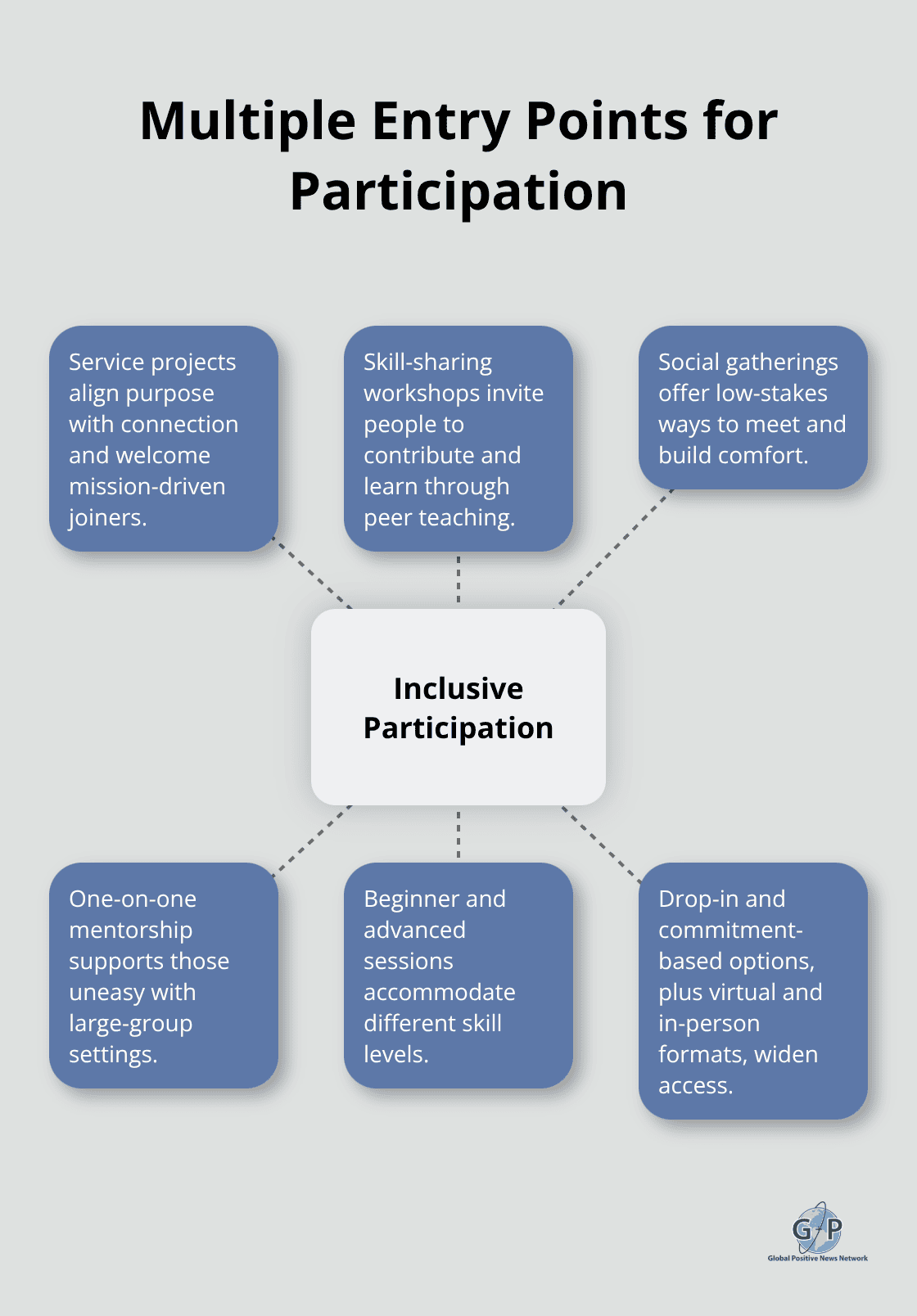
Offering beginner workshops alongside advanced sessions, drop-in participation alongside commitment-based groups, and virtual attendance alongside in-person gatherings means you’re not forcing people into a single mold.
When your community leadership reflects the people you’re trying to welcome-in race, disability status, socioeconomic background, and lived experience-belonging stops being something created for people and becomes something people actively build together.
Ongoing Reflection and Accountability
Belonging requires ongoing reflection about who spaces serve and how they’re designed, not a one-time accessibility audit that gets filed away. Regular assessment of your community’s practices reveals gaps that initial planning missed. Ask community members directly what barriers they face. Listen to who isn’t showing up and why. Adjust your approach based on what you learn, not on what you assumed people needed.
Final Thoughts
Belonging doesn’t emerge from chance-it requires intentional physical design, regular rhythms of connection, and spaces that actively welcome people across differences. Communities with weekly gatherings report significantly higher belonging than those meeting sporadically, and inclusive classrooms with accessible design see graduation rates approximately 6 percentage points higher than non-inclusive settings. These aren’t abstract improvements; they’re concrete evidence that thoughtful community building changes lives.
The work extends beyond a single event or initiative. You need ongoing reflection about who your space serves and honest assessment of what barriers remain. Listen to people who aren’t showing up and adjust your approach based on what you learn, rotate leadership so everyone contributes expertise, and schedule activities at times that work for actual community members, not just convenient times for organizers.
Start where you are today. If you manage a physical space, audit the layout and accessibility now; if you lead a community group, establish a regular meeting rhythm and introduce reciprocal teaching; if you’re building something new, embed accessibility and cultural responsiveness from the beginning rather than adding them later. We at Global Positive News Network believe communities thrive when people experience authentic belonging, and your next step is choosing one concrete action and implementing it this week.
Having a hard day?
The 2 Minute Hope Reset is a short free guide with three small practices for the days that feel heavy. Two minutes each, nothing to keep up with.
Get the free guideExplore more positive news:
Enjoying stories like this?
Global Positive News Network is reader-supported. If you’d like to support the mission, you can visit the Official GPNN store.