

Staying centered when life pulls you in different directions feels nearly impossible for most people. At Global Positive News Network, we believe mindful positivity practices offer a practical path forward, grounded in real science rather than wishful thinking.
This guide walks you through concrete techniques that actually work, from daily meditation to building genuine resilience through community connection.
What Science Actually Says About Mindful Positivity
Mindful positivity isn’t a feel-good concept disconnected from reality. Johns Hopkins Medicine found that positive outlook reduces the risk of heart attack or heart disease by about one-third, even for people with family histories of heart disease. Mayo Clinic research shows that optimism correlates with lower death rates from cardiovascular disease and cancer. These aren’t marginal improvements-they’re significant health shifts driven by how your mind approaches daily challenges.
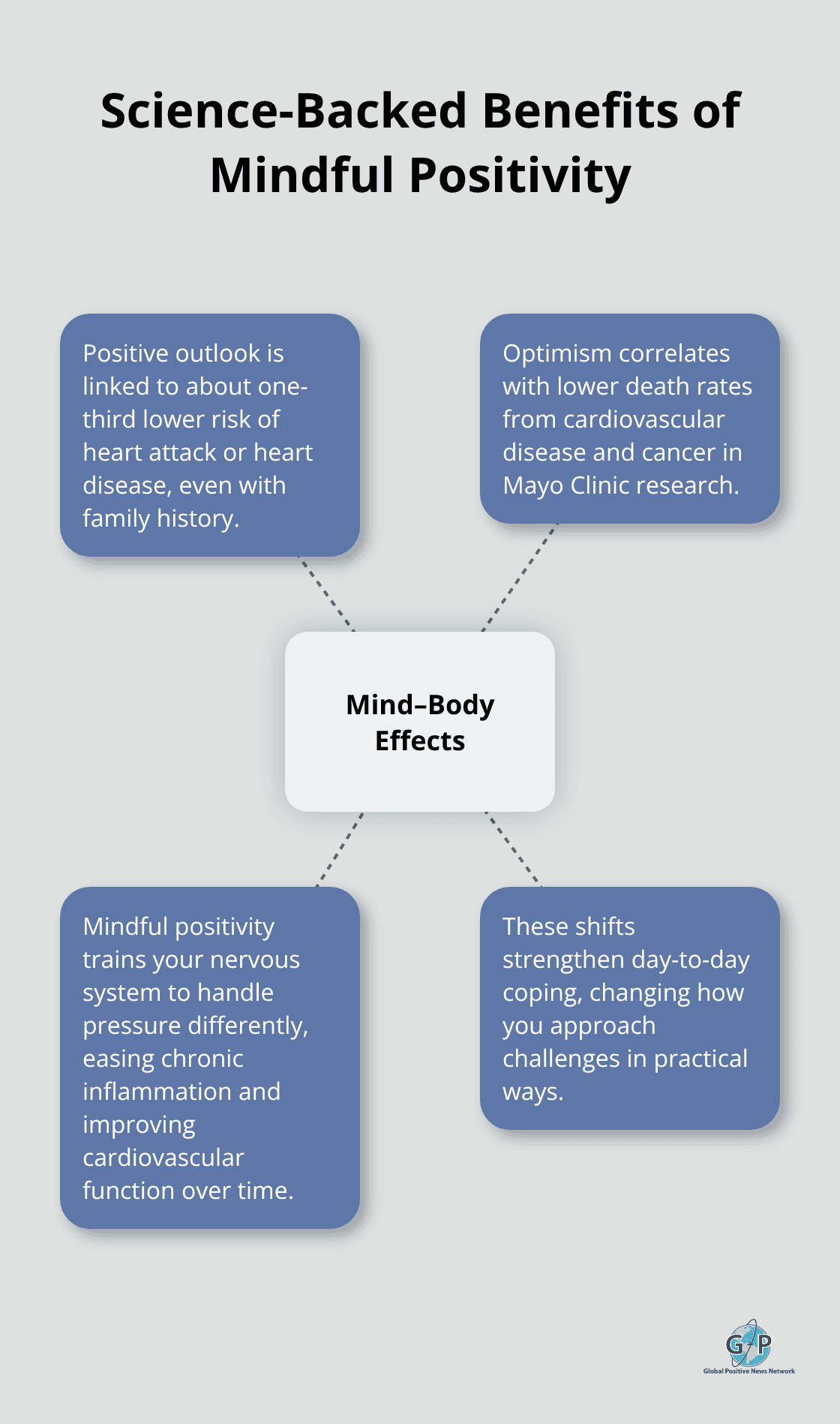
The connection works because positive thinking changes your physical stress response. Short-term stress actually boosts your immune system, but long-term stress dampens it according to Johns Hopkins Medicine. When you practice mindful positivity, you literally train your nervous system to handle pressure differently, which means your body experiences less chronic inflammation and better cardiovascular function over time.
How Your Brain Learns Optimism
Positive thinking is a learnable skill, not an inborn trait. This matters because it means you can build it through practice. The first step involves recognizing your negative self-talk patterns-filtering, catastrophizing, personalization, and perfectionism are the most common culprits according to Mayo Clinic research. Once you identify these patterns, interrupt them with concrete reframing.
Instead of thinking it’s too complicated, tell yourself you’ll tackle it from a different angle. Instead of I can’t, shift to I can learn and improve. This isn’t positive affirmation nonsense; it’s rewiring the neural pathways that drive your mood and resilience. The Penn Resilience Program, developed at the University of Pennsylvania, teaches exactly these coping skills and has proven effective at reducing PTSD risk across students and service members. Daily practice leads to gradual improvement, fewer self-criticisms, and greater resilience-the research from Mayo Clinic shows this compounds over time rather than creating instant transformation.
Three Actionable Starting Points
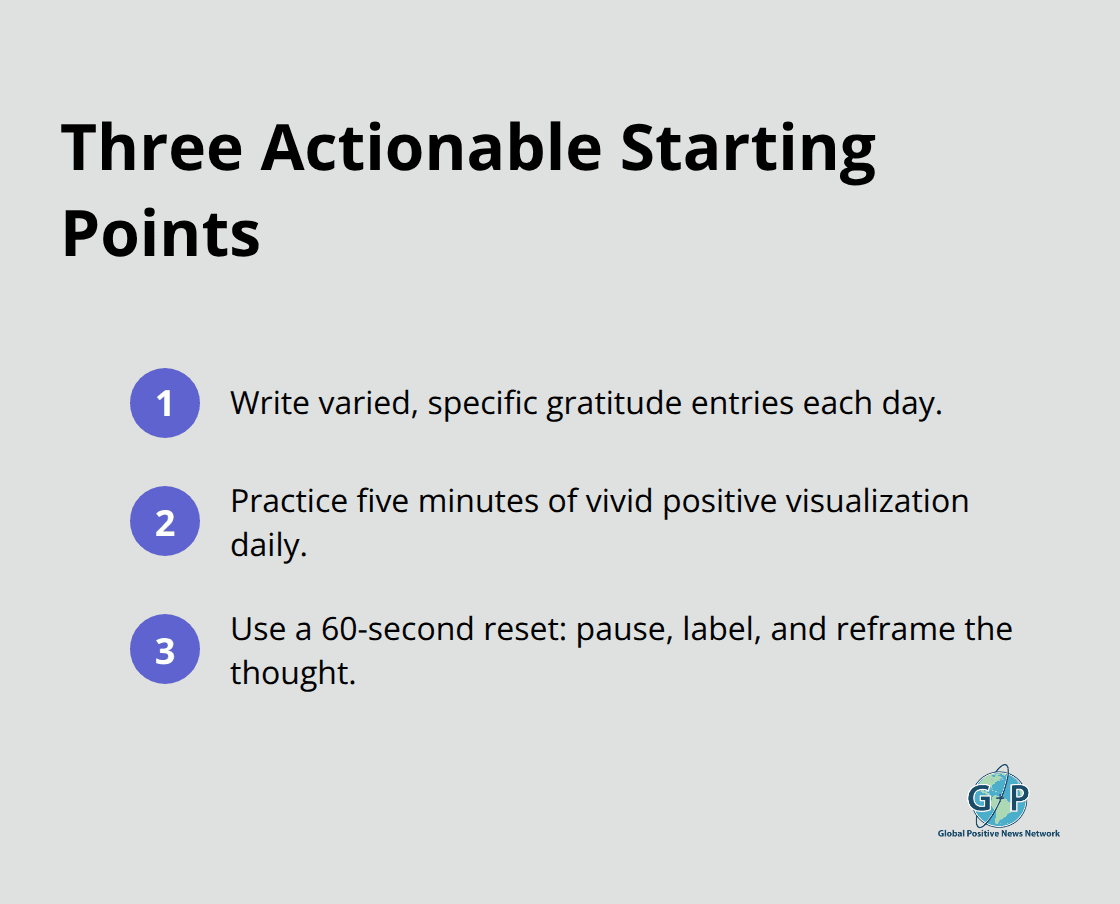
Gratitude journaling works specifically when it’s concrete and varied. Don’t write the same three things daily; instead, write specific items you’re grateful for and rotate them day to day. This keeps your brain engaged rather than falling into autopilot.
Visualization outperforms verbal affirmations for anxiety relief according to Johns Hopkins Medicine research, so try five minutes daily to imagine positive outcomes in vivid detail. Third, practice a 60-second mood reset whenever negativity strikes: pause, label the thought accurately, then reframe it into something more constructive. These three practices create the foundation for sustained mindful positivity because they’re specific enough to actually implement and powerful enough to shift your neurochemistry.
Moving From Theory to Daily Action
You now understand the science behind mindful positivity and have three concrete techniques to start with. The real transformation happens when you move these practices from your awareness into your actual routine, which means the next step involves building sustainable daily habits that stick.
Building Your Daily Centering Practice
Start With Focused Breathing
Meditation doesn’t require sitting in silence for an hour while your mind races. Start with five minutes of focused breathing: breathe in for four counts, hold for four, exhale for four. This specific pattern activates your parasympathetic nervous system, the part that calms your body down. Practice this once daily, preferably in the morning before checking your phone. After two weeks of consistent practice, your nervous system begins recognizing this pattern as a signal to relax, making it easier to access calm throughout your day. If five minutes feels impossible, start with 60 seconds. Consistency matters more than duration.
Research from Johns Hopkins Medicine shows that visualization combined with breathing work outperforms affirmations alone for reducing anxiety. During your practice, pair the breathing with a specific positive image-a place you feel safe, a moment of accomplishment, or a person you love. This combination shifts your neurochemistry more effectively than either technique alone.
Write Specific Gratitude Daily
Gratitude journaling works differently than most people practice it. Writing the same three things repeatedly trains your brain to stop noticing them. Instead, each evening write three to five specific things you’re grateful for that day, making sure they’re concrete and varied. Write that your neighbor waved hello, that your coffee was hot, that you finished a difficult task, that someone made you laugh. Specificity forces your brain to actually scan your day for positives rather than defaulting to the same generic items.
Specific gratitude journaling research confirms that this varied approach keeps your engagement high and prevents the journaling from becoming rote. Your brain stays active and responsive when you rotate what you notice, which amplifies the mood-boosting effects over time.
Move Your Body Regularly
Physical activity completes this trio because movement directly shifts your neurochemistry. The Physical Activity Guidelines for Americans recommend 30 minutes most days, but you can break this into three 10-minute sessions throughout your day. A 10-minute routine after meals stabilizes blood sugar and mood simultaneously. Strength training twice weekly builds resilience at a neurological level, not just physically.
These three practices-breathing work, specific gratitude reflection, and regular movement-create a foundation where your nervous system stays regulated and your mind stays anchored to what actually matters. With this daily structure in place, you’re ready to address the deeper challenge: what happens when negative thoughts arise despite your best efforts.
Building Resilience Through Environment, Relationships, and Thought Management
How Your Surroundings Shape Your Capacity for Positivity
Your physical environment and the people around you function as either accelerators or brakes on your ability to maintain mindful positivity. People who isolate themselves while practicing positive thinking rarely sustain it beyond a few weeks. Research confirms that surrounding yourself with positive, supportive people directly amplifies your ability to maintain optimism. This doesn’t mean toxic positivity or pretending problems don’t exist-it means deliberately choosing environments and relationships where people address challenges practically rather than spiraling into catastrophizing.
If your workspace or home contains constant negativity, your nervous system stays in a defensive state regardless of your breathing practice or gratitude journal. Start by auditing your immediate environment. Remove news sources that trigger anxiety spirals, mute social media accounts that fuel comparison and self-doubt, and rearrange your physical space so it reflects calm rather than chaos. These environmental shifts reduce stress activation, making it significantly easier for your positive practices to take root.
Choosing Relationships That Support Your Growth
Examine your relationships honestly. People who dismiss your efforts toward mindful positivity or constantly pull you toward their drama drain your emotional resources. This isn’t about judgment-it’s about recognizing that your nervous system has limited capacity. Spend more time with people who ask genuine questions about your goals, who celebrate small wins without minimizing them, and who admit their own struggles without expecting you to fix them.
Research on resilience shows that regular engagement with friends, family, or community groups sustains positive outlook far better than solo practices alone. Consider joining a group aligned with your values, whether that’s a fitness class, volunteer work, or a book club. The consistency of showing up with others creates accountability and social reinforcement that individual practice cannot match.
Interrupting Negative Thought Patterns Before They Spiral
Negative thoughts become dramatically easier to manage when you stop treating them as personal failures. Most people believe that mindful positivity means eliminating negative thoughts entirely, which sets them up for disappointment. The goal is actually interrupting negative patterns and reframing them before they spiral. When self-doubt surfaces, your instinct is to fight it or spiral deeper. Instead, use a specific two-step protocol: first, pause and name the thought pattern accurately (catastrophizing, personalizing blame, or filtering out positives). Naming the pattern activates your prefrontal cortex, the part that thinks rationally rather than reacts emotionally.
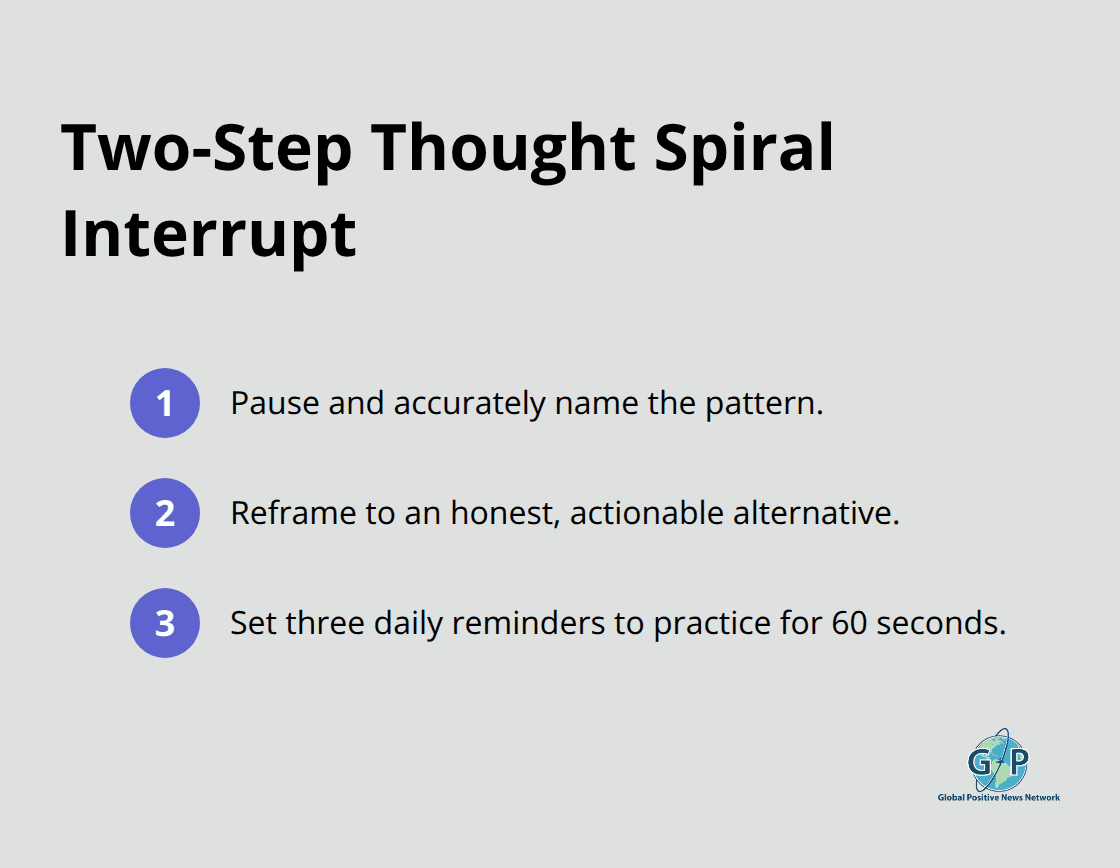
Second, immediately reframe with a concrete alternative. If you think “I’ll never succeed at this,” shift to “I haven’t figured out the approach yet, but I can try a different method.” This isn’t forcing false optimism-it’s simply choosing a thought that’s both honest and actionable. Set a phone reminder three times daily to pause and assess your thoughts for 60 seconds. Over two weeks, this becomes automatic, and your brain starts catching negative spirals before they gain momentum.
Small Acts of Kindness as a Resilience Tool
Small acts of kindness paradoxically boost your own sense of positivity and connection. When you’re caught in self-doubt, helping someone else shifts your perspective from internal criticism to external contribution. This could mean helping a colleague solve a problem, sending a thoughtful message to someone you haven’t contacted in months, or volunteering two hours monthly. These actions remind your nervous system that you’re capable and valuable, which directly counters the voice of self-doubt.
Final Thoughts
Mindful positivity practices work because they address both your mind and your nervous system at the same time. The breathing techniques, gratitude journaling, and movement you’ve learned reinforce each other and create a compounding effect that shifts your neurochemistry over weeks and months. Consistency matters far more than intensity, and Mayo Clinic research confirms that daily practice leads to gradual improvement as these habits accumulate into meaningful change.
Your environment and relationships matter as much as your individual practices do. Surrounding yourself with supportive people and removing sources of constant negativity creates the conditions where mindful positivity actually takes root and sustains itself. Small acts of kindness toward others reinforce your own sense of capability, which directly counters self-doubt when it surfaces.
Start with one practice this week-choose the breathing technique, gratitude journaling, or movement routine, whichever feels most accessible to you. We at Global Positive News Network share stories of people who’ve transformed their lives through consistent practice, proving that mindful positivity practices work for anyone willing to start.
Having a hard day?
The 2 Minute Hope Reset is a short free guide with three small practices for the days that feel heavy. Two minutes each, nothing to keep up with.
Get the free guideExplore more positive news:
Enjoying stories like this?
Global Positive News Network is reader-supported. If you’d like to support the mission, you can visit the Official GPNN store.