
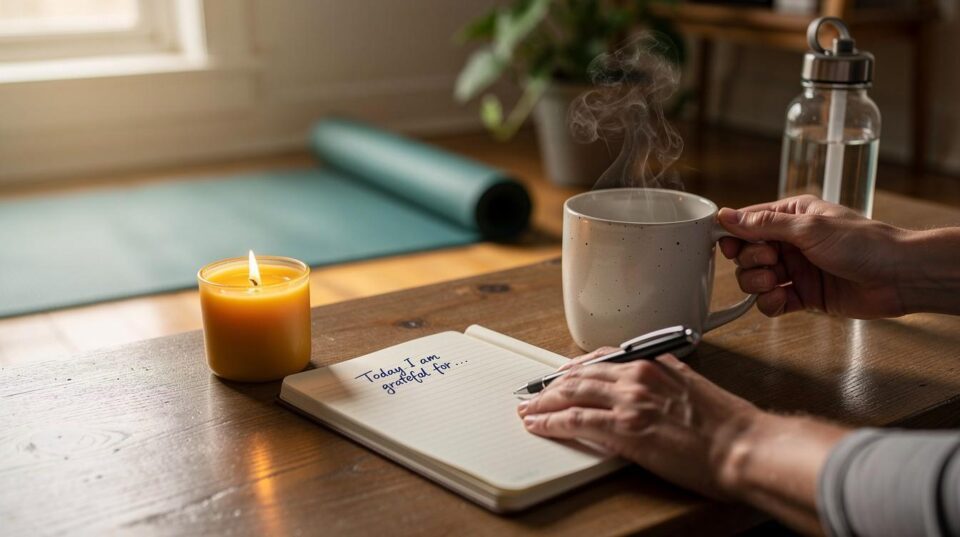
Happiness doesn’t require grand gestures or major life changes. At Global Positive News Network, we believe that simple daily positivity rituals-practiced consistently-can transform how you feel and think.
This guide walks you through practical habits you can start today, from morning gratitude to evening reflection. Each ritual takes just minutes but compounds into lasting emotional resilience.
How to Start Your Morning Right
The Power of Specific Gratitude
The first hour of your day shapes everything that follows. Start before you check your phone, email, or news feed-these pull your attention outward when you need it inward. Spend three to five minutes identifying three specific things you’re grateful for, but go beyond surface-level answers. Write down something concrete: the way your coffee tasted this morning, a text message from a friend yesterday, or how your body felt during a good night’s sleep.
Research shows that gratitude practices boost well-being and reduce anxiety. The effects persist for nearly two weeks after a single session, and they work across all age groups and cultures.
Identity-Based Affirmations That Stick
After gratitude, spend two minutes on self-affirmations tied to your core values or identity rather than generic positive statements. Instead of saying you are confident, reflect on a specific time you handled a difficult situation well or acted according to your values. This targeted approach is what the research shows actually works-identity-based affirmations reduce negative mood and buffer against external stress.
The key difference lies in authenticity. You anchor affirmations to real moments from your life, not wishful thinking. This grounds the practice in evidence you can trust about yourself.
Three Mindful Breaths Before the Day Begins
Then practice three mindful breaths before touching your phone. Breathe in for a count of four, hold for four, exhale for four. This micro-ritual takes ninety seconds and anchors your nervous system before the day’s demands hit.
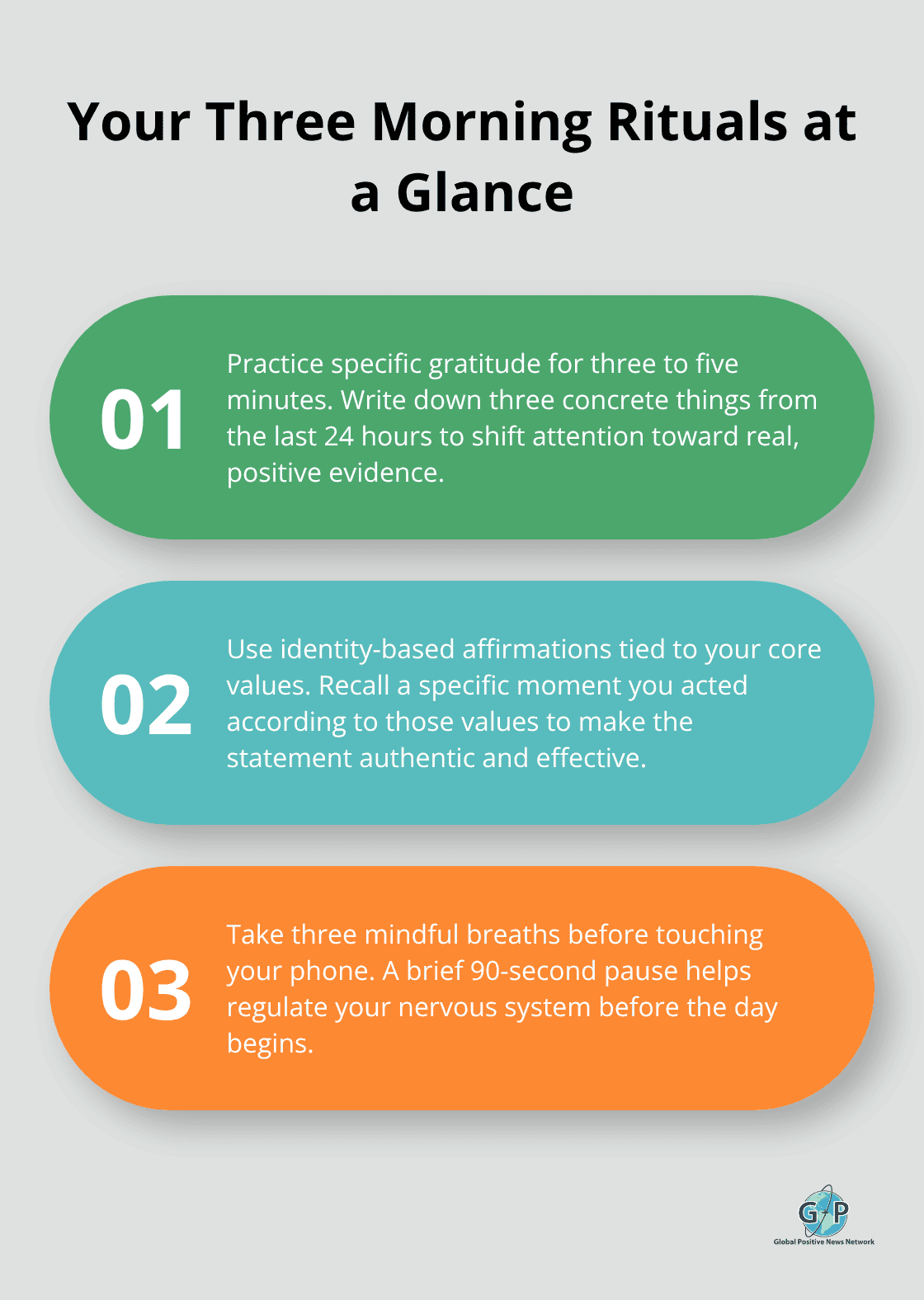
These three practices-gratitude with specificity, identity-based affirmations, and conscious breathing-cost nothing and require no equipment, yet they create a psychological foundation that lasts hours. Once you establish this morning routine, you’ll notice how much steadier you feel when midday challenges arrive.
Midday Momentum Matters More Than You Think
The Afternoon Energy Crisis
Productivity drops by 15 to 20 percent between noon and 3 p.m., according to research on circadian rhythms and energy cycles. This slump arrives exactly when work stress peaks and your morning rituals fade. A deliberate break at this moment prevents mood collapse and protects the positive foundation you built this morning.
Reset Your Nervous System in Five Minutes
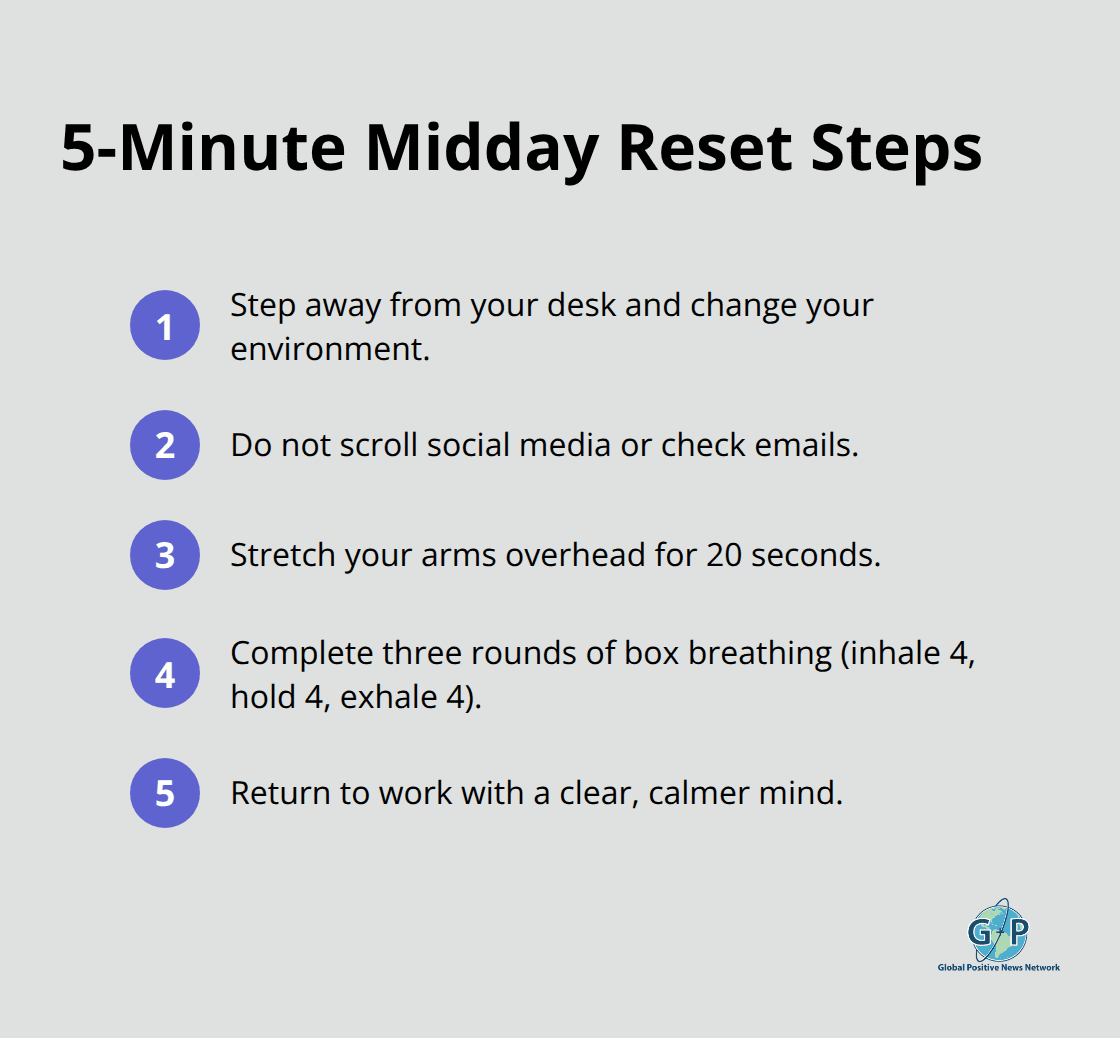
Step away from your desk for five to ten minutes. Walk to another room, outside, or anywhere that breaks your visual pattern. Do not scroll social media or catch up on emails during this break. Instead, stand and stretch your arms overhead for twenty seconds, then complete three rounds of box breathing: inhale for four counts, hold for four, exhale for four. This resets your nervous system and clears mental fog.
Studies on the Pomodoro Technique and work intervals show that short breaks every 60 to 90 minutes improve focus and reduce fatigue far more than pushing through without stopping. The break itself is not laziness-it is maintenance.
Connect With Someone You Care About
After your break, reach out to one person. Send a text to a friend asking how their day is going, call a family member, or write an encouraging message to a colleague. Research from the Harvard Study of Adult Development found that quality relationships are the strongest predictor of long-term happiness and health. A single five-minute conversation or message activates social belonging, which buffers stress and elevates mood for hours.
Harness Natural Light for Serotonin
If you work indoors, spend the remainder of your break in natural light. Step outside for even five minutes. Sunlight exposure increases serotonin production, improves alertness, and regulates your circadian rhythm for better sleep that night. A 2017 study in Frontiers in Human Neuroscience found that time in natural light improved mood and reduced psychological distress within weeks.
The combination of movement, connection, and light creates a midday reset that carries you through the afternoon. This foundation prepares you for the evening practices that complete your daily positivity cycle.
Evening Practices That Prepare You for Restful Sleep
Document Your Day’s Positive Moments
The final hours before sleep determine whether you wake rested or drained. Most people waste this time scrolling endlessly, which floods the brain with blue light and activates stress responses when you need calm. Start thirty to sixty minutes before bed and write down three specific positive moments from your day. Not generic wins like finishing work, but concrete details: a conversation that made you laugh, a task you handled better than expected, or how your body felt during movement.
Research on gratitude journals shows that writing about positive experiences increases happiness levels and improves sleep quality. The act of writing matters more than lengthy reflection-five to ten minutes suffices. This practice counteracts the brain’s negativity bias, which naturally gravitates toward problems and threats. When you document what went right, you reprogram your mind to notice positive evidence about your day and yourself.
Release Physical Tension With Progressive Muscle Relaxation
Next, practice progressive muscle relaxation for five to seven minutes. Tense each muscle group for five seconds-start with your toes, move through your calves, thighs, abdomen, chest, arms, hands, shoulders, neck, and face-then release completely. This technique reduces physical tension that accumulates during the day and signals to your nervous system that threats have passed.
Progressive muscle relaxation increases the state of relaxation for participants. Your body learns to associate this sequence with the transition toward rest, making the shift from wakefulness smoother each night.
Eliminate Screens and Establish a Calming Routine
Finally, eliminate screens at least sixty minutes before bed. The blue light from phones and computers suppresses melatonin production (the hormone that triggers sleep), delaying rest by up to an hour. Replace screen time with activities that calm your mind: reading, gentle stretching, or listening to calm music.
A consistent bedtime routine trains your body to recognize when sleep approaches, making falling asleep faster and easier night after night. This evening sequence transforms sleep from something that happens to you into something you actively prepare for, ensuring you wake tomorrow ready to repeat your morning rituals with genuine energy.
Final Thoughts
These simple daily positivity rituals work because they fit into your actual life rather than demand you reshape everything. A three-minute gratitude practice, a five-minute midday reset, and ten minutes of evening reflection cost almost nothing yet reshape how your brain processes stress and joy. Research confirms that consistency beats intensity-practicing these rituals for two weeks produces measurable improvements in mood, anxiety levels, and sleep quality that persist long after you stop counting the days.
What makes these practices stick is their simplicity and authenticity. You don’t need apps, memberships, or special equipment-only a few minutes and genuine commitment to showing up for yourself. Start with whichever ritual resonates most (morning gratitude, midday connection, or evening reflection), then add the others as your confidence grows.
The compounding effect is real and measurable. After four weeks of consistent practice, you handle frustration differently. After eight weeks, challenges feel less overwhelming. After three months, positivity becomes your default rather than something you manufacture.
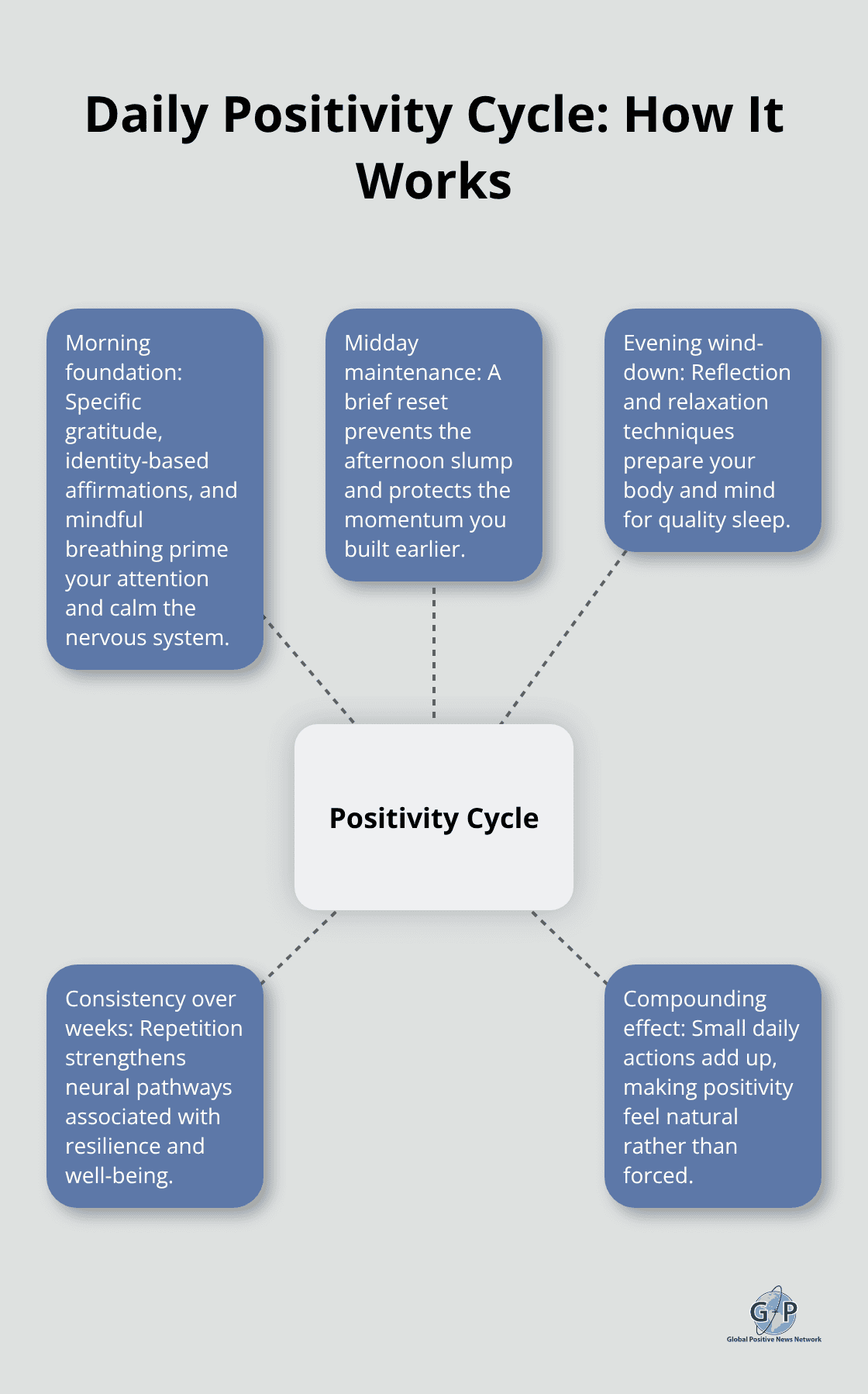
Your brain physically rewires itself through repetition, strengthening neural pathways associated with resilience and well-being. Visit Global Positive News Network for ongoing inspiration, stories of real people building meaningful lives, and resources to deepen your practice.
Having a hard day?
The 2 Minute Hope Reset is a short free guide with three small practices for the days that feel heavy. Two minutes each, nothing to keep up with.
Get the free guideExplore more positive news:
Enjoying stories like this?
Global Positive News Network is reader-supported. If you’d like to support the mission, you can visit the Official GPNN store.