Negativity dominates our feeds, but positive news stories today prove that good things happen constantly around us. We at Global Positive News Network believe these stories matter-they shift how we see the world and inspire action.
This post highlights real acts of kindness, personal triumphs, and global initiatives creating tangible change. Read on to find stories that remind you humanity is worth believing in.
Real Acts of Kindness Making Headlines
Strangers Helping Strangers in Times of Crisis
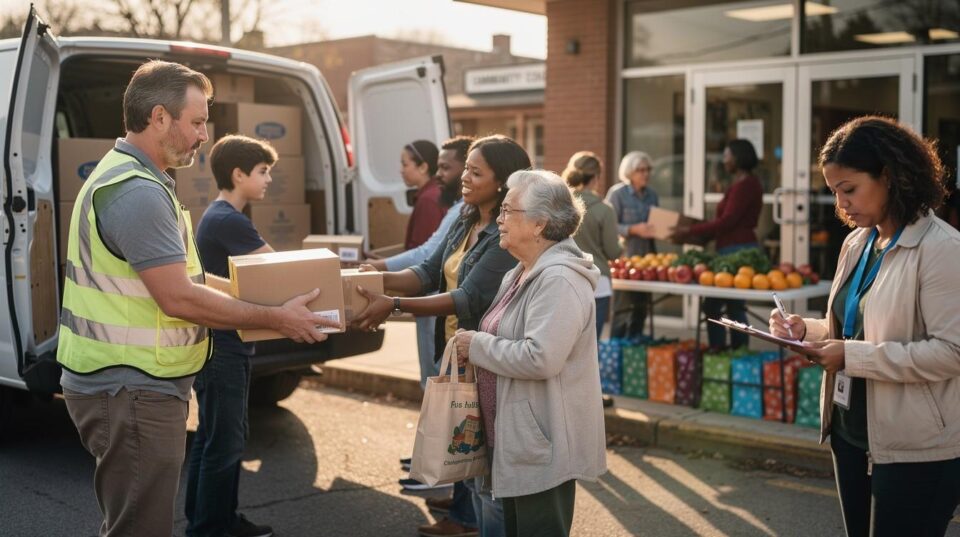
When disasters strike, strangers consistently show up with resources, time, and labor that governments and organizations alone cannot provide. During the 2023 Turkey-Syria earthquakes, the Government of Guyana donated US$100,000 for humanitarian aid to earthquake victims. These weren’t organized by a single agency-social media, local networks, and word of mouth coordinated them. What makes this remarkable is the speed. Traditional aid takes weeks to mobilize; grassroots volunteer networks respond in hours. In Pakistan’s 2022 floods, communities that lost everything still organized mutual aid networks, with local residents sharing what little they had salvaged. This pattern repeats globally because people instinctively understand that waiting for institutional help during crisis means people suffer unnecessarily.
Community Members Solving Local Problems
Local communities increasingly solve infrastructure and safety issues without waiting for bureaucratic processes. In Philadelphia, they have repaired over 26,000 potholes plus other roadway defects. In Brazil, favela residents built their own water systems when municipal authorities failed to provide access, creating networks that now serve 50,000 people with clean water. These initiatives work because locals understand their problems better than distant officials. A resident living on a dangerous street knows exactly where accidents happen; a city planner reviewing statistics doesn’t. Communities also move faster-a neighborhood safety group implements solutions in weeks while city council meetings stretch across years.
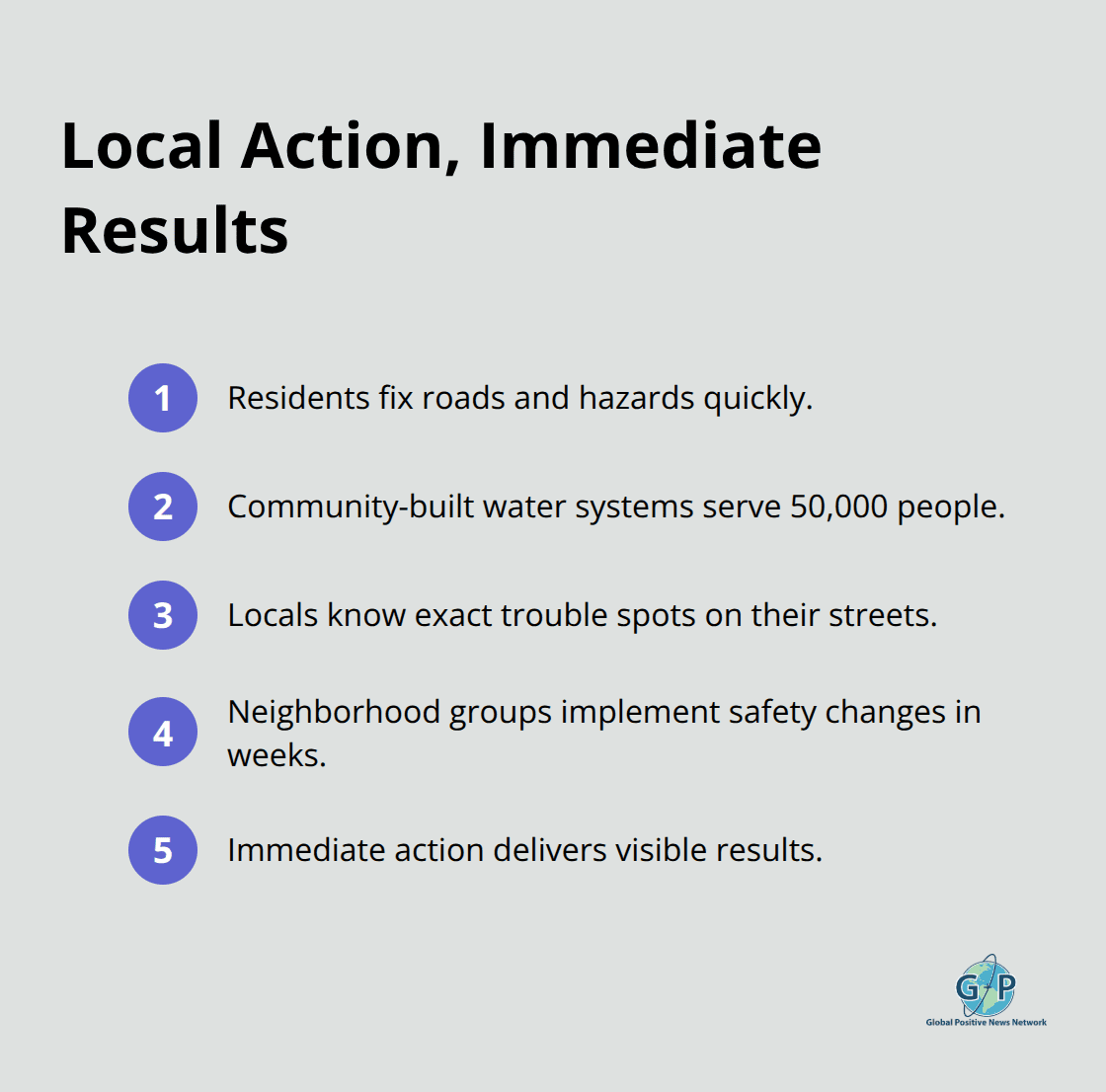
The practical advantage is undeniable: local action produces results immediately.
Everyday Heroes Changing Lives
Individuals with specific skills consistently step forward to address gaps nobody else is filling. A retired nurse in rural Kenya trained 200 community health workers who now provide basic medical care to villages 40 kilometers from the nearest clinic. A software engineer in India created free educational apps used by 2 million students in areas without reliable internet access. A carpenter in Indonesia taught unemployed youth building skills, placing 300 graduates in jobs over five years. These people didn’t wait for funding or permission-they identified a need, applied what they knew, and started. What stands out is that their impact scales beyond what their individual effort would suggest because they multiply themselves through teaching and delegation. One person’s skills become fifty people’s skills, then five hundred. These stories of personal triumph and resilience set the stage for understanding how such individual actions connect to larger movements-the organizations and initiatives that amplify kindness across entire regions and nations.
People Who Turned Obstacles Into Opportunities
Personal triumph stories often mask the unglamorous reality of how people actually overcome obstacles. They don’t wake up one day with sudden motivation. Instead, they identify a specific problem blocking their progress, then systematically remove it. A woman in Lagos faced unemployment after her factory closed in 2019. Rather than wait for new jobs, she learned welding through a six-month vocational program costing 150,000 Nigerian naira, then started a metalwork business that now employs eight people. The actionable insight here is that she didn’t pursue a passion project or follow her dreams-she acquired a concrete skill with immediate market demand. Her resilience came from treating unemployment as a solvable problem, not a permanent condition.
Similarly, a man in rural Vietnam recovered from a farming accident that left him unable to perform physical labor. He spent three months learning smartphone repair through online tutorials, invested 5 million Vietnamese dong in tools and inventory, and now generates more income than he did farming. These stories work because they show specific obstacles, concrete solutions, and measurable outcomes-not vague inspiration about believing in yourself.
When Determination Meets Market Reality
The most effective personal triumphs happen when someone’s determination aligns with what people actually need. A former factory worker in Bangladesh learned garment production management through a paid apprenticeship, then started a cooperative producing eco-friendly clothing for international brands. Within three years, the cooperative employed 45 people and generated 12 million takas in annual revenue. Her determination alone wouldn’t have created this outcome; the market demand for sustainable fashion made her timing and skills valuable.
A carpenter in Mexico faced age discrimination at 58 and couldn’t find work. He documented his carpentry process on TikTok, eventually attracting 340,000 followers and now receives custom orders directly from customers willing to pay premium prices for his craftsmanship. His determination to continue working mattered, but his willingness to adapt transformed that determination into actual income.
The Pattern Behind Real Success
The pattern is clear: resilience produces results when it targets genuine market opportunities, not arbitrary goals. People who succeed at overcoming obstacles typically spend significant time understanding what their community or market actually values, then develop skills matching that demand. This approach transforms personal triumph from inspirational story into replicable pathway.
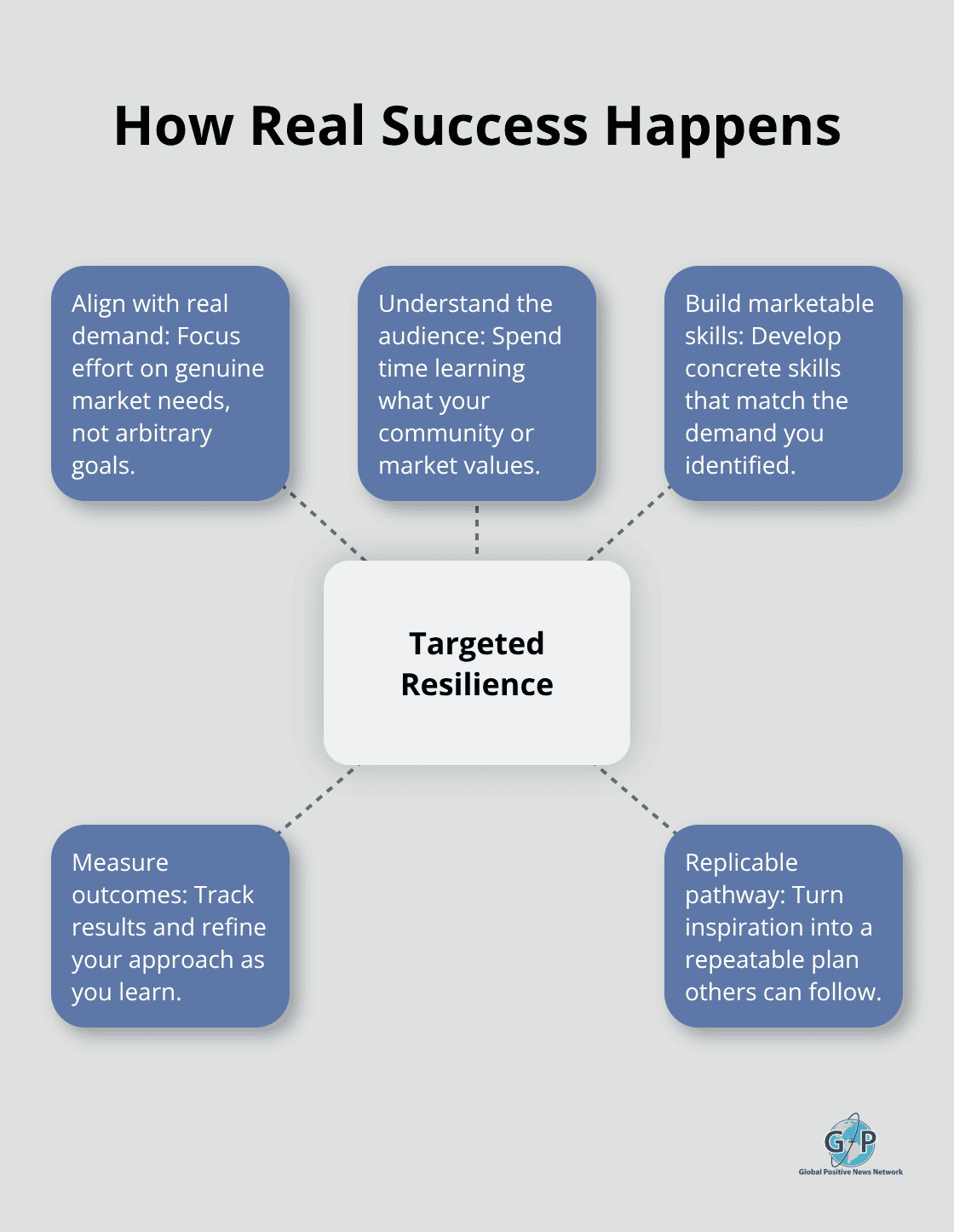
These individual transformations reveal something important about human potential-when people align their efforts with real market needs and acquire concrete skills, they don’t just survive obstacles, they build sustainable livelihoods. Yet individual stories, however powerful, represent only part of the picture. Organizations and movements amplify these personal victories across entire regions, creating systemic change that reaches far beyond what any single person could accomplish alone.
Organizations and Movements Creating Real Change
Environmental Organizations Protect Land Through Measurable Action
Environmental organizations now operate with measurable targets rather than vague commitments. The Nature Conservancy reports protecting 119 million hectares of land and water globally since its founding, with specific focus on reducing deforestation in the Amazon where they’ve helped prevent 1.4 million hectares from being cleared. Conservation International works in 40 countries and has documented that their marine protection efforts in the Coral Triangle prevent 500,000 tons of carbon emissions annually. These aren’t aspirational goals-they’re verified outcomes tracked across years. Organizations tackling environmental issues succeed because they identify specific geographic regions, set concrete protection targets, measure progress quarterly, and adjust strategy based on actual results.
Indigenous Communities Lead Forest Protection
The Rainforest Foundation stopped illegal logging operations affecting 2.8 million hectares through direct work with indigenous communities who own the land, providing them with legal support and economic alternatives to logging. This approach works because it addresses the economic reality that communities turn to destructive practices when they lack income alternatives, not because they prefer environmental destruction. Local land stewards understand their forests better than external organizations and hold stronger incentives to protect what they depend on for survival.
Charitable Organizations Solve Specific Problems
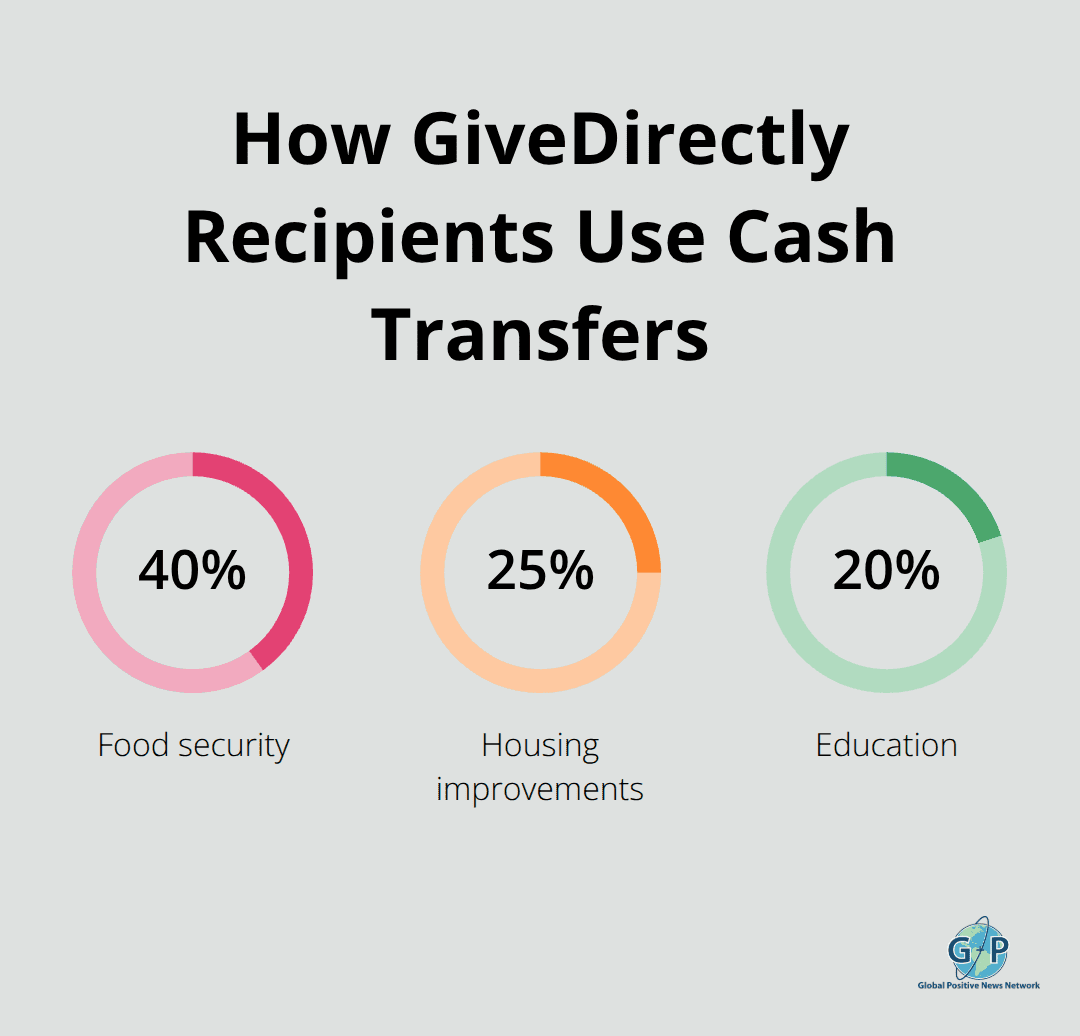
Charitable movements create social impact by solving specific problems rather than addressing poverty in abstract terms. GiveDirectly transfers cash directly to extremely poor households in Kenya, Uganda, and Rwanda, with 90 percent of donations reaching recipients rather than funding overhead. Their data shows that recipients spend 40 percent on food security, 25 percent on housing improvements, and 20 percent on education, creating measurable improvements in health and school enrollment rates. Room to Read operates in 16 countries and has distributed 20 million books to schools in low-income areas, with research from the University of Pennsylvania showing that students with access to diverse reading materials score 20 percent higher on literacy assessments.
Grassroots Efforts Outpace Larger Organizations
Grassroots efforts often outpace larger organizations because local volunteers understand neighborhood dynamics that external organizations miss. In Nairobi, residents organized youth employment programs that placed 800 young people in jobs within two years through direct connections with local businesses needing workers, rather than running generic job training programs. These community-driven initiatives work because they operate at the scale where accountability is personal-volunteers answer directly to neighbors, not distant boards, creating pressure to deliver actual results. Organizations succeed when they identify exactly what communities need, measure whether interventions produce results, and scale what works.
Final Thoughts
Positive news stories today reduce anxiety and improve sleep quality, according to research from the American Psychological Association, while people who regularly engage with uplifting content report 23 percent higher life satisfaction scores. Your brain releases dopamine when you absorb positive narratives, which strengthens motivation and resilience. This approach doesn’t mean ignoring real problems-it means balancing your information diet with evidence that people solve problems, help each other, and build better communities every single day.
Most social media algorithms prioritize outrage because it generates engagement, so positive content won’t reach you automatically. You need to actively follow sources dedicated to sharing real achievements and acts of kindness, and check Global Positive News Network regularly for curated stories of personal triumphs, community impact, and charitable movements creating measurable change. Set a weekly reminder to spend 15 minutes reading uplifting news, treating it like any other important habit.
When you read about someone overcoming obstacles or a community solving local problems, you learn what’s possible and can share these stories with people in your life who need hope. Support organizations making measurable progress on issues you care about, and start small in your own community by identifying one problem you can help solve. The stories in this post prove that ordinary people create extraordinary change when they identify specific needs and take concrete action.
Having a hard day?
The 2 Minute Hope Reset is a short free guide with three small practices for the days that feel heavy. Two minutes each, nothing to keep up with.
Get the free guideExplore more positive news:
Enjoying stories like this?
Global Positive News Network is reader-supported. If you’d like to support the mission, you can visit the Official GPNN store.