

Optimism isn’t something you’re born with-it’s something you build. At Global Positive News Network, we’ve found that habits for daily optimism start small and compound over time.
The practices in this post aren’t complicated. They’re straightforward changes you can make today that reshape how you experience each day.
How to Start Your Morning Right
The First Hour Sets Your Day’s Direction
The first hour after waking determines whether your day tilts toward optimism or anxiety. Research shows that people who spend the first ten minutes of their morning on intentional practices report higher daily satisfaction scores compared to those who immediately check their phones. This gap matters because morning momentum carries through your entire day.
Write Down Three Specific Things You’re Grateful For
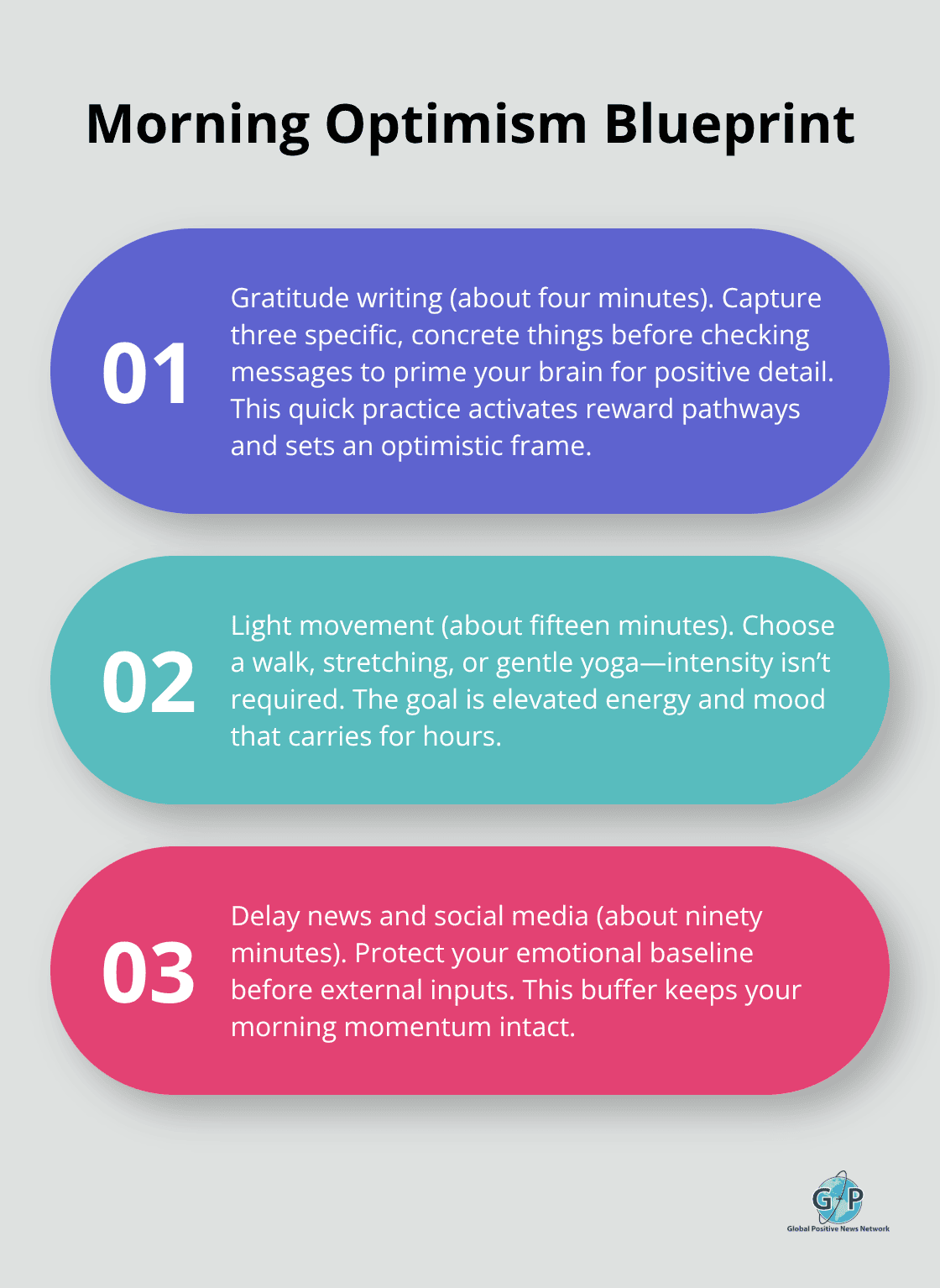
Gratitude rewires your brain toward noticing positive details. Start by writing three specific things you’re grateful for before checking any messages-not generic items like family or health, but concrete details like the coffee you’re about to drink or a conversation you had yesterday. This practice takes four minutes and activates your brain’s reward system through your prefrontal cortex.
Move Your Body for Fifteen Minutes
After gratitude, movement becomes non-negotiable. Even fifteen minutes of light movement in the morning increases energy and mood, creating a foundation for optimism that lasts hours. This doesn’t mean intense exercise-a walk around your block, stretching, or gentle yoga works equally well. The movement matters more than the intensity.
Delay News and Social Media by Ninety Minutes
Finally, wait at least ninety minutes after waking before checking news and social media. Morning news consumption can increase stress levels, triggering a stress response that colors how you interpret everything that follows. Those ninety minutes create a buffer where your brain establishes its own emotional baseline before external information floods in.
This sequence-gratitude, movement, media delay-takes roughly thirty minutes total and establishes optimism as your default rather than something you chase later. Once you anchor your morning, the real work happens when you step into the rest of your day and face the moments that test your mindset.
How to Sustain Optimism When Life Gets Messy
Your morning sets direction, but optimism lives in the hours that follow. The gap between your intentional morning and the rest of your day is where most people lose momentum. Midday stress, interruptions, and fatigue erode the positive mindset you built before breakfast. The solution isn’t willpower-it’s embedding small practices throughout your day that anchor you back to optimism when circumstances try to pull you away.
Why Scattered Reinforcement Beats Single Rituals
Optimism doesn’t survive on a single morning ritual. You need reinforcement points scattered across your day to maintain what you started before breakfast.
Pause and Notice Your Immediate Surroundings
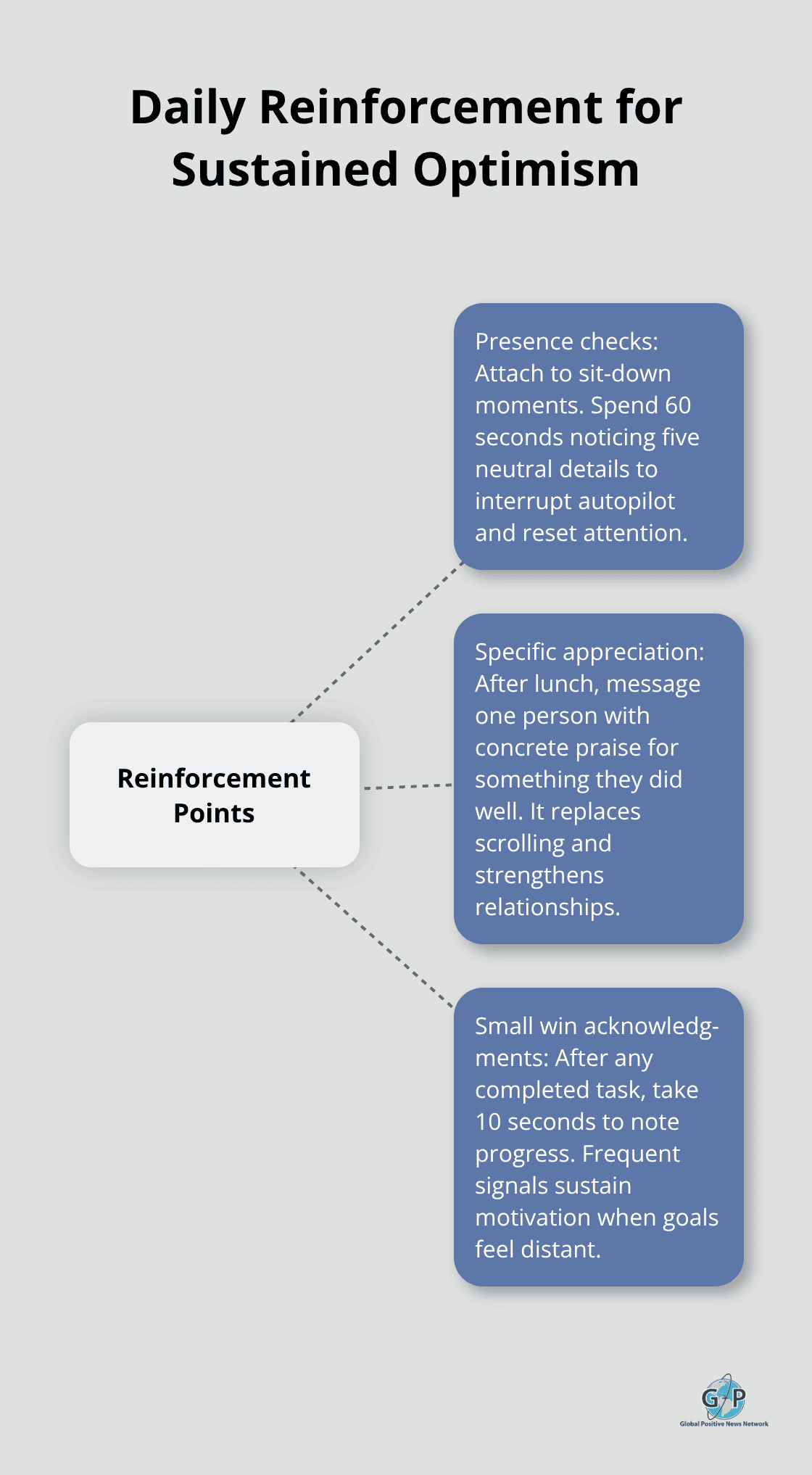
The most practical approach attaches these moments to existing habits. When you sit down at your desk, pause for sixty seconds and notice five specific things around you without judgment-the texture of your keyboard, the quality of light, the sound in the background. This isn’t meditation; it’s just presence. This practice takes almost no time and interrupts the autopilot that kills optimism.
Send Specific Appreciation to Someone
After lunch, before you return to work, identify one person you can genuinely appreciate and send them a specific message about something they did well. Not a generic compliment, but something concrete like mentioning how their idea in the meeting showed creative thinking. These acts of kindness don’t cost time-they replace scrolling or mental wandering. You strengthen relationships while reinforcing your own optimism.
Acknowledge Your Small Wins Throughout the Afternoon
Throughout your afternoon, whenever you complete a task, pause for ten seconds and acknowledge it. Finished an email thread? That counts. Made a difficult phone call? That counts. Completed a project milestone? Absolutely counts. The brain needs frequent signals that forward movement is happening, even when the destination still feels distant.
These three practices-brief presence checks, specific kindness gestures, and small win acknowledgments-take roughly three minutes combined across your entire day. They fundamentally shift whether you finish your afternoon depleted or still carrying momentum into your evening. What happens next determines whether this momentum survives the transition to your personal time.
Environmental and Social Factors That Support Optimism
Your Social Circle Shapes Your Optimism
Your social environment acts as either a fuel source or a drain for optimism. Research from Brigham Young University found that people with strong social connections report higher life satisfaction than those with weak relationships. This doesn’t mean you need dozens of friends-it means the quality of your existing relationships directly determines whether optimism feels sustainable or exhausting.
Start by auditing your current relationships honestly. Which people energize you after conversations, and which ones leave you feeling drained or anxious? The people who energize you typically share a pattern: they acknowledge problems without dwelling in them, they celebrate your wins without minimizing them, and they ask genuine questions about your life.
Protect and deepen these relationships. Contact one energizing person each week with something concrete-not vague check-ins, but actual plans or specific appreciation for something they did. Simultaneously, create boundaries with relationships that consistently pull you toward negativity. This doesn’t require dramatic confrontation; it means reducing frequency or shifting interactions toward lighter topics where possible. If someone regularly dominates conversations with complaints or criticism, you’re allowed to limit how often you engage.
Your Physical Space Determines Your Daily Mood
Your environment isn’t decoration-it’s infrastructure for your mental state. Natural light in workspaces supports better mood regulation throughout the day. If your workspace lacks windows, prioritize getting outside during breaks rather than eating lunch at your desk.
Beyond light, eliminate visual clutter from your immediate workspace. A cluttered desk creates cognitive load that taxes your mental energy before you even start working. Spend thirty minutes removing items that don’t serve a function or bring genuine satisfaction. Keep only what you actively use or what genuinely makes you smile when you see it.
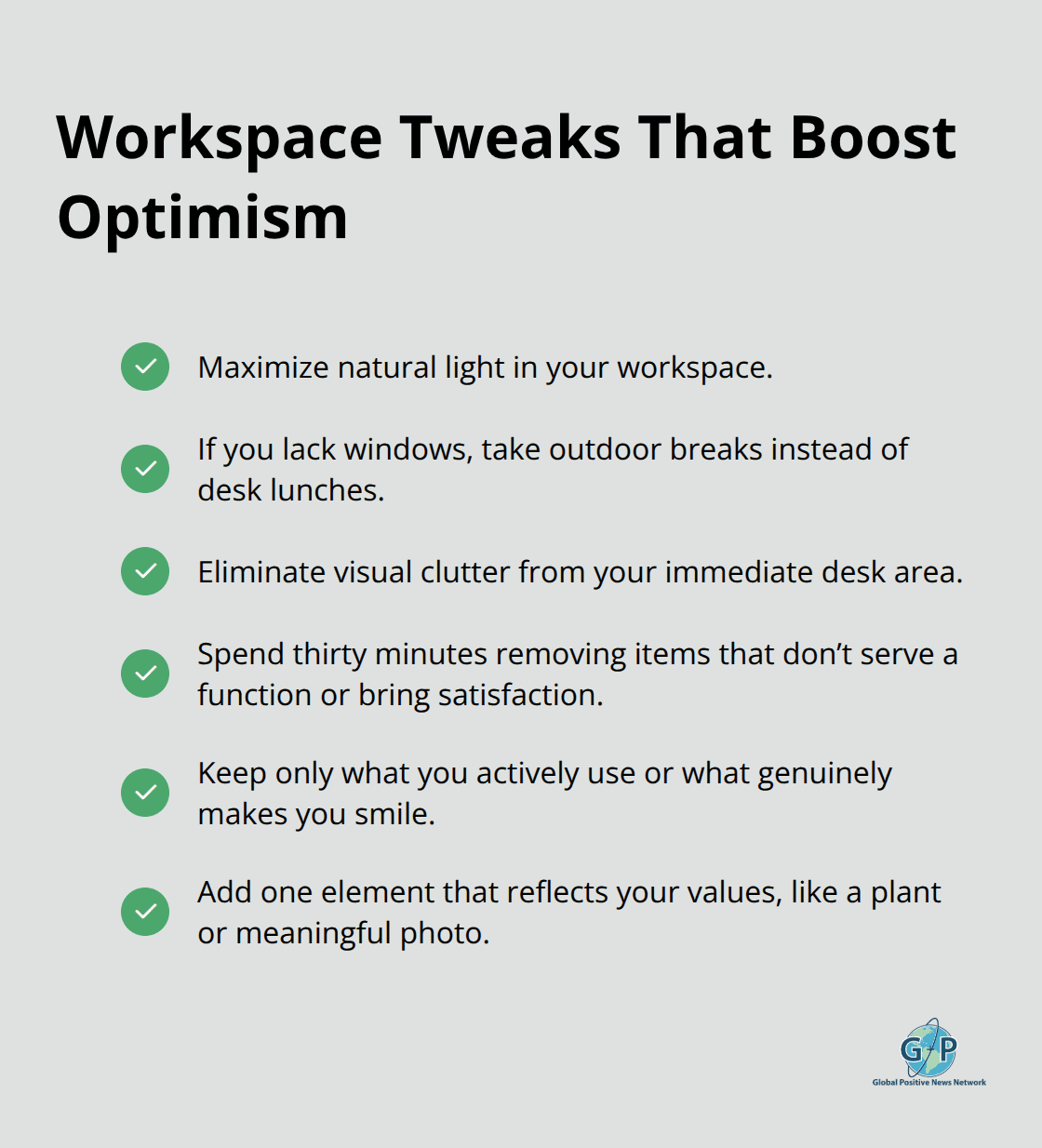
Add one specific element that represents something you value-a plant, a photo from a meaningful experience, or an object that reminds you of a goal you’re working toward. This isn’t about making your space Instagram-worthy; it’s about removing friction between you and your optimism.
How Small Environmental Shifts Reset Your Attention
Consider your daily movement through physical spaces. If your commute or regular routes feel monotonous, change them deliberately. Walking a different path to work, sitting in a different café, or rearranging your home office creates novelty that your brain finds stimulating. Small environmental shifts cost nothing but reset your attention and interrupt the autopilot that deadens optimism over time. The spaces you inhabit should support the mindset you’re building, not work against it.
Final Thoughts
The habits for daily optimism you’ve read about work because they interrupt the autopilot that deadens your mindset. Gratitude writing, movement, presence checks, kindness gestures, and win acknowledgments reshape how you experience each day through small, repeatable actions. Your social circle and physical environment amplify these practices or undermine them, which is why both matter equally.
Consistency transforms these individual habits into a sustained positive mindset. One morning of gratitude doesn’t rewire your brain, but thirty consecutive mornings does-one act of kindness feels nice, but weekly kindness becomes part of how you see yourself and others. The compounding effect happens quietly over weeks and months, not dramatically overnight, and you’ll notice you interpret setbacks differently, recover faster from frustration, and spot opportunities that pessimistic versions of yourself would have missed entirely.
Start your optimism journey this week by choosing one practice, not overhauling your entire life. Pick the morning gratitude practice or the afternoon win acknowledgments, do it for seven days without expecting transformation, and visit Global Positive News Network to explore stories of personal triumphs and community impact that reinforce the mindset you’re building.
Having a hard day?
The 2 Minute Hope Reset is a short free guide with three small practices for the days that feel heavy. Two minutes each, nothing to keep up with.
Get the free guideExplore more positive news:
Enjoying stories like this?
Global Positive News Network is reader-supported. If you’d like to support the mission, you can visit the Official GPNN store.