

Most people focus on what went wrong instead of what went right. At Global Positive News Network, we believe celebration practices deserve far more attention than they typically receive.
When you acknowledge your wins-no matter how small-your brain releases dopamine and your stress levels drop. This isn’t just feel-good psychology; it’s backed by neuroscience and has real effects on your mental health and resilience.
How Your Brain Rewards You for Acknowledging Wins
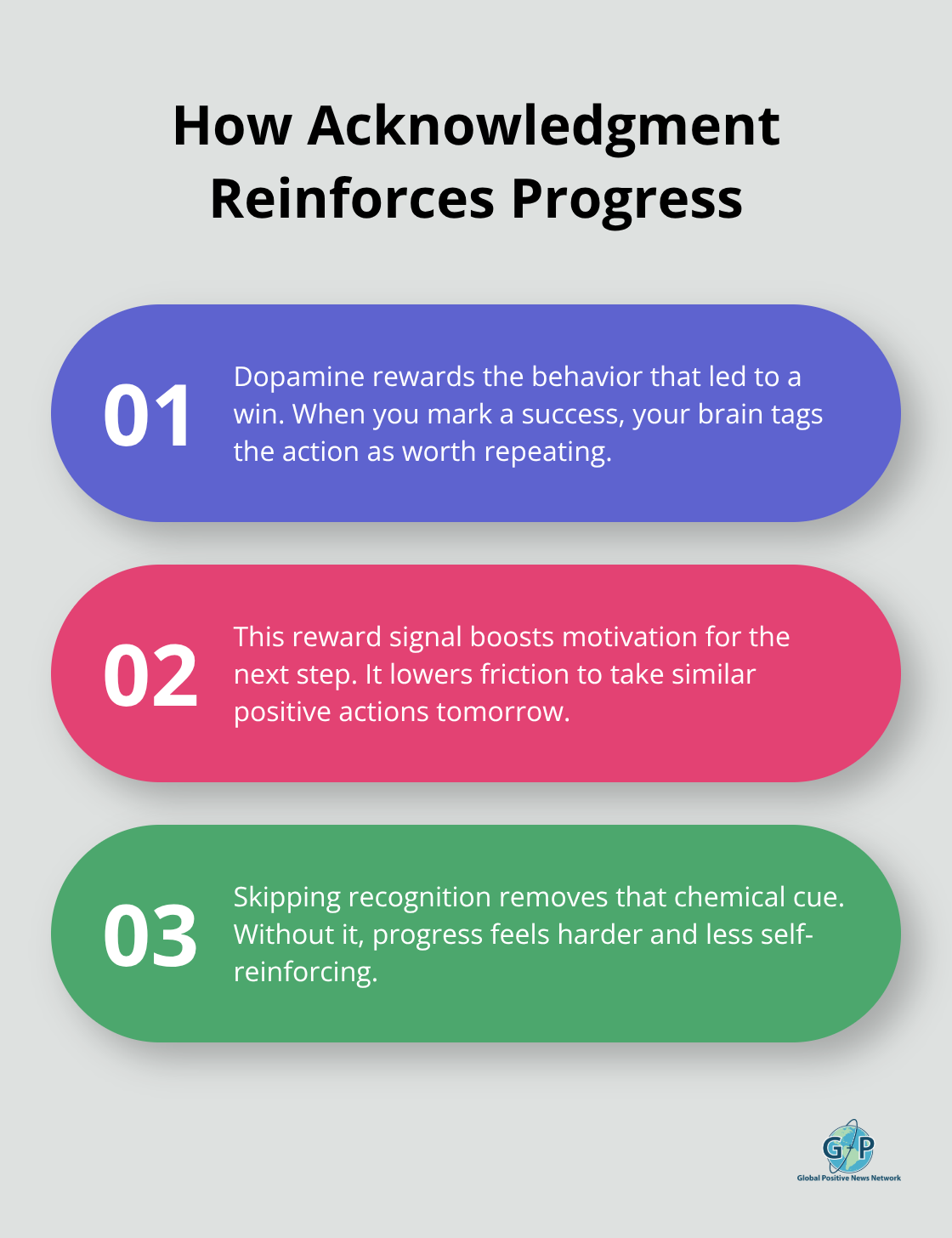
Your brain doesn’t treat all thoughts equally. When you acknowledge a win, your brain’s reward system activates immediately. Neuroscientist James Olds discovered in the 1950s that specific brain regions light up when you experience positive reinforcement, triggering dopamine release. This isn’t abstract neuroscience-it’s a measurable chemical event that shifts your mental state within seconds. Dopamine doesn’t just feel good; it primes your brain to repeat the behaviors that earned the reward. This means acknowledging a small win today makes you more likely to take similar positive actions tomorrow. When you skip recognition, you miss this neurochemical advantage entirely.
The Real Impact on Your Stress Response
Stress hormones like cortisol flood your system when you focus exclusively on what remains incomplete or broken. Acknowledging wins interrupts this pattern directly. When you acknowledge wins, your cortisol stress response shifts as the parasympathetic nervous system dampens the stress response. Your nervous system shifts from threat mode to safety mode. This matters because chronic stress accumulation damages both mental and physical health-elevated cortisol contributes to anxiety, sleep disruption, and weakened immunity. When you acknowledge wins regularly, you’re not just feeling better temporarily; you’re actively protecting your physiological wellbeing. The brain learns that progress exists and that you’re capable, which reduces the constant background anxiety many people carry.
Building Lasting Confidence Through Evidence
Self-doubt thrives in invisibility. When you track and acknowledge wins, you create a documented record of your competence. Psychologist Albert Bandura’s research on self-efficacy shows that people who witness their own progress develop stronger belief in their ability to handle future challenges. This isn’t confidence born from arrogance; it’s confidence grounded in evidence you’ve collected yourself. A simple list of wins from the past week-completed tasks, problems solved, kind gestures made, or just getting through a difficult day-becomes your personal proof of capability. Review this list when doubt appears. You’ll notice patterns of capability you’d otherwise overlook. The more concrete evidence you gather, the harder self-criticism becomes to sustain.
Why Visibility Transforms Your Self-Perception
Hidden progress feels like no progress at all. The moment you write down a win or speak it aloud, your brain treats it as real and significant. This shift from internal experience to external acknowledgment (whether in a journal, conversation, or tracker) changes how you perceive yourself. People who make their wins visible report stronger resilience when facing setbacks because they have tangible proof that they’ve overcome challenges before. Your next step involves choosing how to make these wins visible in your daily life.
How Acknowledging Wins Stops the Perfectionism Trap
Perfectionism masquerades as ambition, but it actually accelerates stress and keeps your nervous system locked in high alert. People caught in perfectionism loops focus relentlessly on gaps between current reality and an impossible ideal, which means they rarely pause to acknowledge what they’ve actually accomplished. Research on impostor syndrome, which affects high achievers across industries, shows that successful people often attribute wins to luck or external circumstances while blaming themselves for any setback. This lopsided thinking pattern feeds anxiety and burnout because the brain never receives confirmation that effort produces results.
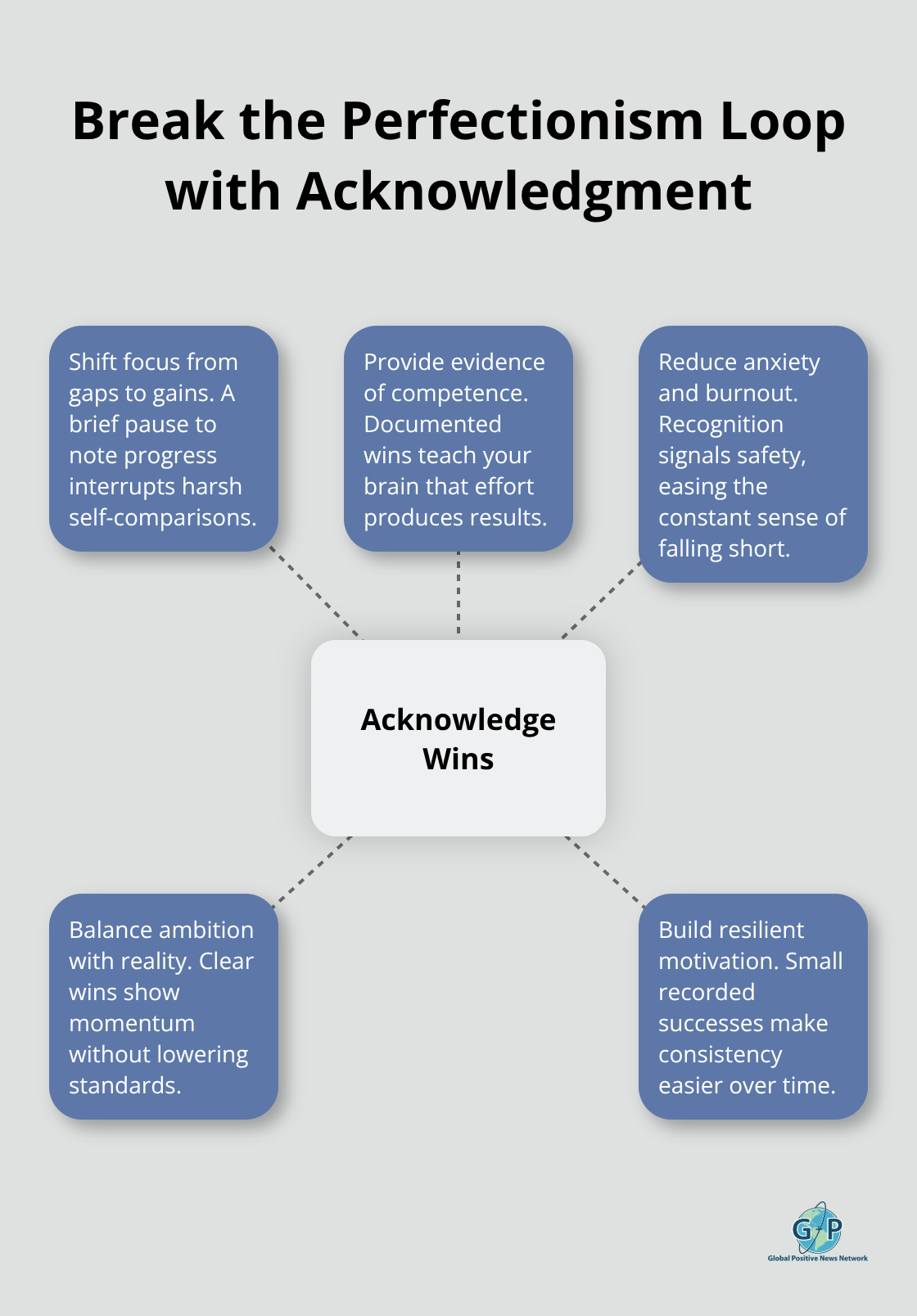
The antidote isn’t lowering your standards; it’s interrupting the invisibility of progress. When you acknowledge a win-finishing a project despite obstacles, handling a difficult conversation, or simply maintaining consistency through a tough week-you provide your brain with concrete evidence that your actions matter. This evidence directly counters the perfectionist narrative that nothing you do is good enough. Psychologist Albert Bandura’s research on self-efficacy demonstrates that people who regularly witness their own progress develop measurably stronger confidence in handling future challenges. The key difference between healthy ambition and destructive perfectionism lies in whether you pause to notice what’s working. Without acknowledgment, your brain treats progress as invisible and effort as pointless, which intensifies self-criticism and anxiety spirals.
Why Your Nervous System Needs Evidence of Competence
Most people underestimate how much their nervous system requires evidence of competence to function well. When wins remain unacknowledged, frustration accumulates beneath the surface, eventually manifesting as passive resistance, procrastination, or emotional numbness. Your nervous system interprets invisible effort as wasted energy, which triggers the stress response all over again. The solution demands specificity: write down exactly what you accomplished and how you did it. Instead of saying you had a good day, note that you completed three client emails, set a boundary with a colleague, and ate lunch without working. This granularity matters because vague recognition doesn’t activate the same reward pathways as concrete details.
Making Progress Visible Transforms Your Thinking
Track your wins for one week in whatever format works for you-a notes app, sticky notes on your mirror, or a dedicated notebook. Research on habit formation shows that visible progress reduces overwhelm because your brain can reference real evidence instead of operating from scarcity thinking. The shift from perfectionism to progress-focused thinking happens fastest when you have something tangible to point to when doubt arrives. Your brain treats written wins as real and significant in a way that internal thoughts cannot match. This external acknowledgment (whether in a journal, conversation, or tracker) changes how you perceive yourself and your capabilities. People who make their wins visible report stronger resilience when facing setbacks because they have tangible proof that they’ve overcome challenges before.
The Evidence You Collect Becomes Your Proof
A simple list of wins from the past week-completed tasks, problems solved, kind gestures made, or just getting through a difficult day-becomes your personal proof of capability. Review this list when doubt appears, and you’ll notice patterns of capability you’d otherwise overlook. The more concrete evidence you gather, the harder self-criticism becomes to sustain. Self-doubt thrives in invisibility, but documented progress creates a record that your mind cannot ignore. This isn’t confidence born from arrogance; it’s confidence grounded in evidence you’ve collected yourself. Your next step involves choosing how to make these wins visible in your daily life and establishing a rhythm that keeps this practice alive.
How to Actually Track and Share Your Wins
The gap between knowing you should acknowledge wins and actually doing it comes down to systems, not willpower. A win journal works only if you use it consistently, which means choosing a format that fits your life rather than fighting against your habits. If you hate writing, a voice memo on your phone takes fifteen seconds. If you prefer visual tracking, a spreadsheet with a simple column for the date and what you accomplished serves the same purpose. Progress tracking works because visible progress reduces overwhelm-your brain can reference real evidence instead of operating from scarcity thinking.
Choose a Format That Matches Your Life
The format matters far less than the consistency. Start with whatever method requires the least friction: a notes app, sticky notes on your bathroom mirror, or a dedicated notebook. The goal is to capture wins within hours of them happening, not days later when the emotional resonance has faded. Write specifics instead of vague statements.
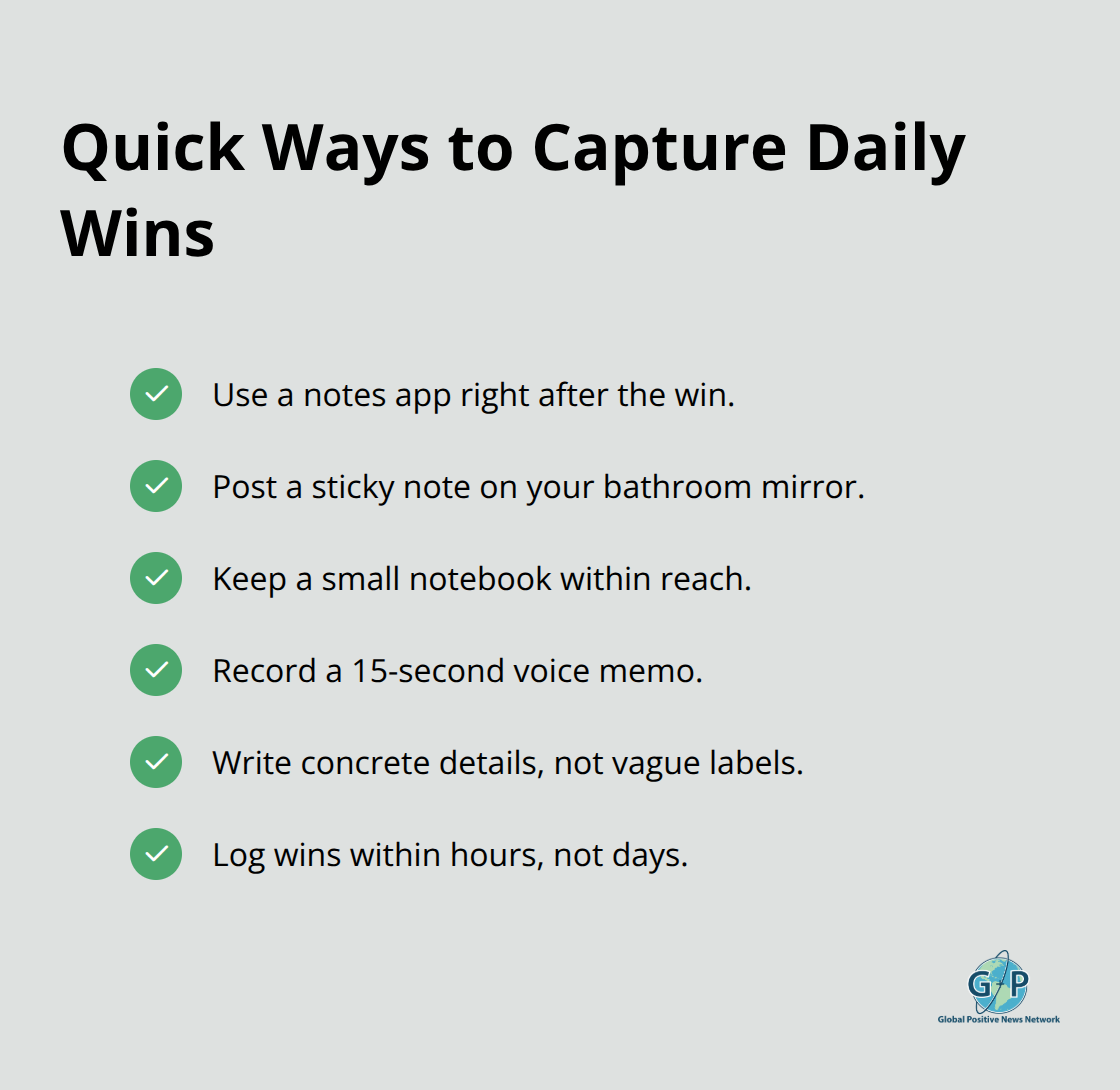
Instead of noting you had a productive day, write that you finished the report despite three interruptions, or that you practiced saying no to an extra commitment. Specific details activate your reward pathways more effectively than general praise.
After one week of tracking, you’ll notice patterns in what you accomplish and how often you downplay genuine achievements. Expressive writing reduces intrusive and avoidant thoughts about negative events and improves working memory. Your brain treats written wins as real and significant in a way that internal thoughts cannot match.
Identify People Who Celebrate Without Minimizing
Sharing wins with trusted people accelerates their impact on your wellbeing, but only if you choose the right audience. Research on relational dynamics shows that when wins go unacknowledged by others, frustration accumulates and can manifest as procrastination or emotional numbness. The solution is selecting people who genuinely celebrate your progress without minimizing it or redirecting focus to themselves.
A trusted friend, family member, or partner who asks follow-up questions and remembers your wins from previous conversations becomes your accountability partner and emotional anchor. You might establish a weekly check-in where you both share your wins with each other, or send a voice message to someone who reliably responds with genuine enthusiasm. The vulnerability of speaking wins aloud transforms them from private thoughts into shared reality, which strengthens your belief in your own capability.
Find Your Audience When Your Circle Falls Short
Some people find that telling someone else makes the win feel more real than writing it down alone. If your immediate circle lacks this skill, online communities focused on accountability and progress offer alternatives. The key distinction is that your audience must genuinely celebrate without comparison or envy.
Once you identify these people, make the sharing intentional rather than random. Schedule it, name it, and protect the space from cynicism or dismissal. This practice prevents wins from vanishing into the background of your life.
Final Thoughts
Celebration practices form a foundation for mental health that extends far beyond temporary mood boosts. When you recognize your accomplishments, your brain releases dopamine, your stress hormones drop, and your nervous system shifts from threat mode to safety. This practice interrupts perfectionism, counters impostor syndrome, and creates documented evidence of your competence that self-doubt cannot ignore.
Start this week with one win you will acknowledge today. Write it down or speak it aloud to someone you trust, using concrete details rather than vague statements. Notice how your nervous system responds when you pause to recognize something you did well-that single moment of acknowledgment builds the foundation for measurable changes in how you feel and function.
As you build your own celebration practice, you model for others that progress deserves recognition. Explore Global Positive News Network to discover stories of personal triumphs and community impact that remind you why acknowledging wins matters beyond yourself.
Having a hard day?
The 2 Minute Hope Reset is a short free guide with three small practices for the days that feel heavy. Two minutes each, nothing to keep up with.
Get the free guideExplore more positive news:
Enjoying stories like this?
Global Positive News Network is reader-supported. If you’d like to support the mission, you can visit the Official GPNN store.