
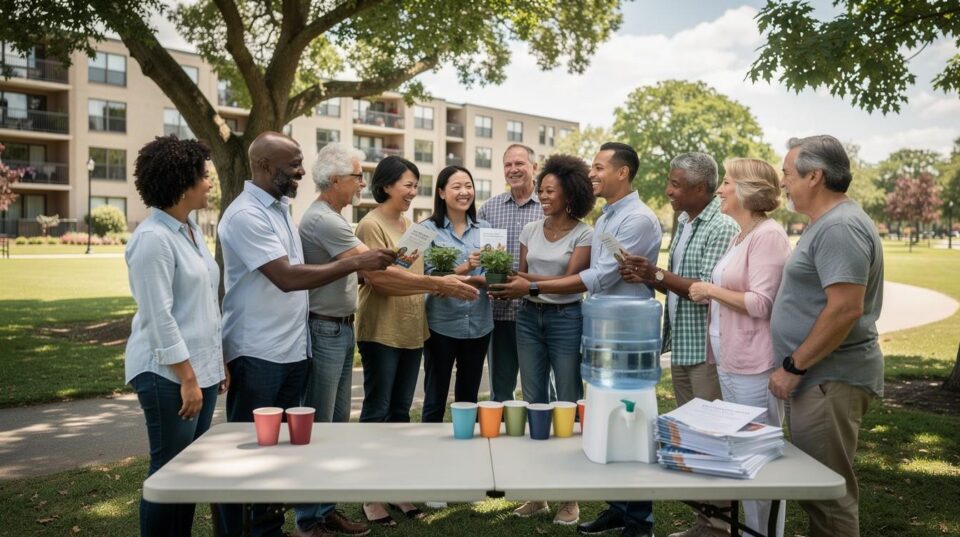
Hope isn’t just a feeling-it’s a force that rebuilds neighborhoods, strengthens bonds between people, and transforms how communities respond to challenges. At Global Positive News Network, we’ve seen firsthand how collective optimism creates measurable shifts in mental health, civic participation, and social trust.
This post shows you exactly how hope spreads through communities and what you can do to nurture it where you live.
How Hope Reshapes Mental Health and Community Bonds
Hope fundamentally alters how people respond to stress and hardship. Research shows that individuals with higher hope levels report improvements in mental health outcomes and sleep quality. When communities foster collective optimism, this effect multiplies across neighborhoods.
Hope in Action: Winston-Salem’s Model
Winston-Salem’s Hope to Thrive organization demonstrates this principle in action. Since launching their Holistic Produce Pantry in 2020, they expanded from serving 10 families weekly to 80 families within a year, primarily low-income Black and Latinx households in East and South Winston. The pantry operates far beyond food distribution. Staff trained in trauma-informed care create spaces where people feel heard and valued rather than judged. This approach directly reduces the shame and isolation that typically accompany poverty and food insecurity. When community members experience consistent dignity and support, their mental health metrics improve measurably.
Building Trust Through Participation
Communities with higher hope levels exhibit stronger social bonds and increased trust in institutions. Hope to Thrive deliberately structures their work around this principle. They involve community members in decision-making about pantry locations and services, reinforcing agency and ownership rather than dependency. This participatory model strengthens relationships between neighbors and between residents and local organizations.
Civic Engagement Follows Hope
Civic engagement follows naturally when people believe their actions matter. Hope to Thrive participants volunteer at significantly higher rates than comparable communities, and the organization has successfully vaccinated approximately 100 people during periods when vaccines were difficult to reach in their neighborhoods. These aren’t isolated successes. The organization’s partnerships with Grace Presbyterian Church and Crisis Control Ministry created a network effect where emergency financial assistance, food security, and community connection reinforce one another. People who experience hope don’t simply feel better individually-they become more likely to show up for neighbors, attend community meetings, and contribute their skills to collective improvement efforts.
The Ripple Effect Across Networks
When hope spreads through structured community work, it transforms how residents engage with one another and their local institutions. This foundation of trust and participation creates the conditions for neighborhoods to tackle larger challenges together, moving from immediate relief toward lasting systemic change.
Where Hope Rebuilds Broken Communities
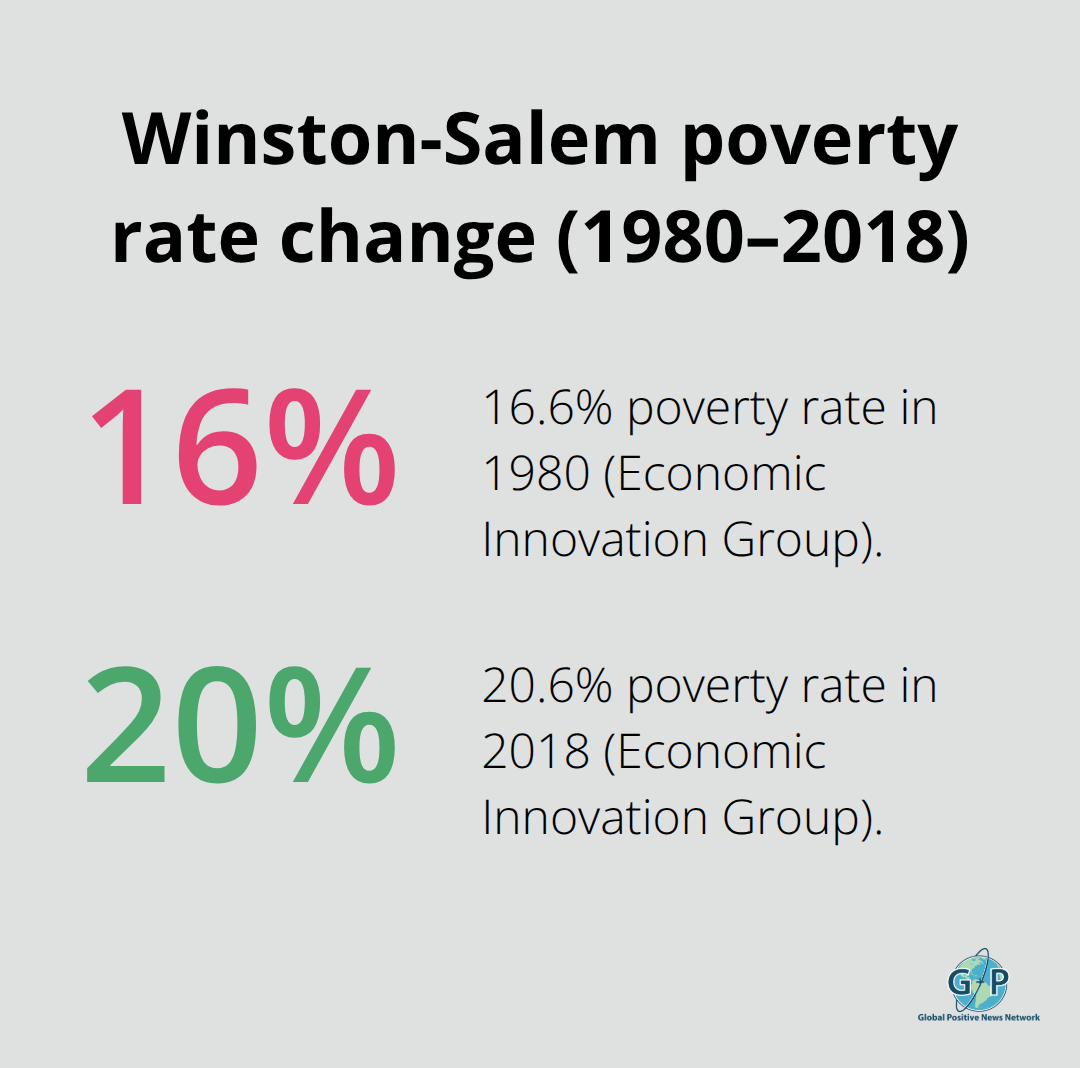
Winston-Salem’s Hope to Thrive organization operates in a city where poverty increased from 16.6% in 1980 to 20.6% by 2018, according to the Economic Innovation Group. Rather than accept this trajectory, the organization constructed something radical: a pantry system that treats food distribution as a gateway to systemic change.
Their Holistic Produce Pantry runs on Tuesdays and Thursdays at local churches, but the real work happens in the conversations that unfold while volunteers and community members sort produce together. Staff trained in trauma-informed care understand that shame blocks participation. When someone arrives hungry and exhausted, judgment destroys hope faster than scarcity ever could. Hope to Thrive eliminated that barrier entirely. The result speaks plainly: they expanded from serving 10 families weekly in March 2020 to 80 families by March 2021, primarily low-income Black and Latinx households in East and South Winston. That’s not incremental growth. That’s momentum built on trust.
How Participation Replaces Dependency
The pantry spaces function as something most food assistance programs never become: sites where people decide what happens next. Community members choose pantry locations, suggest services, and shape priorities. This isn’t symbolic. When residents control decisions about their own neighborhoods, they stop waiting for solutions and start building them. Hope to Thrive pairs this participation with concrete partnerships. Grace Presbyterian Church and Crisis Control Ministry provide emergency financial assistance that connects to food security, employment placement, and housing support. The network effect matters enormously. A family receiving produce also gains access to job training, emergency funds, and healthcare coordination.
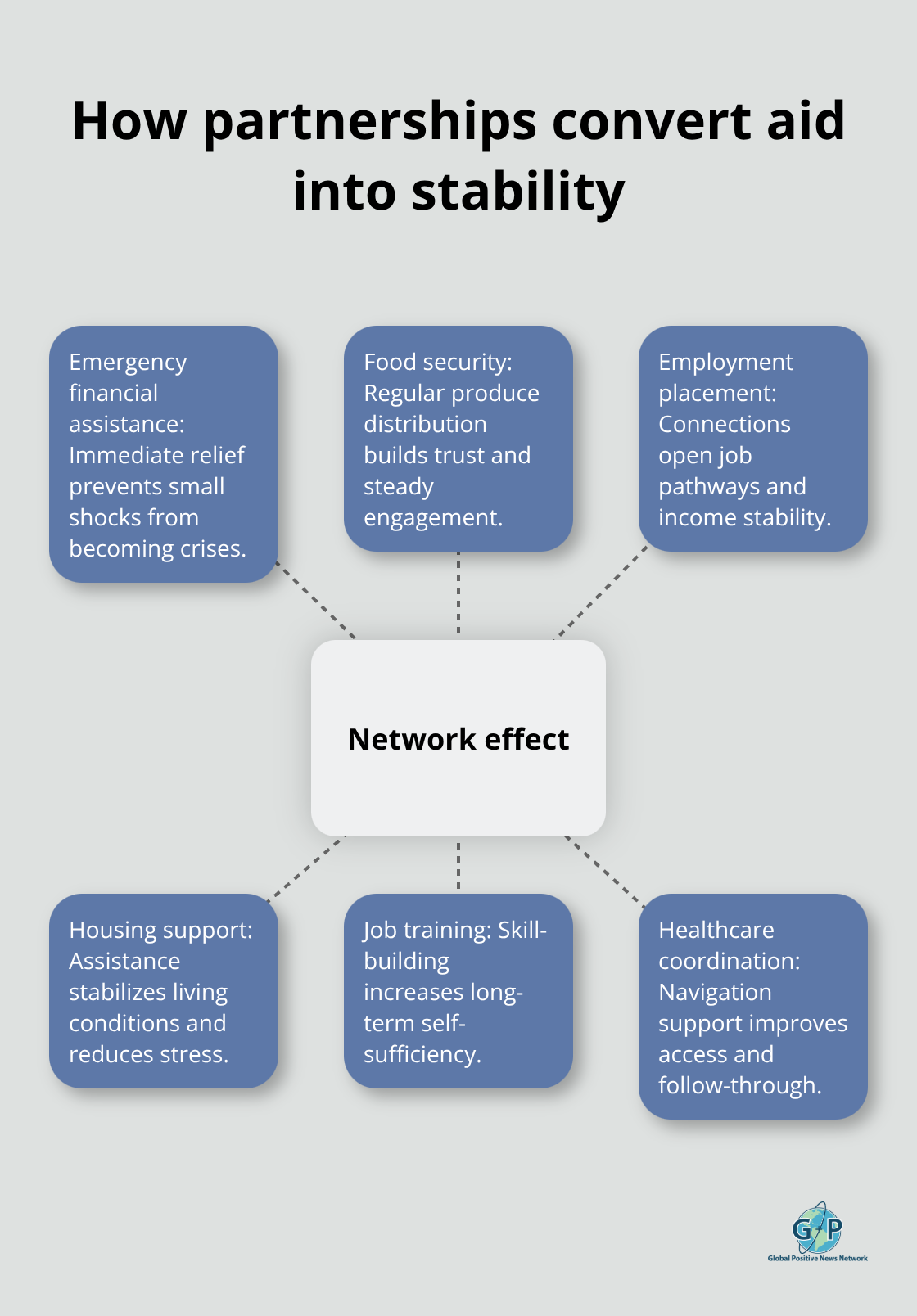
When these systems reinforce each other, people experience stability instead of perpetual crisis. During the COVID-19 pandemic, Hope to Thrive vaccinated approximately 100 people in communities where vaccine access lagged significantly. That number emerged not from medical authority but from relationships built through consistent presence and dignity.
Building Resilience Through Environmental and Social Responsibility
Hope to Thrive structures their operations around sustainability and shared ownership. Volunteers handle composting and recycling, transforming a food pantry into an environmental justice initiative. This matters because it signals that the community deserves care in every dimension. The organization deliberately creates spaces for difficult conversations about systemic racism, poverty, and economic inequality. These conversations aren’t separate from food distribution-they’re integrated into it. Pantry volunteers and participants discuss what structural barriers created hunger in the first place, then identify what changes their neighborhood actually needs. This approach moves communities from relief toward power.
From Understanding Systems to Changing Them
When people understand the systems that harmed them, they become capable of changing those systems rather than simply surviving within them. Hope to Thrive demonstrates that food pantries can function as organizing spaces where residents recognize their own power. The organization’s success in Winston-Salem reveals something critical about how communities thrive: they need both immediate relief and pathways to influence their own futures. This foundation of trust, participation, and systemic awareness creates the conditions for neighborhoods to tackle larger challenges together. The next step involves understanding how communities can scale these principles beyond single organizations, spreading hope through networks that reach across entire regions.
How to Actually Build Hope in Your Community
Hope spreads fastest through concrete actions, not abstract discussions. Start by documenting what’s already working in your neighborhood and sharing those stories persistently. When Hope to Thrive expanded from 10 families to 80 families in one year, they didn’t hide that success. They talked about it, celebrated it with participants, and used momentum to attract volunteers and partners. This matters because people contribute energy to efforts they believe are winning. If your local food bank just served 50 families this month, that’s the story. If a neighbor started a job training program that placed three people in employment, spread that news through social media, local newsletters, and conversations at churches, schools, and community centers. Don’t wait for perfect outcomes.
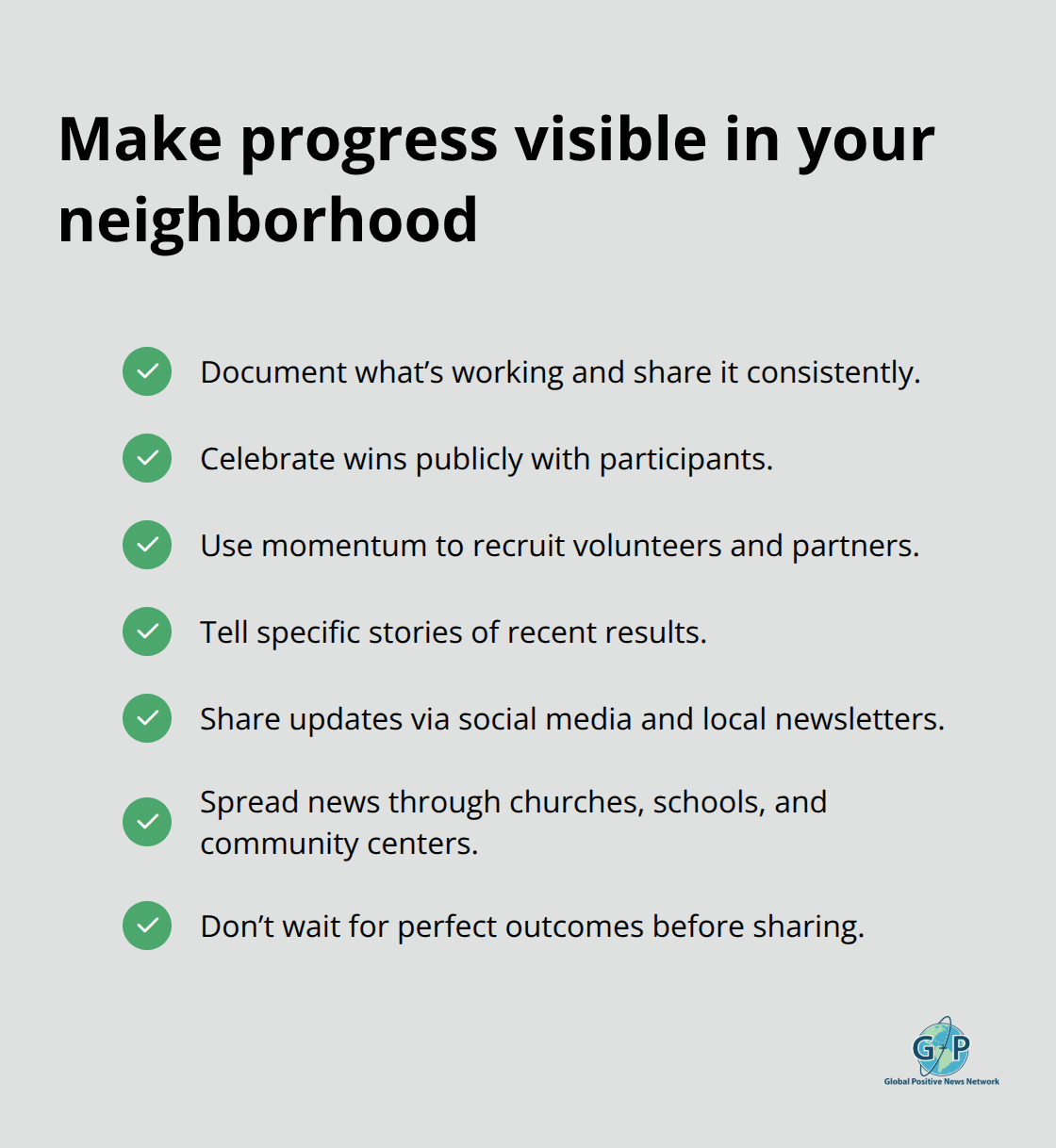
A small business that hired someone from your neighborhood, a street cleanup that removed debris from a park, a youth program that kept kids engaged during summer-these are stories that convince others their effort will matter. Research from the Corporation for National Service shows that people volunteer at higher rates in communities where they see visible progress. Make progress visible.
Create Gathering Spaces Where Real Conversations Happen
Hope to Thrive discovered that pantry spaces became powerful when people could talk while handling produce together. The conversations about systemic barriers, racism, and neighborhood change happened simultaneously with food distribution. Replicate this model in your community by hosting regular gatherings where people work on something tangible while discussing what they actually want from their neighborhood. This could mean community gardens where volunteers plant vegetables while discussing food access, cleanup days where people remove litter while talking about what environmental changes matter most, or skill-sharing sessions where residents teach each other practical abilities while building relationships. The work creates legitimacy. People trust conversations more when they’re embedded in shared action rather than sitting in a circle discussing problems. These spaces should be trauma-informed, meaning staff and organizers understand that people arriving from difficult circumstances need consistency, respect, and genuine voice in decisions. If someone suggests a different pantry location or different services, that suggestion gets heard and considered. When people experience their ideas shaping what happens, they stop waiting for solutions and start building them. This transforms casual attendees into invested community members.
Support Existing Leaders Rather Than Creating New Ones
Most communities already have organizations doing serious work-food banks, churches, job training programs, mental health services, environmental groups. Instead of launching parallel initiatives, identify these existing leaders and strengthen them. Hope to Thrive succeeded partly because they partnered with Grace Presbyterian Church and Crisis Control Ministry rather than trying to replace them. Find the organizations in your neighborhood doing work you believe in, then ask directly: what do you need? Do they need volunteers? Funding? Marketing help? Connections to other organizations? A single person committing four hours monthly to an established nonprofit accomplishes far more than that same person attending occasional community meetings. If your neighborhood lacks obvious leaders in a particular area (say, youth programming or senior services), look for individuals, not organizations. A teacher who cares deeply about student outcomes, a retired nurse who volunteers, a parent organizing other parents-these people matter. Support these individuals directly. Introduce them to others doing similar work. Help them connect with funding sources or training programs. When existing leaders feel supported and resourced rather than competing for attention, hope spreads through established networks instead of dissolving in fragmented efforts. This approach builds momentum faster because it works through relationships that already exist.
Final Thoughts
Hope doesn’t happen to communities-communities build it through deliberate action and persistent effort. Hope to Thrive in Winston-Salem started with 10 families and expanded to 80 within a year, transforming food distribution into a platform for systemic change. That trajectory proves what becomes possible when people believe their work will produce real results.
Collective optimism spreads fastest when neighbors witness tangible progress. A food pantry expanding, a job training program placing people in employment, or a community garden producing vegetables all signal that effort works. This recognition shifts how people engage with their neighborhoods-they stop waiting for external solutions and start building what their community actually needs. One person volunteers at a pantry, experiences dignity and respect, and invites a friend who later finds employment and mentors someone else.
Your neighborhood already contains the ingredients for this growth. Support one organization doing work you believe in, share one story of local progress, and host one gathering where people work together on something that matters. These actions form the foundation of neighborhoods that thrive, and Global Positive News Network shares more stories of communities building hope and creating positive change.
Having a hard day?
The 2 Minute Hope Reset is a short free guide with three small practices for the days that feel heavy. Two minutes each, nothing to keep up with.
Get the free guideExplore more positive news:
Enjoying stories like this?
Global Positive News Network is reader-supported. If you’d like to support the mission, you can visit the Official GPNN store.