

Technology is reshaping how communities connect, support each other, and grow stronger together. At Global Positive News Network, we’ve seen firsthand how the right digital tools can transform neighborhoods and create real opportunities for people to thrive.
This blog post explores innovations for hopeful futures-the apps, platforms, and systems that are already making a measurable difference in communities worldwide. We’ll show you concrete examples and practical steps for bringing these solutions to your own community.
What Tech Solutions Actually Work for Connecting Communities
Mobile Apps That Bridge Neighborhood Gaps
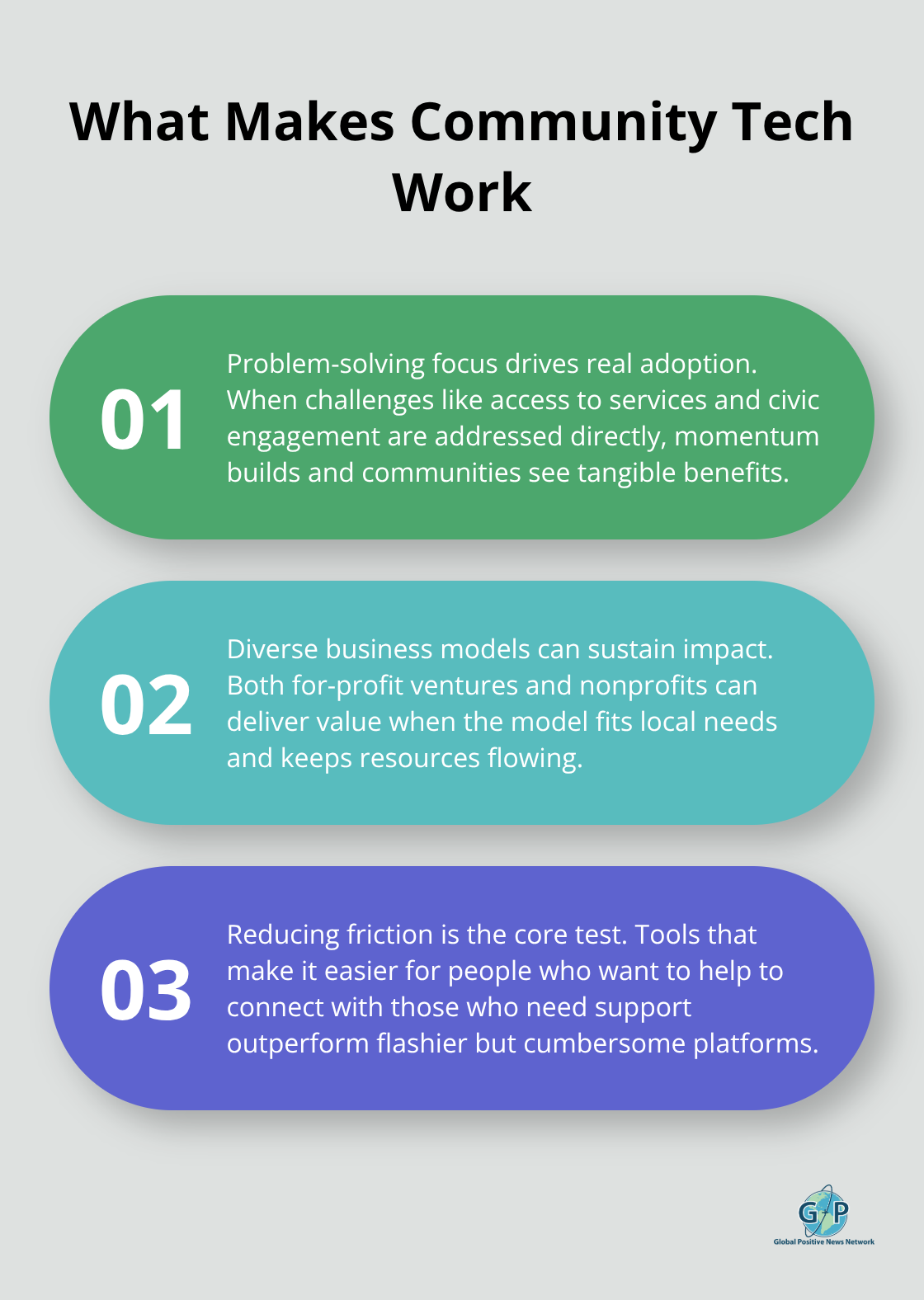
Mobile apps and digital platforms designed for neighborhood connection have moved beyond nice-to-have tools into measurable drivers of community resilience. The MIT Solve Economic Prosperity Challenge sought technology-driven solutions to increase economic prosperity, with submissions incorporating artificial intelligence to improve access to services and civic engagement. This signals serious momentum behind technology that solves real problems rather than creating new ones. The challenge attracted a mix of for-profit ventures and nonprofits, showing that sustainable community tech does not require a single business model. What matters most is whether the tool actually reduces friction between people who want to help and people who need support.
Skill-Sharing Platforms Build Social Capital
Skill-sharing platforms and mentorship networks prove particularly effective at building social capital while addressing labor market shifts. As organizations face pressure to upskill workers faster, peer-to-peer learning platforms cut training costs while strengthening neighborhood bonds. Community networks that prioritize offline components alongside digital infrastructure see the strongest retention rates. Event organization tools specifically designed for volunteer coordination report higher participation when they integrate mobile push notifications with simple sign-up flows rather than relying on email alone.
Human Facilitation Matters More Than Software
The most successful implementations pair technology with human facilitation, meaning someone in your community needs to actively manage the platform rather than expecting software to run itself. Digital literacy programs for older adults work best when paired with hands-on training sessions in familiar locations like libraries or community centers, not webinars. Funding models that combine municipal grants with small membership fees tend to sustain longer than purely volunteer-dependent systems.
Designing for Limited Connectivity
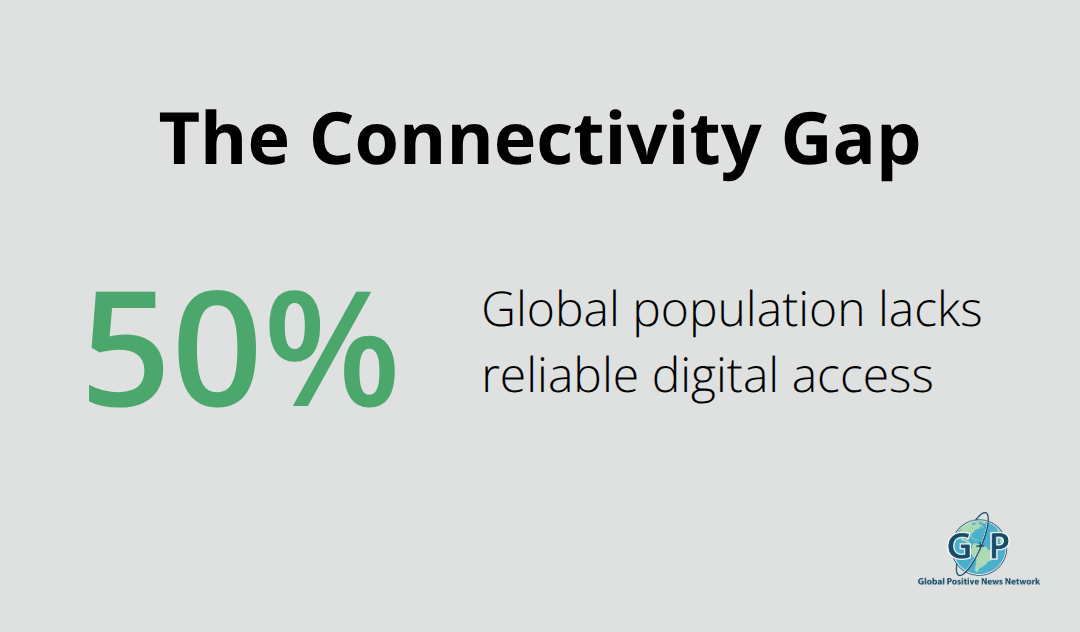
Organizations building community tech should prioritize tools that work offline or with limited connectivity, as roughly 50 percent of the global population still lacks reliable digital access according to research on digital democracy barriers. This design constraint forces developers to create simpler, more resilient systems that actually serve the communities most in need. The next section examines real-world examples of how these principles translate into measurable community outcomes.
Real-World Examples Making Community Tech Work
California’s Participatory Design Workshops Transform Public Services
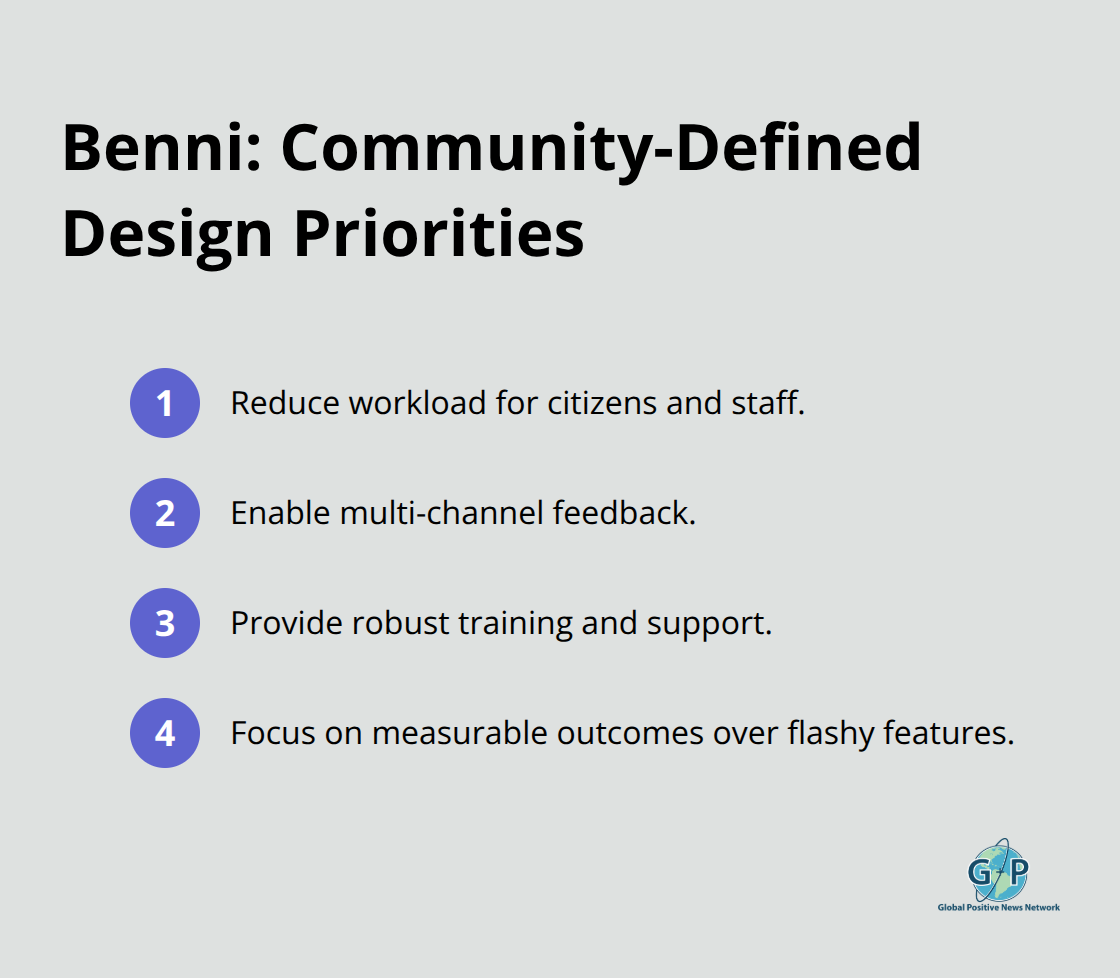
Participatory design workshops across California demonstrate what happens when communities shape technology instead of receiving it passively. Between spring 2025 and now, nearly 125 participants joined in-person or virtual immersive workshops across Visalia, Long Beach, Concord, Riverside, and Sacramento to imagine futures for public benefits systems. The workshops produced two concrete outcomes: Benni, an AI-assisted benefits agent designed through direct community input, and recognition ceremonies celebrating co-design work already happening in government services. Participants reported enhanced creativity and a newfound sense of agency, meaning they stopped viewing themselves as passive service recipients and started seeing themselves as problem-solvers. Technology adoption rates spike when people help build the tools they’ll eventually use. Benni’s design constraints emerged directly from community input: reduce workload for citizens and staff, enable multi-channel feedback, provide robust training and support, and focus on measurable outcomes rather than flashy features. Over 400 people engaged across workshops, conferences, and newsletters, signaling strong momentum.
The project’s success hinged on creating dignified, respectful spaces where people felt safe offering honest feedback about government services they depend on.
Why Extractive Design Fails Farmers and Indigenous Communities
Digital platforms supporting small-scale farmers in India reveal why design without community voice fails. Decentralising Digital, a two-year collaboration between the University of Dundee and design agency Quicksand, showed that centralized data collection strips farmers of ownership over their data while feeding information into government or private databases with minimal farmer control or compensation. Organic farming collectives in Karnataka instead adopted participatory methods where farmers and Indigenous communities co-created technology aligned with their actual needs rather than external assumptions. Women farmers stewarding heirloom seeds and Indigenous communities near forests face the highest risks from tech imposition, yet they hold irreplaceable knowledge about local adaptation and resilience. The project’s speculative design artifacts foreground biodiversity and Indigenous knowledge rather than replacing them with algorithmic solutions. When technology bridges access gaps in underserved areas, it must work with limited connectivity and respect existing knowledge systems. Partnerships with organizations like Buffalo Back Collective and Black Baza Coffee provided grounded links to rural communities, ensuring that design decisions reflected lived experience rather than external expertise.
The Difference Between Tech That Sticks and Tech That Fails
The difference between technology that sticks and technology that fails often comes down to whether communities experienced the design process as extractive or collaborative. Communities that participate in shaping solutions develop ownership and commitment to implementation. Those that receive pre-built tools from outside experts tend to abandon them once initial enthusiasm fades. This pattern holds across geographies and sectors-from public benefits in California to agricultural systems in India. The next section examines how your community can identify and adopt the right technology for your specific context, moving beyond one-size-fits-all solutions toward tools that reflect local values and constraints.
Building the Right Tech Stack for Your Community
Map Community Needs Before Selecting Tools
Start by mapping what your community actually needs rather than adopting whatever tool is trendy. The California participatory design workshops showed that communities consistently identify different priorities than outside experts expect. Before selecting any platform, spend two to four weeks talking directly with people who will use it. Ask small-business owners, teachers, elderly residents, and people without smartphones what problems they face daily. This conversation costs nothing but reveals whether your community needs event coordination, skill-sharing, resource mapping, or something entirely different. The Decentralising Digital project in India demonstrated that extractive design fails because outsiders assume they know what farmers need.
Embed Local Knowledge in Your Implementation
Communities that thrived had someone locally embedded who could translate between resident needs and technical capabilities. That person does not need to be a software engineer-they need deep relationships in the neighborhood and willingness to push back against solutions that sound impressive but don’t fit local context. Digital literacy programs work best when paired with specific tools rather than teaching technology in the abstract. A library in Sacramento offering free training on a particular skill-sharing app sees higher attendance and sustained usage than generic computer classes. Target your training to actual residents who will benefit immediately, not hypothetical future users.
Design Sustainable Funding and Low-Bandwidth Systems
Funding models matter enormously for sustainability. Municipal grants combined with small membership fees from users who can afford them outperform purely volunteer systems or grant-dependent approaches. Organizations in the MIT Solve challenge that mixed revenue streams reported longer operational lifespans than those relying on single funding sources. If your community has limited connectivity, prioritize tools that function offline or with minimal data usage. This constraint forces developers to build simpler systems that actually serve people most in need. Roughly 50 percent of the global population still lacks reliable digital access, so designing for low-bandwidth environments expands your tool’s real-world impact rather than limiting it.
Activate Human Facilitation and Local Partnerships
Human facilitation transforms whether technology sticks or gets abandoned. The California workshops succeeded because trained facilitators actively managed the process rather than expecting software to run itself. Communities need someone checking in regularly, addressing technical problems quickly, and celebrating early wins publicly. That person’s salary often matters more than the software license cost. Partnerships with established local organizations accelerate adoption significantly. When organic farming collectives in Karnataka partnered with organizations already embedded in their communities, technology adoption jumped because trust already existed. Your community probably has nonprofits, schools, or religious institutions with deep relationships-approach them as partners rather than trying to build everything independently.
Measure Outcomes and Iterate Rapidly
Set specific outcomes you want to measure before launching any platform. California’s Benni design process identified measurable goals upfront: reduce workload for citizens and staff, enable multi-channel feedback, provide training, focus on outcomes. Vague goals like increasing community connection guarantee failure because you cannot tell whether your tool actually works. Start small with a single neighborhood or demographic group rather than rolling out citywide. Test for three to six months, gather honest feedback about what failed, and redesign before expanding. The communities that reported enhanced creativity and agency in the California workshops participated in multiple feedback cycles where their input directly changed what was built. Technology adoption rates spike when people see their suggestions actually implemented.
Final Thoughts
Technology alone does not create community growth. What matters is whether the tools you choose reflect your community’s actual values and constraints. Innovations for hopeful futures emerge when communities shape the technology they use rather than passively receiving solutions designed elsewhere. The California participatory design workshops, the organic farming collectives in Karnataka, and the skill-sharing platforms that thrive all share one pattern: people participated in deciding what problems technology should solve.
The most powerful role technology plays is removing friction between people who want to help and people who need support. A mobile app that works offline serves more people than a sophisticated platform requiring constant connectivity. A skill-sharing platform paired with human facilitation sustains longer than software running unattended. A funding model mixing grants with membership fees outlasts purely volunteer systems (these are not exciting technical innovations, but they are the ones that actually work).
Moving communities forward through digital innovation requires starting with honest conversations about what your neighborhood needs, embedding local knowledge in implementation, and measuring whether your tools actually produce the outcomes you intended. Start mapping your community’s needs this week. Identify one local partner to collaborate with, test a single tool with a small group, and listen carefully to what people tell you works and what does not. Visit Global Positive News Network to explore more stories about how communities build solutions together.
Having a hard day?
The 2 Minute Hope Reset is a short free guide with three small practices for the days that feel heavy. Two minutes each, nothing to keep up with.
Get the free guideExplore more positive news:
Enjoying stories like this?
Global Positive News Network is reader-supported. If you’d like to support the mission, you can visit the Official GPNN store.