
Most people struggle to find clarity when life feels overwhelming. At Global Positive News Network, we believe positivity journaling prompts are one of the most practical tools for shifting your mindset and building genuine hope.
This guide shows you exactly how to start journaling, which prompts actually work, and how to make the habit stick.
What Positivity Journaling Actually Is
Positivity journaling is straightforward: you write down what went well, what you’re grateful for, and what matters to you. It’s not about ignoring problems or pretending life is perfect. Instead, it trains your brain to notice the good alongside the difficult. Research from a 2018 study published in JMIR Mental Health tested a 12-week web-based positive affect journaling program with 70 adults dealing with chronic conditions like arthritis, diabetes, and asthma. Participants spent just 15 minutes journaling three days per week, and the results showed real improvements. Within the first month, anxiety scores dropped significantly on the Hospital Anxiety and Depression Scale. In month two, resilience increased and perceived stress fell across all measurements. The study also found that journaling reduced the number of days pain interfered with daily activities. This isn’t theoretical-these are people with serious health challenges who experienced measurable shifts in their emotional state through a simple writing practice.
What Makes Positivity Journaling Different From General Writing
The key difference is intentionality. Standard journaling often becomes a place to process problems and complaints. Positivity journaling flips this approach and asks specific questions that anchor your attention on what’s working. The 2018 study used prompts like “What are you thankful for?” and “What did someone else do for you?” These aren’t vague feel-good questions-they direct your mind toward concrete experiences. You might write that your neighbor waved hello, your coffee tasted good, or you finished a task at work. The specificity matters because your brain then registers these moments as real wins rather than dismissing them as luck. When you journal this way consistently, you build what researchers call cognitive resilience-the process of adapting well in the face of adversity, trauma, or significant sources of stress. Adherence data from the study showed that people who completed at least one journaling session per week saw better outcomes, meaning consistency trumps perfection.
Physical and Mental Health Shifts You Can Actually Measure
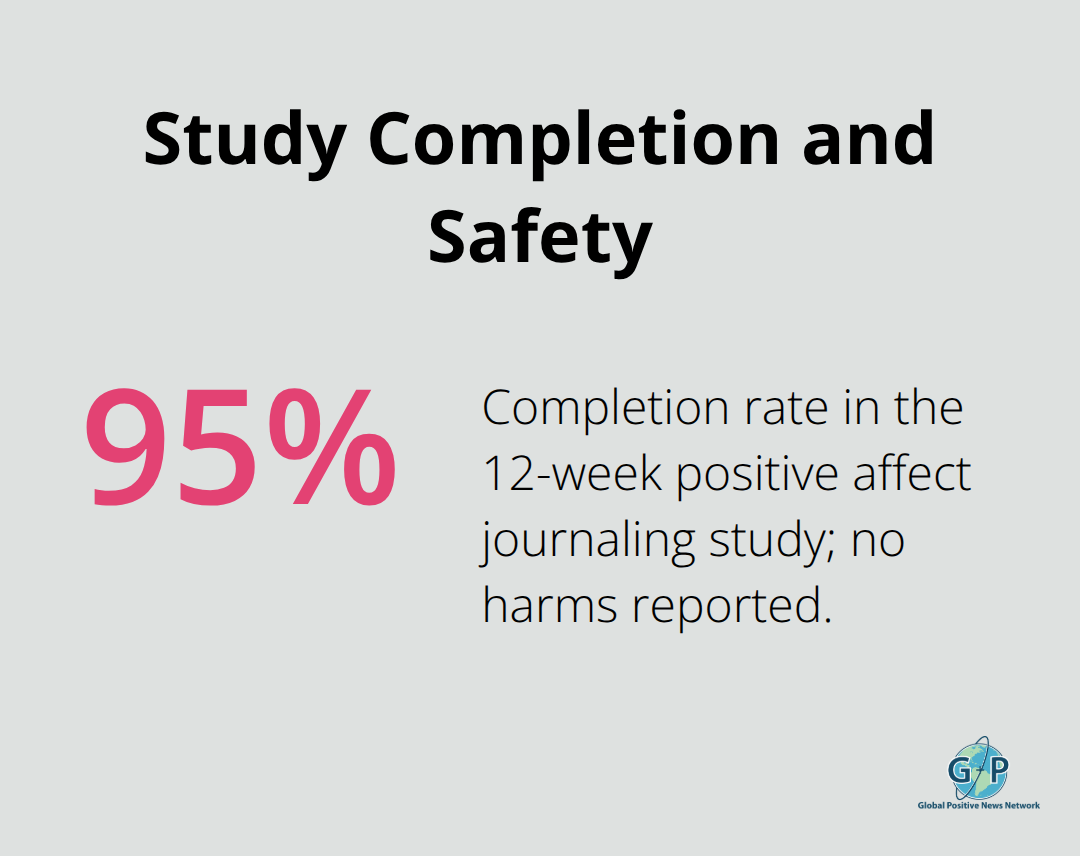
The mental health gains are substantial. Writing about positive experiences reduces anxiety and stress in measurable ways, especially when you stick with it for more than 30 days. The 2018 study showed that participants reported greater social integration in month two, meaning they felt more connected to others. This matters because isolation amplifies distress. When you journal about kindness others showed you or acts of kindness you want to perform, you’re actually rewiring how you perceive your social world. The research also found that gratitude journaling improves physical health-fewer sick days, lower blood pressure, and better immune function. Positivity journaling takes this benefit further and focuses your writing on what’s constructive rather than purely cathartic. The study had a 95 percent completion rate with no reported harms, showing this approach is safe and sustainable for people managing chronic illness, anxiety, or everyday stress.
Getting Started With Your First Session
Start with sessions as short as a few minutes and expand from there. You don’t need a fancy journal or perfect conditions-a plain notebook works just fine. The prompts that work best ask you to identify what went right, what you accomplished, and what you look forward to tomorrow. Write two or three positive events from your day first to anchor your focus on what actually happened. Then reflect on those positives and accept them as real rather than dismissing them as temporary luck. This simple shift in attention trains your brain to notice what’s already present in your life. The next chapter covers the specific prompts that produce the strongest results and how to structure them for maximum clarity.
What Prompts Actually Work for Clarity
Anchor Your Practice in Real, Observable Moments
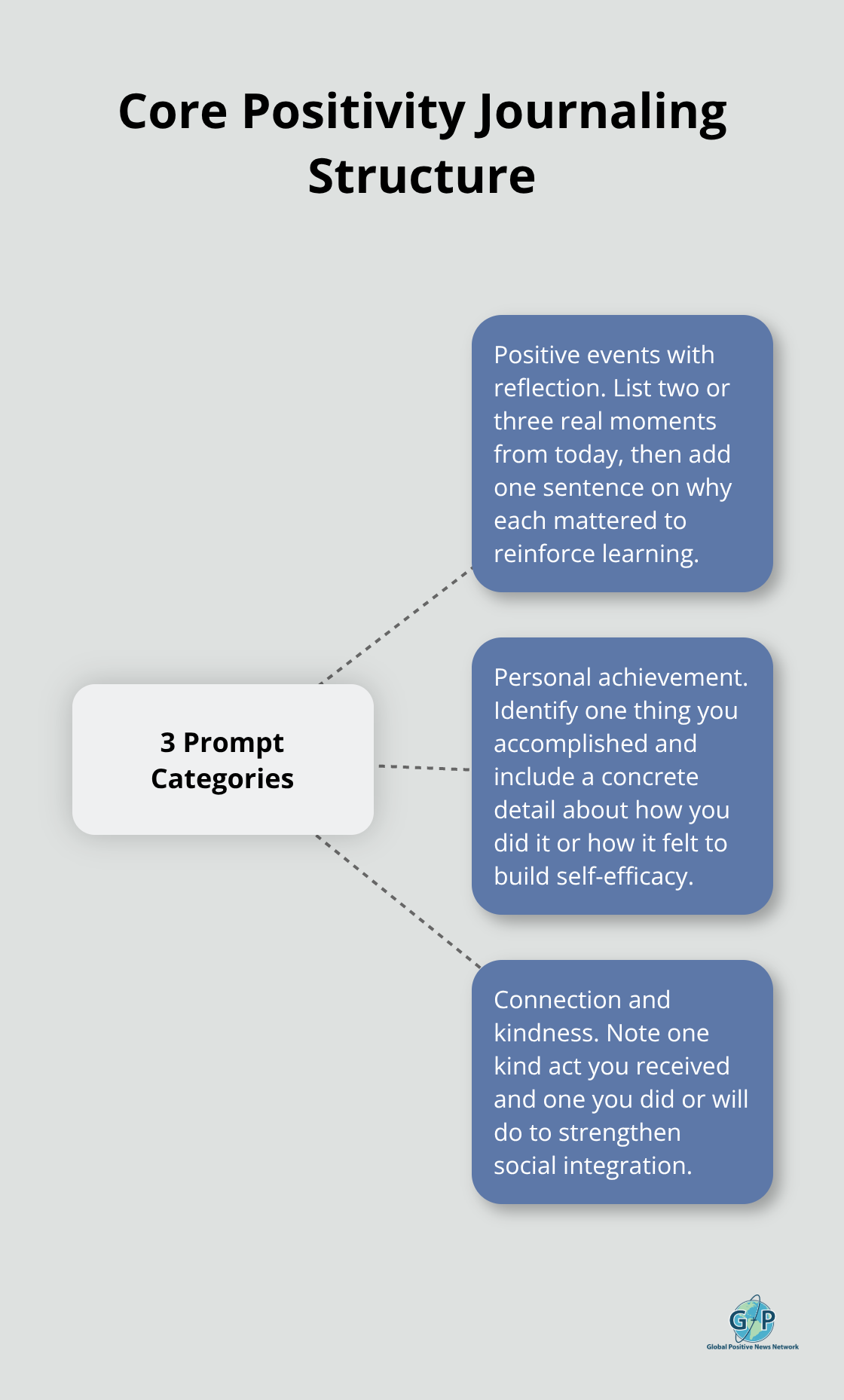
The prompts that shift your mindset ask you to identify specific, concrete details from your actual life. Start each session by writing down two or three positive events that happened today-not vague positives like “I had a good day,” but specific moments: a coworker complimented your work, you solved a problem at home, you laughed at something, you completed a task. A 2018 study found that participants who anchored their journaling in real, observable moments saw measurable anxiety reductions within the first month. After you list those events, write one sentence reflecting on each: why did this moment matter, what did it show you about yourself or others, or how did it change your day slightly? This reflection step transforms journaling from simple note-taking into genuine clarity work.
Identify Your Achievements and Build Resilience
Next, ask yourself what you accomplished today that you’re genuinely proud of, no matter how small. Did you finish a work project, have a difficult conversation, exercise, help someone, or learn something new? Write it down with one specific detail about how you did it or how it felt. Research on positive affect journaling shows that identifying your own achievements builds resilience faster than only processing problems. Finally, write down one thing you’re looking forward to tomorrow-not something you’re pressuring yourself to make happen, but something realistic you actually anticipate: a meal you want to eat, a conversation you’ll have, time with someone you enjoy, or a task you feel capable of handling. This forward-looking prompt trains your brain to expect positive possibilities rather than catastrophe.
Strengthen Connection Through Kindness Prompts
The second category of prompts focuses on connection and kindness, which research identifies as essential for social integration and reduced isolation. Write down one kind thing someone did for you recently, even something small like a text message, a smile, or making you coffee. Then write one act of kindness you performed or want to perform for someone else. Journaling about kindness helps build social connection and reduces overall distress levels. Make this concrete: instead of “I was nice to someone,” write “I sent my friend a message checking on her after her difficult week” or “I helped my neighbor carry groceries inside.” Specificity makes the kindness real in your mind rather than abstract.
Structure Your Sessions for Maximum Impact
These three prompt categories-positive events with reflection, personal achievement, and connection and kindness-form the core structure that produces measurable mental health shifts. Try fifteen minutes total, three times per week, and you’ll see anxiety scores drop and resilience increase within thirty days.
People who journaled at least once weekly experienced better outcomes than those with sporadic practice. Once you establish this foundation, the next chapter reveals how to maintain your habit over time and track the emotional shifts that emerge from regular practice.
How to Build a Journaling Habit That Actually Sticks
Choose Your Format and Commit to Access
The format you select matters less than consistency, so pick whatever medium feels natural and requires the least friction. A plain notebook works as well as a journaling app-what matters is that you will actually use it. Research on positive affect journaling showed measurable improvements when people had straightforward access to their tool, whether digital or paper. If you prefer writing by hand, keep your journal and pen in the same visible spot where you will see them at the same time each day. If you use an app like Daylio or a simple notes app on your phone, set a daily reminder at a specific time.
Find Your Frequency and Stick to It
The 2018 JMIR Mental Health study found that people who journaled at least once per week experienced measurable improvements in anxiety and resilience, but those who tried for three sessions weekly saw faster mental health gains within the first month. Start with whichever frequency feels sustainable-three times weekly is ideal, but one consistent session beats sporadic attempts at perfection. Set a specific time: morning before work, lunch break, or evening before bed. The time matters less than the consistency. Your brain builds the habit fastest when journaling happens at the same moment each day, turning it into an automatic behavior rather than something you have to decide about.
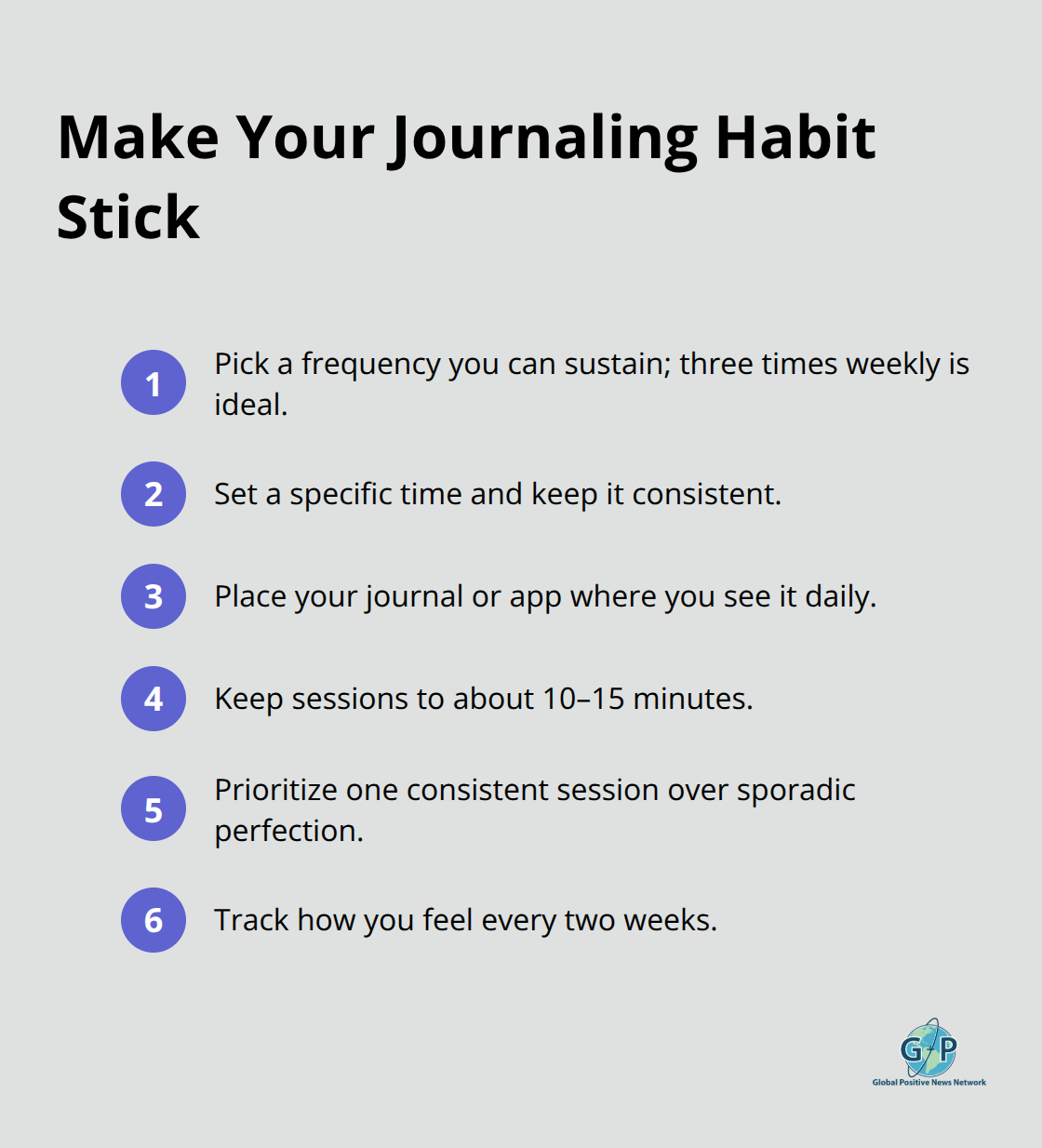
Most people complete their sessions in ten to fifteen minutes, so time constraints are not a real barrier.
Track Your Progress With Simple Measurements
Tracking your progress transforms journaling from a vague wellness activity into measurable mental health work. After two weeks, write down your baseline anxiety level on a simple one-to-ten scale, how many days you felt socially isolated, and how often negative thoughts dominated your thinking. Then check these same three measures every two weeks as you continue journaling. The 2018 study measured outcomes using the Hospital Anxiety and Depression Scale and Perceived Stress Scale, both showing measurable drops by week four for consistent journalers. You do not need complicated tracking-a simple spreadsheet with dates and one-sentence observations works perfectly: “Felt less overwhelmed today,” “Had three good conversations,” or “Noticed I’m expecting positive things instead of bracing for problems.”
Record Accomplishments and Build Momentum
Record monthly accomplishments you are genuinely proud of, not just work achievements but personal ones: difficult conversations you handled well, boundaries you set, people you supported, or skills you developed. This practice builds momentum because your brain registers real progress rather than fixating on what remains incomplete. After thirty days of consistent journaling practice, your anxiety scores typically drop noticeably and your resilience increases measurably. After sixty days, most people report that noticing positives feels automatic rather than forced-your brain has rewired toward genuine optimism rather than forced positivity.
Final Thoughts
Positivity journaling prompts work because they train your brain to notice what already exists in your life rather than fixating on what’s missing or broken. After thirty days of consistent practice, anxiety drops measurably and resilience builds naturally. After sixty days, noticing positives feels automatic instead of forced, and this shift in attention creates the clarity you’ve been searching for when life feels overwhelming.
Start today with whatever format requires the least friction-a notebook or phone app-and commit to one session this week. Write down two positive events from your day, one accomplishment you’re proud of, and one act of kindness you witnessed or performed (spend ten minutes total). Notice how your mind shifts when you anchor your attention on what went right, then repeat three days later.
At Global Positive News Network, we share stories of personal triumphs, acts of kindness, and community impact designed to help you maintain an optimistic outlook while you build your journaling practice. Your clarity journey connects you to others doing the same work, and consistency builds the habit faster than intensity.
Having a hard day?
The 2 Minute Hope Reset is a short free guide with three small practices for the days that feel heavy. Two minutes each, nothing to keep up with.
Get the free guideExplore more positive news:
Enjoying stories like this?
Global Positive News Network is reader-supported. If you’d like to support the mission, you can visit the Official GPNN store.