
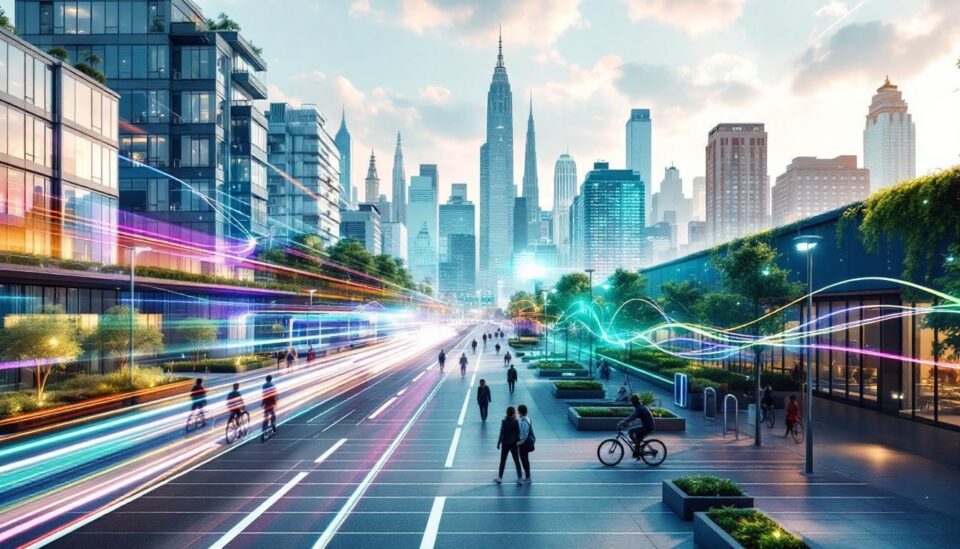
Cities worldwide are becoming laboratories for positive change, where communities tackle housing shortages, pollution, and inequality head-on.
At Global Positive News Network, we’ve identified three powerful forces reshaping urban life: green infrastructure that cleans our air and water, community programs that strengthen neighborhoods, and technology that connects people to solutions. Urban hopeful innovations are already happening in real cities, and we’re here to show you what’s working.
Green Infrastructure Transforming Urban Life
Cities are moving fast on renewable energy, green spaces, and water systems because they have no choice. Buildings account for 36% of global energy use and 39% of CO2 emissions, according to the World Green Building Council, so cities are attacking this head-on. San Jose became the largest U.S. city to require nearly all new buildings to be all-electric, a decision that signals where urban development is heading. Seattle and other cities updated energy codes to push electrification in new developments while improving efficiency. For existing buildings, cities adopted building performance standards targeting energy and greenhouse gas reductions, with Boston leading the way. These aren’t theoretical targets-they’re binding requirements reshaping how buildings operate.
The Economics of Green Buildings
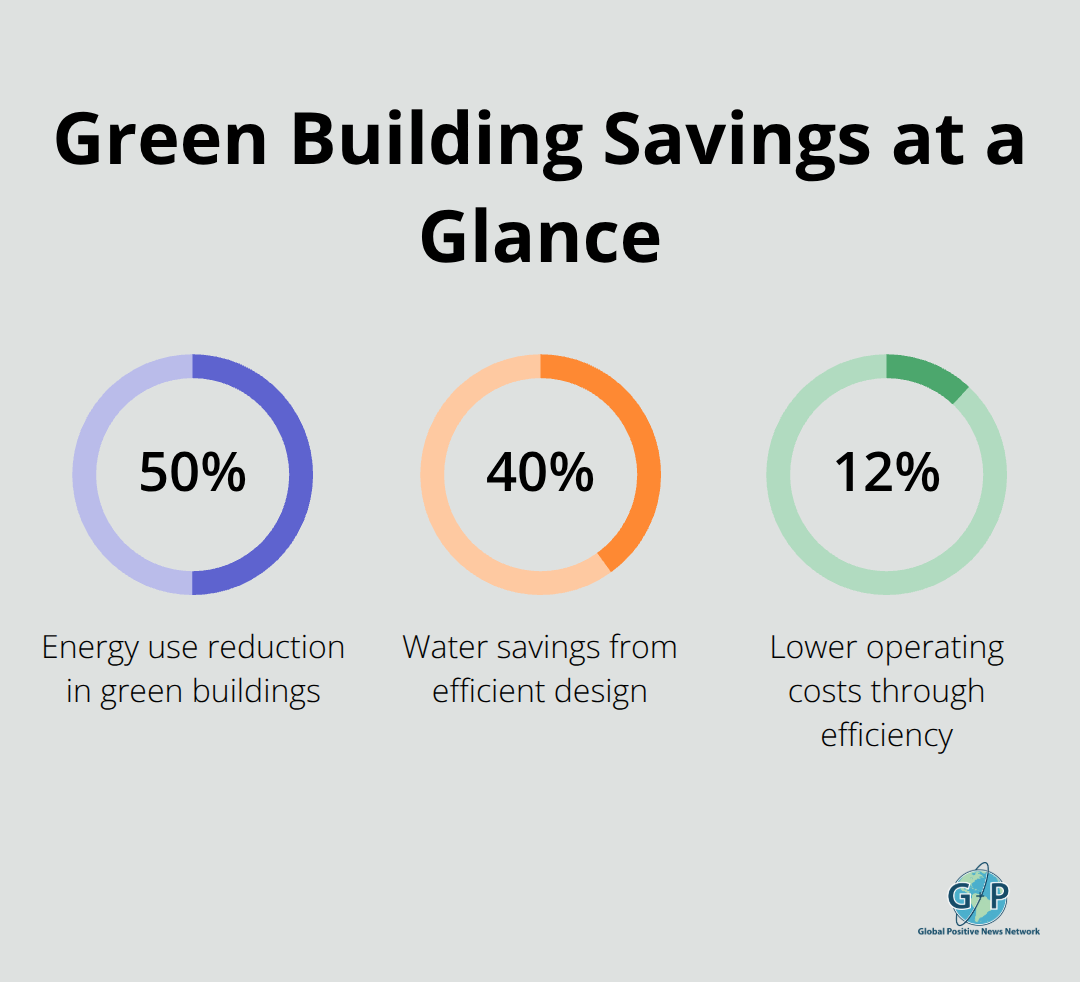
Green buildings cut energy use by up to 50%, save 40% on water, and reduce operating costs by about 12%, making the business case obvious. New York invested about $24 million through NYSERDA and HPD to upgrade roughly 1,200 affordable housing units, benefiting around 3,000 residents with electrification upgrades. Pittsburgh requires new or renovated city government buildings to be net-zero energy ready, showing how municipal leadership drives market change.
These investments prove that sustainability and affordability can advance together.
Water Systems That Actually Work
Water scarcity forces cities to act. Stormwater capture, fixing leaky pipes, efficient plumbing fixtures, and wastewater recycling are no longer optional. New York City and Los Angeles lead on water conservation because they have to. Cities scale rainwater harvesting, wastewater recycling, green infrastructure, and greywater reuse. IoT-based leak detection and smart water grids identify problems faster than traditional approaches. Rotterdam took a different angle with its Rooftop Catalogue, gathering 130+ ideas for using flat roofs across 18.5 square kilometers, including green roofs and water towers. Berlin TXL broke ground on a former airport site, adding 5,000 homes while addressing a housing shortage of about 310,000 units. These projects show how urban land repurposing solves multiple problems at once.
Green Spaces and Pollution Reduction
Green spaces reduce pollution directly. Urban InVEST, a free mapping tool developed by Stanford, links nature and wellbeing. In Shenzhen, the tool revealed greenspace benefits, while in Paris it identified neighborhoods lacking access to nature. Cities must measure access to green spaces and act on the data, not just plant trees and hope. This data-driven approach to greenspace planning sets the stage for how technology amplifies urban solutions across all sectors.
Communities Solving Housing and Inequality at Scale
Housing shortages and homelessness demand direct action, not policy papers. Cities pursuing aggressive solutions see results because they treat housing as infrastructure, not charity. The World Economic Forum reports that 1.6 billion people lack adequate housing globally, a number projected to reach 3 billion by 2030 without intervention. UN-Habitat calculates we need roughly 96,000 new affordable homes daily to close the gap by 2030. Cities recognizing this urgency reclaim underutilized public land through eminent domain and zoning reform to build housing fast.
Converting Underused Land Into Housing
Berlin TXL converted a former airport into mixed-income housing, adding 5,000 units while creating employment. Bradfield City Center in Sydney committed AU$1.15 billion across 114 hectares to remediate contaminated land and build foundational infrastructure for a new economic hub, proving that remediation and housing happen simultaneously. New York took a different approach but matched the same intensity: NYSERDA and HPD invested roughly $24 million to electrify approximately 1,200 affordable units, benefiting around 3,000 residents directly. These projects treat housing as essential infrastructure requiring capital investment, workforce training, and cross-department coordination.
Building Workforce Pipelines in Green Sectors
Education and skill-building programs must connect directly to job creation in growing sectors. India’s Bureau of Energy Efficiency expanded building energy codes while training architects and engineers, creating a workforce pipeline for the energy transition. Missouri’s energy efficiency sector supports roughly 42,000 jobs, demonstrating how green infrastructure generates employment in underserved areas. Cities that embed workforce development into climate projects create pathways for residents to transition into better-paying roles while addressing emissions.
Addressing Health Through Place-Based Solutions
Climate change now poses the foremost urban health threat, with rising non-communicable diseases and widening health inequities according to the World Cities Report 2022. Place-based interventions addressing geographic and socioeconomic exclusion work better than generic programs. Cities must expand universal health care access alongside addressing pollution, housing instability, and food security. Community engagement in program design determines success; top-down solutions fail because they ignore local context and lived experience.
These structural shifts in housing, employment, and health create the foundation for technology to amplify impact across entire city systems-a transformation we explore in the next section.
Technology Making Cities Work Better
The smart city market is projected to grow from USD 699.7 billion in 2025 to USD 1,445.6 billion by 2030 at a compound annual growth rate of 15.6%. Yet most cities waste this investment on technology that solves nothing. Cities must demand technology that addresses concrete problems: waste management, energy efficiency, traffic congestion, and resource allocation. Alphabet’s Sidewalk Labs developed a tool called Delve that uses machine learning to simulate city data and test millions of design combinations, optimizing metrics like cost, energy use, and daylight. This approach matters because it turns abstract goals into testable scenarios.
Digital Twins and Scenario Testing
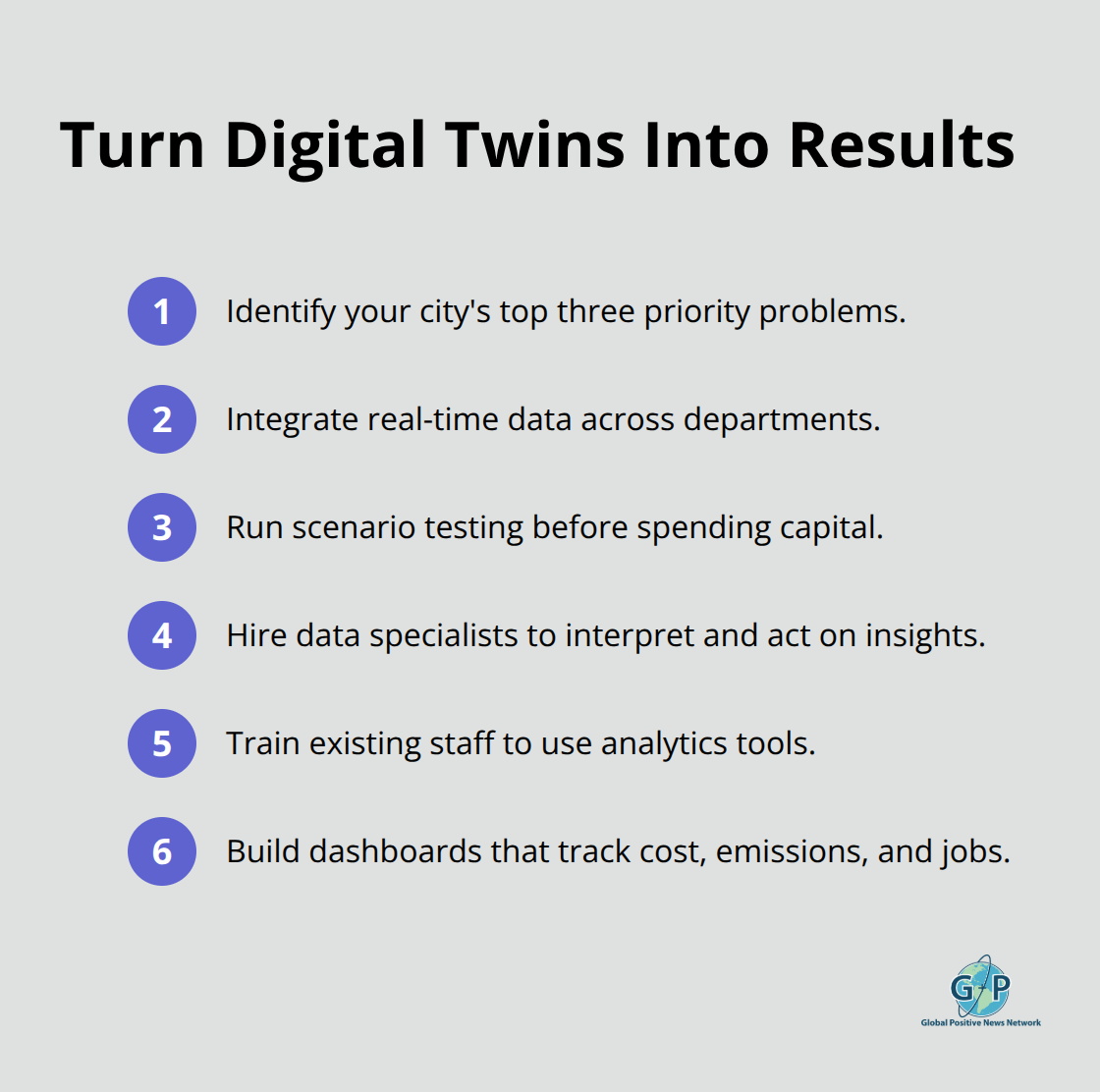
Cities deploying digital twins-virtual replicas of urban systems that simulate different scenarios-can model interventions before spending capital. Singapore, Barcelona, and New York City lead here, testing climate adaptation strategies and transport planning in simulation first. The practical step: identify your city’s top three problems, invest in real-time data integration, and run scenario testing before implementation. Cities often purchase expensive systems that sit unused because they lack the internal capacity to interpret data. Solving this requires hiring data specialists, training existing staff, and building dashboards that show results in terms city officials understand: cost savings, emissions reductions, jobs created.
Without this translation layer between technology and decision-making, innovation fails.
Digital Platforms and Community-Centered Design
Digital platforms connect residents to housing, food, health services, and job training only when designers build them with communities, not for them. Boston’s building performance standards target energy reductions while supporting historically underserved populations through local job creation, proving that technology and equity advance together when intentional. Data-driven greenspace planning in Paris and Shenzhen using Urban InVEST identified neighborhoods lacking nature access and guided investment toward equitable outcomes. The lesson applies across sectors: collect data on who benefits and who gets left behind, then adjust accordingly.
AI Governance and Environmental Accountability
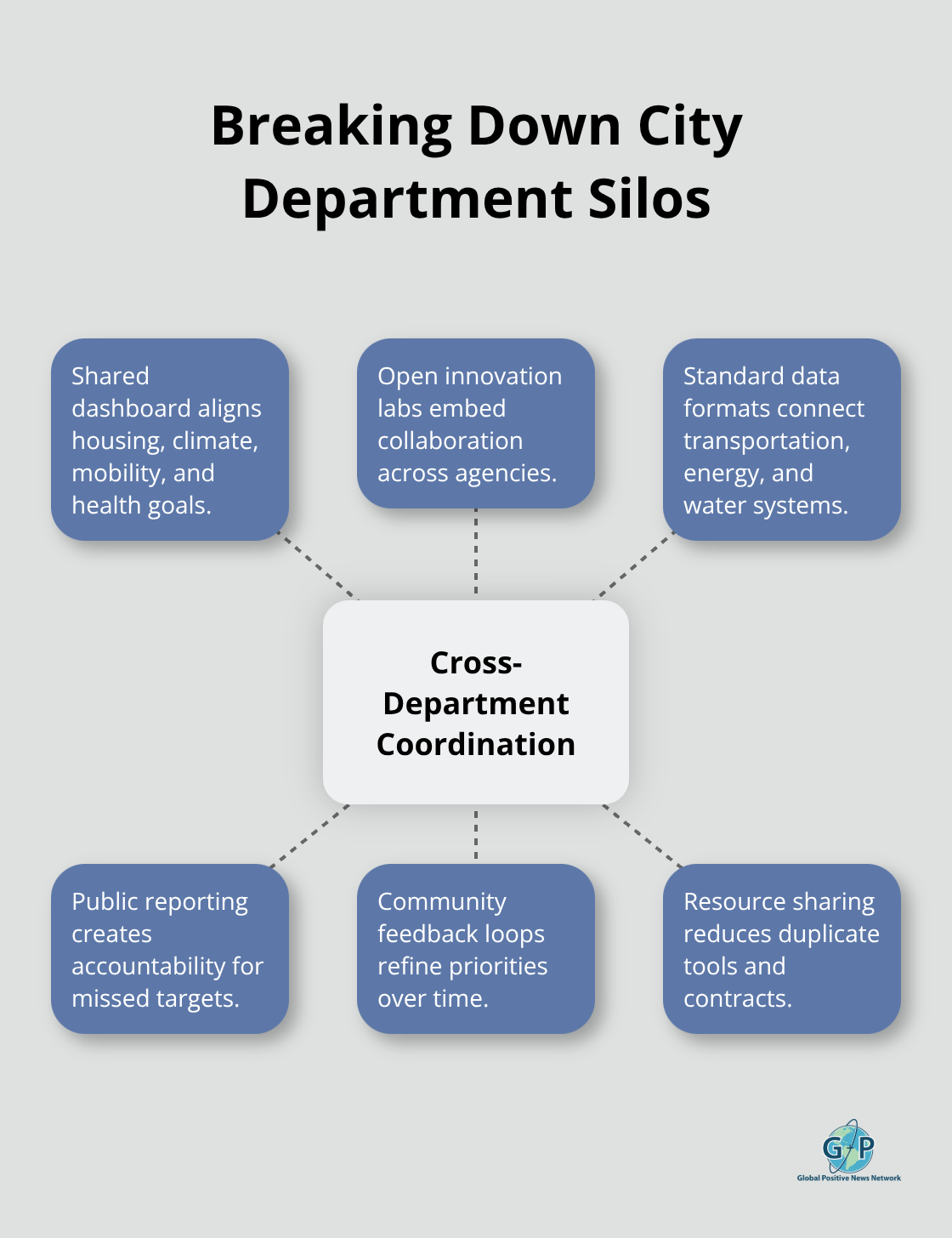
Cities must demand transparency and independent audits of AI systems before deploying them at scale. The environmental footprint of AI infrastructure-data centers consume enormous energy-cannot be ignored. Push for energy-efficient AI and lifecycle assessments that account for the full cost. Technology amplifies existing problems if governance fails. Fragmented city departments working in silos mean that transportation data doesn’t connect to housing allocation, energy systems don’t coordinate with water management.
Breaking Down Departmental Silos
Cross-department innovation labs and shared dashboards break these silos. Vilnius implemented a city-wide open school concept and Freetown launched a reforestation project by embedding collaboration across departments. The actionable step: establish a single shared dashboard showing progress on housing, climate, mobility, and health metrics, forcing departments to coordinate or explain gaps in performance.
Final Thoughts
Cities transform when leaders treat problems as urgent infrastructure challenges and measure results relentlessly. The projects we’ve covered-from San Jose’s building electrification mandate to Berlin’s airport-to-housing conversion to Vilnius’s cross-department innovation labs-all move fast and track outcomes. Urban hopeful innovations work because cities stop waiting for perfect solutions and start testing real ones instead.
Communities can act today without massive budgets. Map what you have: underutilized public land, rooftops, vacant buildings, and existing neighborhood skills. Berlin TXL and Rotterdam’s Rooftop Catalogue prove that repurposing infrastructure solves housing and sustainability at once. Push your city for a shared dashboard connecting housing, energy, water, and health data-Boston and Pittsburgh show that municipal leadership on building standards drives market change faster than voluntary programs.
Collaboration makes everything else work. When housing departments coordinate with workforce programs, residents transition into better jobs while buildings get retrofitted. When water systems connect to green infrastructure planning, stormwater becomes a resource instead of a problem. Global Positive News Network shares stories of communities making this shift happen, offering the perspective and inspiration needed to build better cities.
Having a hard day?
The 2 Minute Hope Reset is a short free guide with three small practices for the days that feel heavy. Two minutes each, nothing to keep up with.
Get the free guideExplore more positive news:
Enjoying stories like this?
Global Positive News Network is reader-supported. If you’d like to support the mission, you can visit the Official GPNN store.