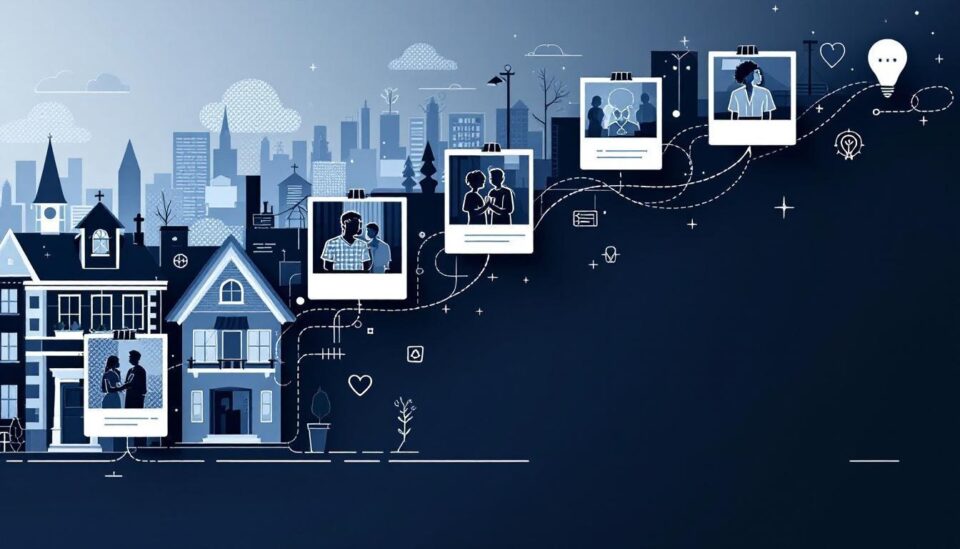
Community impact stories remind us that ordinary people create extraordinary change. At Global Positive News Network, we’ve seen how these narratives shift our perspective and inspire action.
From individuals overcoming hardship to grassroots initiatives solving real problems, these stories show what’s possible when communities come together. The ripple effects extend far beyond the immediate moment, strengthening connections and building momentum for lasting transformation.
How Real People Transform Their Lives and Communities
From Hardship to Mentorship to Action
Maya’s story starts in poverty without electricity or running water, yet she studied relentlessly through secondary school. A teacher recognized her potential and became her mentor, shifting the trajectory of her entire life. She secured a university scholarship, graduated with distinction, and returned to her hometown to build a youth center that offers tutoring and free meals. This center now serves dozens of students annually, addressing multiple barriers to learning in one space. Her experience proves that adversity paired with mentorship and opportunity creates lasting change, not just for one person but for entire communities.
Youth-Led Impact Through Strategic Distribution
Maggie Hartman’s journey shows how young people drive impact from the ground up. Starting at age five, she cultivated flowers across eight gardens and donated over 550 Christmas gifts last year through roadside stands, markets, and a weekly Growing Kindness bouquet at Chick-fil-A. She distributed gifts across a local food pantry, nursing home, mobile food pantry, school district families, and three neighboring families, demonstrating how diversified giving channels multiply reach. Her multi-channel approach teaches a critical lesson: impact scales when you combine production with strategic distribution and community partnerships.
Rapid Response Through Organized Volunteer Networks
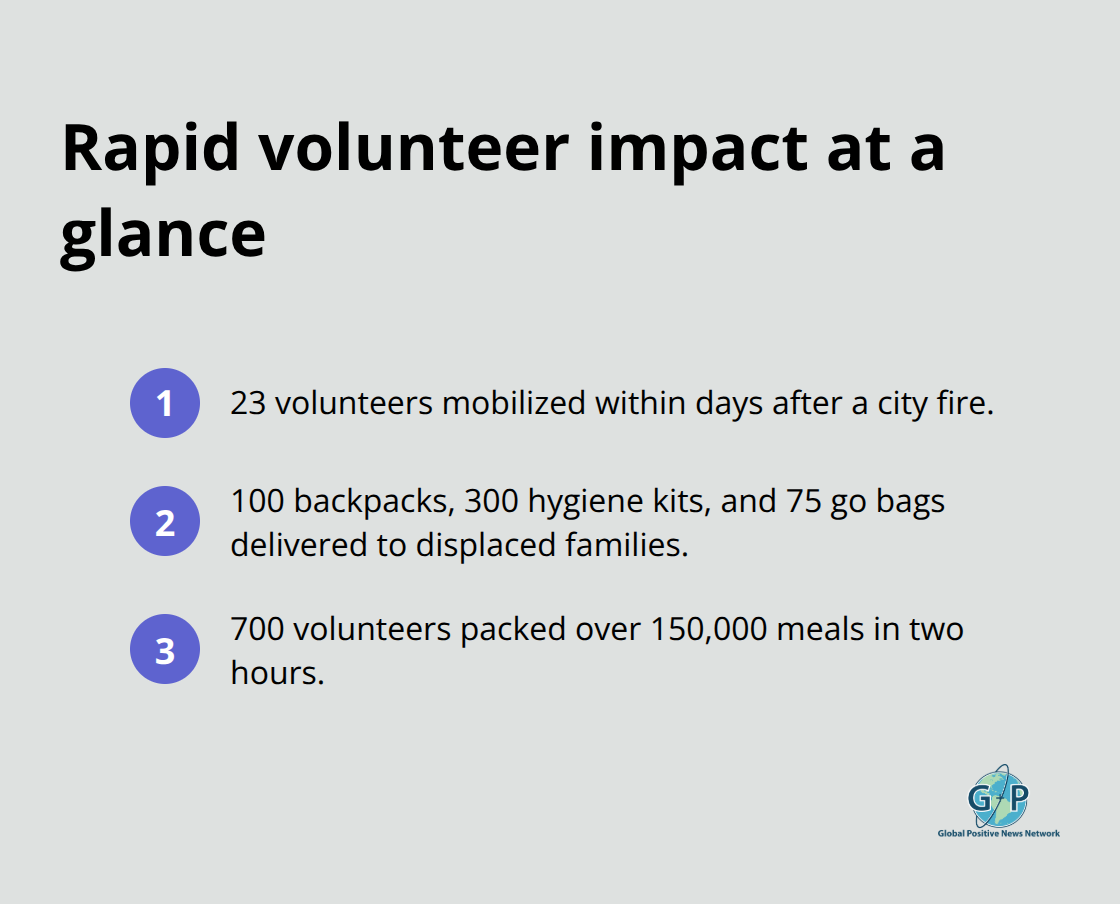
Volunteer networks rooted in local connections mobilize rapidly when disaster strikes. After a major city fire displaced families, 23 volunteers organized aid in days, packing and donating 100 backpacks, 300 hygiene kits, and 75 go bags to survivors in temporary housing. When a company organized a volunteer event packing meals, 700 volunteers produced over 150,000 nutritious meals for hunger-relief organizations in just two hours. These numbers reveal that organized volunteer efforts with clear logistics and nonprofit partnerships generate exponential impact.
Structure, Partnership, and Measurable Outcomes
The common thread across these stories is intentional structure. Simon, a veteran, accessed housing through coordinated VA services and went from crisis to his own apartment within weeks, which restored his dignity and enabled him to reconnect with family and plan for the future. Ganjana transformed personal anxiety into purposeful flower growing and gifting, building ambassador networks that connected her with someone in England and created cross-border collaboration. These individuals identified a local need, built a team or partnership, and executed with measurable outcomes. Transformation happens when people move from passive observation to active participation in their communities-and the stories that follow show how this participation takes shape across different sectors and scales.
Community-Led Initiatives Creating Real Change
When communities identify specific problems and organize targeted solutions, the results speak louder than good intentions. Everytable addresses food insecurity through neighborhood-based pricing that makes fresh meals accessible regardless of zip code. In Compton, a meal costs $5; in Santa Monica, $8. This model works because it removes the shame of affordability while maintaining sustainability. Last year, Everytable donated nearly 5,000 free meals through its Pay It Forward program and has raised over $10 million in growth capital, including support from the Kellogg Foundation.
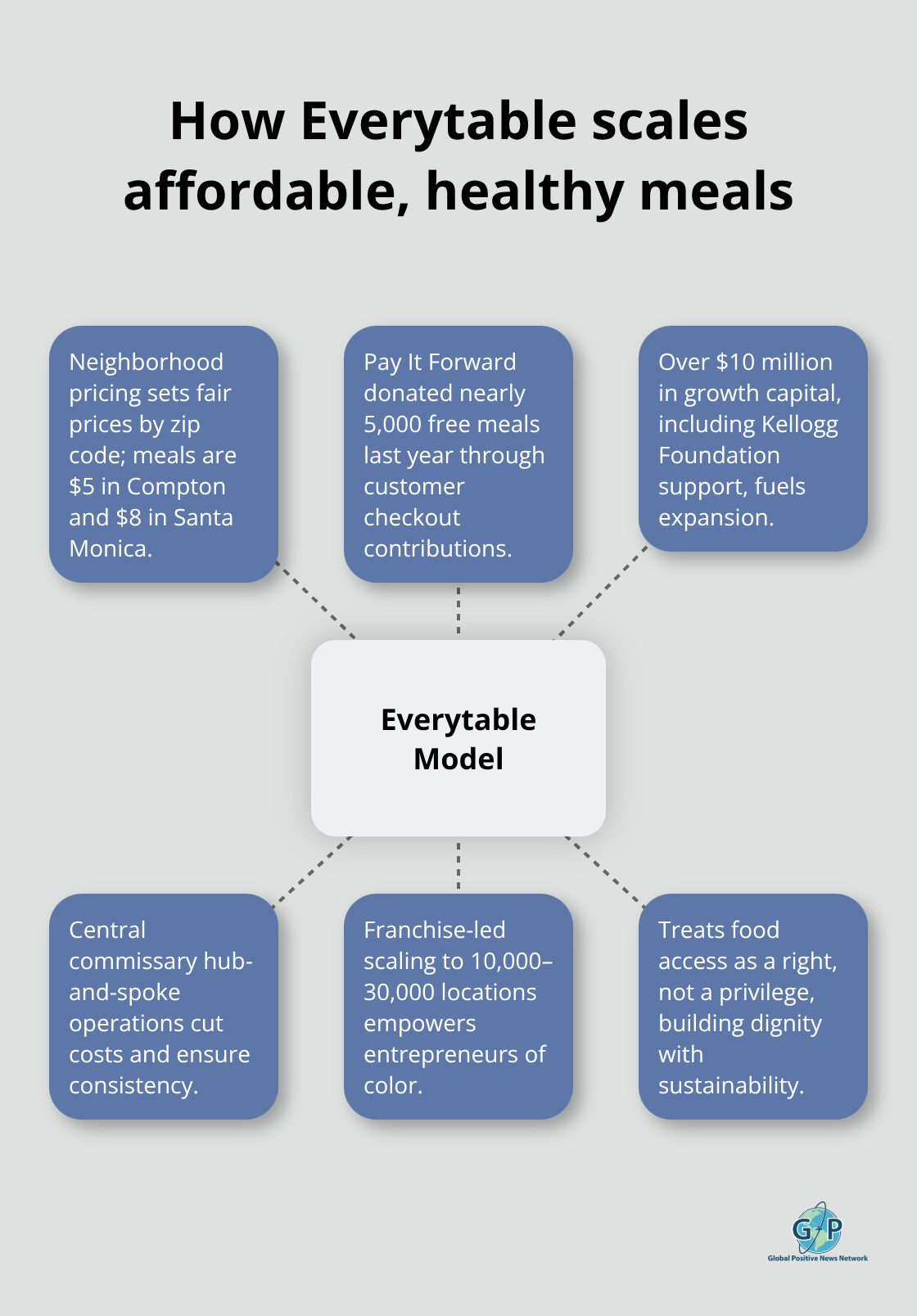
The company operates a hub-and-spoke model with a central commissary to cut costs, and plans to scale to 10,000 to 30,000 locations using a franchise model designed to empower entrepreneurs of color from underserved communities. This isn’t charity disguised as business; it’s a structural solution that treats food access as a right, not a privilege.
Environmental Action Built on Real Restrictions
Grassroots conservation efforts gain traction when they push for concrete legal change rather than settling for awareness campaigns. All Good, a women-run skincare company, supports global legislation to ban toxic chemicals harmful to ocean ecosystems. The company points to real wins: Key West and Hawaii have already banned reef-damaging ingredients. All Good’s sales jumped 100% last year, signaling that consumers actively support brands aligned with conservation. The company operates as a Certified B Corporation and earned Best for the World Overall honors while maintaining membership in 1% for the Planet, committing 1% of sales to environmental nonprofits. This model proves that environmental action works when it combines product transparency, legal advocacy, and measurable business growth. Communities don’t need to wait for government mandates; they can build market demand for sustainable alternatives and use that leverage to shift policy.
Education as the Foundation for Breaking Cycles
Mentorship and meals together create conditions where learning actually happens. Maya’s youth center in her hometown combines tutoring with free meals, addressing the fact that hungry students cannot concentrate. Schools and districts serve as effective partners for these initiatives because they reach families already embedded in education systems. When a local flower farm donated 300 stems for a foster families bouquet event organized with a Boys & Girls Club, the partnership multiplied impact through youth programming and community generosity. Establishing a scholarship fund targeted at underprivileged students equalizes opportunities for higher education in ways that tutoring alone cannot. The practical approach works like this: identify the barrier (hunger, lack of mentors, cost of college), build a partnership with an institution that reaches your target population, and execute with measurable outcomes. These programs sustain momentum when teachers remain as ongoing mentors, when local businesses contribute resources, and when success stories are shared publicly to attract new donors and volunteers.
How Organized Networks Scale Impact Rapidly
Volunteer networks rooted in local connections mobilize rapidly when disaster strikes. After a major city fire displaced families, 23 volunteers organized aid in days, packing and donating 100 backpacks, 300 hygiene kits, and 75 go bags to survivors in temporary housing. When a company organized a volunteer event packing meals, 700 volunteers produced over 150,000 nutritious meals for hunger-relief organizations in just two hours. These numbers reveal that organized volunteer efforts with clear logistics and nonprofit partnerships generate exponential impact. Structure matters as much as intention. Communities that establish clear roles, coordinate with established organizations, and measure outcomes create momentum that extends far beyond a single event or initiative.
How Kindness Compounds Through Communities
Small Actions Become Movements
One person’s act of compassion rarely stays contained. When Ganjana started growing flowers to manage her anxiety, she didn’t anticipate that her weekly bouquets would inspire an ambassador network spanning continents, including a collaborator in England who helped amplify her impact. That’s how small actions become movements. The Growing Kindness initiative demonstrates this concretely: weekly hospital bouquets delivered by volunteers to families staying at Lily Pads Housing near a pediatric hospital create measurable momentum. Hospitals see increased patient morale; families experience tangible care; volunteers develop ongoing relationships with the community they serve.
Structure Multiplies Impact Exponentially
The partnership with an established organization like Lily Pads Housing matters enormously because it removes friction. The hospital’s volunteer services department coordinates logistics, ensures compliance, and connects givers with recipients efficiently. Without that structure, good intentions stall. With it, a single person’s flower garden becomes a weekly ritual that touches dozens of lives. This is why organized giving channels outperform random acts. Everytable’s Pay It Forward program donated nearly 5,000 free meals last year not through sporadic donations but through a deliberate system where customers fund meals for others at checkout. The structure makes participation effortless; the scale multiplies impact. Similarly, when 700 volunteers organized through a single company event packed over 150,000 meals in two hours for hunger-relief organizations, the outcome wasn’t luck-it was logistics. Clear roles, predetermined workflows, partner nonprofits ready to receive donations, and measurable targets created conditions for exponential impact. Communities that want to scale kindness must resist the urge to keep things informal. Formalize partnerships with established institutions, set specific targets, measure outcomes, and document results so others can replicate the model.
Visibility Transforms Individual Acts Into Cultural Shifts
Sustained momentum requires visibility and invitation. Maggie Hartman’s gift-giving reached over 550 recipients last year precisely because she made her work visible through roadside stands, farmers markets, and a weekly bouquet at Chick-fil-A. People saw what was possible and joined in.
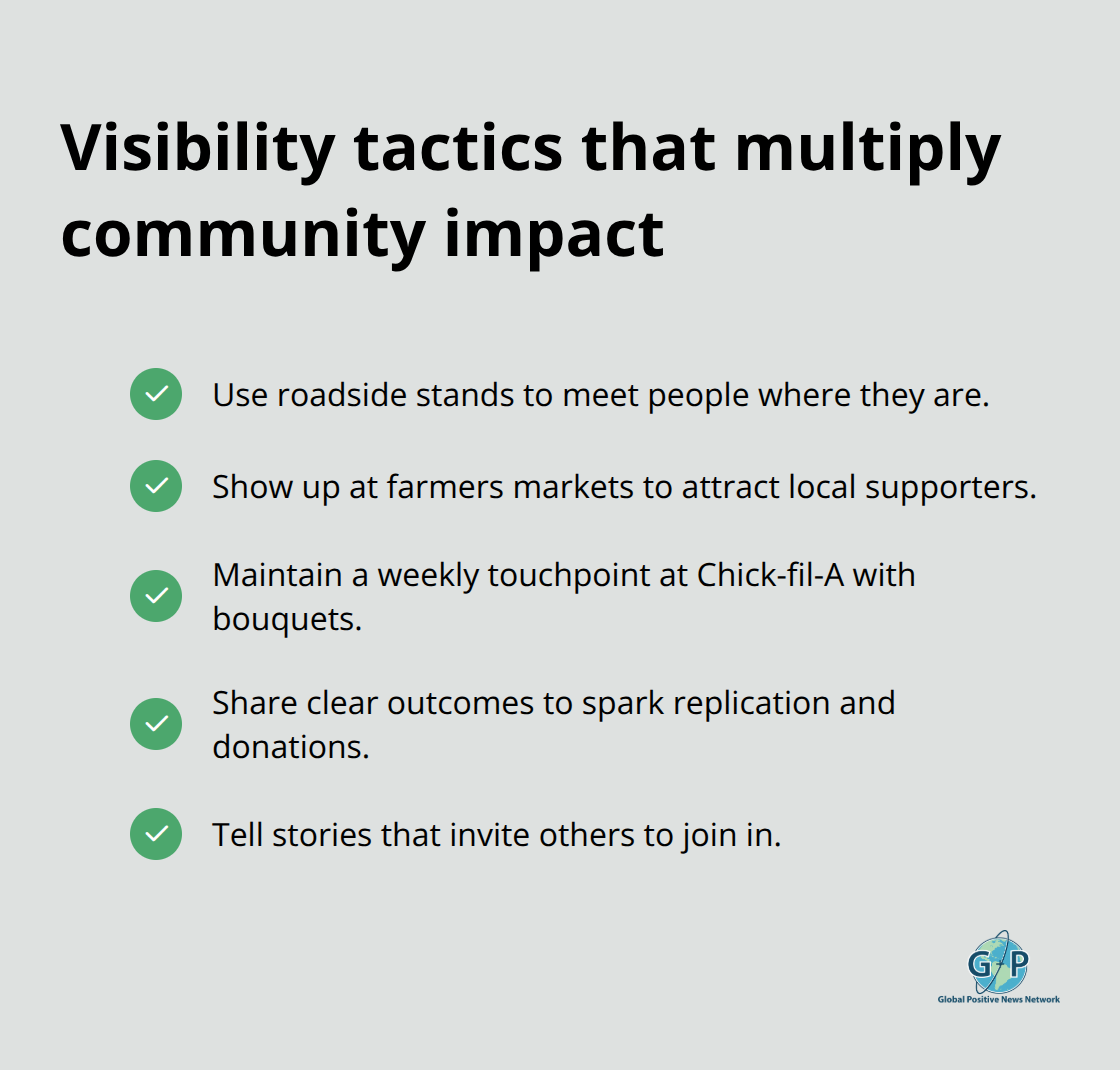
The TDThanksYou initiative highlights everyday customers making community-wide impacts, illustrating how storytelling transforms individual acts into cultural shifts. When success stories circulate publicly, they do more than inspire-they create permission structures. People see that someone like them created change, so they believe they can too. This is why sharing concrete outcomes matters more than vague platitudes. Rather than celebrating generosity abstractly, name the 300 hygiene kits distributed to fire survivors or the 5,000 meals donated through a specific program. Specificity breeds replication.
Systemic Solutions Create Lasting Structural Change
Communities that want systemic change must move beyond individual stories to systemic solutions. All Good’s push for legislation banning reef-damaging chemicals in Key West and Hawaii shows how market pressure combined with legal advocacy creates lasting structural change. The company’s 100% sales jump last year proves that consumers actively support brands advancing concrete policy wins, not just awareness campaigns. This pattern repeats across sectors: when communities identify a problem, build partnerships with institutions, execute with measurable outcomes, and publicize results, they create momentum that attracts new participants, funding, and eventually policy attention. The ripple effect isn’t mystical-it’s mechanical. One act of compassion spreads when it’s organized, visible, and replicable.
Final Thoughts
Community impact stories matter because they counter the narrative that individual action doesn’t matter. When you read about Maya building a youth center or Maggie distributing 550 gifts, your brain registers possibility instead of helplessness. Research shows that exposure to stories of positive change reduces anxiety and increases optimism about the future, and people who regularly engage with community impact stories report feeling more connected to their neighborhoods and more motivated to participate in local efforts.
Finding these stories requires intentional attention to what happens around you. Look within your own community first-local nonprofits, schools, and volunteer organizations document their work through newsletters and social media. Ask neighbors about causes they support, attend community meetings, and listen for the people solving problems quietly. When you find a story worth sharing, amplify it by posting specific details about outcomes on social media, tagging the organizations involved, and sharing it with friends who care about similar issues.
Your role in creating the next uplifting story starts with identifying a problem you notice and a skill or resource you can contribute. Start small by volunteering with an existing organization that aligns with your values, donating supplies to a local program, mentoring a young person, or organizing your neighbors around a shared need. Explore uplifting stories and join a community committed to positive change at Global Positive News Network.
Having a hard day?
The 2 Minute Hope Reset is a short free guide with three small practices for the days that feel heavy. Two minutes each, nothing to keep up with.
Get the free guideExplore more positive news:
Enjoying stories like this?
Global Positive News Network is reader-supported. If you’d like to support the mission, you can visit the Official GPNN store.