

Technology is reshaping how communities thrive, and 2026 is proving to be a turning point. At Global Positive News Network, we’re tracking hopeful tech solutions that are genuinely improving lives-from affordable internet reaching remote areas to AI healthcare tools serving underserved populations.
The innovations we’re covering aren’t theoretical. They’re working right now, solving real problems and creating tangible opportunities for communities worldwide.
What’s Driving Real Change in Communities Right Now
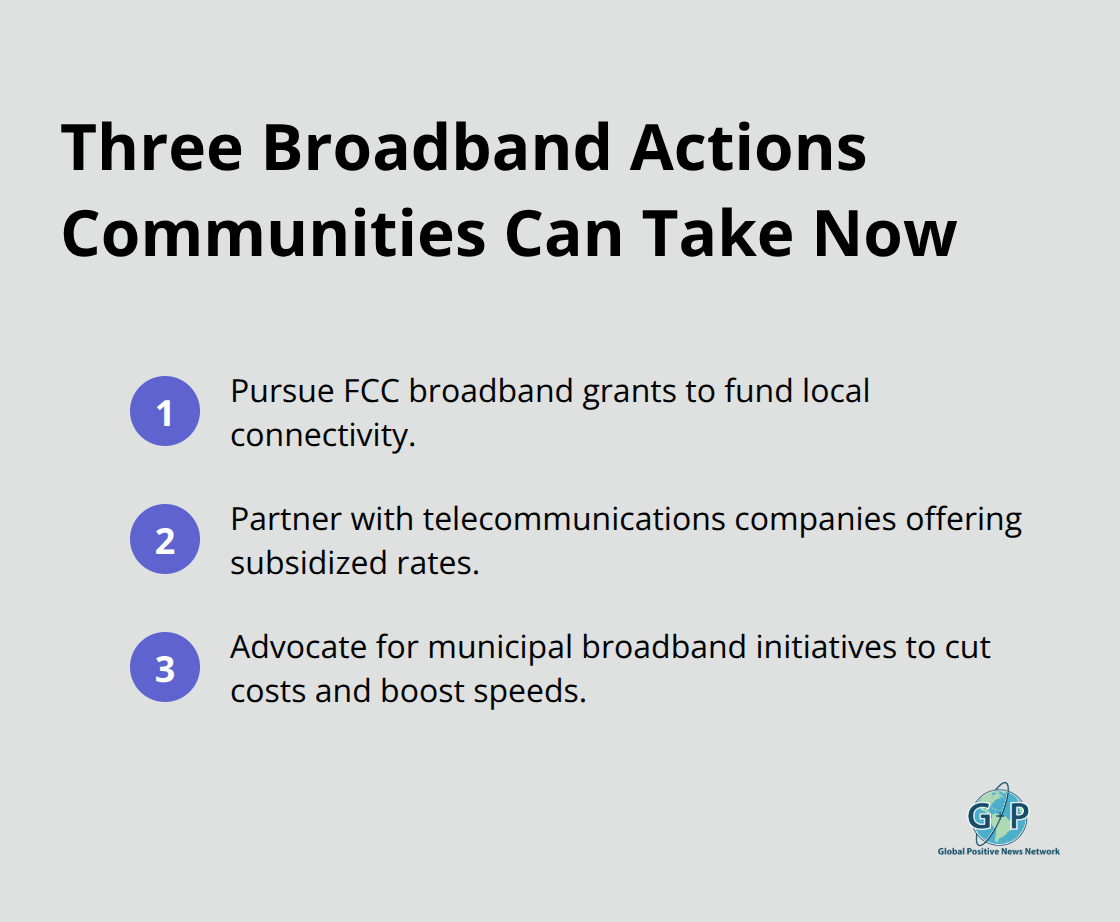
Broadband access remains the foundation for community progress, and 2026 shows genuine momentum. The Federal Reserve Bank of San Francisco tracks how lower-income communities adopt digital tools, revealing that internet connectivity directly correlates with economic opportunity. Communities that secured broadband funding through government grants and corporate partnerships saw measurable improvements in small business formation and job access. Communities should pursue FCC broadband grants, partner with telecommunications companies offering subsidized rates, and advocate for municipal broadband initiatives. Cities like Lafayette, Louisiana built municipal fiber networks, cutting costs and improving speeds for residents.
The investment pays off immediately. Small business owners report faster transaction processing, reduced operational expenses, and expanded customer reach within months of obtaining reliable internet.
Healthcare Tools Meeting Communities Where They Are
AI-powered healthcare platforms operate in underserved areas right now, not in pilot phases. Telemedicine applications using artificial intelligence for initial diagnosis triage reduce wait times in rural clinics from weeks to days. The Federal Reserve’s research emphasizes that on-the-job exposure to AI for lower-income workers creates training needs and career pathways. Community health workers trained on these systems become more valuable employees, commanding higher wages and building sustainable careers. Nonprofits and local health departments should prioritize staff training on AI healthcare tools rather than assuming technology adoption happens automatically. Communities benefit when they identify vendors offering free or reduced-cost training, allocate staff hours for skill development, and measure outcomes monthly to justify continued investment.
Open-Source Solutions Cutting Costs Dramatically
Open-source software eliminates licensing fees that drain nonprofit budgets. Organizations using open-source platforms for data management, communication, and fundraising report cost reductions in technology spending. The Federal Reserve emphasizes that technical assistance helps lower-income communities adopt solutions while managing costs and access. Local nonprofits should audit their software stack, identify proprietary tools they can replace with open-source alternatives, and invest savings into staff training. Communities benefit most when they build internal technical capacity rather than relying entirely on external vendors. Established local tech support networks where trained volunteers maintain systems create employment and strengthen community resilience.
The Next Wave: Corporate and Philanthropic Support
Tech companies and foundations increasingly recognize their role in community transformation. Corporate pro bono programs now provide free software, training modules, and direct technical assistance to nonprofits and underserved communities. Philanthropic organizations craft policies that balance AI benefits (efficiency and opportunity) with risks (bias, privacy, and displacement). This alignment between corporate capability and community need creates sustainable pathways forward. Communities that tap into these resources-whether through corporate partnerships, foundation grants, or collaborative networks-position themselves to scale solutions rapidly.
Tech Solutions Already Working in Communities
Solar Power Transforms Remote Villages Today
Solar energy systems electrify remote villages across Africa and South Asia right now, not in distant future scenarios. Off-grid solar installations in Kenya’s rural regions power clinics, schools, and small businesses without reliance on government infrastructure that may never arrive. Farmers extend work hours with reliable lighting, students study after dark, and healthcare workers operate equipment consistently. The cost barrier has collapsed. Solar panel prices dropped 85% between 2010 and 2020, making installations affordable for village cooperatives and nonprofits.

Communities should assess local solar potential through free online tools like PVGIS and partner with equipment suppliers offering payment plans. Training local technicians to maintain systems creates ongoing employment while reducing dependency on external contractors. This approach builds economic resilience alongside energy access.
Mobile Apps Connect Food to Families in Hours
Food insecurity persists in wealthy nations, yet mobile applications now connect surplus food directly from donors to families in need within hours. Food bank networks in the United States adopted real-time inventory apps that show participating families exactly what’s available, when it’s available, and how to access it. Food waste dropped measurably while family participation increased because the experience felt less like charity and more like shopping.
Communities implementing these platforms should start small with a specific neighborhood or demographic and measure participation monthly. Technical infrastructure matters less than community leadership that actively recruits participants, responds to feedback within days, and celebrates wins publicly. Expansion happens only after establishing reliable engagement patterns.
Skill-Sharing Platforms Build Local Capacity
Community skill-sharing platforms connect residents with expertise in everything from home repair to language instruction without requiring payment. These platforms thrive when communities invest minimal overhead costs and prioritize building trust through moderation and clear communication standards. The strongest networks require someone accountable for quality and safety rather than assuming peer review alone maintains standards.
Effective platforms start small, measure engagement monthly, and expand strategically. Community leadership that actively recruits participants and responds to feedback within days creates momentum. Public celebration of wins attracts more participants and strengthens the network’s reputation.
These real-world solutions demonstrate that technology works best when communities take ownership of implementation and adapt tools to their specific contexts. The next step involves understanding how communities can access the support and resources needed to launch these initiatives at scale.
Getting Support From Tech Companies and Funders
Structured Pro Bono Programs Deliver Real Resources
Tech companies have moved beyond one-off donations and now operate structured pro bono programs specifically designed for community implementation. These aren’t theoretical partnerships-they’re formalized commitments with measurable deliverables. Companies like Inflectra now provide free software licenses, training modules aligned with university curricula, and direct technical assistance to nonprofits and underserved areas. The Federal Reserve Bank of San Francisco found that technical assistance directly helps lower-income communities adopt AI and digital solutions while managing costs and access barriers.
Communities should approach tech companies with specific requests rather than vague partnership inquiries. Instead of asking for general support, identify the exact software your organization needs, request a pilot period of 90 days with measurable metrics, and propose how your success story could benefit the company’s corporate social responsibility goals. Many tech firms allocate budget specifically for pro bono work and need concrete projects to deploy it.
Corporate Volunteer Programs Unlock Specialized Expertise
Corporate volunteer programs unlock specialized expertise that most nonprofits cannot afford to hire. Data analysts, cybersecurity professionals, and product designers can spend paid time supporting your initiatives. Request a skills audit first, where company volunteers assess your current technical infrastructure and recommend targeted improvements rather than wholesale replacements. This approach produces actionable recommendations without requiring your organization to fund expensive consultants.
Navigate Broadband and Foundation Funding Strategically
Funding pathways for digital infrastructure have expanded significantly, though they require strategic navigation. The Federal Communications Commission broadband grants fund last-mile connectivity in underserved areas. Communities should apply for these grants 12 months before needing the funds, as approval timelines run long. State broadband offices maintain updated lists of available grants and often provide application support at no cost.
Foundation funding from major philanthropic organizations increasingly emphasizes tech adoption and digital equity. Enterprise Community Partners, the Robert Wood Johnson Foundation, and the Comcast NBCUniversal Foundation actively fund community technology initiatives. These foundations craft policies balancing innovation benefits with risks like bias and privacy concerns, meaning your proposal should address how you will implement technology responsibly.
Build Permanent Capacity Through Local Training Programs
Local technical training programs create the most sustainable advantage because they build permanent capacity within your community. Partner with community colleges to integrate AI healthcare tools, open-source platforms, and renewable energy systems into existing certificate programs. This approach produces graduates with marketable skills while solving your immediate staffing needs.
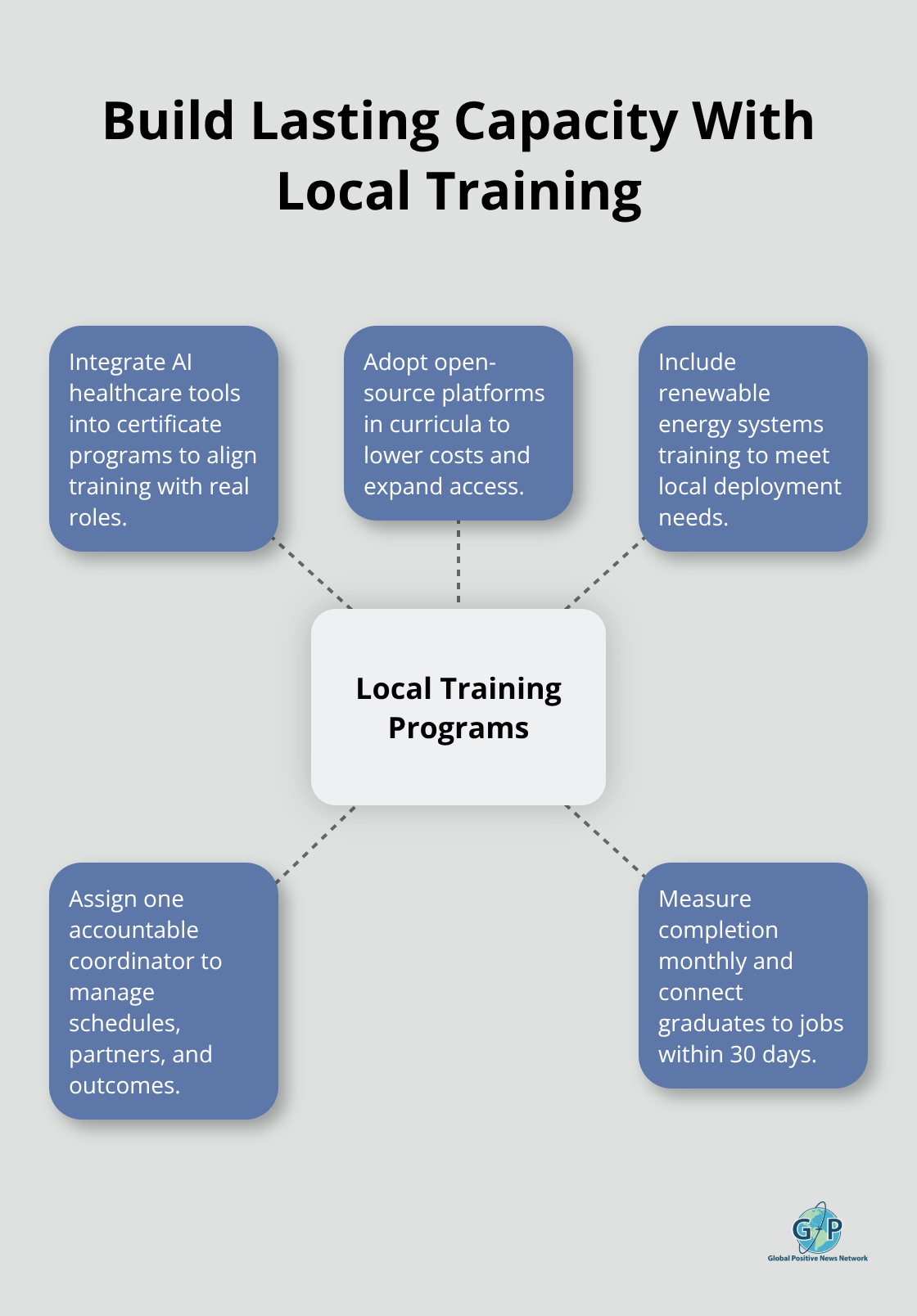
Successful communities identify one person accountable for training coordination, measure completion rates monthly, and connect graduates directly to local employment opportunities within 30 days of program completion. This accountability structure transforms training from a one-time event into a sustainable pipeline that strengthens your community’s technical foundation.
Final Thoughts
Technology transforms communities when people take action. The hopeful tech solutions emerging in 2026 prove that innovation works best when communities own the implementation process rather than waiting for external solutions to arrive. Solar power reaches remote villages because local technicians maintain systems, food banks connect families to surplus meals because community leaders actively recruit participants, and healthcare workers gain valuable skills because organizations prioritize staff training over passive technology adoption.
The momentum building across communities worldwide reflects a fundamental shift in how tech companies, foundations, and government agencies operate. Tech companies now offer structured pro bono programs with measurable deliverables, foundations craft policies that balance innovation benefits with responsible implementation, and government agencies fund broadband infrastructure strategically. This alignment between corporate capability, philanthropic support, and community need creates genuine pathways forward that didn’t exist five years ago.
Your community can start today without waiting for perfect conditions or massive funding. Identify one specific problem technology can solve in your neighborhood, request free software licenses or training from tech companies with concrete proposals, apply for broadband grants through your state’s broadband office, and partner with community colleges to build permanent technical capacity through certificate programs. We at Global Positive News Network track these stories because they demonstrate what becomes possible when communities take ownership of their futures and combine technology with leadership, accountability, and strategic partnerships to create lasting impact.
Having a hard day?
The 2 Minute Hope Reset is a short free guide with three small practices for the days that feel heavy. Two minutes each, nothing to keep up with.
Get the free guideExplore more positive news:
Enjoying stories like this?
Global Positive News Network is reader-supported. If you’d like to support the mission, you can visit the Official GPNN store.