
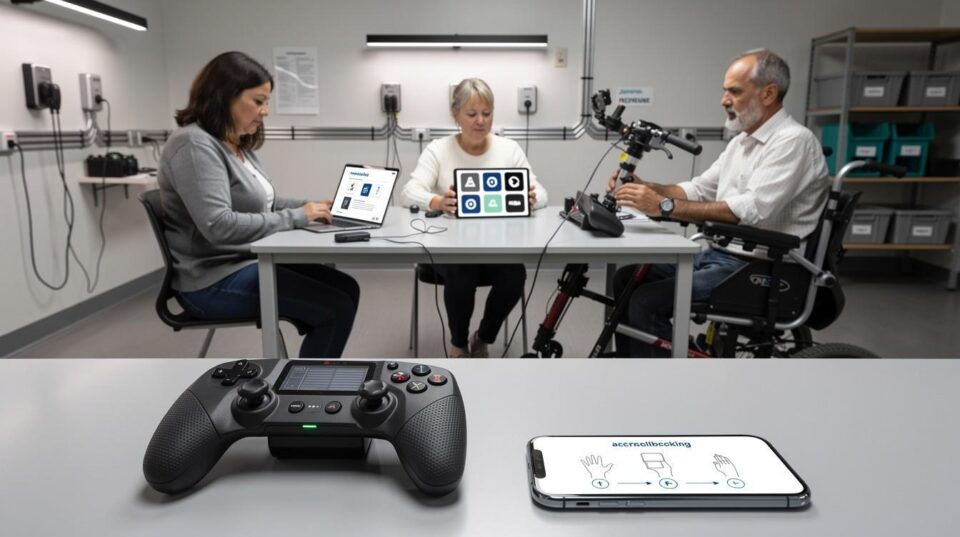
Accessible technology for hope is transforming lives by removing barriers that have long kept people with disabilities from full participation in society. At Global Positive News Network, we believe that innovation in digital tools isn’t just about convenience-it’s about fundamental human dignity and equal opportunity.
The solutions emerging today are real, practical, and already making measurable differences in employment, education, and independence. This blog post explores how these innovations work and what comes next in building a truly inclusive digital world.
How Accessible Technology Creates Real Opportunity
Removing Barriers That Block Daily Life
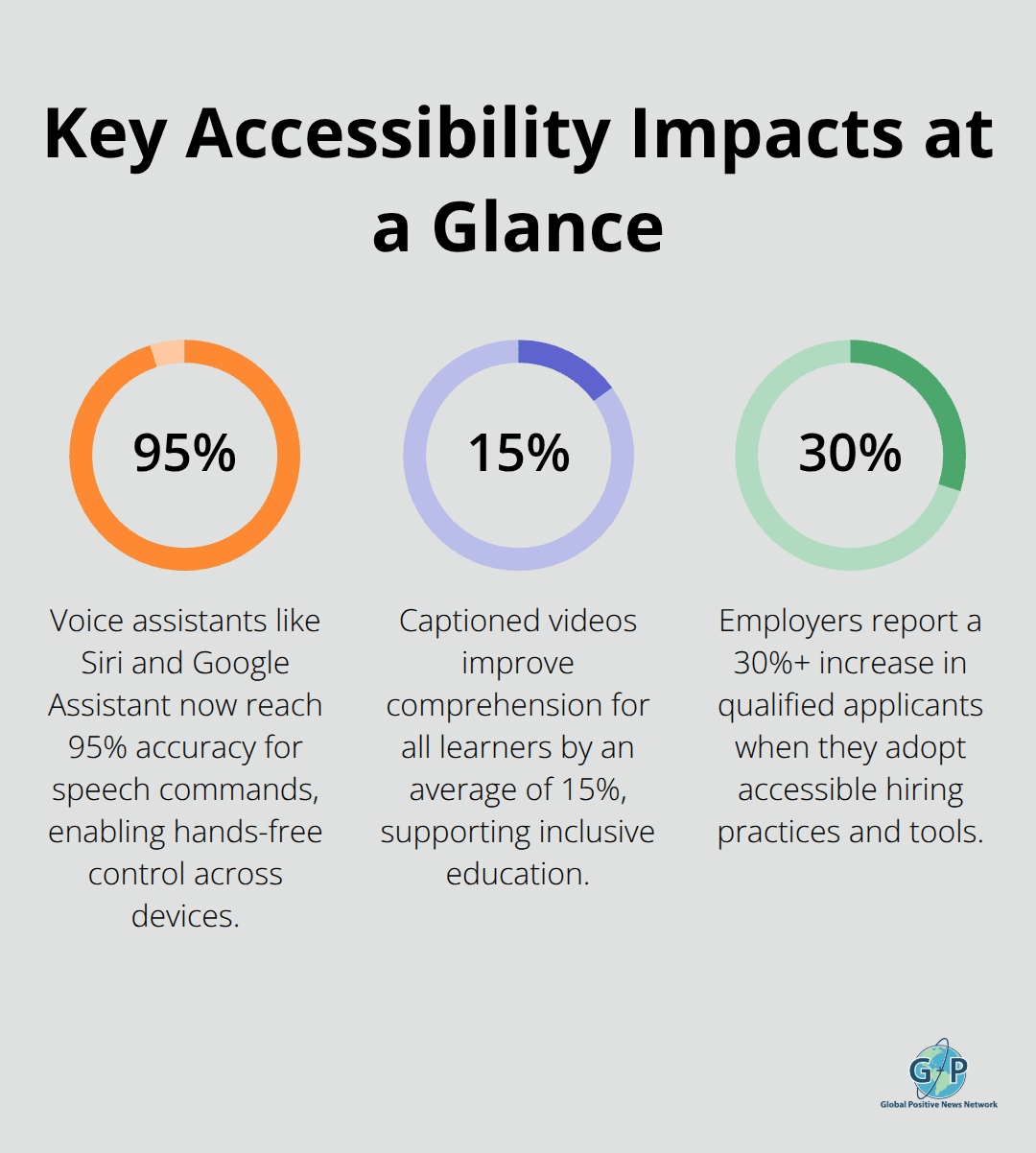
Accessible technology works because it removes specific, concrete barriers that people with disabilities face every day. A person who is blind can navigate websites and applications through screen readers that convert text to speech, allowing them to apply for jobs, manage finances, and access educational content independently. According to the American Foundation for the Blind, screen reader users have access to properly configured digital tools that support workplace inclusion. Voice recognition technology has advanced significantly, with tools like Google Assistant and Apple’s Siri achieving 95% accuracy rates in understanding speech commands, enabling people with mobility limitations to control computers, smartphones, and smart home devices without touching a keyboard or mouse. These aren’t theoretical improvements-they translate directly into people working, learning, and living without constant dependence on others.
Employment Gains Through Accessible Design
The employment impact is measurable and substantial. The World Health Organization reports that people with disabilities experience unemployment rates nearly double those of people without disabilities, yet accessible technology supports an estimated 1.3 billion people who experience significant disability globally. When employers implement proper accessibility features like adjustable font sizes, customizable color schemes, and keyboard navigation options, they tap into this talent pool. Companies like Microsoft and IBM have reported that accessible hiring practices increased their qualified applicant pools by 30% or more, while simultaneously improving retention rates.
Education and Independence Through Technology
Educational access has expanded equally-online learning platforms with captions, transcripts, and adjustable playback speeds enable deaf and hard-of-hearing students to participate fully in courses. Research from the National Association of the Deaf shows that captioned videos improve comprehension for all learners by an average of 15%. Independence grows when technology adapts to individual needs rather than forcing people to adapt to rigid systems. This shift from one-size-fits-all design to personalized, flexible interfaces represents a fundamental change in how we build digital tools.
The real power of accessible technology lies not in its complexity but in its practical results. People with disabilities gain control over their own lives, employers access wider talent pools, and educational institutions reach more students effectively. These outcomes depend on continued innovation and widespread adoption of accessibility standards across industries. Understanding what innovations currently exist sets the stage for examining the tools and technologies that are already reshaping possibilities for millions of people worldwide.
What Technology Powers Accessibility Today
Voice Assistants Transform Daily Control
AI-powered voice assistants have become the most practical entry point for accessibility because they work across devices and require minimal setup. Google Assistant, Apple’s Siri, and Amazon’s Alexa now handle complex commands with 95% accuracy rates, allowing people with mobility or visual impairments to control computers, phones, and smart home systems without keyboards or touchscreens. These tools work in real homes and workplaces right now, not in laboratories. A person with severe arthritis can dictate emails, schedule appointments, and navigate applications entirely through speech, eliminating the physical strain that previously forced many out of the workforce. The National Federation of the Blind reports that voice-controlled devices have become an increasingly adopted accessibility solution by people with disabilities.
Screen Readers Enable Workplace Productivity
Screen readers remain the backbone of web and application accessibility, converting digital text into audio output that blind users can navigate at their own pace. NVDA, a free open-source screen reader, has become standard in education and many workplaces because it costs nothing and works reliably across Windows systems. JAWS, a commercial alternative, costs around $1,200 but offers advanced features for complex professional software. The difference between these tools and older solutions matters significantly-speed and accuracy directly impact productivity. A 2024 WebAIM study found that screen readers enable blind employees to work effectively in professional environments, with adoption of tools like VoiceOver growing significantly among users with disabilities.
Natural-Sounding Speech Technology
Text-to-speech technology has improved dramatically beyond robotic-sounding voices, with natural-sounding options now available through tools like Natural Reader and Read&Write. These solutions integrate directly into Microsoft Office and Google Workspace, making them workplace standards that employers must provide to comply with accessibility regulations in most developed countries. The shift from specialized software to integrated tools means organizations can support accessibility without expensive separate purchases.
Adaptive Hardware and Built-In System Features
Physical accessibility requires both hardware adaptation and software flexibility working together. Customizable keyboards with programmable keys, eye-tracking devices that translate eye movement into cursor control, and switch-activated systems that respond to single button presses have all become more affordable and powerful. Tobii’s eye-tracking technology, once limited to research settings, now costs under $400 for consumer versions and integrates with Windows 10 and 11 natively.
The real innovation lies in how operating systems now support these devices. Windows Accessibility Settings and macOS Accessibility features allow users to adjust font sizes, increase color contrast, enable high-contrast modes, and remap keyboard functions without purchasing specialized software.
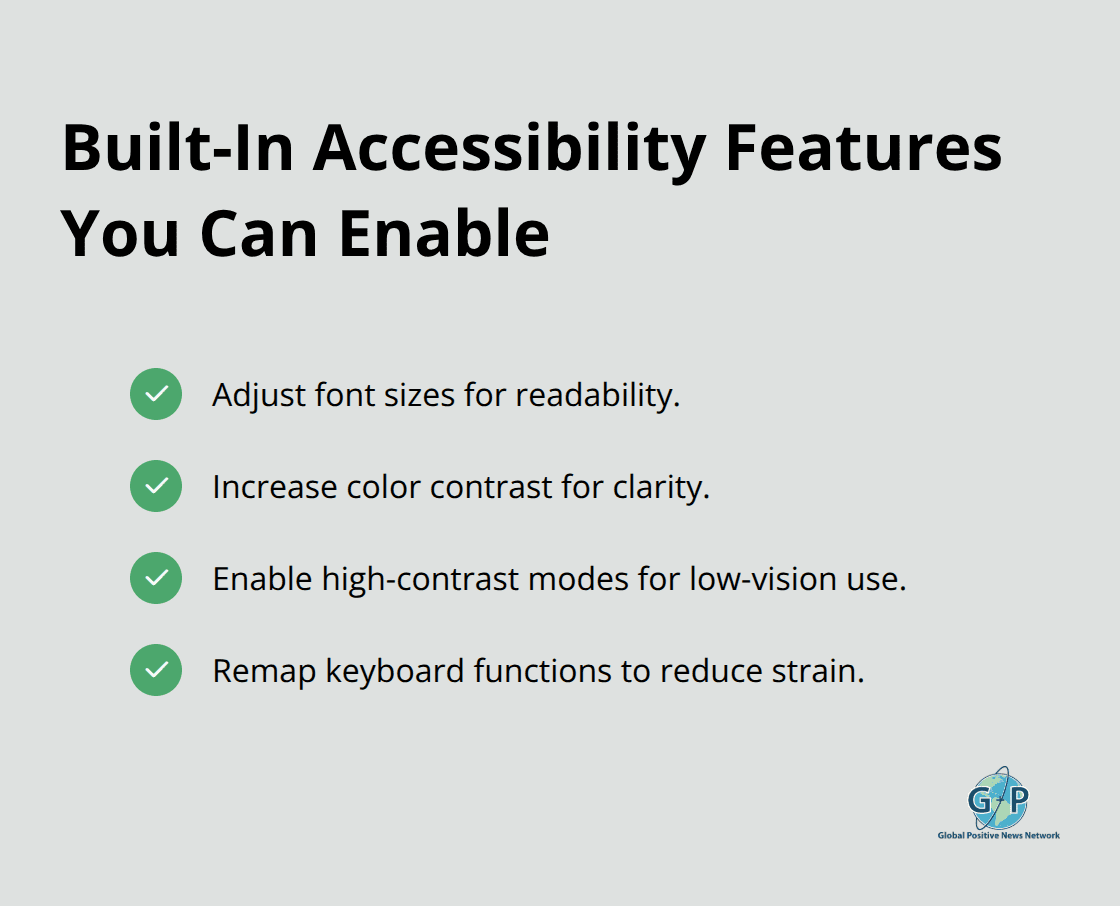
This shift toward built-in accessibility means a person with low vision can make a computer usable within minutes instead of spending hundreds on dedicated adaptive technology. Organizations worldwide have recognized this trend, making accessibility a standard feature rather than an afterthought.
These technological advances have created the foundation for broader change. Yet technology alone cannot sustain progress-the organizations, policies, and communities that champion accessibility standards determine whether these innovations reach the people who need them most.
Who’s Making Accessibility Happen Right Now
Tech Giants Embed Accessibility Into Core Products
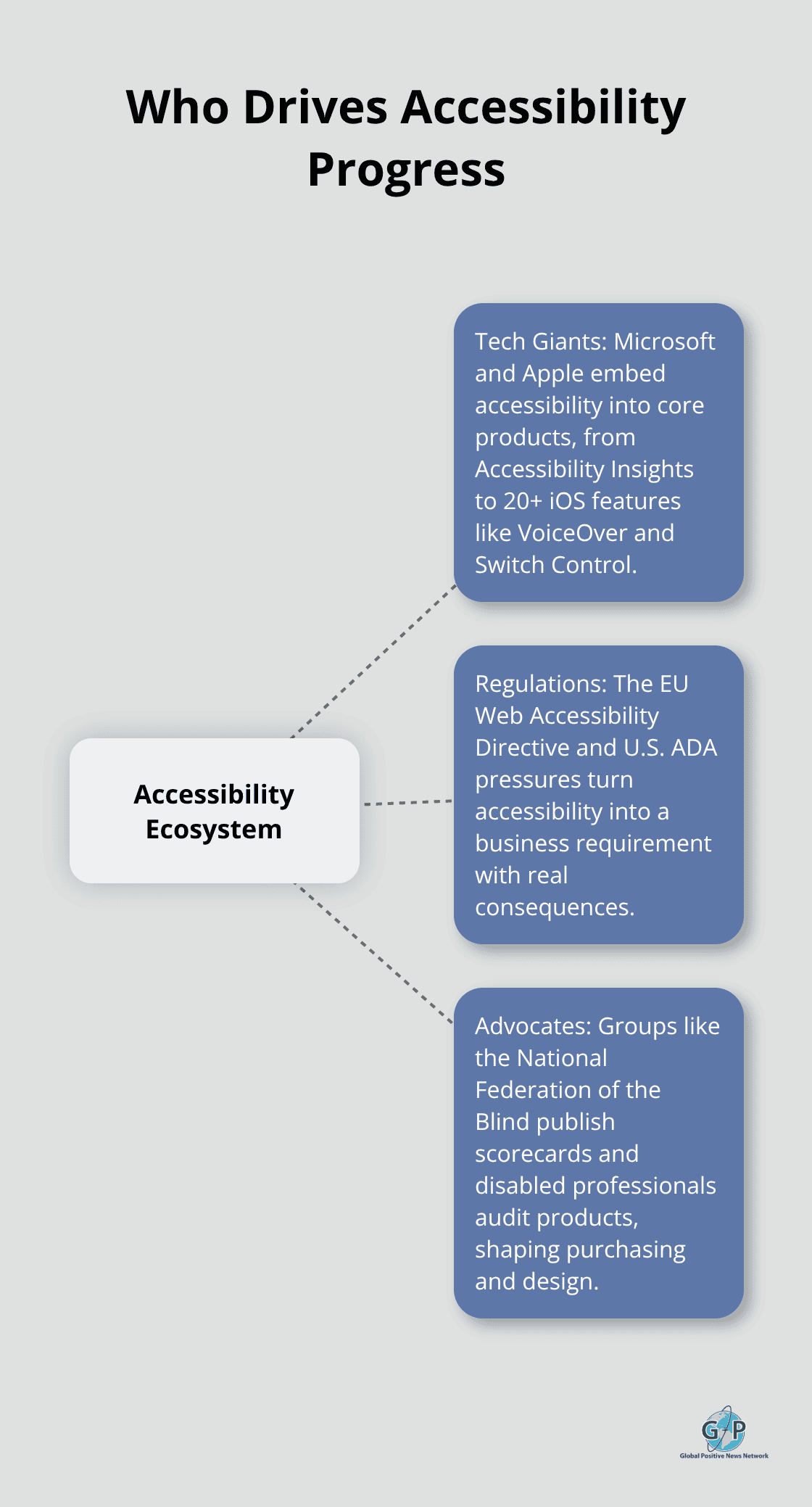
Microsoft and Apple have embedded accessibility into their core product development rather than treating it as an afterthought, which fundamentally changes what gets built. Microsoft’s Accessibility Insights tool works publicly and free, allowing developers to test websites and applications for accessibility compliance without expensive audits. Apple’s commitment shows in concrete numbers: iOS supports over 20 accessibility features built directly into the operating system, from VoiceOver to Switch Control, meaning users don’t need to purchase separate adaptive technology. These represent actual engineering resources and product roadmap decisions that prioritize disabled users from the beginning of development.
Regulations Transform Accessibility Into Business Requirements
The European Union’s Web Accessibility Directive, which took effect in 2020, requires all public sector websites and applications to meet WCAG 2.1 AA standards or face legal consequences. This regulatory pressure has forced organizations across Europe to invest in accessibility compliance, creating demand for accessible design expertise and pushing vendors to build accessible products as standard features. The Americans with Disabilities Act’s digital accessibility requirements produce similar effects in the United States, though enforcement remains inconsistent. Countries like Canada and Australia have followed with their own standards, meaning multinational organizations now find it simpler to build accessible products globally than to maintain separate accessible and inaccessible versions.
This regulatory shift matters because it transforms accessibility from a nice-to-have feature into a business requirement with financial consequences for non-compliance. Organizations ignoring these standards face lawsuits-Target paid $6 million in 2008 for website accessibility violations, and similar cases continue today, making accessibility a liability issue that finance departments finally understand.
Disability Advocates Hold Companies Accountable
Grassroots momentum comes from disability advocacy organizations that test products, publish accessibility ratings, and hold companies accountable. The National Federation of the Blind publishes accessibility scorecards for major technology companies, directly influencing purchasing decisions by government agencies and large employers. Disabled people themselves have become accessibility auditors and consultants, moving beyond passive users to active participants in product design. Companies like Deque Systems now employ disabled professionals specifically to audit accessibility, recognizing that disabled people understand accessibility barriers better than non-disabled designers ever will. This shift from consultation to employment of disabled people in accessibility roles has accelerated progress because it embeds lived experience into product decisions rather than relying on theoretical guidelines.
Final Thoughts
Accessible technology for hope has moved from concept to reality, with screen readers, voice assistants, and adaptive devices now serving as working tools that people depend on daily for employment, education, and independence. Employers who implement accessibility features report 30% increases in qualified applicants, while educational platforms with captions improve comprehension for all learners by 15%. Regulatory standards like the EU’s Web Accessibility Directive have transformed accessibility from optional to mandatory, forcing meaningful change across industries and proving that progress happens when organizations prioritize disabled people in product design.
Technology companies must continue embedding accessibility into core products rather than treating it as an afterthought, and governments need consistent enforcement of existing standards alongside stronger regulations. Organizations that hire disabled people as accessibility consultants and product designers gain competitive advantages because lived experience drives better solutions than external expertise alone. Companies that build accessible products access wider talent pools and customer bases while societies that prioritize accessibility benefit from fuller participation of disabled people in economic and civic life.
This isn’t charity-it’s recognizing that accessibility benefits everyone while creating fundamental fairness. Those wanting to learn more about accessible solutions and stories of positive change can visit Global Positive News Network for curated content on community impact and human progress, including accessibility initiatives making real differences worldwide.
Having a hard day?
The 2 Minute Hope Reset is a short free guide with three small practices for the days that feel heavy. Two minutes each, nothing to keep up with.
Get the free guideExplore more positive news:
Enjoying stories like this?
Global Positive News Network is reader-supported. If you’d like to support the mission, you can visit the Official GPNN store.