

Teams with strong leadership perform better under pressure. At Global Positive News Network, we’ve seen firsthand how optimistic leadership strategies transform workplace culture and boost resilience when challenges arise.
The difference between teams that crumble and teams that thrive often comes down to one thing: how their leaders respond to adversity. This guide shows you exactly how to build that strength.
Lead With Vision and Purpose
Vague Goals Destroy Team Morale
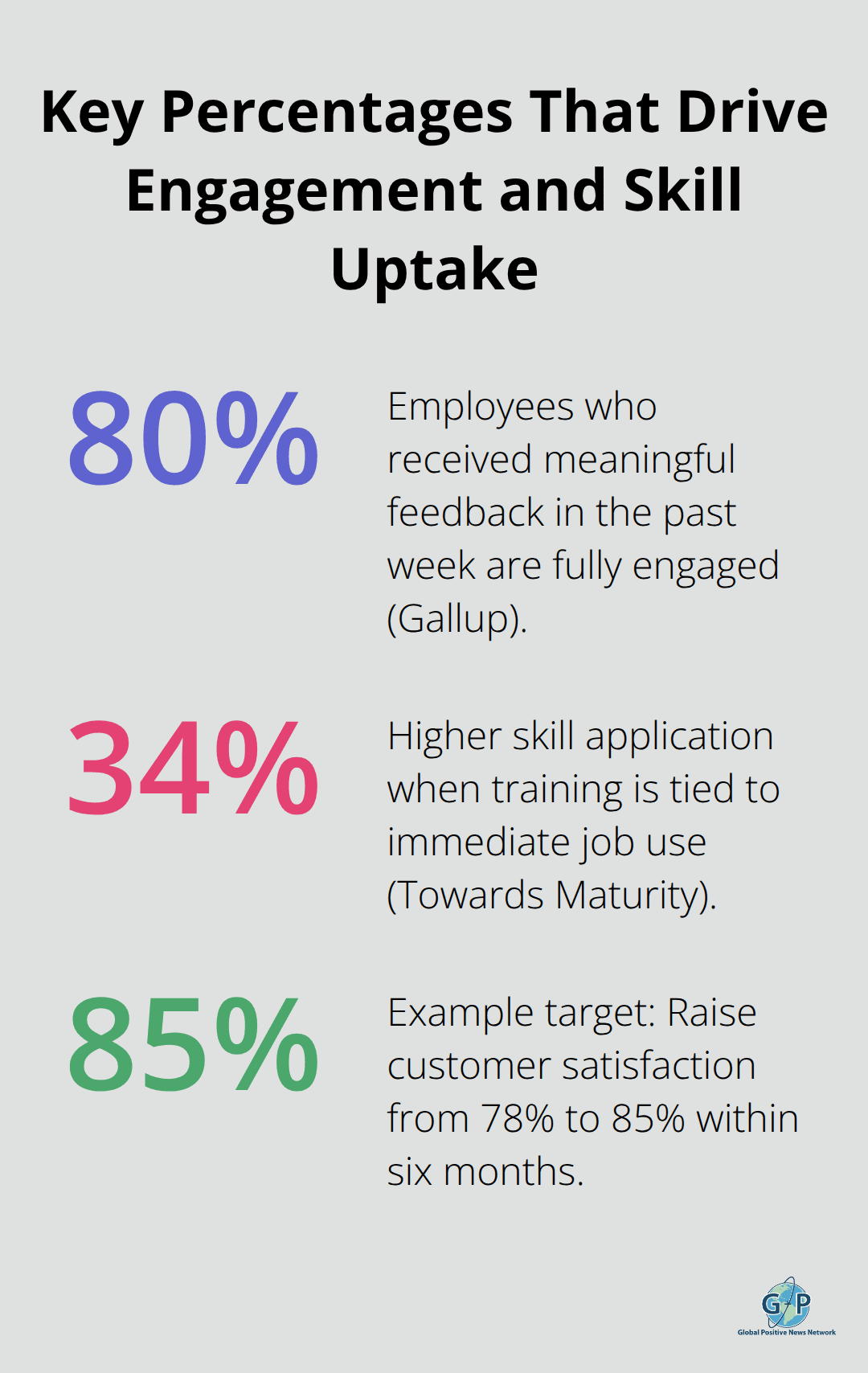
Vague goals destroy team morale. Leaders who articulate specific, measurable objectives see measurable results. Lead With Vision and Purpose research shows that specific, challenging goals motivate performance far better than general “do your best” exhortations. Specificity matters-teams need to know exactly what success looks like, not general aspirations. Instead of telling your team to improve customer satisfaction, set a concrete target like increasing satisfaction scores from 78% to 85% within six months.
Connect Goals to Purpose
Pair these targets with your organization’s core values, then connect both to why the work matters. When people understand how their daily tasks contribute to something larger, engagement increases significantly. Employees who understand how their work aligns with company purpose show significantly higher engagement levels. The most effective leaders don’t just announce goals once and move on-they reference them consistently in one-on-one meetings, team updates, and decision-making conversations.
Stories Stick Better Than Statistics
People remember stories 22 times better than facts alone, according to research from Stanford University. This means your vision needs a narrative attached to it. Share real examples of how your team’s work has created positive change (a customer whose problem was solved, a process that saved time, a mistake that taught everyone something valuable). These narratives shouldn’t feel polished or corporate; they should feel authentic and relatable.
Model Optimism When Pressure Rises
When leaders openly discuss their own challenges and what they learned, team members become more willing to take intelligent risks. A leader who shares how they mishandled a situation and what they changed afterward gives permission for others to experiment and fail productively. This builds psychological safety faster than any formal policy ever could. In high-pressure moments, leaders who maintain composed, forward-looking communication prevent panic from spreading. Your team watches how you respond to setbacks-if you catastrophize, they will too. If you acknowledge difficulty while focusing on solutions, they follow that model.
The foundation of resilient teams starts with clear vision and authentic leadership. What separates teams that thrive from those that struggle often comes down to trust-and that’s where psychological safety enters the picture.
Build Trust and Psychological Safety
Treat Failures as Information, Not Moral Failures
Trust collapses when leaders treat failures as moral failures rather than information sources. The most resilient teams treat mistakes as data points that improve future performance. This requires a deliberate shift in how leaders respond when things go wrong.
Instead of asking who caused the problem, ask what the problem reveals about your processes, systems, or assumptions. When a team member misses a deadline, the conversation should focus on whether the timeline was realistic, whether they had the right resources, or whether priorities shifted unexpectedly. This approach removes the shame that typically silences people and prevents them from speaking up about obstacles before they become crises.
Create Psychological Safety Through Specific Feedback
Research from Google’s Project Aristotle found that psychological safety was an important factor in high-performing teams. The teams that performed best weren’t the ones with the smartest people-they were the ones where people felt safe taking interpersonal risks.
You build this safety through consistent, specific feedback that separates the person from the behavior. Say something like “That approach didn’t work because the data showed X” rather than “You made a bad decision.” The difference matters enormously for how people internalize feedback and respond to future challenges.
Recognize Contributions Consistently and Specifically
Recognition frequency matters more than recognition size. 80% of employees who say they have received meaningful feedback in the past week are fully engaged, according to research from Gallup. Most leaders undershoot dramatically on this-they save recognition for formal reviews or major accomplishments.
Instead, call out specific contributions in team meetings, one-on-one conversations, or quick messages. Name exactly what the person did and how it contributed to a concrete outcome. A message saying “Your analysis in yesterday’s meeting caught an error we would have missed-that saved us from a costly mistake” lands far differently than generic praise.
Open Communication Channels That Actually Work
Create regular communication channels that allow problems and concerns to surface before they fester. Weekly team meetings should include time for people to voice obstacles without fear of judgment. Some leaders use anonymous feedback channels for issues people feel uncomfortable raising directly, though named feedback tends to lead to faster problem-solving.
The key is consistency-if you ask for input once and never act on it, people stop offering it. When someone raises a concern, you must respond with either action or a clear explanation of why you’re not taking action. Silence signals that speaking up was pointless, and that’s when trust erodes fastest.
The foundation of trust rests on how leaders respond to vulnerability. Once your team knows their mistakes won’t destroy their reputation and their contributions will be recognized, they shift from self-protection to genuine collaboration-which is exactly what resilient teams need to grow stronger under pressure.
Develop Resilience Through Support and Growth
Structure Mentorship Around Real Skill Gaps
Resilient teams don’t emerge from isolation. They form when leaders actively invest in individual growth while creating spaces where people support each other through difficulty. The most effective leaders stop treating development as an annual conversation and start treating it as an ongoing responsibility that directly impacts how their teams handle pressure.
Mentorship works best when it’s structured and specific rather than vague. Assign mentors based on actual skill gaps, not just seniority. A junior analyst struggling with data visualization needs mentorship from someone who excels at that specific skill, not necessarily from the person with the longest tenure. Set clear expectations for both mentor and mentee: monthly meetings, specific topics to cover, and measurable progress markers. Research shows that mentees who received structured mentorship showed greater retention rates than those without formal guidance. The mentee should drive the agenda based on real challenges they face at work, not theoretical exercises. When a team member masters a new skill because someone invested time teaching them, they develop confidence that transfers directly to how they handle setbacks and unfamiliar problems later.
Connect Training to Immediate Application
Professional development budgets often sit unused because leaders fail to connect training to immediate job application. Instead of approving generic courses, tie development directly to upcoming projects or known capability gaps. If your team adopts new software, fund training before implementation begins. If a team member wants to improve presentation skills, enroll them in a course and then have them present findings to leadership within two weeks. This immediate application embeds the learning and prevents the common scenario where people complete training that never influences their actual work. Companies that implement this approach see 34% higher skill application rates, according to research from Towards Maturity, compared to organizations that offer training without workplace reinforcement.
Build Peer Support Networks That Reduce Isolation
Peer support networks accelerate resilience far more effectively than formal support structures alone. Create explicit opportunities for team members to help each other rather than assuming it will happen naturally. Some teams use peer accountability partnerships where two people meet weekly to discuss obstacles and brainstorm solutions. Others organize peer learning sessions where someone teaches a skill to colleagues. These informal networks reduce isolation and give people immediate access to someone who understands their work context. When a team member faces a difficult client situation or a failed project, they talk through it with a peer who’s experienced something similar rather than waiting for a formal mentorship conversation.
Make Continuous Improvement Safe and Action-Oriented
Continuous improvement cultures require leaders to separate improvement discussions from performance evaluations. When improvement ties to ratings or salary decisions, people become defensive and hide problems. Instead, hold dedicated conversations focused purely on how work processes could function better. Ask what obstacles people encounter regularly, which tools frustrate them, and where they lack skills. Then actually address those obstacles. If three people mention the same software limitation, fix it or find a workaround. If people lack time for focused work because of excessive meetings, cut meetings. Improvement only sticks when leaders act on feedback consistently. Teams that practice this see problems surface earlier and get solved faster because people trust that speaking up leads to action rather than judgment. The psychological safety built in previous chapters directly enables this openness, making continuous improvement possible rather than theoretical.
Final Thoughts
Optimistic leadership strategies work because they address a fundamental truth: teams perform better when they feel safe, valued, and connected to something meaningful. The three pillars we’ve covered-vision with purpose, trust through psychological safety, and resilience built on support-reinforce each other. Clear goals give people direction, psychological safety lets them voice obstacles without fear, and mentorship helps them overcome those obstacles.
Organizations with resilient teams experience lower turnover, faster problem-solving, and stronger performance during crises. When people trust their leaders and feel invested in their growth, they stay longer and contribute more fully. They catch problems early instead of hiding them, and they collaborate instead of competing for safety.
Implementation starts small by picking one area where your team struggles most: unclear goals, fear of speaking up, or lack of growth opportunities. Set specific, measurable objectives and reference them consistently, create one regular channel for feedback and respond to what you hear, or pair one person with a mentor focused on a real skill gap. We at Global Positive News Network believe that leadership grounded in optimism and authenticity creates workplaces where people thrive, and your team is waiting for exactly this kind of leadership.
Having a hard day?
The 2 Minute Hope Reset is a short free guide with three small practices for the days that feel heavy. Two minutes each, nothing to keep up with.
Get the free guideExplore more positive news:
Enjoying stories like this?
Global Positive News Network is reader-supported. If you’d like to support the mission, you can visit the Official GPNN store.