

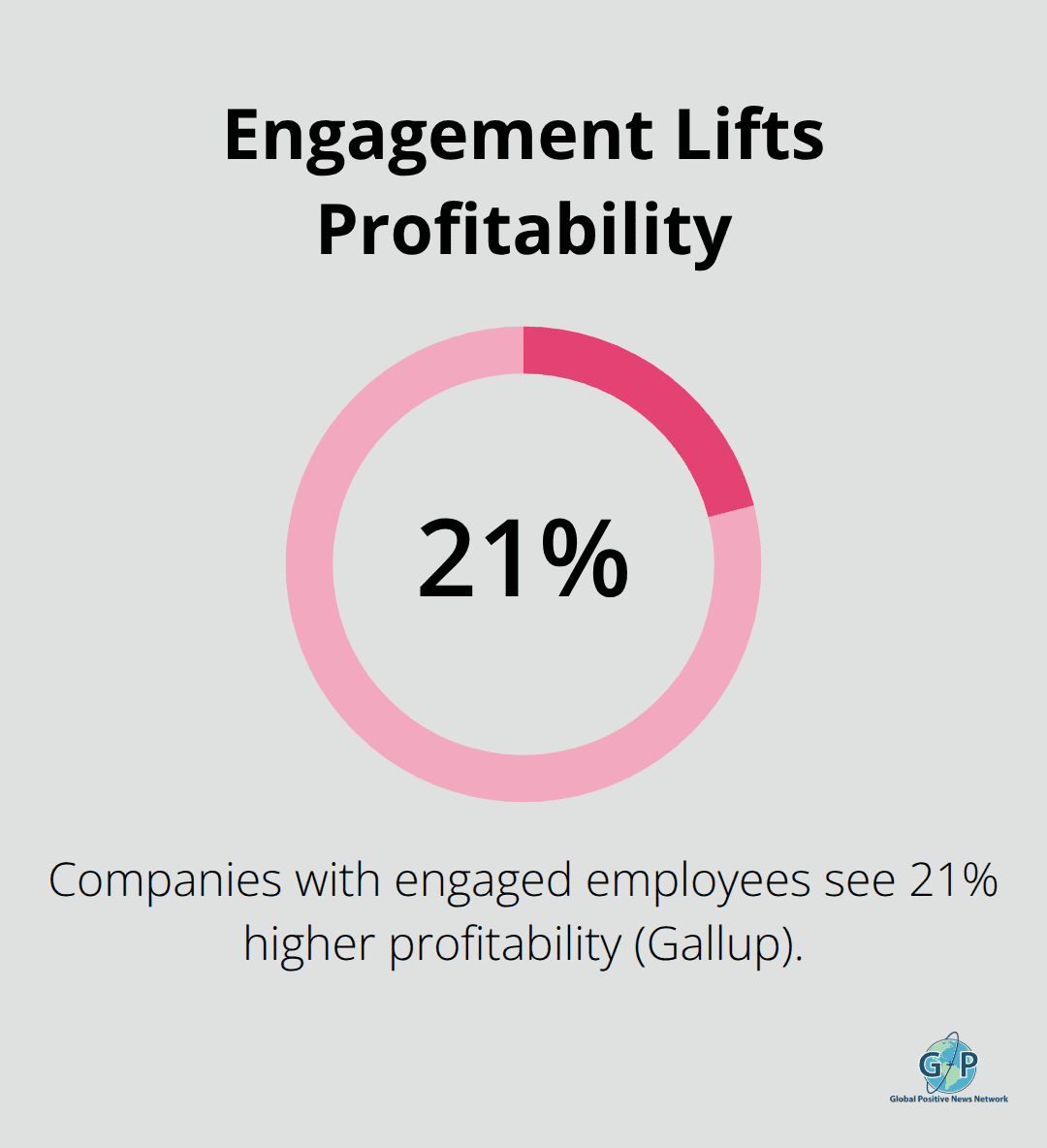
A positive workplace isn’t a luxury-it’s a business necessity. Companies with engaged employees see 21% higher profitability, according to Gallup research, and workplace positivity tips directly drive those results.
We at Global Positive News Network believe that team spirit transforms how people work together. When leaders and teams prioritize positivity, productivity rises, turnover drops, and people actually want to show up.
How Positivity Directly Boosts Productivity and Cuts Costs
Engagement Drives Measurable Productivity Gains
Engaged employees produce results you can measure. Businesses with a critical mass of engaged employees outperform their competition. When people feel valued and supported at work, they complete tasks faster, make fewer errors, and contribute ideas that move projects forward. The opposite is equally true: disengaged teams waste time, repeat mistakes, and drain resources through rework.
Psychological safety-the confidence to speak up without fear-forms the foundation here. Google’s Project Aristotle research showed that teams with psychological safety outperform others consistently. Managers create this environment by acknowledging mistakes without blame and actively listening to concerns. If your team members fear judgment, they stay silent about problems until they become expensive crises.
Recognition and Clear Roles Reduce Turnover
Turnover costs money in ways many leaders underestimate. Replacing a single employee costs between 50% and 200% of their annual salary when you account for recruitment, training, lost productivity, and knowledge gaps. Gallup data reveals that regular recognition and praise from managers directly correlates with higher retention rates. Teams that receive consistent feedback and see clear career development paths stay put.
Clear roles and responsibilities prevent confusion that drains morale. When people know exactly what they own and how their work connects to team goals, they invest more energy in their roles. Absenteeism drops significantly in positive environments too-the American Psychological Association links access to mental health resources and well-being programs to reduced burnout and fewer sick days.
Frequent Check-Ins and Shared Purpose Build Connection
Leaders who check in regularly improve alignment and reduce the misunderstandings that breed frustration. These conversations signal that you value your team members as people, not just task-completers. Companies that tie their work to meaningful social impact see stronger retention and engagement. Spirit Halloween demonstrates this through their Spirit of Children program, which has raised over 93 million dollars for hospitals since 2006 and creates ongoing volunteer opportunities that build team connection and shared purpose.
When employees know their workplace supports their growth and contributes to something meaningful, showing up becomes more than an obligation. The practical path forward is straightforward: establish peer-to-peer recognition systems, schedule frequent one-on-ones, train managers in emotional intelligence, and tie company goals to measurable social impact your team cares about. These moves shift how your team operates and sets the stage for leadership to actively shape that positive culture.
How to Build a Workplace Culture Where People Actually Communicate
Transparency and honest dialogue separate thriving teams from stagnant ones. Transparent, frequent communication about goals, progress, and changes builds trust and reduces rumors. Yet most workplaces fail at this basic requirement. Managers hold back bad news, employees hide mistakes, and information silos grow. The fix is deliberate: establish weekly team huddles where problems surface without punishment, create a shared document tracking project status that everyone updates, and train managers to ask follow-up questions instead of lecturing.
Address Mistakes With Curiosity, Not Blame
When a team member makes an error, the conversation should focus on what went wrong and how to prevent it next time, not on blame. This shifts the dynamic from fear-based silence to collaborative problem-solving. Teams that operate this way report problems early, solve them faster, and build stronger relationships in the process. The alternative-punishing mistakes-teaches people to hide problems until they explode into crises.
Amplify Recognition Across Your Team
Peer-to-peer recognition programs amplify communication effects dramatically. Gallup found that regular recognition from managers boosts engagement, but peer recognition creates something stronger: it signals that the entire team values contribution and effort. Tools like Bonusly or even a simple shared Slack channel where team members publicly acknowledge each other’s work cost little and generate measurable improvements in morale. This practice transforms how colleagues view one another and strengthens bonds across departments.
Create Communication Rhythms That Stick
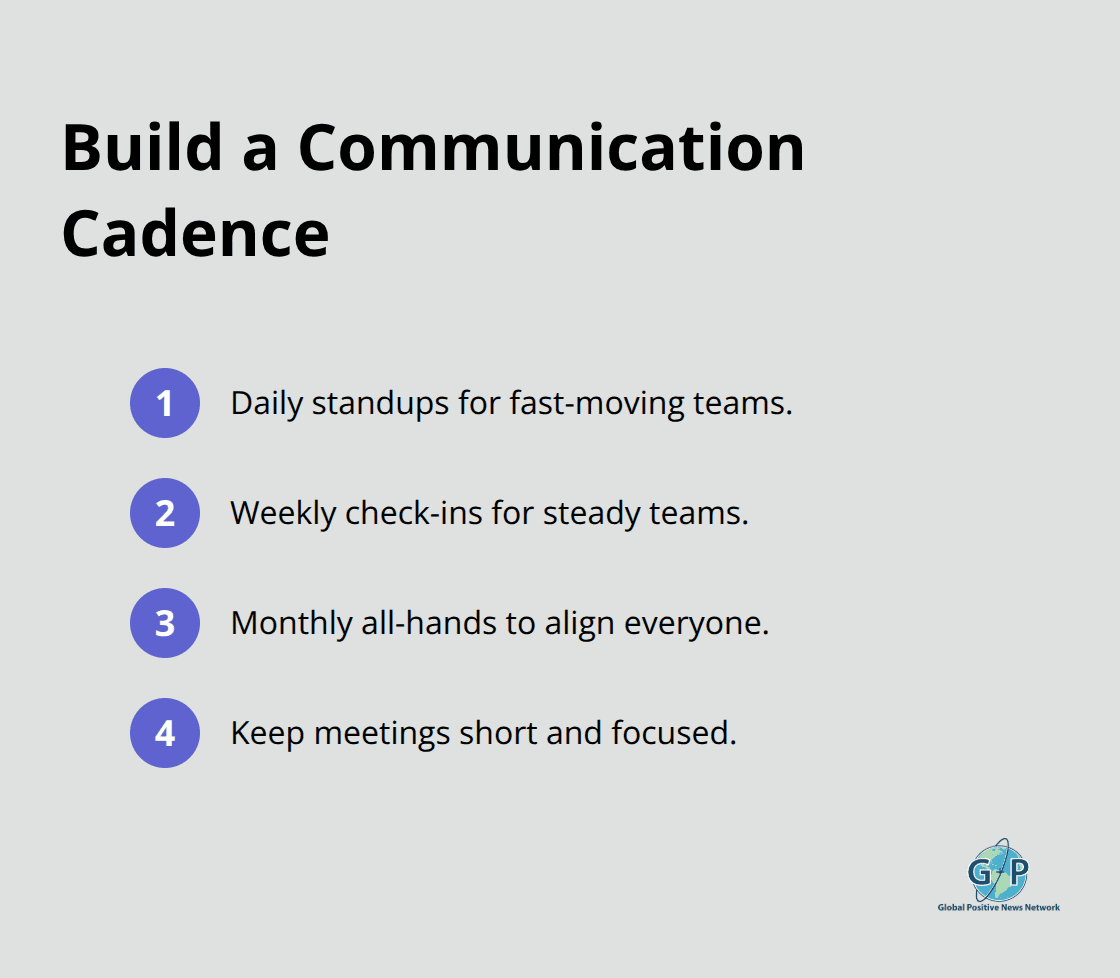
Distributed teams require consistent communication across locations to deliver a cohesive experience. They achieve this through structured communication protocols and shared systems that keep everyone aligned. You need the same discipline. Try a communication cadence and stick to it: daily standups for fast-moving teams, weekly check-ins for others, monthly all-hands meetings. Make these sessions focused and short so people actually attend and participate.
Connect Work to Shared Purpose
Tangible social impact amplifies the positive effect of communication. When teams volunteer together or know their workplace funds meaningful causes, conversations shift from transactional updates to shared purpose. Meaningful volunteer opportunities and workplace giving programs offer year-round ways to engage. This isn’t just philanthropy; it’s a communication strategy that reminds employees why they work there. Your team needs the same anchor. Pick a cause your company supports, create quarterly volunteer days, and talk openly about the impact. This transforms how your team communicates with each other and the world around them, setting the foundation for leadership to actively shape culture and drive team performance forward.
Leaders Shape Culture Through Daily Actions
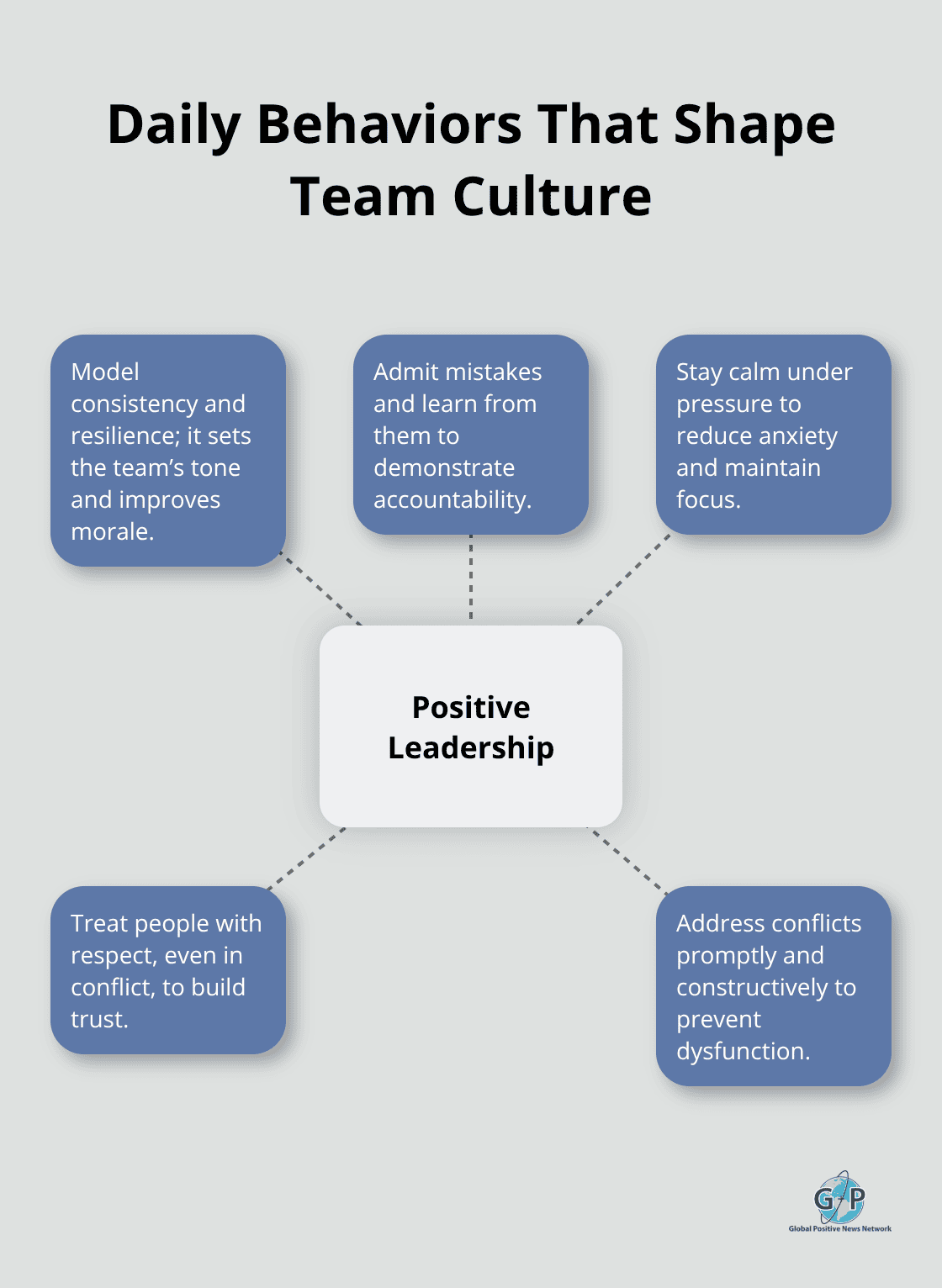
Leaders build positive teams through consistent daily choices, not grand gestures or motivational posters. McKinsey research shows that leaders who model positive behavior and resilience set the tone for the entire team and directly improve morale. This means showing up on time, admitting when you’re wrong, staying calm under pressure, and treating people with respect even when frustrated. Your team watches how you handle setbacks far more closely than they listen to what you say about positivity. If you panic when problems emerge, your team learns to hide problems. If you blame others, your team stops taking risks. If you dismiss concerns without listening, your team stops speaking up.
Establish Personal Standards for Leadership Behavior
The practical move is straightforward: establish a personal standard for how you respond to mistakes, difficult conversations, and high-stress situations. Then hold yourself accountable to it. Ask a trusted peer to give you honest feedback on whether your actions match your words about team culture. This accountability loop transforms your leadership from aspirational to actual. Your team notices the difference immediately.
Invest in Skills Before Problems Emerge
Employee development directly correlates with retention and engagement according to Deloitte research. Yet most companies treat training as an afterthought or a box to check. Leaders who genuinely cultivate team spirit treat development as a core leadership responsibility. This means identifying skill gaps on your team and addressing them months before they become problems. If someone struggles with conflict resolution, enroll them in training now. If your team needs better project management skills, build that into your quarterly plan.
Create mentorship pairs where experienced team members teach newer people. Internal experts guide team growth and build stronger problem-solving capacity across the organization. Schedule quarterly conversations with each person about their career goals and what skills they need to reach them. Then actively remove obstacles to their learning. This transforms development from a compliance activity into a signal that you genuinely care about their growth.
Address Conflict Promptly and Constructively
Conflict doesn’t disappear when you ignore it. Leaders who address conflict constructively and promptly reduce team dysfunction significantly. The key word is constructively. This doesn’t mean harsh confrontation or public criticism. It means having private, focused conversations quickly when issues surface. If someone misses deadlines repeatedly, talk to them within days, not weeks. If two team members aren’t collaborating, meet with them separately first to understand their perspectives, then bring them together to solve it.
The conversation should focus on the impact of the behavior and what needs to change, not on character judgments. Ask questions before you lecture. Listen for the real issue underneath the surface problem. Sometimes missed deadlines reflect unclear expectations. Sometimes poor collaboration stems from unclear roles. Sometimes frustration builds because people don’t feel heard. When you address issues promptly and with curiosity instead of judgment, you prevent small tensions from becoming team-wide resentment. You also send a clear message that standards matter and that you take accountability seriously.
Final Thoughts
Workplace positivity doesn’t happen by accident-it results from deliberate choices that leaders and teams make to build cultures where people thrive. The evidence shows that companies prioritizing engagement see measurable gains in productivity, retention, and employee well-being. Recognition programs, transparent communication, psychological safety, and consistent leadership accountability create environments where people contribute their best work. These workplace positivity tips work because they address what people actually need: to feel valued, to understand how their work matters, and to know their leaders genuinely care about their growth.
Starting your journey toward a more positive workplace requires three concrete moves. First, establish clear communication rhythms and hold yourself accountable to them-weekly check-ins, transparent updates about goals and challenges, and peer recognition systems cost little and generate immediate shifts in how your team operates. Second, invest in your people’s development before problems emerge by identifying skill gaps, creating mentorship opportunities, and having quarterly conversations about career growth. Third, model the behavior you want to see by addressing mistakes with curiosity, staying calm under pressure, and treating people with respect even when frustrated.
You don’t need a massive budget or a complete organizational overhaul to shift your culture. Start with one practice this week-pick one team ritual, one recognition system, or one development conversation and build from there. For more stories about how teams and individuals create positive change, visit Global Positive News Network for uplifting examples of workplace culture and community impact in action.
Having a hard day?
The 2 Minute Hope Reset is a short free guide with three small practices for the days that feel heavy. Two minutes each, nothing to keep up with.
Get the free guideExplore more positive news:
Enjoying stories like this?
Global Positive News Network is reader-supported. If you’d like to support the mission, you can visit the Official GPNN store.