

Most people think generosity is something you do occasionally, when you have extra time or money. We at Global Positive News Network believe daily giving fundamentally rewires how you experience life.
When you give consistently, something shifts. Your mental health improves, your community strengthens, and you become a different person entirely.
How Daily Giving Changes Your Brain and Body
Generosity activates specific brain chemicals that transform your mental state. According to Cleveland Clinic, acts of giving trigger serotonin, dopamine, and oxytocin-neurochemicals directly responsible for mood elevation and feelings of connection. This isn’t theoretical. When you give daily, you tap into your brain’s reward system consistently without relying on motivation or willpower. The helper’s high is real: your brain releases endorphins when you give, which boosts self-esteem and creates measurable happiness. Over time, daily giving reduces cortisol levels (the primary stress hormone), which means you feel genuinely less overwhelmed.
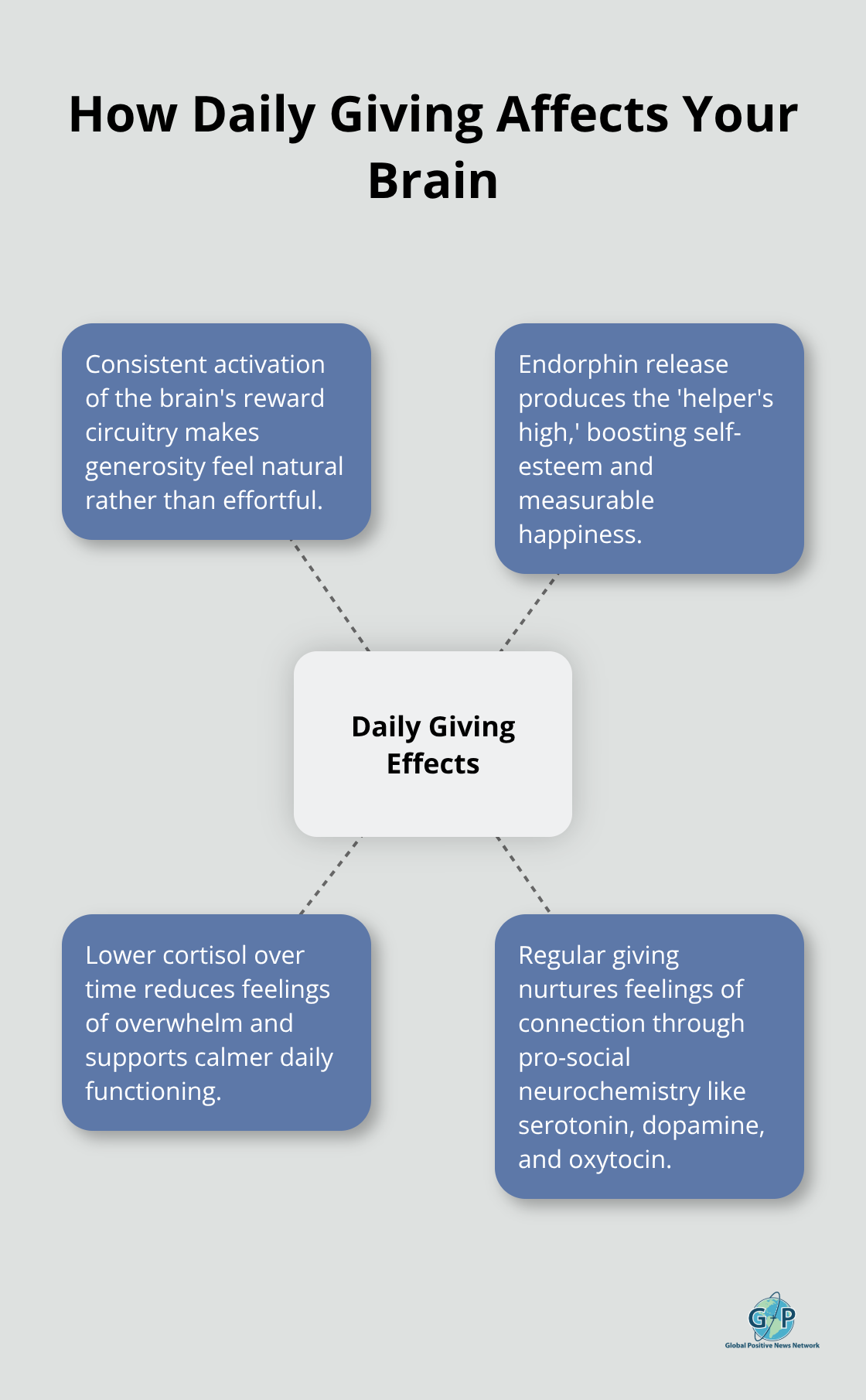
Cleveland Clinic research shows that people who volunteer regularly live longer than those who don’t, and generosity can lower blood pressure in ways comparable to healthy diet and exercise.
The key difference between occasional giving and daily giving lies in frequency. One act of kindness provides temporary relief; daily acts compound into lasting neurological change. Your brain adapts to generosity as a normal state, not an exception.
Why Your Brain Rewards Consistency
Daily giving works because it creates meaning faster than almost any other habit. Research on generosity commitments shows that when people publicly pledge to give regularly, their sense of purpose strengthens dramatically, and this commitment actually changes how their brain processes decisions. The temporo-parietal junction-the region handling social cognition-shows increased activation during generous choices, especially in people who’ve committed to regular giving. This neural shift means you stop thinking of generosity as optional; it becomes integral to your identity.
Life satisfaction rises not because you spend money, but because you consistently act on your values. Daily giving removes the friction of deciding whether to help. You’ve already decided.
How Automation Eliminates Decision Fatigue
This elimination of decision fatigue matters more than most people realize. When you give the same amount daily, your brain treats it like brushing your teeth-automatic, effortless, and part of who you are. The neural patterns that emerge from this consistency reshape how you experience generosity itself. What once required willpower now requires nothing at all. Your identity shifts, and with it, your entire relationship to helping others transforms into something sustainable and deeply rewarding.
How Daily Giving Strengthens Communities
Daily giving creates measurable changes in how communities function and how people relate to one another. When thousands of individuals commit to giving consistently, the cumulative effect transforms neighborhoods and support systems. Daily Giving has distributed over $28 million since 2019 to vetted charities, demonstrating that small daily contributions from many people generate substantial community resources. This steady flow of funds differs fundamentally from episodic giving.
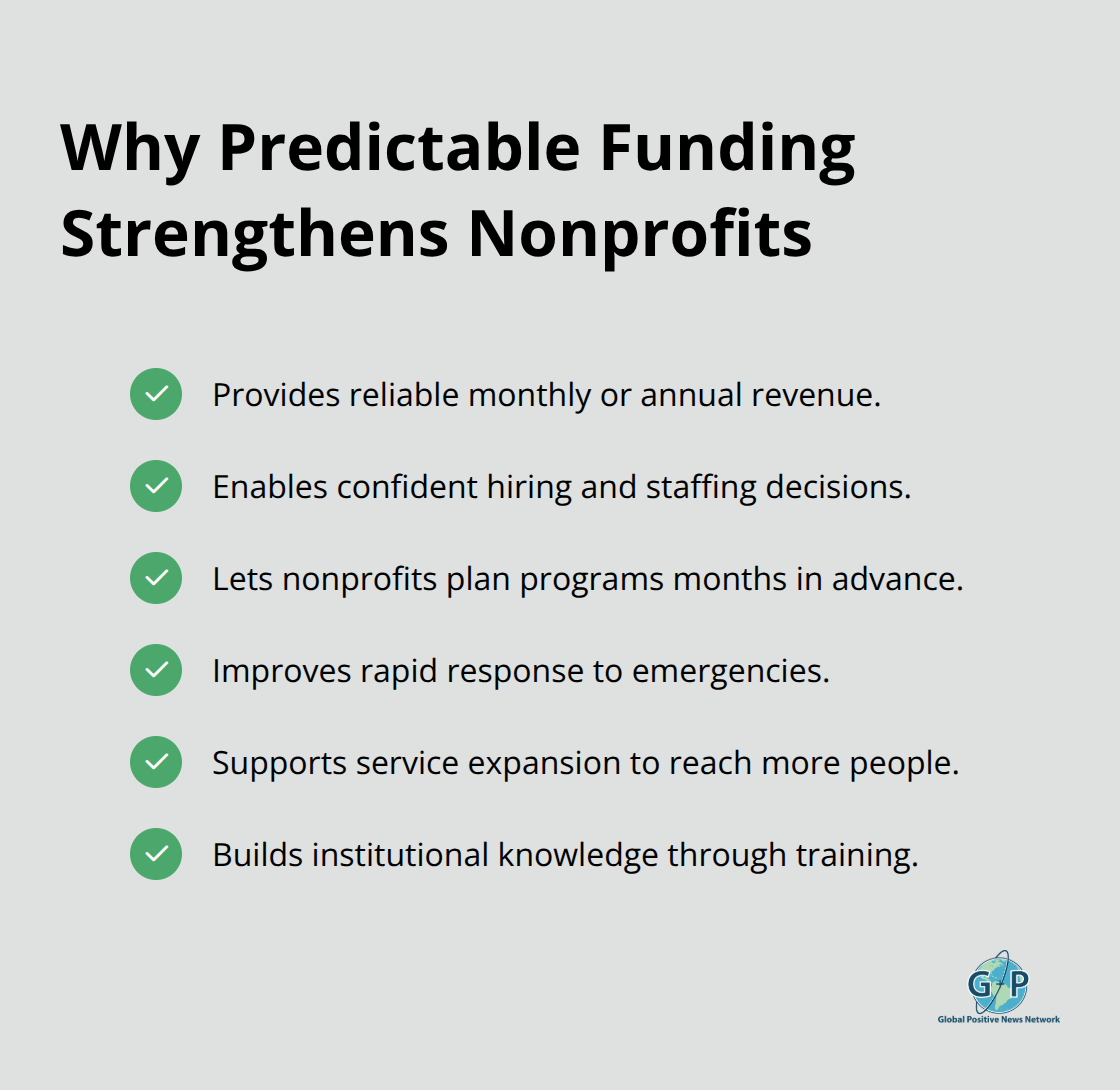
Traditional fundraising relies on occasional large donations that arrive unpredictably, forcing nonprofits to operate with budget uncertainty. Daily giving provides reliable monthly or annual revenue streams, allowing organizations to hire staff with confidence, plan programs months in advance, and respond to emergencies without scrambling for emergency funds.
Nonprofits Thrive on Predictable Support
Communities benefit because local nonprofits can finally focus on impact rather than fundraising cycles. When you give daily, you’re not just supporting a cause-you’re enabling organizations to build sustainable infrastructure that serves people consistently. Organizations that receive steady funding can expand services, hire additional staff, and reach more vulnerable populations. The Daily Giving community includes thousands of participants supporting carefully vetted Jewish nonprofits, creating networks of mutual support that extend far beyond individual donations. When nonprofits know they’ll receive predictable daily contributions, they can recruit volunteers, train staff members, and build institutional knowledge. These investments in human capital create stronger community organizations.
Trust Emerges From Transparency and Consistency
Daily Giving’s model proves that transparency accelerates community trust. Each giver receives a daily email showing exactly where their contribution went and who it helped. This immediate feedback loop creates accountability that traditional annual reports cannot match. People see results within hours, not months. Research shows that when individuals pledge to give regularly, their behavior strengthens not only their own generosity but also influences those around them. This ripple effect means that your visible commitment to daily giving influences neighbors, colleagues, and family members to examine their own giving practices. Communities develop stronger social bonds when generosity becomes visible and normalized. Trust builds because people witness consistent action over time, not promises made once and forgotten.
Networks Expand Through Routine Participation
Local support networks expand when daily giving integrates into people’s daily routines. Measurable improvements in community wellbeing follow because nonprofits operate from stability rather than crisis mode. They can conduct proper needs assessments, implement evidence-based programs, and track outcomes systematically. Daily giving removes the feast-or-famine cycle that weakens community institutions. The result is communities where people trust their local organizations, participate in their missions, and experience tangible improvements in services available to vulnerable populations. When generosity becomes routine, it transforms from a private transaction into a public declaration of community values-one that ripples outward and reshapes how entire neighborhoods function.
How You Become More Generous Over Time
Daily giving rewires your capacity for empathy and transforms how you relate to others. When you commit to giving daily, you stop viewing generosity as something separate from your identity and start seeing it as core to who you are. Research on generosity commitments shows that people who publicly pledge to give regularly experience measurable increases in empathetic behavior across all areas of life, not just in their giving decisions.
Your Brain Strengthens Through Repeated Generosity
The neural systems that activate during generous choices-particularly the temporo-parietal junction, which handles social perspective-taking-strengthen with repeated use. This means your brain literally becomes better at understanding others’ needs and emotions. Over weeks and months of daily giving, you notice yourself responding differently to people’s struggles. You ask better questions. You listen more carefully. You see people as individuals rather than abstract problems to solve.
This shift manifests visibly in how you interact with family members, colleagues, and strangers. Daily givers report that after three to six months of consistent giving, they find themselves more patient during conflicts, more willing to help without expecting recognition, and more attuned to others’ emotional states. The generosity commitment research demonstrates that this transformation happens regardless of the amount you give. Someone giving one dollar daily experiences the same empathetic rewiring as someone giving ten dollars daily.
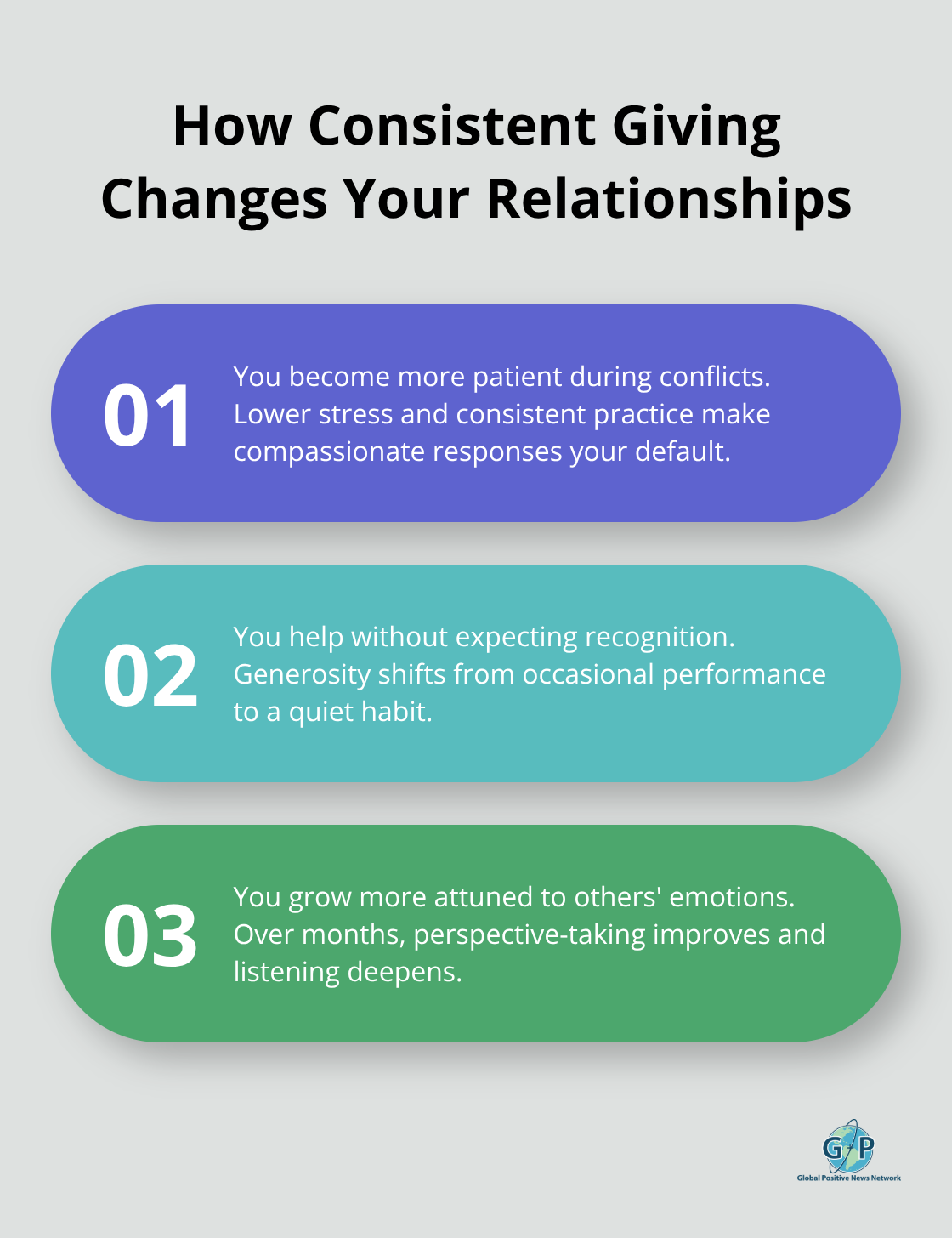
What matters is the consistency and the public commitment to regular giving.
Identity Shifts When Generosity Becomes Routine
When you establish daily giving as a non-negotiable part of your routine-like taking medication or eating breakfast-your brain reorganizes around generosity as a fundamental value. This creates what researchers call a positive identity shift. You stop thinking of yourself as someone who occasionally helps and start identifying as a generous person. That identity shift changes everything about how you make decisions and relate to the world around you.
Relationships Deepen Through Consistent Action
The long-term changes in relationships emerge because consistent generosity makes you a more trustworthy and emotionally available person. People notice when you show up for others repeatedly over time. Your partner observes that you’re less reactive to frustration because your stress levels have dropped from regular giving. Your friends see that you’re genuinely interested in their struggles rather than offering surface-level sympathy. Your children watch you model values through action rather than words.
Prosocial spending demonstrates that people who give regularly experience stronger relationships because they’ve invested time and resources in understanding what others actually need. This creates reciprocal trust-people respond to your generosity with openness and honesty. Relationships deepen because generosity removes the transactional thinking that poisons many connections. You’re not giving to get something back. You’re not helping to feel superior. You’re simply acting consistently on the belief that others’ flourishing matters.
Communities Shift When Generosity Becomes Visible
Communities function better when individuals adopt daily giving practices because the visible consistency of generosity normalizes helping as an ordinary behavior. When your neighbors see you consistently supporting local nonprofits, they’re more likely to examine their own giving practices. When your workplace colleagues notice you’ve made a daily commitment to generosity, they become more willing to contribute to team projects and community causes. Daily giving transforms your relationships because it signals that you value others’ wellbeing as much as your own success.
That signal, repeated daily through action rather than words, rebuilds trust in environments where it’s eroded. The consistency over weeks and months creates relationships grounded in genuine care rather than obligation or social expectation.
Final Thoughts
Daily giving transforms your life across three interconnected dimensions. Your physical health improves as generosity lowers cortisol and blood pressure while triggering endorphins that boost mood and resilience. Your emotional wellbeing deepens through increased happiness, reduced anxiety, and a stronger sense of purpose that comes from acting on your values consistently.
One generous act provides temporary relief; daily generosity rewires your brain’s reward systems and strengthens the neural networks responsible for empathy and social connection. Your identity shifts from someone who occasionally helps to someone fundamentally generous, which means you stop relying on motivation or willpower. Generosity becomes automatic, like brushing your teeth, removing decision fatigue and making helping others sustainable indefinitely.
Communities experience measurable improvements because daily giving provides nonprofits with predictable funding streams instead of unpredictable donations. You can start with as little as one dollar daily, billed monthly or annually, and develop a generosity mindset through consistent action that transforms not just your life but the lives of people your contributions reach.
Having a hard day?
The 2 Minute Hope Reset is a short free guide with three small practices for the days that feel heavy. Two minutes each, nothing to keep up with.
Get the free guideExplore more positive news:
Enjoying stories like this?
Global Positive News Network is reader-supported. If you’d like to support the mission, you can visit the Official GPNN store.