

Your online presence shapes how others feel and think. At Global Positive News Network, we’ve seen firsthand how digital kindness can transform conversations and communities.
The internet doesn’t have to be a place of conflict. Small acts of compassion-thoughtful comments, genuine support, respectful disagreement-create ripples that change the tone of entire spaces.
How Negativity Spreads Online and Its Real Impact
The Speed and Power of Hostile Content
Hostile comments spread three times faster than constructive ones on social media platforms. Research from Princeton University found that angry content receives 5 times more engagement than neutral posts, which means algorithms prioritize outrage to keep users scrolling. This isn’t accidental-platforms profit when you stay engaged, regardless of whether that engagement makes you feel good or terrible. The human brain is wired to notice threats, and online platforms exploit this biological reality. Negativity triggers immediate emotional responses, while kindness requires conscious effort to recognize and amplify. This mismatch between what algorithms reward and what actually benefits us creates a hostile feedback loop where the worst behavior gets the loudest megaphone.
The Mental Health Cost of Toxic Online Spaces
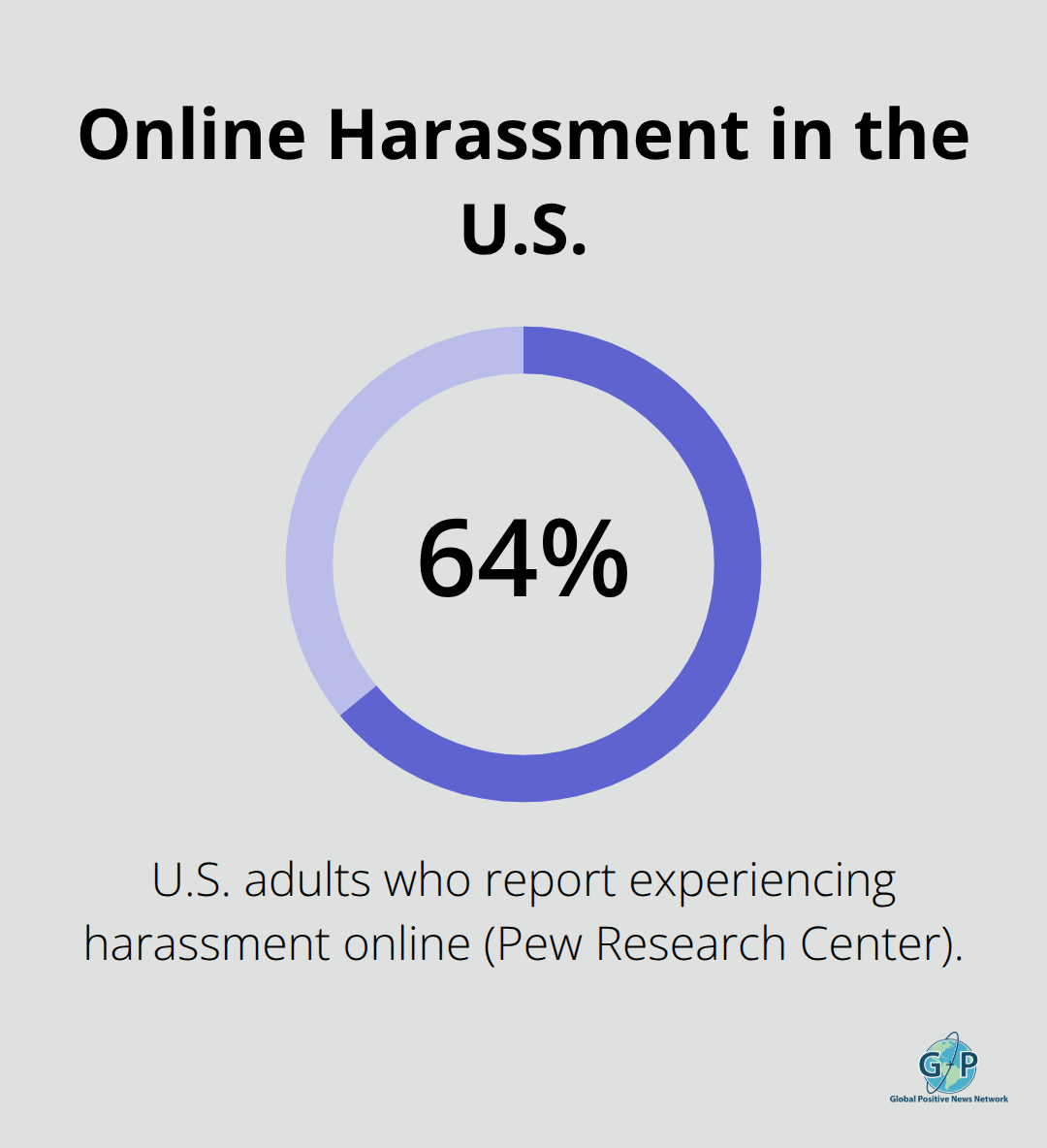
Studies from the American Psychological Association show that prolonged exposure to hostile online environments increases anxiety and depression symptoms among regular social media users. The Pew Research Center found that 64 percent of Americans have experienced harassment online, and those incidents have real consequences-people report sleeping worse, feeling more isolated, and losing trust in their communities. Young people aged 13 to 29 face the hardest hit, with rates of online harassment correlating directly to increased suicidal ideation. Many people scroll through negativity passively, absorbing the toxicity without realizing the cumulative damage.
Witnessing hostility between others creates a chilling effect where people self-censor and withdraw from conversations entirely. Communities built on negativity become ghost towns where only the angriest voices remain.
How Algorithms Weaponize Disagreement
Platform algorithms don’t distinguish between healthy debate and personal attacks-they treat all high-engagement content the same way. When someone posts a divisive comment, the algorithm shows it to more people because it generates reactions. Disagreement becomes conflict becomes harassment, all while the platform’s recommendation system actively pushes the most inflammatory versions of that conversation to your feed.
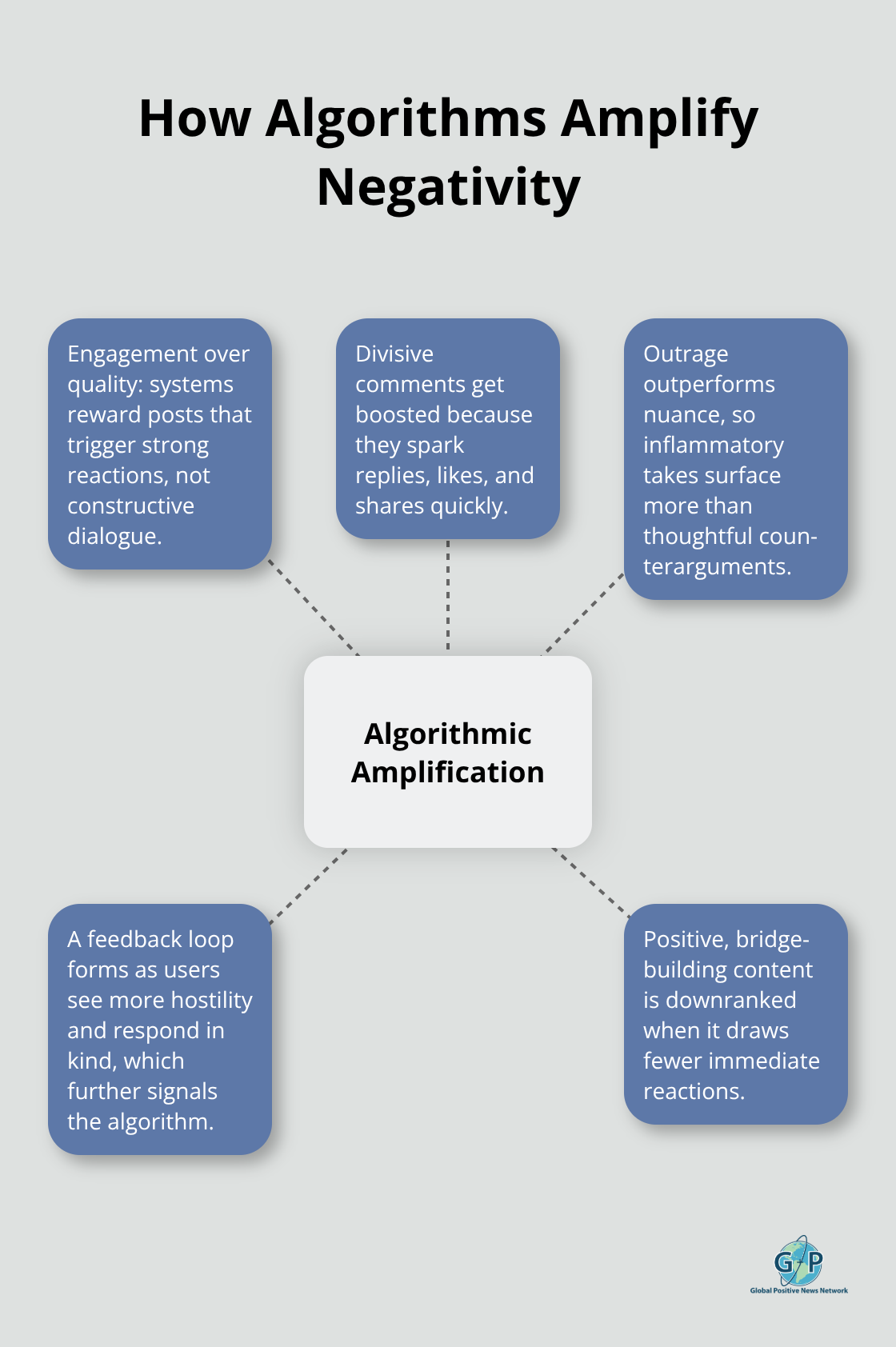
Facebook’s own internal research revealed that their algorithm amplifies content that triggers anger and outrage at 5 times the rate of content that builds understanding. A thoughtful counterargument gets buried while a dismissive personal attack gets promoted. The result is that online spaces naturally trend toward hostility unless someone intervenes with intentional design choices and active moderation.
This reality makes the next step clear: understanding how negativity spreads is only half the battle. What matters now is learning the practical moves you can make in your own digital life to interrupt this cycle and build something better.
How to Actually Respond with Compassion Online
Pause Before You Post
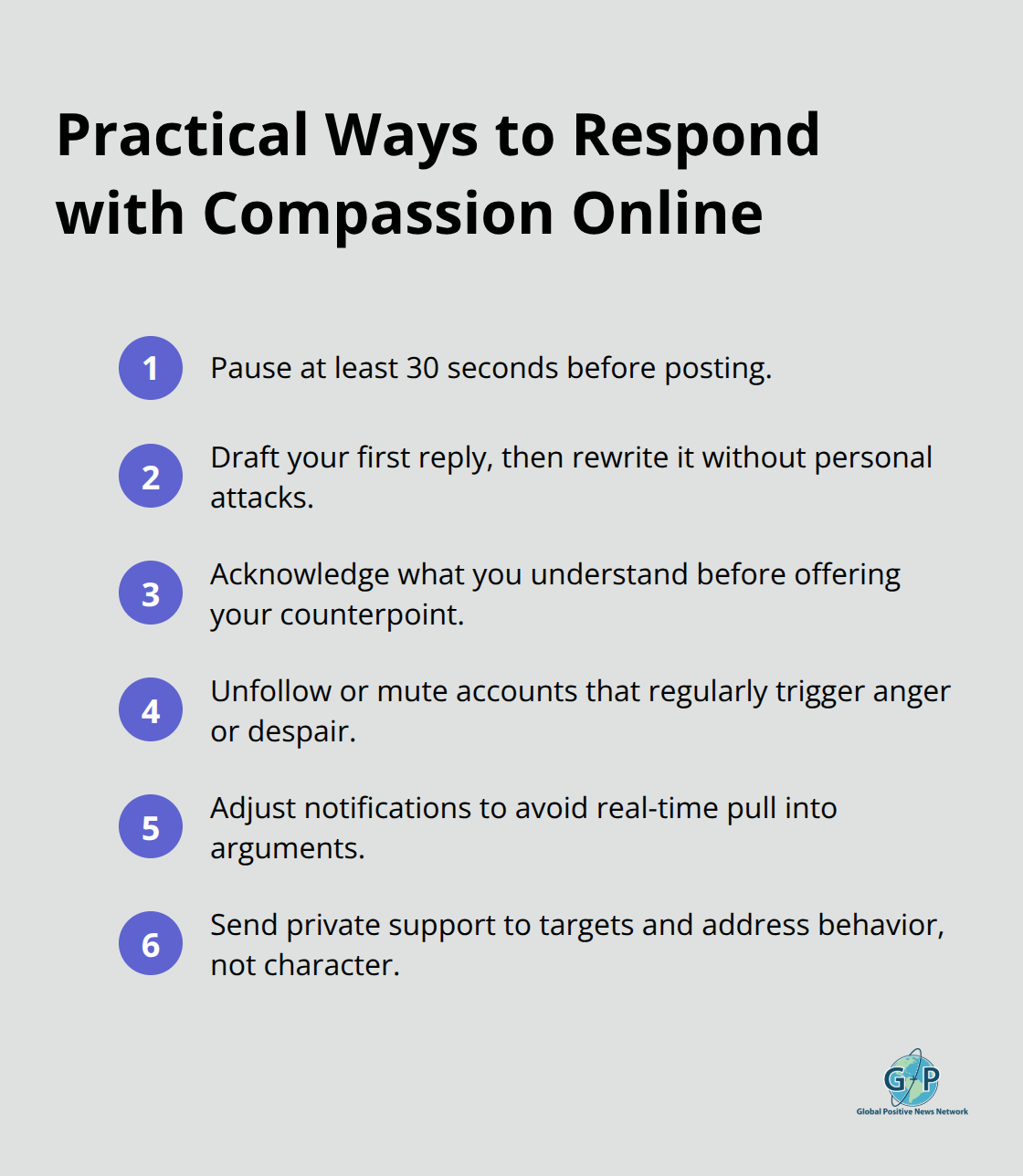
The gap between knowing you should be kind online and actually doing it when you’re angry is massive. You read a comment that infuriates you, and your instinct is to fire back immediately. Pause before posting-even thirty seconds gives your nervous system time to shift out of threat mode. This isn’t about suppressing your real feelings; it’s about choosing how you express them.
When you pause, you move from reactive to intentional. A practical approach works like this: write your angry response, read it once, then delete it and write a second version that addresses the actual issue without attacking the person. Post that second version instead. You’ll notice something shifts in the conversation when you do this-people respond to the substance of your point rather than defending themselves against your tone.
Lead with Understanding, Not Agreement
Empathy isn’t pretending the other person is right; it’s acknowledging that they have reasons for their position, even if you disagree completely. Start your response by naming what you understand about their perspective before introducing your counterpoint. Research from Bandura’s social learning theory shows that modeling respectful disagreement actually changes how others engage in the same space. When people see someone disagree firmly but respectfully, they’re more likely to do the same in future conversations.
Build Your Feed Intentionally
Your feed is a choice, not a fixed reality. Most people treat their social media experience as something that happens to them rather than something they actively build. Unfollow or mute accounts that consistently trigger anger or despair in you-this isn’t avoidance, it’s self-protection. Follow accounts that share substantive positive content, not saccharine motivational quotes but actual stories of people solving problems and building things.
You can also adjust your notification settings so you’re not constantly pulled into hostile arguments happening in real time. When you’re not in a state of high alert, you have more emotional capacity to respond with compassion when genuine conflict does arise.
Show Up for Others Publicly and Privately
Support others through specific comments on what they’ve shared rather than generic praise. Instead of saying something is inspiring, explain what action or insight it sparked in you. Public recognition matters-people remember who showed up for them when they shared something vulnerable.
Private messages carry even more weight. If someone posts about a struggle, a direct message asking how you can help carries more impact than a public comment. These actions cost almost nothing but they rebuild trust in communities where most people have learned to expect indifference or hostility.
This foundation of genuine connection is what makes the next step possible: creating spaces where compassion becomes the default rather than the exception.
How You Shape the Culture of Your Online Spaces
Model Respectful Disagreement in Your Posts
Your posts set the tone for how others behave in the spaces you occupy. When you demonstrate respectful disagreement, acknowledge different viewpoints, and refuse personal attacks even when provoked, you actively rewire what your community considers acceptable behavior. Research from Bandura’s social learning theory confirms that people mirror the communication patterns they see most frequently in their environments. If your posts consistently show how to disagree firmly while respecting the person across from you, followers will replicate that approach in their own conversations. This means your individual choice to stay calm and substantive during conflict directly influences dozens or hundreds of other interactions you’ll never see.
Start by examining your own recent posts and comments. Ask genuine questions when you disagree rather than making sweeping statements about who people are. Acknowledge valid points in arguments you oppose instead of dismissing entire positions. The specificity matters enormously. A comment that explains why someone holds a particular view, then presents your different perspective, creates space for dialogue. A comment that attacks someone’s intelligence or character shuts it down immediately.
Respond to Negativity Without Spreading It
Calling out negativity without amplifying it requires restraint that most people don’t practice. When you see harassment, don’t quote-tweet it with outrage or share it widely-that spreads the harmful content further. Instead, respond directly to the person being attacked with support, and report the abusive comment using platform tools. Bystander interventions work best when they’re brief and calm rather than prolonged public confrontations.
A simple direct message to someone who’s been targeted (saying you saw what happened and you’re in their corner) carries more weight than dramatic public callouts of the person who caused harm. When you respond to problematic content, focus entirely on the behavior and its impact rather than attacking the person’s character. This distinction matters: you address what they did, not who they are.
Celebrate Others’ Accomplishments With Specificity
Actively celebrate others’ accomplishments, launches, and milestones with specificity rather than generic praise. Instead of a generic congratulations, mention what impressed you about their work or how it might help people. These specific endorsements receive more visibility in algorithms than generic praise, and they create the conditions where people feel safe sharing their wins rather than hiding them. When someone shares a vulnerability or achievement, your detailed recognition signals that this community values real contribution and genuine connection.
Final Thoughts
Every comment you write, every person you support publicly, and every moment you choose calm over outrage shapes the digital spaces you inhabit. These actions interrupt the cycle of algorithmic amplification that rewards hostility and create conditions where digital kindness becomes the norm rather than the exception. When you lead with empathy in disagreements, you show others that respectful dialogue remains possible even when stakes feel high.
Communities built on compassion function differently than those built on conflict. People participate more openly, share more vulnerably, and solve problems more effectively when they trust they won’t face attack for speaking up. Mental health improves when people experience online spaces as supportive rather than hostile, and trust rebuilds when individuals consistently show up for each other (this isn’t theoretical-it’s measurable in how people behave and whether they return to those spaces).
Your role in building a kinder internet is active, daily, and consequential. You’re not waiting for platforms to change their algorithms or for other people to start being nicer-you’re making the choice right now to respond with understanding, to celebrate others, and to refuse amplifying harm. We at Global Positive News Network believe this work matters because it directly shapes the world people experience online and offline.
Having a hard day?
The 2 Minute Hope Reset is a short free guide with three small practices for the days that feel heavy. Two minutes each, nothing to keep up with.
Get the free guideExplore more positive news:
Enjoying stories like this?
Global Positive News Network is reader-supported. If you’d like to support the mission, you can visit the Official GPNN store.