

The world is shifting toward sustainable hopeful innovations that reshape how we produce, consume, and live. Companies are cutting emissions, communities are taking action, and startups are proving that profit and environmental responsibility go hand in hand.
At Global Positive News Network, we’re tracking the real momentum behind this green transformation. This post shows you concrete examples of change happening now and practical ways you can be part of it.
How Industries Are Actually Cutting Emissions Right Now
Renewable energy isn’t a future promise anymore-it’s reshaping power grids today. Germany’s Energiewende policy pushed renewables to over 40% of its energy mix, proving that large-scale transitions work when policy backs innovation. Solar and wind installations expand faster than most predictions suggested, with offshore wind becoming increasingly competitive against fossil fuels. Floating offshore solar platforms now enable generation on water surfaces, eliminating land-use conflicts entirely. What matters most is that these technologies are economically viable now, not decades from now. Companies adopt renewables not out of altruism; they do it because operating costs drop and energy independence reduces vulnerability to price volatility.
The Circular Economy Stops Being Theoretical
Patagonia proves that circular business models generate profits while reducing waste. The company repairs and recycles products to extend their lifespan, turning the traditional buy-and-discard model on its head. Kinship skincare founder Christin Powell took this further by converting plastic waste into reusable materials for consumer products. These aren’t niche experiments-they’re scaling operations that demonstrate manufacturers can recover materials and resell them rather than extract virgin resources endlessly. The financial logic is straightforward: recycled materials cost less than mining new ones, and customers increasingly prefer brands that don’t generate mountains of waste. Manufacturing facilities that adopt circular principles report reduced input costs within two to three years.
Manufacturing Plants Achieve Greener Operations Through Efficiency
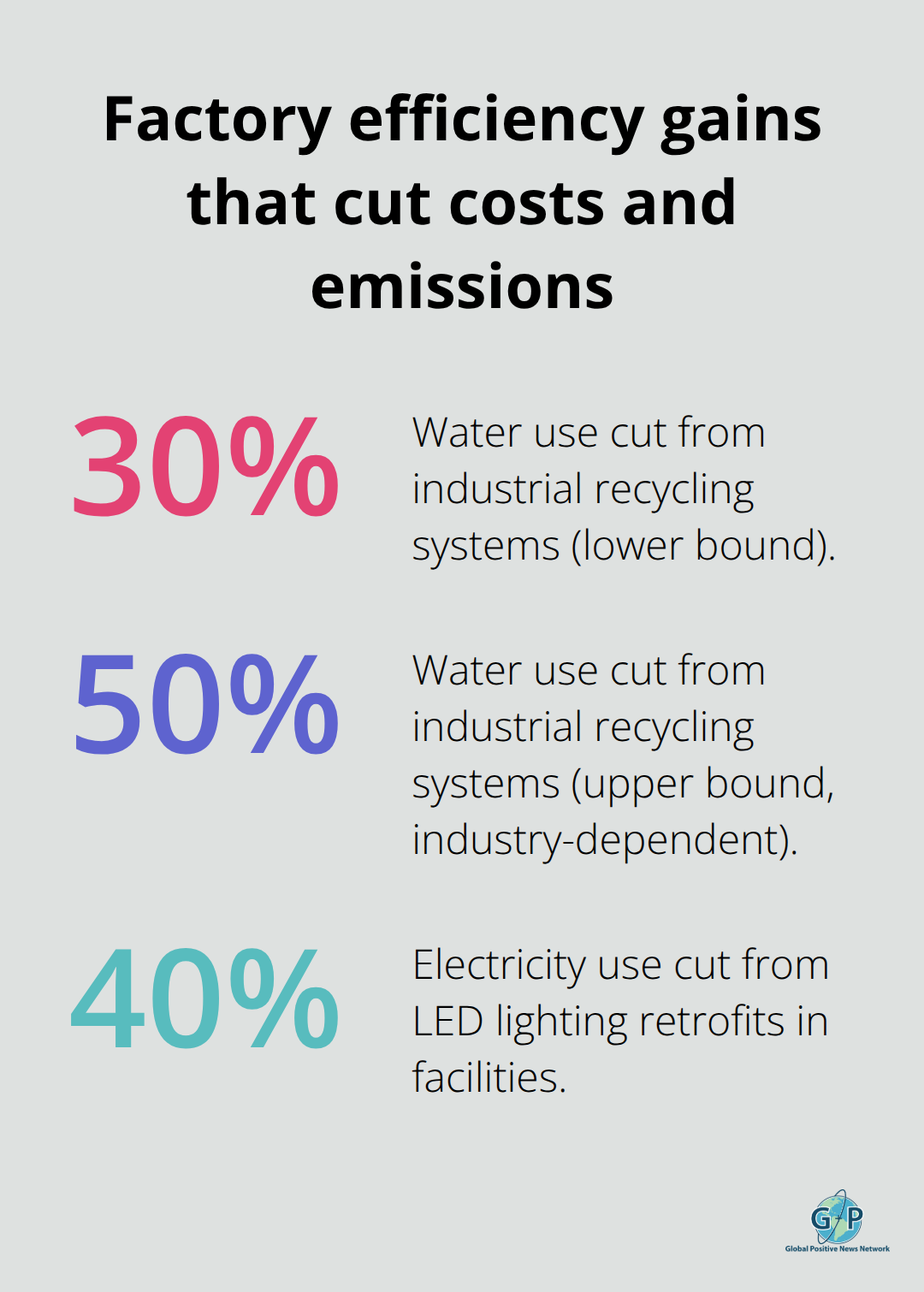
Green technology adoption in factories focuses on measurable efficiency gains, not marketing claims. Advanced sensors monitor energy consumption in real time, identifying waste immediately. Water recycling systems in manufacturing reduce consumption by 30% to 50% (depending on the industry). LED lighting retrofits cut electricity use for facility operations by 40% or more. These upgrades pay for themselves through operational savings, which is why adoption accelerates once manufacturers do the math.
The barrier isn’t technology-it’s awareness and initial capital. Plants that invest in these systems report productivity improvements alongside emissions reductions because optimized systems simply run better.
What Drives Real Corporate Change
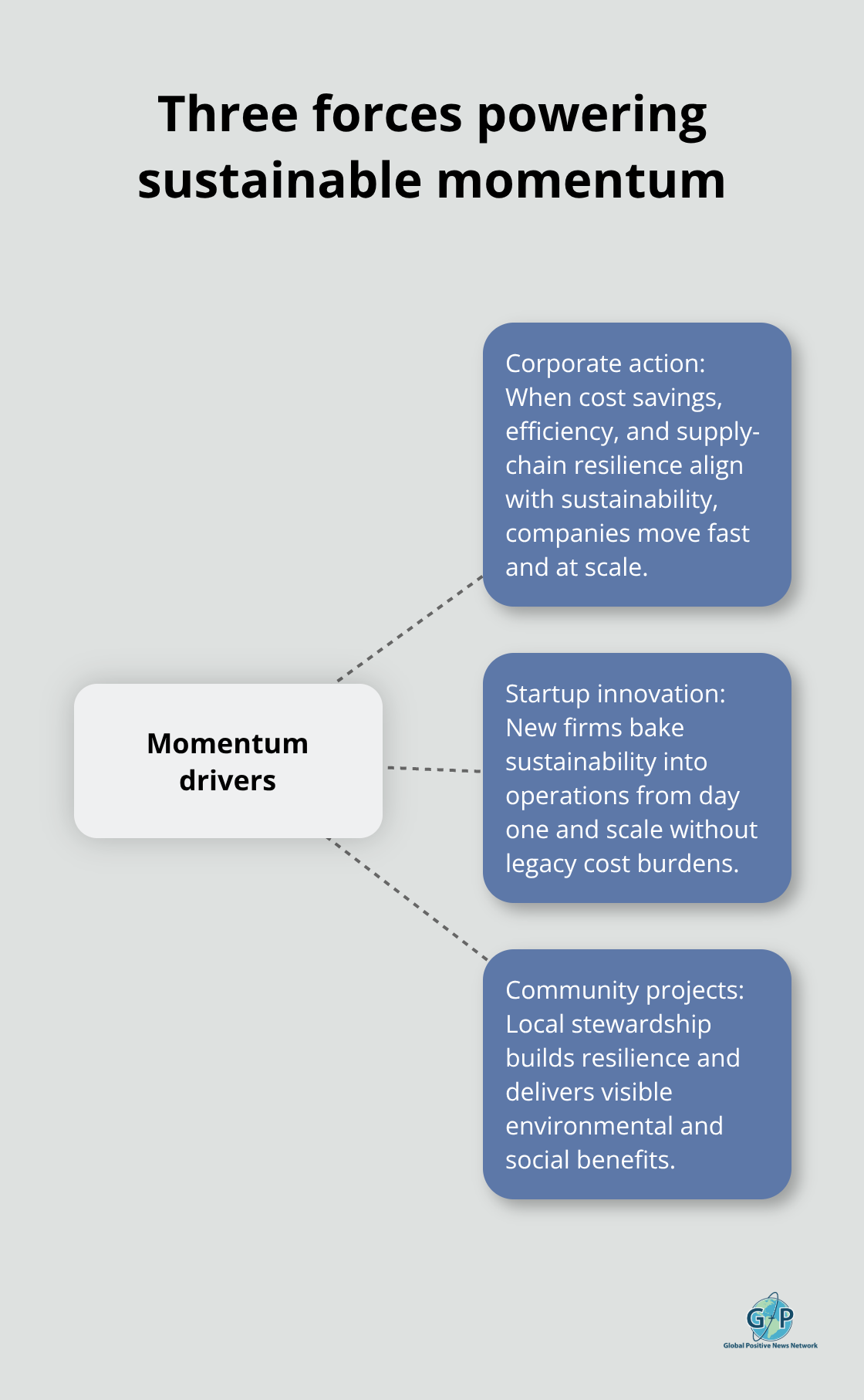
Companies shift toward sustainable practices when financial incentives align with environmental goals. Cost reduction motivates faster adoption than regulatory pressure alone. Operational efficiency improvements (reduced energy bills, lower material costs, decreased waste disposal fees) create immediate returns on investment. Customers reward brands that demonstrate genuine environmental commitment through purchasing decisions. Supply chain resilience matters too-companies that control their material sources and recycling processes face less disruption from resource scarcity. These factors combined explain why sustainable innovation accelerates across industries rather than remaining confined to environmentally conscious niche markets.
The momentum behind industrial transformation sets the stage for what individuals and communities can accomplish when they align their choices with these broader shifts.
Real-World Examples of Sustainable Impact
Corporate Commitments That Produce Measurable Results
The Nature Conservancy purchased 236,000 acres of Belize rainforest to block deforestation for large-scale farming, protecting biodiversity and carbon storage capacity in a single decisive action. This move demonstrates that corporate environmental commitments work best when they involve concrete land protection rather than vague carbon-neutral pledges. Companies serious about emissions reductions don’t just announce targets; they invest in specific projects that produce measurable outcomes.
Patagonia’s repair and recycling programs generate real material recovery, not marketing narratives. The company’s commitment to product longevity reduces manufacturing demand, lowering emissions across supply chains. Kinship skincare’s plastic-to-reusable material conversion operates at commercial scale, proving that circular practices attract customers willing to pay premium prices for products that don’t perpetuate waste cycles. These examples share a common trait: they prioritize operational changes over public relations.
Startups Scale Solutions Without Legacy Constraints
Startups scaling sustainable solutions face a distinct advantage over established corporations. They build environmental responsibility into their core operations from inception rather than retrofitting it onto existing systems. Startups entering renewable energy, sustainable materials, and waste reduction markets grow faster than traditional competitors because their cost structures reflect efficiency gains rather than legacy infrastructure expenses.
This structural advantage means newer companies can undercut established players on price while maintaining stronger environmental standards. Investors increasingly fund startups that solve sustainability challenges at scale, recognizing that these markets will dominate energy, materials, and waste management sectors within the next decade.
Community Projects Build Local Resilience
Urban gardens in food-insecure neighborhoods provide fresh produce while reducing transportation emissions and building neighborhood connections simultaneously. Local clean-ups remove waste while strengthening community bonds and demonstrating that environmental stewardship belongs to everyone, not just corporations or governments.
The Nature Conservancy’s partnership model shows that conservation success requires building strong ties with neighboring communities; without local support and participation, large-scale projects fail or face resistance. Communities that establish environmental stewardship practices develop resilience against resource scarcity and climate disruption.
Three Forces Creating Momentum
Corporate action driven by financial incentives, startup innovation unencumbered by legacy constraints, and community-led projects that build local resilience create momentum that transforms abstract sustainability goals into tangible environmental and social progress. This combination operates across regions and industries simultaneously, accelerating change far beyond what any single sector could accomplish alone. The next section shows how individuals can align their personal choices with these broader movements.
How You Can Participate in the Green Movement
Your Purchasing Power Shapes Markets
Individual purchasing decisions create immediate market pressure that corporations cannot ignore. When you choose brands demonstrating genuine circular practices over those making empty sustainability claims, you directly reduce demand for wasteful production. Patagonia’s repair programs exist because customers paid for them through purchasing decisions, not because the company suddenly developed environmental consciousness. Your wallet votes every single time you buy something.
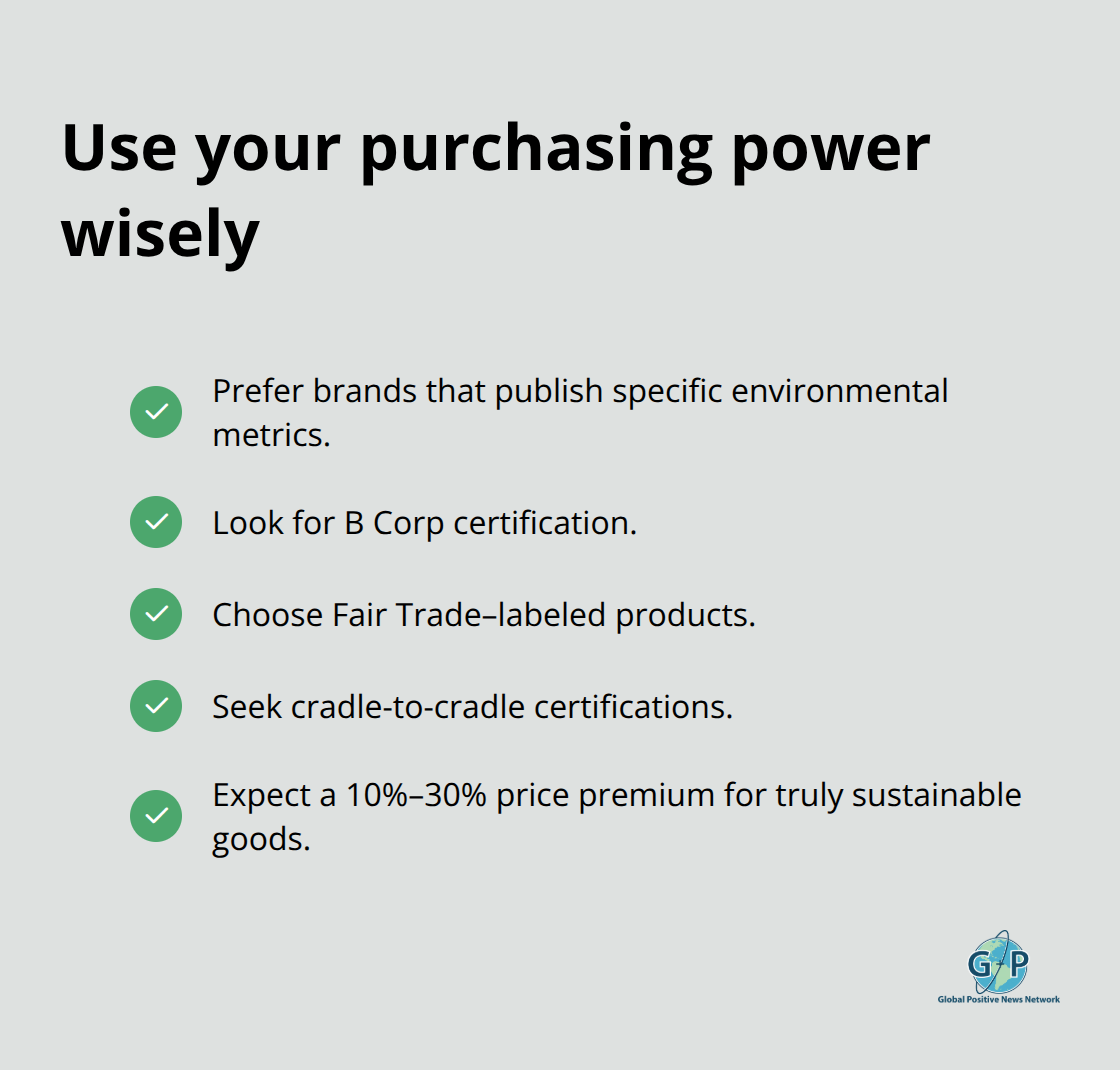
Prioritize brands that publish specific environmental metrics-companies measuring water reduction percentages, recycled material percentages, or emissions per unit produced-rather than those using vague language like net-zero targets without timelines or verification. Third-party certifications matter: B Corp certification, Fair Trade labels, and cradle-to-cradle product certifications indicate independent auditing rather than self-assessment. Kinship skincare’s transparent approach to plastic conversion works because customers understand exactly what happens to their packaging. Price premiums for sustainable products typically range from 10% to 30% above conventional alternatives, but that cost reflects actual environmental benefits rather than marketing expenses.
Food and Transportation Choices Generate Measurable Impact
Food choices create measurable impact: reducing meat consumption lowers greenhouse gas emissions because livestock production generates methane and consumes enormous quantities of water and land. You don’t need to eliminate meat entirely; cutting consumption by 50% still produces significant emissions reductions. Local food sources reduce transportation emissions substantially, and farmers markets often feature producers using regenerative practices that improve soil carbon storage.
Public transportation reduces per-capita emissions compared to personal vehicle use; switching to public transit for your commute produces more emissions reduction than most other individual actions combined. This single shift outweighs dozens of smaller environmental choices in terms of actual impact.
Daily Changes Accumulate Into Significant Results
LED bulbs consume 75% less electricity than incandescent alternatives and last 25 times longer, eliminating frequent replacement waste. Shower duration matters: reducing shower time from 10 minutes to 5 minutes saves approximately 12,500 gallons of water annually per person. These specific changes generate measurable results, not abstract environmental benefits. When millions of people adopt these practices simultaneously, the cumulative effect transforms resource consumption patterns across entire regions.
Policy Advocacy Amplifies Individual Action
Advocating for policy changes amplifies individual action exponentially because policies shape infrastructure and corporate behavior at scale. Germany’s Energiewende policy created the conditions enabling renewable energy adoption across entire regions; without that policy framework, individual renewable energy purchases would remain marginal market phenomena. Contact elected representatives and demand science-based climate solutions and conservation-forward agricultural policies. Audubon’s Birds Tell Us to Act on Climate campaign demonstrates that organized citizen pressure produces legislative movement. Policy advocacy matters because one policy change affecting millions of people generates more environmental impact than thousands of individual consumption choices.
Community Action Builds Local Resilience
Community gardens, neighborhood clean-ups, and local environmental projects build resilience while demonstrating that environmental stewardship belongs to everyone. These initiatives strengthen neighborhood bonds and create tangible environmental improvements that residents witness directly.
Final Thoughts
Sustainable hopeful innovations transforming industries right now prove that environmental responsibility and economic viability move together, not against each other. Germany’s renewable energy transition, Patagonia’s circular business model, and The Nature Conservancy’s rainforest protection demonstrate that concrete action produces measurable results. These aren’t theoretical possibilities or distant promises-they’re happening today because companies, startups, and communities recognized that sustainability creates competitive advantages and operational savings.
Individual choices matter more than most people realize, but not because personal consumption decisions alone solve environmental challenges. Your purchasing power shapes market demand, your transportation choices reduce emissions at scale, and your daily habits accumulate into significant resource savings. These actions gain real power when millions of people adopt them simultaneously, and policy advocacy amplifies everything else you do-one policy change affecting millions of people generates more environmental impact than thousands of individual consumption choices combined. Contacting elected representatives and demanding science-based climate solutions creates the conditions enabling renewable energy adoption, circular manufacturing, and conservation-focused agriculture across entire regions.
The momentum building right now combines three forces: corporations pursuing sustainability because it reduces costs and builds resilience, startups scaling solutions without legacy constraints, and communities establishing environmental stewardship practices that strengthen local resilience. Your purchasing decisions, daily choices, and policy advocacy work together with corporate commitments and community projects to build the greener future already taking shape. Global Positive News Network tracks these real stories of environmental progress and community impact because sustainable hopeful innovations deserve attention and celebration.
Having a hard day?
The 2 Minute Hope Reset is a short free guide with three small practices for the days that feel heavy. Two minutes each, nothing to keep up with.
Get the free guideExplore more positive news:
Enjoying stories like this?
Global Positive News Network is reader-supported. If you’d like to support the mission, you can visit the Official GPNN store.