

Most people chase happiness as if it’s somewhere far away. At Global Positive News Network, we believe joy lives in the small moments you create every single day.
Daily joy routines aren’t complicated rituals that demand hours of your time. They’re simple practices woven into your morning, midday, and evening that shift how you feel and think.
How to Start Your Day With Purpose
The Science Behind Your Morning Window
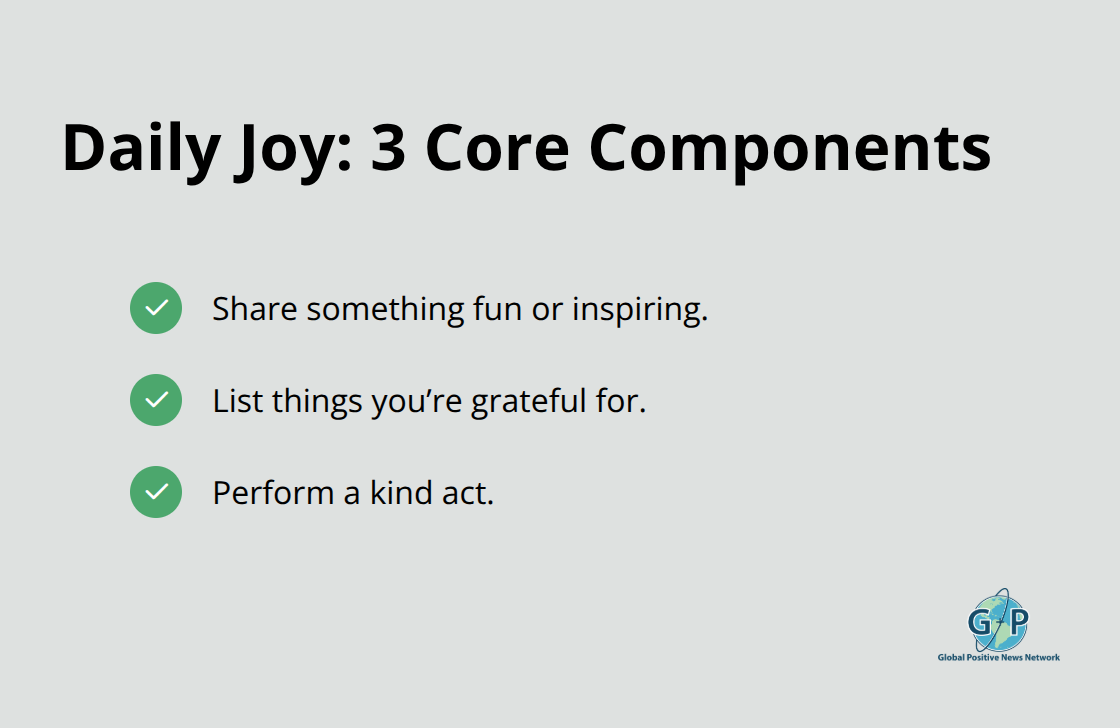
Your morning sets the tone for everything that follows. Brain plasticity peaks at the end of the day, and this is exactly when small practices deliver the biggest impact. A study from UCSF involving approximately 17,600 participants across 169 countries found that a seven-day wellbeing intervention requiring just 5–10 minutes daily produced measurable improvements in emotional wellbeing with an effect size of 0.48. That intervention included three core components: sharing something fun or inspiring, listing things you’re grateful for, and performing a kind act.
Start With Specific Gratitude
You don’t need to practice all three components every morning, but starting with gratitude creates momentum. Write down one specific thing you’re grateful for before checking your phone-not something generic like family or health, but something concrete from yesterday or that morning. One person might write “I’m grateful my coffee was hot today” or “I’m grateful my neighbor waved at me.” This specificity matters because it anchors your mind to real moments rather than abstract concepts.
Move Your Body Intentionally
After gratitude, move your body intentionally. A brisk 10-minute walk lifts mood quickly and requires no special equipment or gym clothes. If you can get outside within the first hour of waking, even better-morning light exposure cues your body that the day has started and regulates your circadian rhythm. If stepping outside isn’t possible, stand by a window and breathe to gain light exposure.
Nourish Yourself Properly
Then nourish yourself properly. Eat slowly and focus on texture, temperature, and flavor; mindful eating can support mental wellbeing through its effects on neurotransmitter levels. Drink water before coffee or tea to rehydrate after sleep. These three practices-gratitude, movement, and nourishment-take roughly 30 minutes combined and create a foundation that carries through your entire day.
Building Momentum Through Consistency
The dose-response pattern from the UCSF study shows that more daily practices led to larger wellbeing gains, so even adding one of these elements to your morning produces real change. Once you establish this foundation, your midday habits become easier to maintain because you’ve already primed your brain for positivity.
Midday Momentum
Your morning routine primes your brain for positivity, but midday is where that momentum either strengthens or collapses. Most people hit an energy dip between 2 and 3 PM, and intentional breaks shift your entire afternoon. The UCSF study on the Big Joy Project showed that younger participants experienced greater reductions in perceived stress when they maintained consistent daily practices throughout their waking hours.
Reset Your Energy With Movement
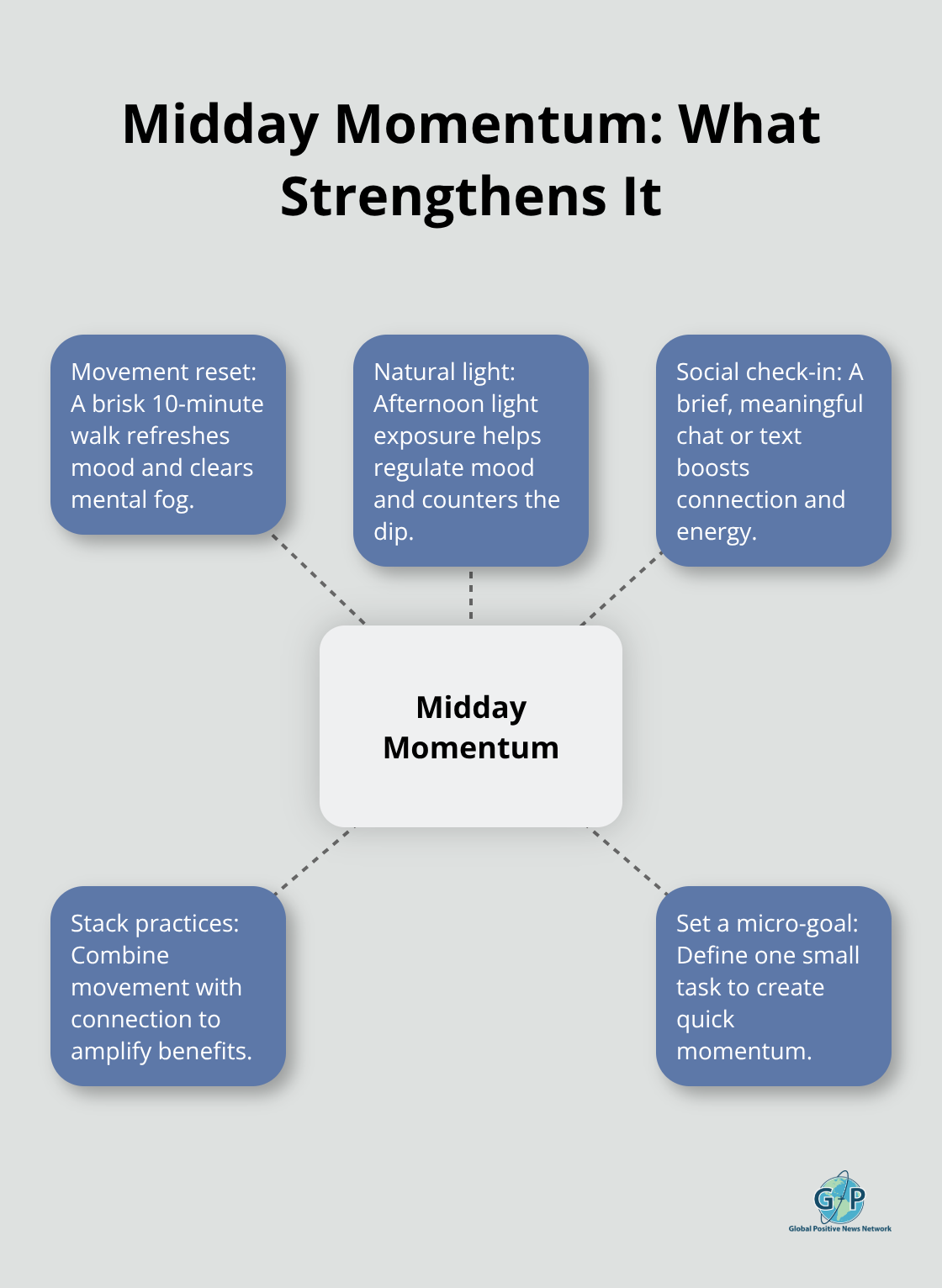
A brisk 10-minute walk at midday works just as effectively as a morning walk, and the added benefit is that you reset your mental state after hours of focused work. Step outside when you can-natural light exposure during the afternoon regulates your mood and counteracts the energy dip. If outdoor time isn’t feasible, stand by a window for five minutes while you take phone-free breaths to create measurable calm. Treat this break as non-negotiable, not as something you fit in only when your schedule allows.
Connect With Someone Meaningful
Social connection at midday operates differently than evening connection. Text someone you appreciate with specific reasons they matter to you, or have a genuine conversation with a colleague about something beyond work tasks. These interactions don’t need to be long-a five-minute conversation over coffee or a text exchange counts. The NHS emphasizes that doing enjoyable activities with friends and talking with trusted people releases tension and strengthens relationships, both of which directly impact afternoon mood.
Stack Your Practices for Maximum Impact
When you combine a midday walk with a social moment, you stack two wellbeing practices that amplify each other. This is where the dose-response pattern from the UCSF study becomes your advantage: more practices lead to larger gains. End your midday break by setting one micro-goal for the next work block (send one email, outline one paragraph, complete one small task). This creates quick momentum and prevents the afternoon from feeling like you’re pushing uphill.
As evening approaches, your brain shifts into a different mode-one that responds powerfully to reflection and calm.
Evening Practices for Reflection and Calm
Write Down Your Positive Moments
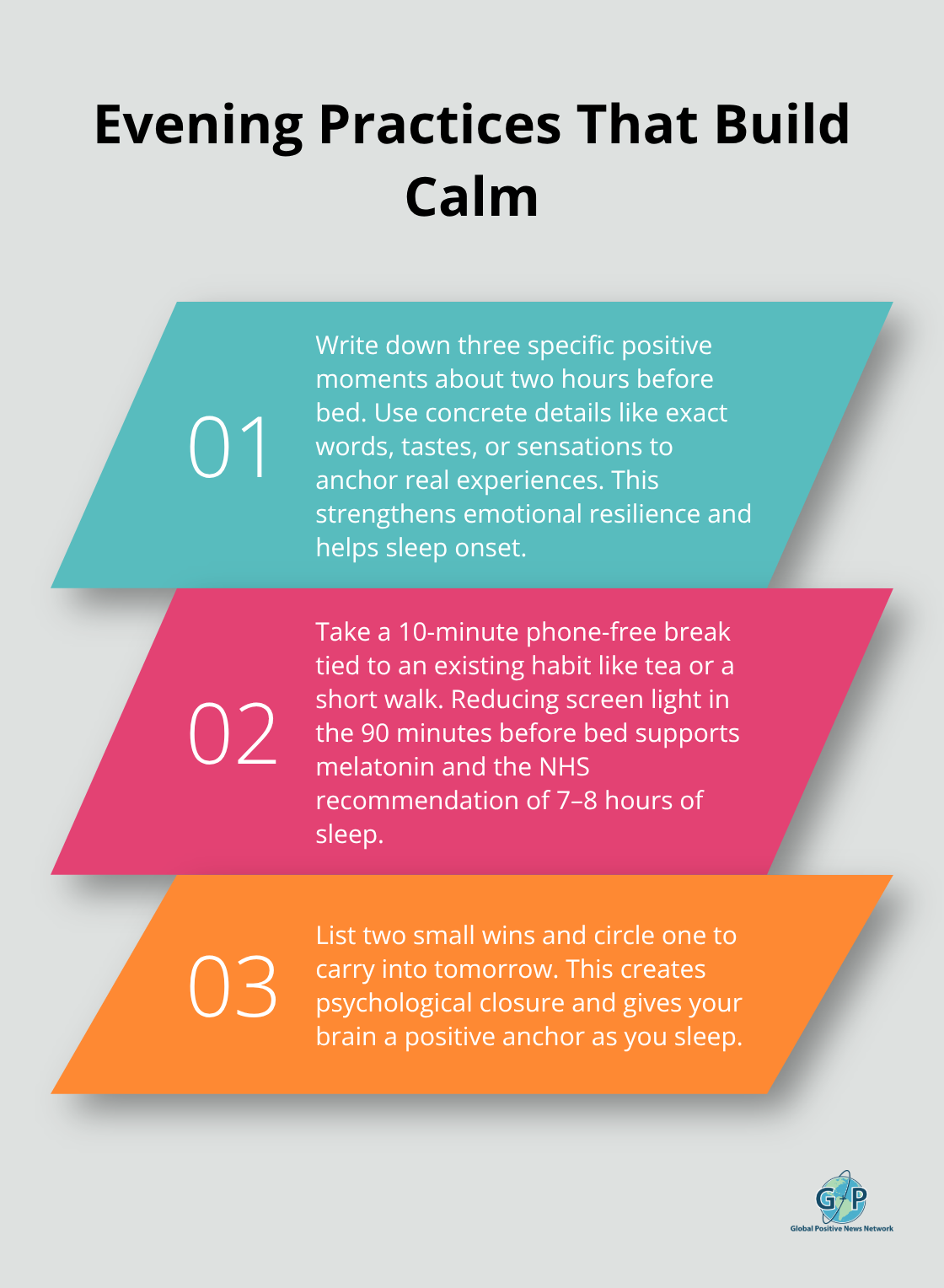
Evening is when your brain shifts into reflection mode, and this is precisely when small practices compound into lasting change. Your evening routine determines not only how you sleep but how you wake, which means these practices directly influence tomorrow’s foundation. Start your evening wind-down two hours before bed by writing down three specific positive moments from your day. Not vague reflections like having a good day, but concrete details: the exact words someone said that made you laugh, the specific taste of your lunch, the precise feeling when you completed a task. This practice anchors your brain to real experiences rather than abstract positivity, which research shows strengthens emotional resilience and improves sleep onset.
Disconnect From Your Phone
The most powerful evening practice is a phone-free break tied to an existing habit. If you drink tea after dinner, use that 10 minutes without your phone. If you take a walk to the mailbox, keep your device inside. The NHS recommends getting 7 to 8 hours of sleep, and screen light suppresses melatonin production up to 90 minutes before bed, directly sabotaging that goal. If you slip on this practice one evening, reset at the next break rather than abandoning the routine entirely.
Activate Your Parasympathetic Nervous System
Practice a wind-down technique that activates your parasympathetic nervous system. The 4-4-6 breathing method works: inhale for four counts, hold for four, exhale for six. Do this for one minute or longer to slow your heart rate and ease tension. Alternatively, use a guided relaxation audio or gentle stretching to signal to your body that sleep is approaching.
Anchor Tomorrow With Your Wins
End by listing two small wins from your day on paper, no matter how minor, and circle one item to carry into tomorrow. This creates psychological closure and gives your brain something positive to anchor onto as you sleep. These evening practices take 20 to 30 minutes combined and work because they interrupt the spiral of rumination that keeps most people awake.
Final Thoughts
The practices you’ve read throughout this article work because they’re small enough to fit into any life, yet powerful enough to shift how you feel. A seven-day intervention from UCSF showed that just 5–10 minutes of daily joy routines produced measurable improvements in emotional wellbeing, with participants reporting higher happiness and lower stress. The real power emerges when you stack these practices across your day: morning gratitude primes your brain, midday movement resets your energy, and evening reflection anchors positive moments into memory.
Start with one practice tomorrow morning and write down one specific thing you’re grateful for before checking your phone. That single action takes two minutes and creates the foundation everything else builds on. Once gratitude feels natural, add a ten-minute walk, then add an evening win list. The dose-response pattern from the research is clear: more daily practices lead to larger wellbeing gains, but even one practice produces real change.
What makes daily joy routines sustainable is that they don’t demand willpower or special equipment-they work because you weave them into moments you already experience (your morning coffee, your lunch break, your evening wind-down). We at Global Positive News Network believe this is how lasting happiness builds: through small, deliberate choices repeated daily. Tomorrow morning, start your joy routine.
Having a hard day?
The 2 Minute Hope Reset is a short free guide with three small practices for the days that feel heavy. Two minutes each, nothing to keep up with.
Get the free guideExplore more positive news:
Enjoying stories like this?
Global Positive News Network is reader-supported. If you’d like to support the mission, you can visit the Official GPNN store.