

Most people wake up feeling rushed and reactive. At Global Positive News Network, we’ve found that morning positivity rituals transform how your entire day unfolds.
The good news is you don’t need hours or complicated routines. Small, consistent practices-from gratitude to movement-create measurable shifts in your mood and mental clarity.
What Actually Changes Your Mood in the Morning
Gratitude and Value-Based Affirmations Shift Your Brain
Gratitude shifts your brain chemistry faster than you’d expect. Research from the University of Pennsylvania found that people who wrote self-affirmations focused on core values like kindness or friendship showed measurable changes in brain regions linked to self-processing. One week later, those same people exercised more and reported better attitudes toward physical activity. The practical application here is straightforward: write down what you’re grateful for or what you value most, then repeat it ten times each morning. Not as vague thankfulness, but specific appreciation tied to your actual values.
If you value connection, acknowledge one person you care about. If you value growth, note one small improvement you’ve made. This specificity matters because generic affirmations often backfire, while value-based ones consistently drive behavior change. A study from the University of Sheffield showed that people who used morning rituals around positive self-statements consumed 5.5 more portions of fruits and vegetables the following week, meaning these practices reshape your choices throughout the entire day.
Light, Sound, and Movement Create Immediate Effects
Movement in the morning isn’t optional if you want to shift your mental state. Morning exercise raises serotonin and norepinephrine, the neurotransmitters that build stress resilience. Harvard Business Review highlighted research showing that people who exercise in the morning experience increased creativity and productivity for the two hours afterward, plus they report less work-related stress overall.
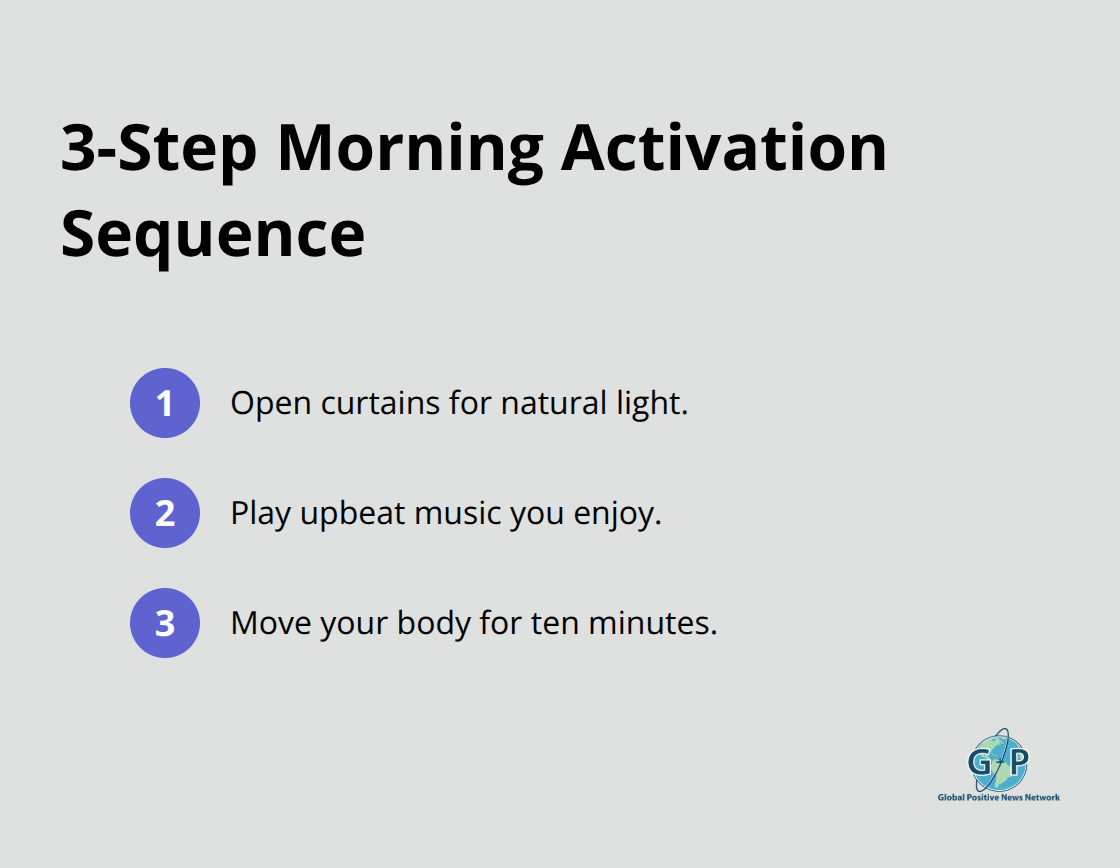
A simple ten-minute walk, light stretching, or even dancing to upbeat music produces real effects. Natural light exposure increases alertness and serotonin production, while upbeat music energizes your brain. Combine these: open curtains, play music you actually enjoy, then move your body for ten minutes. That’s the sequence. Your nervous system responds to light, sound, and physical movement in predictable ways.
Start With What You Can Sustain
Start with what you can sustain, not what sounds impressive. These morning shifts compound into lasting changes across your entire day, which means the next step involves building a routine that actually fits your life.
How to Build a Morning Routine That Actually Sticks
Match Your Routine to Your Real Life, Not Your Ideal Self
Most people design a morning routine for who they wish they were, not who they actually are. Time-management expert Anna Dearmon Kornick emphasizes that preparation the night before cuts morning friction significantly. Set your outfit, pack your bag, and program your coffee maker to brew at your wake time. Check the weather forecast so you’re not scrambling for the right clothes.
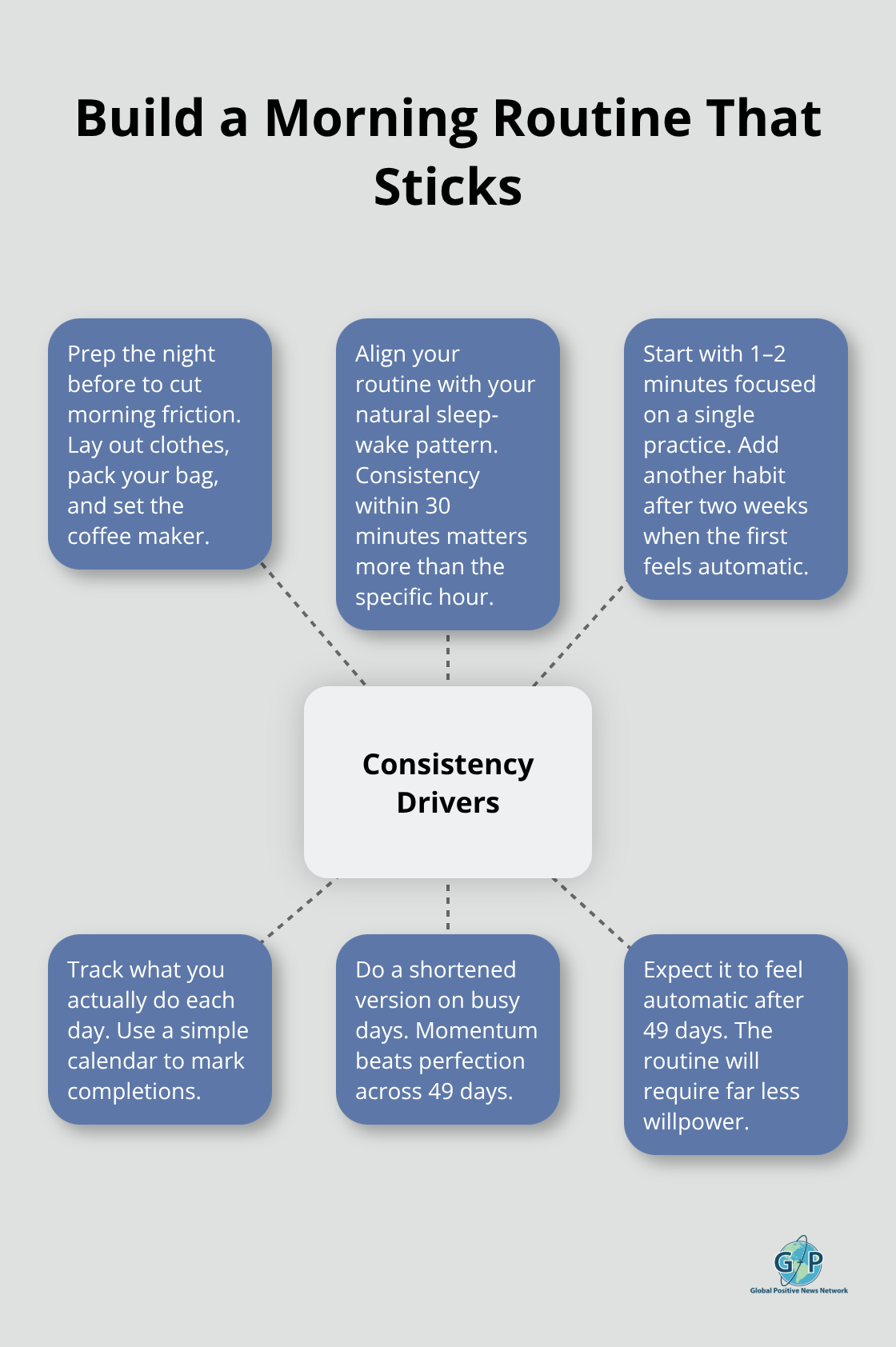
These decisions made in advance mean you wake up with momentum instead of paralysis. Start with just one or two of these prep steps, not all of them at once. The goal is reducing decision fatigue in those first waking hours, which research shows directly impacts your energy and cognitive performance for the entire day.
Anchor Your Routine to Your Natural Sleep-Wake Pattern
Your morning routine must match your sleep-wake pattern, not fight against it. Some people genuinely function better waking at 5 a.m., while others peak at 7 a.m. or later. Forcing yourself into an early-bird schedule when you’re naturally a night owl creates resistance that kills consistency. Instead, identify your natural rhythm and build your routine within a 30-minute window of your typical wake time. This consistency matters more than the specific hour. Research shows that maintaining a regular sleep-wake schedule within about 30 minutes each day supports mental health, heart health, and cognitive performance.
Start Small and Build Gradually
Once you’ve anchored your routine to a realistic time, keep it short at first. Try 1–2 minutes initially, focusing on a single practice like gratitude or movement. Add another habit after two weeks when the first one feels automatic. This staged approach prevents overwhelm and increases your odds of staying consistent. Track what you actually do, not what you plan to do. Use a simple calendar where you mark off each day you complete your morning ritual. After 49 days of consistency, the practice becomes genuinely automatic, requiring far less willpower.
Maintain Momentum Over Perfection
On busy days when you can’t do the full routine, do a shortened version rather than skipping entirely. Consistency matters far more than perfection, and maintaining momentum across 49 days is what transforms these small morning actions into lasting habits that reshape your entire day. Once these habits stick, you’re ready to explore how real people have transformed their days with these same simple practices.
What Works in Real Life
Habit-Tracking Tools Turn Consistency Into Visible Progress
The gap between planning a morning routine and actually doing it every day is where most people fail. Habit-tracking apps like Streaks and Done work because they transform abstract consistency into visible progress. You mark off each completed morning ritual and build momentum across weeks. While habits can start forming within about two months, the time required varies significantly across individuals, requiring far less willpower. Some people photograph their morning ritual or log it in a shared spreadsheet with accountability partners, which adds a social layer that strengthens follow-through. The accountability piece matters more than you’d think.
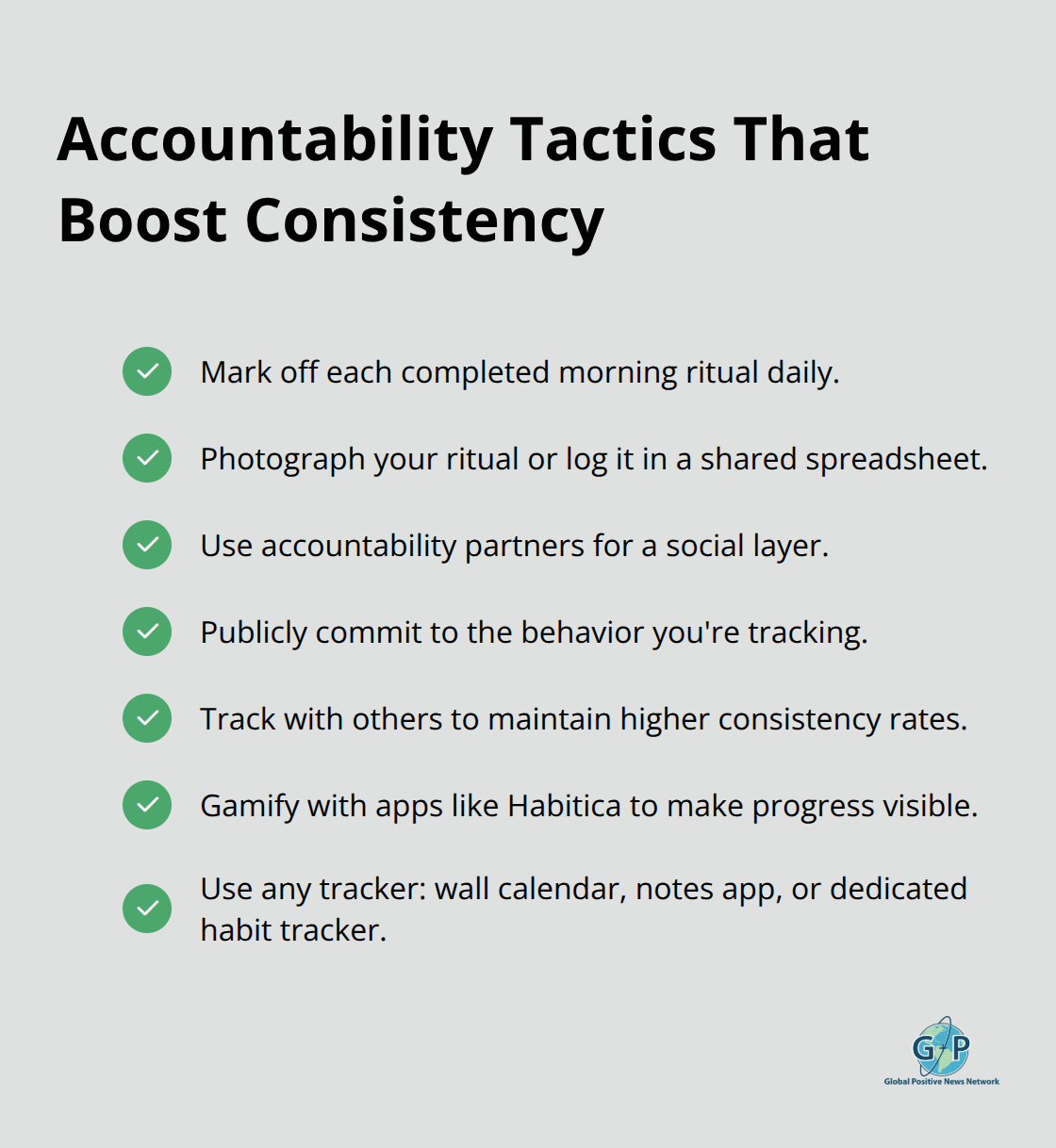
Research on habit formation shows that people who publicly commit to a behavior and track it with others maintain consistency at significantly higher rates than solo practitioners.
Apps like Habitica gamify your morning routine by awarding points for completed practices, turning the abstract concept of mood improvement into concrete progress you can see. The tool itself becomes less important than the tracking mechanism, whether that’s a calendar on your wall, a notes app, or a dedicated habit tracker.
Communities Create the Environment Where Routines Thrive
Communities built around morning routines create the environment where these practices thrive. Platforms like Reddit’s r/GetStudying and r/DecidingToDoBetter host thousands of people sharing their morning sequences and accountability check-ins. Private Facebook groups focused on positive habits often have daily prompts where members post their morning ritual completion, creating social proof that sticks with you. Some people join coworking spaces or morning running clubs not just for the activity but for the built-in accountability of showing up at a specific time with other people.
The simplest version is texting a single friend your morning ritual each day and asking them to do the same, creating a two-person accountability loop that costs nothing.
Remove the Decision to Make It Automatic
What separates people who sustain morning routines from those who quit is not willpower or motivation-it’s removing the decision to do it in the first place. When your routine is anchored to a specific time, tracked visibly, and shared with at least one other person, the friction drops dramatically. You move from thinking about whether to do your morning ritual to simply executing it as part of your established sequence.
Final Thoughts
The shift from a rushed morning to one anchored in positivity requires no life overhaul. Start with a single practice-gratitude tied to your values, a ten-minute walk, or upbeat music while you move-then track it visibly and share it with one person. After 49 days, the practice becomes automatic, and you’ll notice the effects ripple through your entire day: better focus, fewer stress-related decisions, more energy for what matters.
Morning positivity rituals work because they rest on neuroscience, not willpower. Light exposure increases alertness, movement raises serotonin, and value-based affirmations reshape how your brain processes threats and opportunities. These produce measurable shifts in mood, behavior, and resilience that compound over weeks (not abstract promises, but real changes you’ll feel).
The real challenge lies in matching your routine to your actual life, not your ideal self. Anchor your practice to your real sleep-wake pattern, start with one or two habits, and add gradually as they stick. Visit Global Positive News Network for more stories of personal transformation and practical strategies for living with intention.
Having a hard day?
The 2 Minute Hope Reset is a short free guide with three small practices for the days that feel heavy. Two minutes each, nothing to keep up with.
Get the free guideExplore more positive news:
Enjoying stories like this?
Global Positive News Network is reader-supported. If you’d like to support the mission, you can visit the Official GPNN store.