

Most people think they need massive life overhauls to feel happier. That’s not true.
At Global Positive News Network, we’ve found that simple positivity habits-small, consistent practices-create real changes in how you feel every single day. Research shows these micro-habits stick better than ambitious resolutions, and they reduce stress without requiring hours of effort.
The best part? You can start today with just five minutes.
Why Small Positivity Habits Create Real Change
Micro-Habits Bypass Willpower Resistance
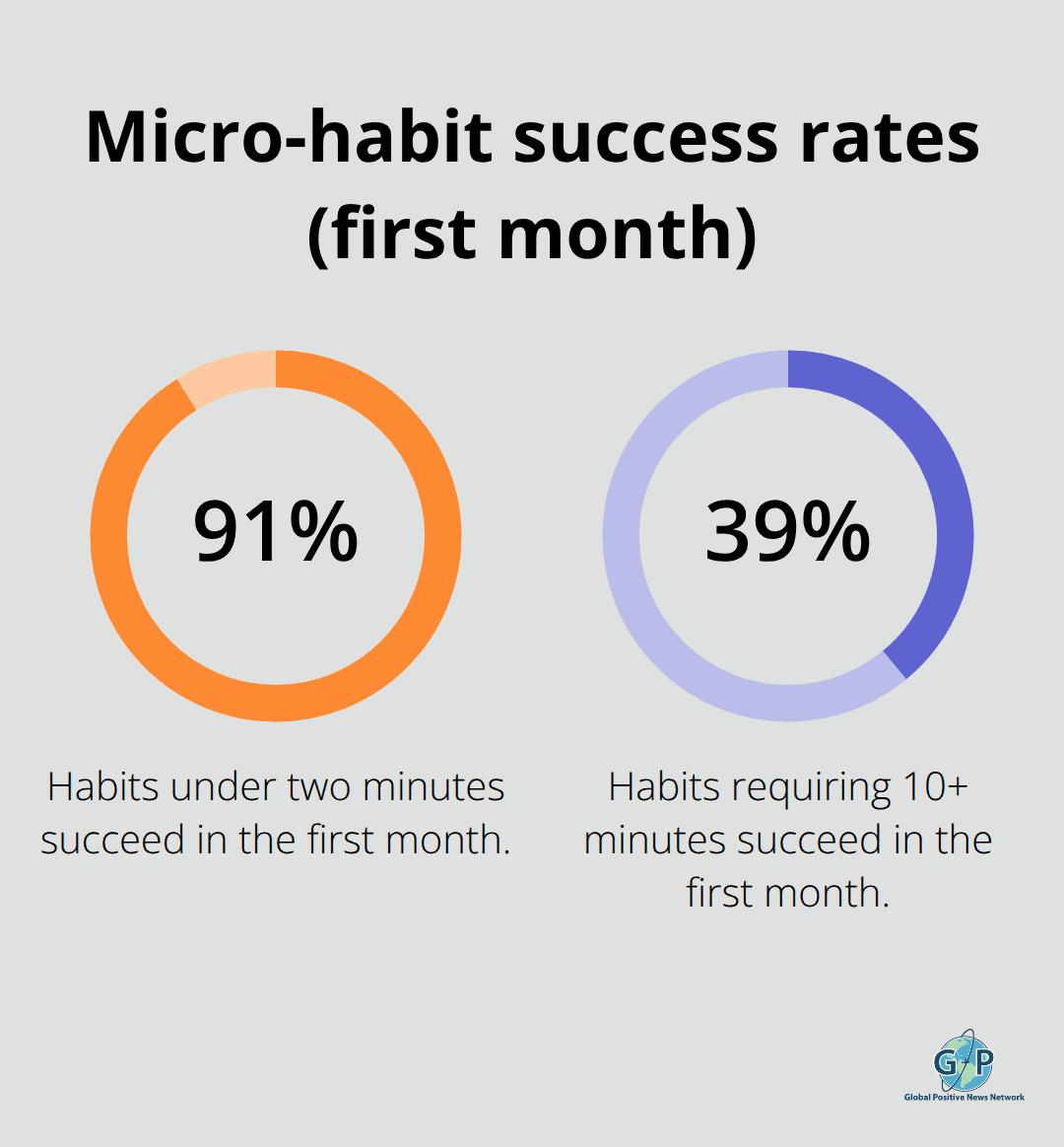
Most people fail at resolutions because they demand too much willpower at once. Micro-habits work differently-they sidestep this resistance entirely. When you commit to a five-minute gratitude practice instead of overhauling your entire mindset, your brain accepts the change without fighting back. Research from BJ Fogg at Stanford University shows that habits requiring less than two minutes achieve a 91% success rate in the first month, compared to just 39% for habits requiring 10+ minutes. Small consistency beats ambitious sporadic effort every time.
How Your Brain Locks In New Patterns
Your nervous system responds faster to repeated small actions than to occasional big ones. When you practice a two-minute breathing exercise daily, your body learns to associate that trigger with calm. After three weeks of repetition, neural pathways strengthen enough that the habit becomes automatic. This is why New Year’s resolutions fail-they exhaust your prefrontal cortex within days by demanding too much change at once.
Stress Hormones Drop With Daily Practice
Daily positivity habits directly suppress stress hormones in your body. A study found that people who spent time on gratitude writing improved their self-reported positive and negative affect. The American Psychological Association reports that chronic stress affects 77% of adults, yet most people never address it with concrete daily practices. Acts of kindness trigger dopamine release in both the giver and receiver, creating an immediate mood lift that lasts hours.
Momentum Compounds Faster Than You Think
The momentum from small wins matters more than most people realize. Completing one habit creates psychological momentum that makes starting the second habit easier (this is called the progress principle). Your brain releases more motivation after visible wins. When you nail a five-minute morning practice, you’re statistically 3.5 times more likely to attempt a second habit that same day. Start with one practice, lock it in for 21 days, then add another. This stacking approach keeps you from overwhelming yourself while building genuine, lasting change.
With the science behind micro-habits clear, the real question becomes which specific practices work best for your daily life.
Three Habits That Work Right Now
Morning Gratitude Practice: Specificity Matters
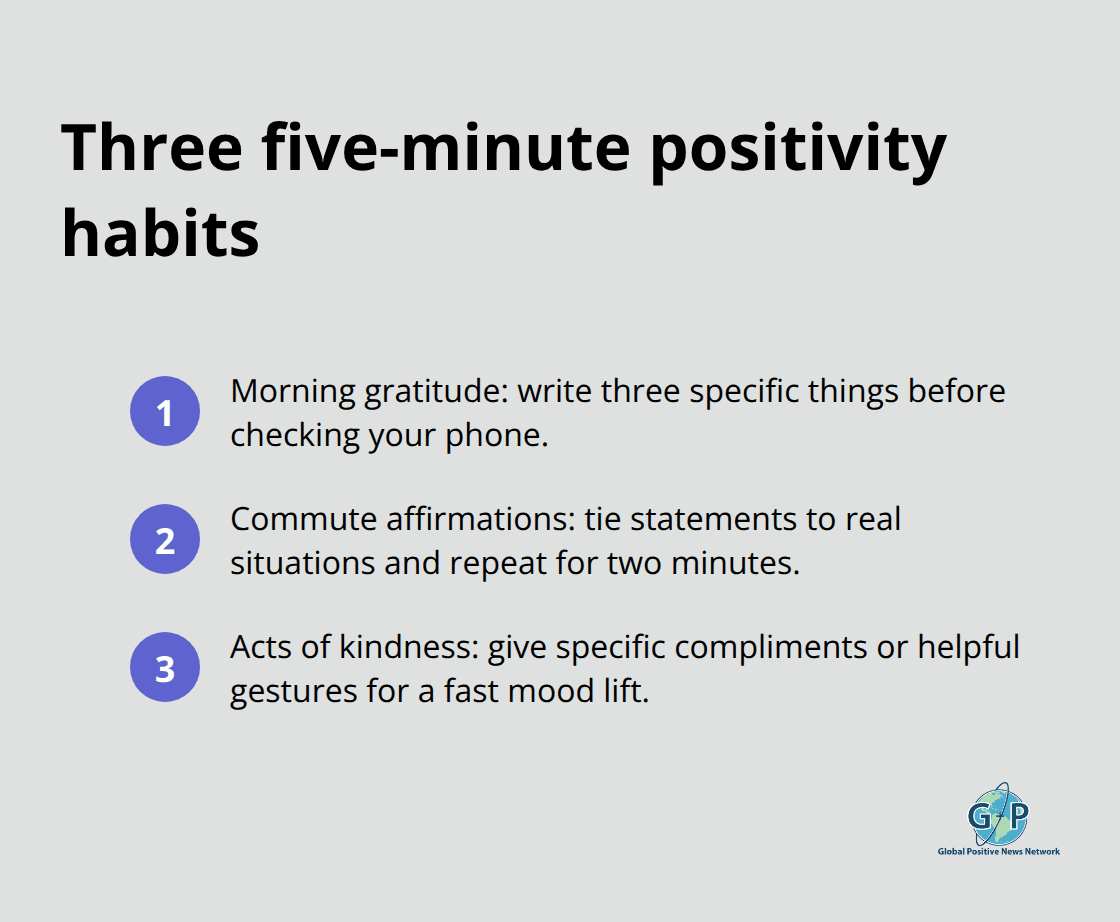
Start your morning with a five-minute gratitude practice before checking your phone. Write down three specific things you’re grateful for, not generic ones like family or health. Instead, write something like “I’m grateful my coffee was hot this morning” or “I’m grateful the barista remembered my order.” Specific gratitude triggers stronger neural responses than vague thankfulness. Handwriting activates more brain regions than typing and creates stronger memory encoding.
Start this tomorrow morning, give yourself exactly five minutes, and stop when the timer goes off. Extending it depletes your willpower before the day begins.
Positive Affirmations During Commutes and Breaks
Your commute or work breaks offer perfect moments for positive affirmations, and timing matters more than content. Instead of generic statements like “I am confident,” use affirmations tied to real situations you face. If you struggle with meetings, your affirmation becomes “I communicate my ideas clearly in conversations.” If you worry about productivity, try “I focus on one task until it’s complete.” Research from Carnegie Mellon University found that self-affirmations focused on personal values reduced stress responses in high-pressure situations. Spend two minutes during your commute or lunch break repeating your affirmation aloud or internally. The repetition rewires how your brain interprets upcoming challenges.
Acts of Kindness: The Fastest Mood Boost
Acts of kindness deliver the fastest mood boost of all three habits. Compliment a coworker specifically (not just saying they’re nice), hold a door, or send a text thanking someone for something concrete they did. These actions trigger dopamine release in your brain, creating genuine joy that lasts longer than scrolling social media. The person receiving the kindness experiences the same dopamine spike, so you create positive momentum in two nervous systems simultaneously. Start with whichever habit feels easiest, lock it in for three weeks, then add a second one. This stacking approach prevents overwhelm while building genuine momentum. Once these three habits become automatic, you’re ready to integrate them into your daily routine in ways that stick permanently.
How to Lock Positivity Habits Into Your Life
Track Progress With Simple Systems
Tracking your progress matters far more than most people realize, and it doesn’t require fancy apps or complicated systems. A simple paper journal works better than digital tracking because handwriting activates your brain differently and creates stronger memory encoding. Write one sentence each evening about which habit you completed that day and how you felt afterward. After two weeks, you’ll see patterns emerge-you’ll notice which habits stick easiest and which times of day work best for your nervous system. Some people find morning practices click immediately while others need evening slots. Your journal becomes your personal feedback loop, showing you that consistency compounds. People who track habits in any form complete them more often than those who don’t track at all. Your tracking system doesn’t need to be elaborate-it just needs to exist.
Attach Habits to Existing Routines
The real secret to permanence lies in attaching new positivity habits to activities you already do without thinking. This technique is called habit stacking, and it works because your existing routines have neural pathways already carved into your brain. If you drink coffee every morning, attach your gratitude practice to that moment-sit with your coffee and write your three specific things before anything else. If you take a shower daily, use that time for your positive affirmations. If you eat lunch at your desk, that’s when you send a kindness text or compliment someone. Your brain stops treating these as separate tasks and instead integrates them into one existing routine.
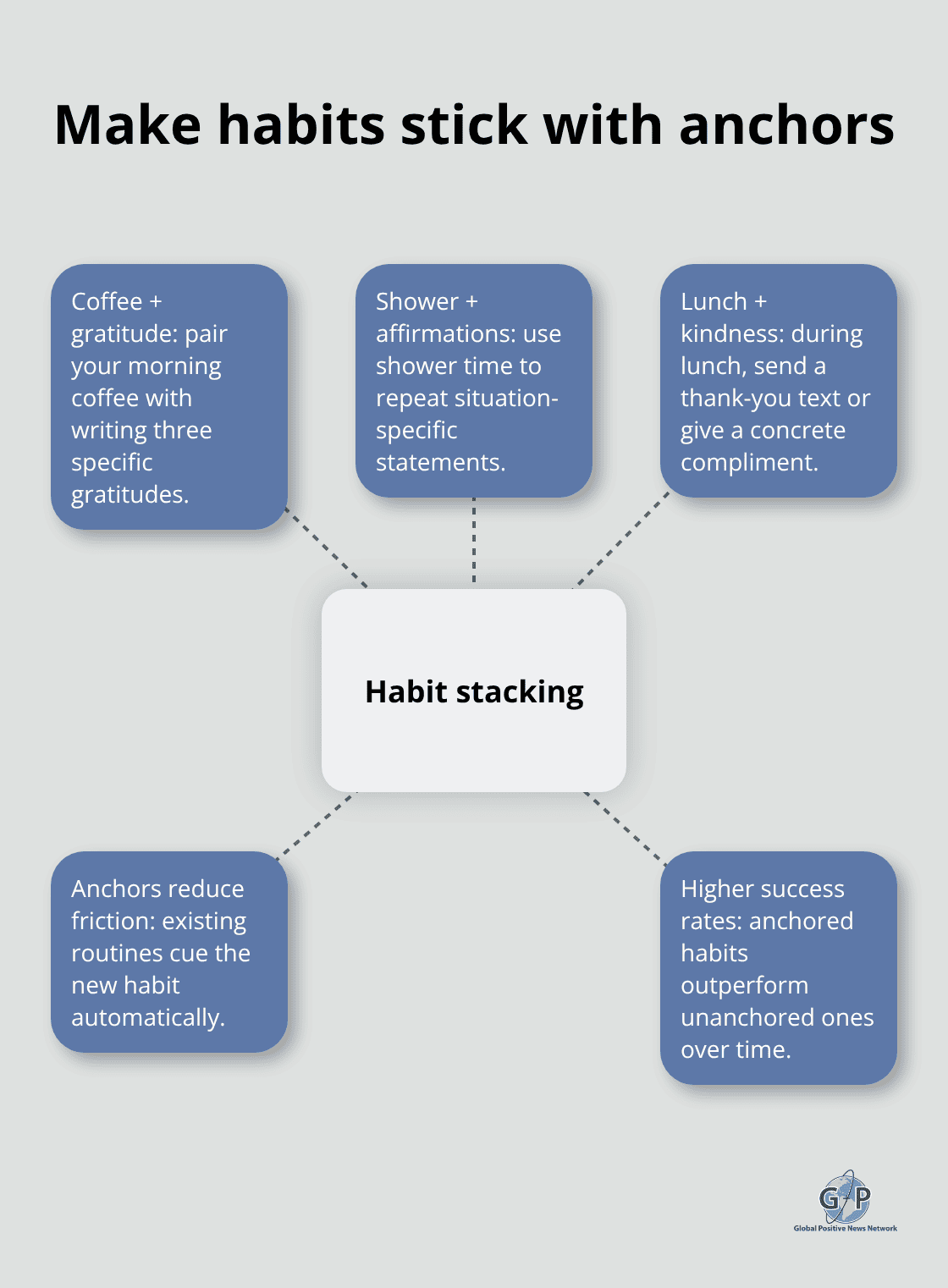
Habits attached to existing daily anchors succeed at higher rates compared to habits without anchors.
Build Community Accountability
Communities and groups accelerate this process dramatically. Joining people who practice positivity habits creates social accountability and makes the practices feel normal rather than forced. Online communities dedicated to gratitude practice, affirmation sharing, or acts of kindness provide daily reminders and genuine connection. When you see others celebrating small wins from their five-minute practices, your brain recognizes these habits as valuable and worth maintaining. The momentum from community support often means the difference between habits that last three weeks and habits that become permanent parts of your identity.
Final Thoughts
The transformation from feeling stuck to experiencing genuine daily joy doesn’t require a complete life redesign. Simple positivity habits work because they respect how your brain actually functions, and consistency with small actions beats sporadic ambitious efforts every single time. Over weeks and months, these small practices reshape your nervous system, lower your stress hormones, and create lasting changes in how you experience each day.
Pick one habit from the three we covered and commit to it for 21 days. Attach it to something you already do daily, whether that’s your morning coffee, your commute, or your lunch break. Write it down in a journal each evening so you can see the momentum building, and don’t add a second habit until the first one feels automatic. This approach prevents overwhelm while building genuine, lasting change.
What makes this process powerful is sharing it with others. When you tell someone about your five-minute gratitude practice or mention a specific compliment you gave, you normalize these habits for people around you. Visit Global Positive News Network to explore uplifting stories and connect with others on this journey toward simple positivity habits that stick.
Having a hard day?
The 2 Minute Hope Reset is a short free guide with three small practices for the days that feel heavy. Two minutes each, nothing to keep up with.
Get the free guideExplore more positive news:
Enjoying stories like this?
Global Positive News Network is reader-supported. If you’d like to support the mission, you can visit the Official GPNN store.