

Most people wake up feeling the weight of the day before they’ve even started. At Global Positive News Network, we believe daily optimism reminders can shift this pattern by training your mind to notice what’s working instead of what’s wrong.
The science backs this up. Regular optimism practices reduce stress hormones, improve sleep quality, and strengthen your immune system over time.
How Optimism Protects Your Body and Mind
Stress Reduction at the Cellular Level
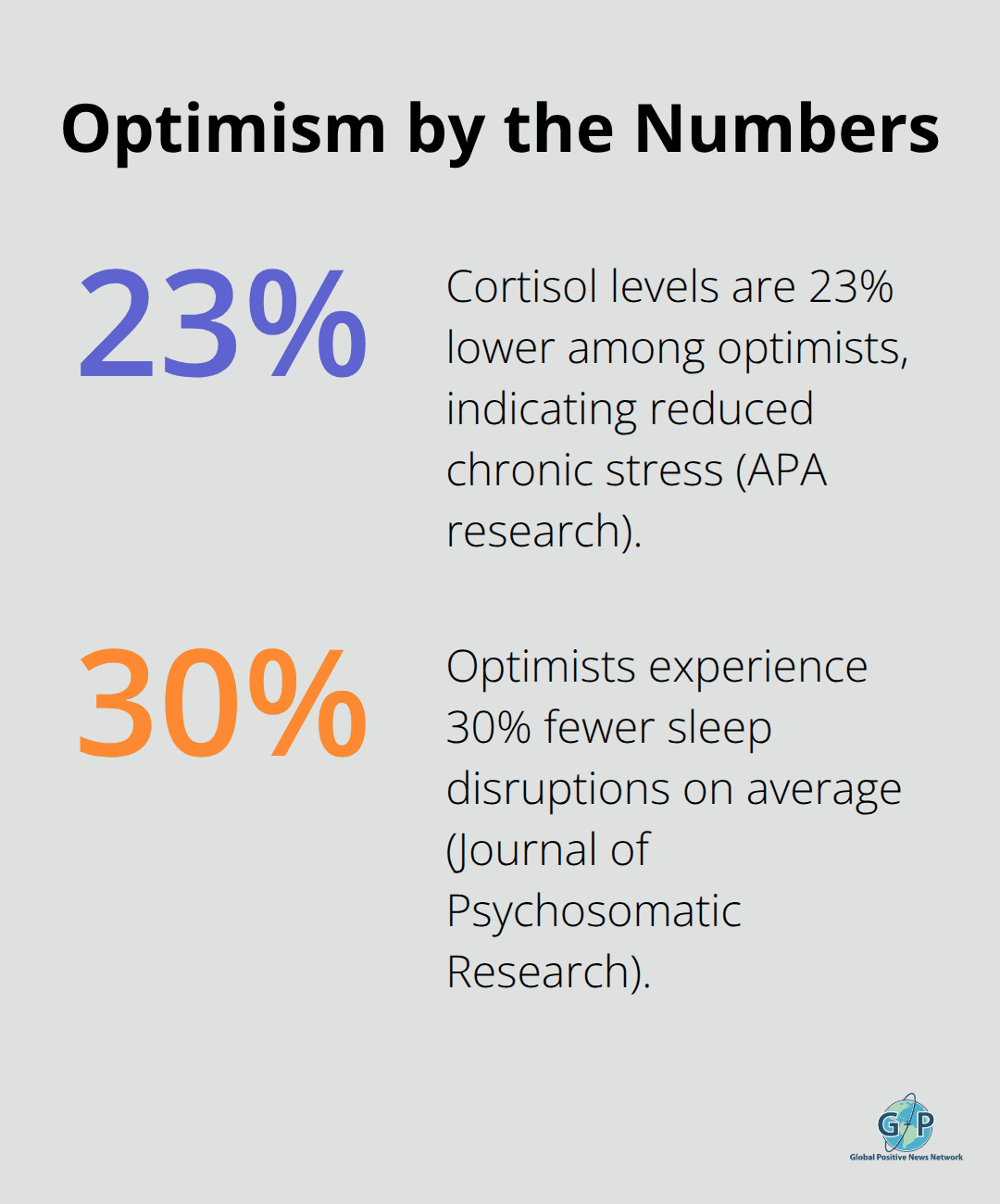
Optimism isn’t just a feel-good concept. Research from the American Psychological Association shows that people with optimistic outlooks have cortisol levels that are 23% lower than pessimistic individuals, meaning their bodies experience significantly less chronic stress. When you train yourself to notice positive possibilities, your nervous system calms down, which directly reduces the physical toll of daily pressure. This matters because sustained high cortisol damages everything from your immune function to your ability to think clearly.
People who practice daily optimism reminders report feeling less overwhelmed by work deadlines, relationship challenges, and unexpected changes, simply because their brains process threats differently. Your mind stops catastrophizing and starts evaluating situations more accurately.
Sleep Quality and Recovery
Your sleep improves substantially when you shift toward optimism. A study published in the Journal of Psychosomatic Research found that optimistic individuals fall asleep 15 minutes faster on average and experience 30% fewer sleep disruptions than their counterpart. This happens because optimism quiets the mental chatter that keeps you awake at 2 AM replaying conversations or worrying about tomorrow.
Better sleep then strengthens your immune system, improves your metabolism, and enhances your ability to regulate emotions the next day, creating a positive cycle. The connection between optimism and rest becomes self-reinforcing-good sleep makes you more optimistic, and optimism helps you sleep better.
Long-Term Health Outcomes
The long-term payoff is real: research from Harvard Medical School tracking participants over 15 years showed that optimism is related to 11 to 15% longer life span. These aren’t marginal gains. When you commit to daily optimism practices, you’re essentially choosing a different health trajectory.
Your body responds by reducing inflammation, improving cardiovascular function, and building resilience against illness. The compounding effect means that someone who starts optimism reminders at 35 will experience measurably better health outcomes by 50 than someone who never develops this practice. This foundation of physical and mental strength positions you to handle the practical strategies that actually build optimism into your daily life.
Building Optimism Into Your Actual Day
Start Your Morning With Specificity
The science showing that optimism improves health means nothing if you don’t practice it. Most people fail at building optimism because they treat it like a one-time decision rather than a daily skill that requires specific actions. Start your morning before checking your phone. Spend five minutes writing down three specific things you’re grateful for, but make them concrete, not vague. Instead of writing “I’m grateful for my family,” write “I’m grateful that my daughter laughed at breakfast” or “I’m grateful my partner made coffee without me asking.” Gratitude journaling with specific details activates your brain’s reward system more effectively than generic gratitude.
Research shows that people who wrote detailed gratitude entries reported higher life satisfaction than those who didn’t. The key is that your brain responds to particularity. After gratitude, spend two minutes on a simple affirmation tied to something you actually control today. Not “I will be successful,” but rather “I will respond calmly to difficult conversations” or “I will finish this project step by step.”
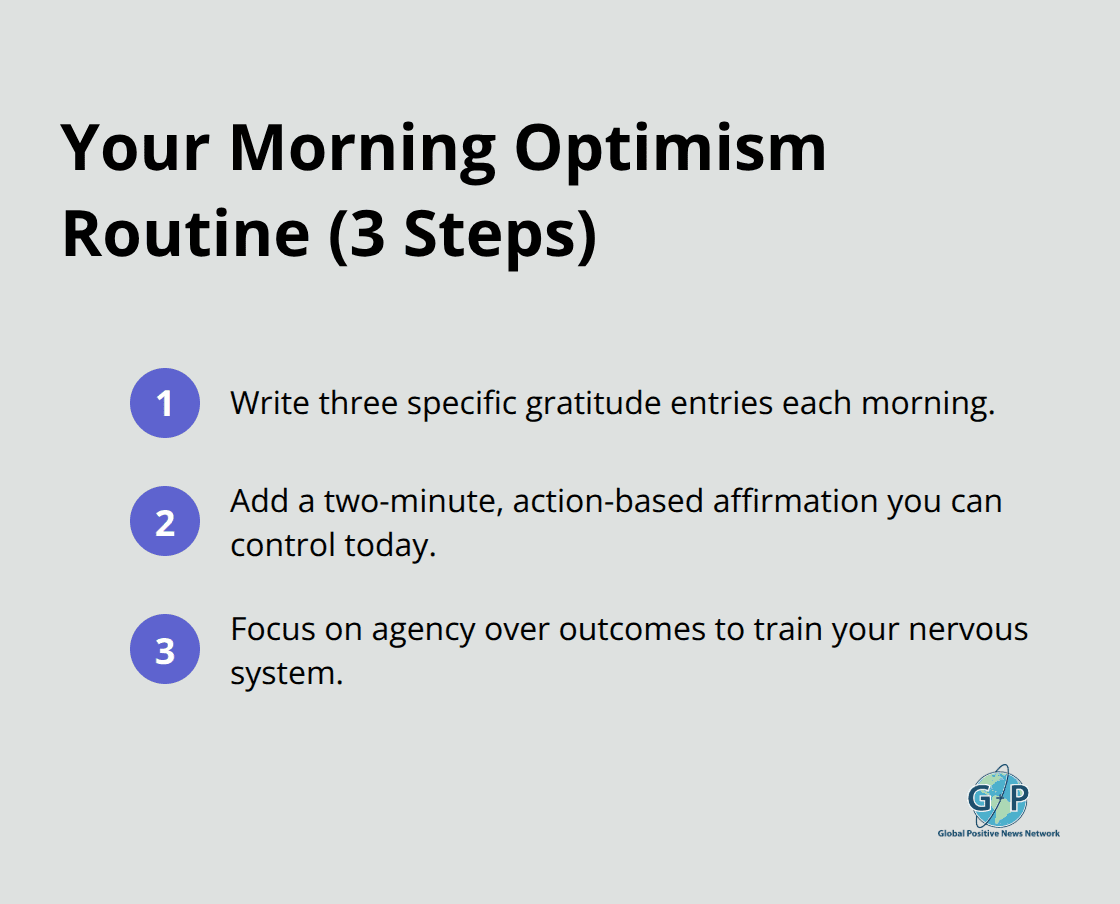
This trains your nervous system to focus on agency instead of outcome.
Choose Your Information Diet Carefully
Your news diet shapes your mental state more than almost anything else, yet most people scroll through catastrophe after catastrophe before breakfast. Replace 30 minutes of mainstream news with sources focused on what’s actually working in the world. Platforms that provide curated stories of real solutions, community progress, and human resilience train your brain to notice possibility instead of threat.
A study published in Media Psychology showed that people who consumed primarily negative news experienced higher anxiety levels than those who balanced their intake with constructive stories. Your information choices directly affect your nervous system’s baseline state. When you intentionally select uplifting content, you’re not avoiding reality-you’re training yourself to see the full picture, including the progress and solutions that mainstream outlets ignore.
Build Connection Around Shared Optimism
Your optimism depends on the people around you. Isolation amplifies pessimism while connection amplifies optimism. Join one community this month focused on your actual interests, whether that’s a local volunteer group, an online forum around your profession, or a neighborhood association. Optimistic people aren’t born that way; they’re built through repeated exposure to people who see problems as solvable.
Research tracking hundreds of thousands of people showed that social connection and longevity rivals quitting smoking in its impact. Your optimism practice works fastest when you’re surrounded by others doing the same work. These communities reinforce your daily practices and show you that sustained optimism isn’t naive-it’s a practical response to a world full of both challenges and genuine solutions. With this foundation in place, you’re ready to explore the specific tools that make daily optimism reminders automatic and effortless.
Making Optimism Automatic
Remove Friction From Your Practice
The gap between wanting to feel optimistic and actually feeling it comes down to friction. When optimism requires willpower, it fails. When it arrives automatically through your phone, your inbox, or your physical space, it sticks. Apps that send positive notifications throughout your day work because they interrupt your default thought patterns at moments when you need them most.
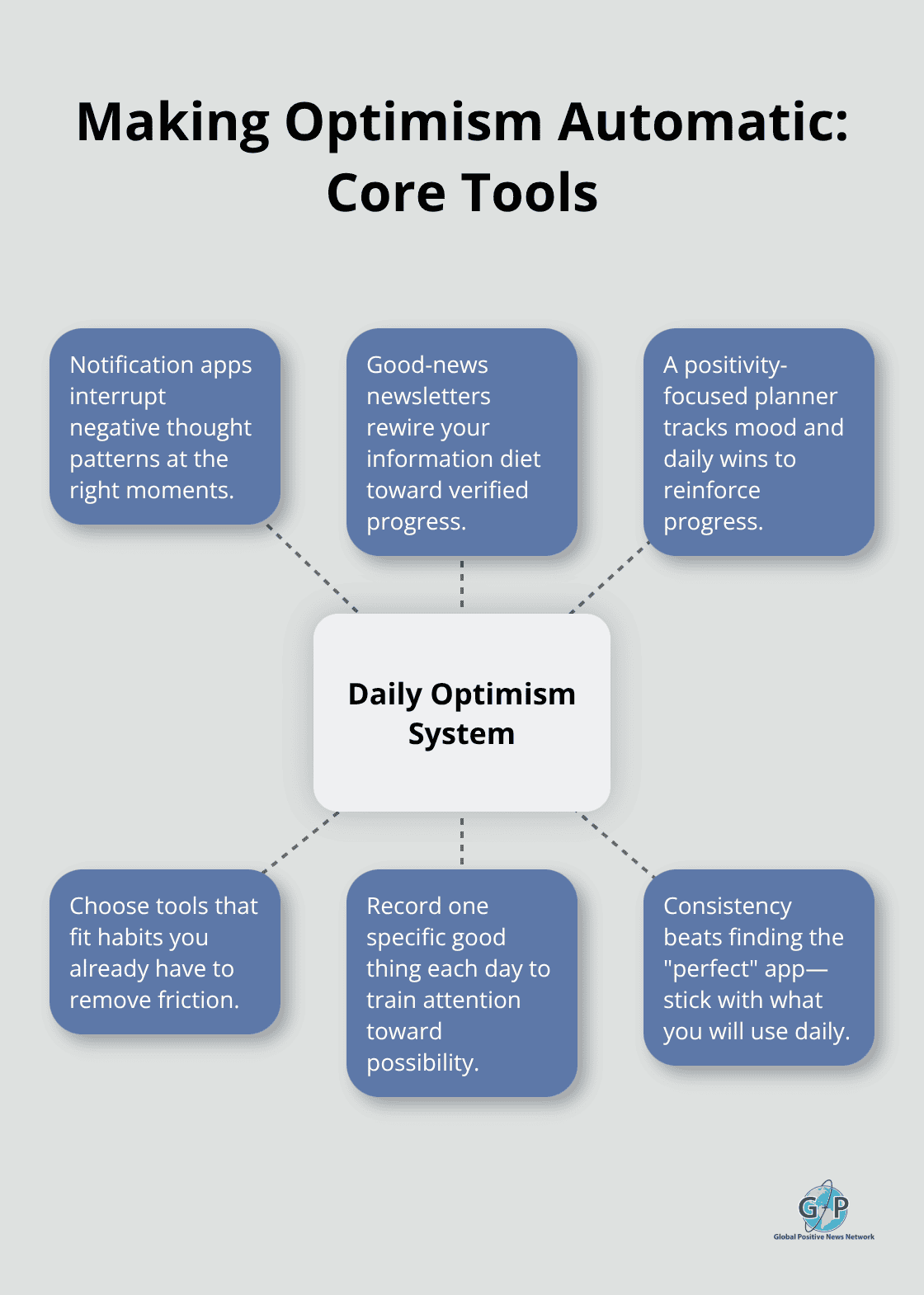
Start with one tool that matches your actual habits, not the habits you wish you had. If you check your phone first thing in the morning, a notification-based app works better than a journal you’ll forget to open. If you’re already journaling, add a positivity-focused planner that tracks your mood alongside concrete wins from each day.
A study from the University of California found that people who tracked positive events increased their optimism scores within weeks, simply because the act of recording created awareness. Your tool must fit into what you already do, not require you to build new time into an already packed schedule. Consistency matters more than finding the perfect app.
Rewire Your Information Diet
Newsletters focused on solutions and progress rewire your information diet faster than any other single change. Platforms that deliver curated stories of real solutions, community progress, and human resilience train your brain to see what’s working in the world. Good news platforms send you verified stories about breakthroughs in health, environmental restoration, social progress, and human kindness.
These platforms work because they don’t deny problems; they show you that solutions exist and progress happens constantly. Your information choices directly affect your nervous system’s baseline state.
Track What You Witness
Combine your news sources with a simple tracking system where you note one specific good thing you witnessed or experienced each day. Over time, this practice creates a neural pathway that makes your brain naturally scan for possibility instead of threat. The compounding effect means your optimism doesn’t depend on willpower anymore; it becomes your default operating system. When you record positive events consistently (even small ones like a helpful conversation or a solved problem), you train your attention to notice what’s working rather than what’s broken.
Final Thoughts
The path to sustained optimism requires consistency, not complexity. Daily optimism reminders work because they interrupt your brain’s default patterns and train it to notice what actually works in your life. When you combine specific gratitude practices with intentional information choices and community connection, you create a system that operates without willpower.
You’ll notice small shifts first: you fall asleep faster, you handle frustration with less reactivity, conversations feel lighter. These small wins compound into measurable changes over months and years. Research shows that people who maintain consistent optimism practices experience cumulative benefits that accelerate over time, not days.
Start this week by picking one tool that fits your existing routine, adding one community where you connect with people who share your commitment to possibility, and replacing one source of negative news with Global Positive News Network, which delivers verified stories about real progress and human resilience. Your brain begins rewiring immediately when you introduce these practices into your routine, and each small action strengthens your ability to notice what’s working.
Having a hard day?
The 2 Minute Hope Reset is a short free guide with three small practices for the days that feel heavy. Two minutes each, nothing to keep up with.
Get the free guideExplore more positive news:
Enjoying stories like this?
Global Positive News Network is reader-supported. If you’d like to support the mission, you can visit the Official GPNN store.