
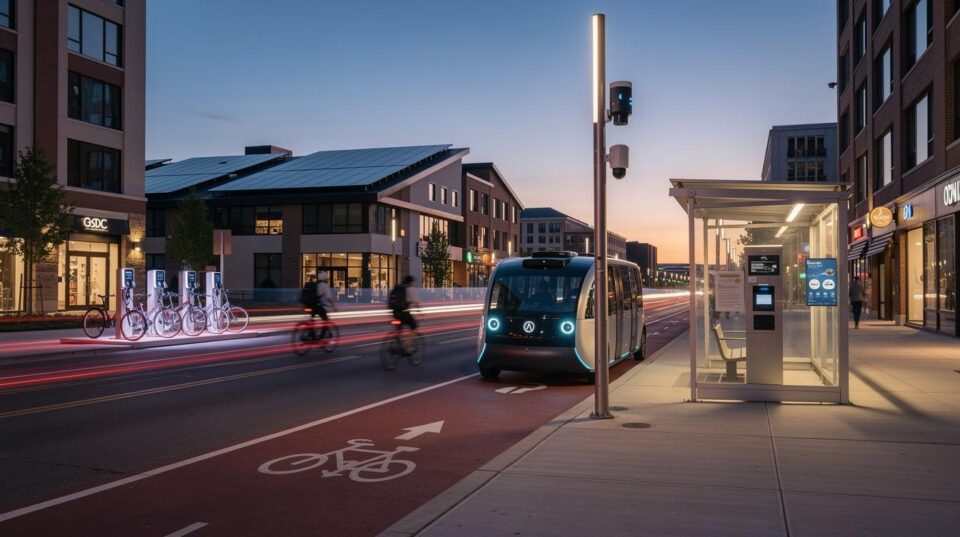
Cities worldwide are adopting smart technologies that measure air quality, manage traffic, and optimize energy use in real time. These innovations are delivering measurable results-from reduced congestion to lower emissions.
At Global Positive News Network, we’re tracking how smart cities hopeful tech is reshaping urban living through concrete examples and practical solutions. Singapore, Barcelona, and Copenhagen show us what’s possible when governments commit to intelligent infrastructure.
IoT Sensors Transform Cities Into Responsive Systems
Cities worldwide now collect millions of data points daily from traffic cameras, air quality monitors, and utility meters. These sensors transform raw information into actionable insights that residents experience immediately. Singapore’s traffic management system processes data from over 13,000 sensors across the island, reducing average commute times by 20 percent since 2015. Barcelona installed 3,200 IoT devices throughout the city, cutting water consumption by 25 percent and identifying underground leaks within hours rather than weeks. These operational systems generate immediate results-not theoretical experiments, but infrastructure that works in real time.
Traffic Systems Respond in Seconds, Not Predictions
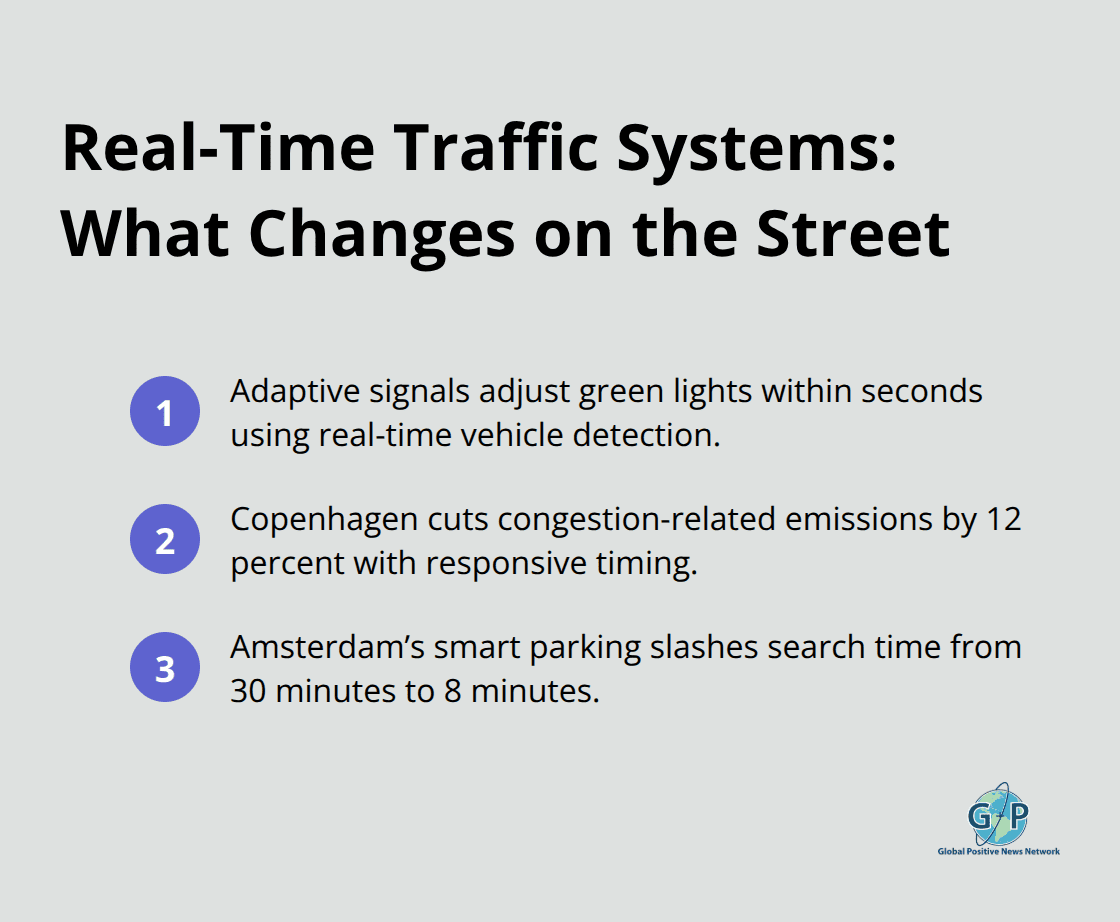
Traffic congestion costs cities billions annually in lost productivity and wasted fuel. Copenhagen’s adaptive traffic signal system uses real-time vehicle detection to adjust green light timing within seconds, reducing congestion-related emissions by 12 percent. The system responds to what happens right now on the streets rather than relying on predictions or algorithms that guess traffic patterns. Amsterdam’s smart parking system guides drivers to available spaces using occupancy sensors, cutting time spent searching for parking from 30 minutes to 8 minutes on average.
This direct feedback loop between sensors and infrastructure changes how cities operate through immediate, measurable adjustments that occur hundreds of times daily.
Air Quality Data Reaches Individual Neighborhoods
Air pollution monitoring historically relied on a handful of centralized stations that captured data from limited locations. Distributed sensor networks now provide hyperlocal air quality readings block by block, allowing residents to make real decisions about outdoor activities and exposure. Seoul deployed 1,000 air quality sensors throughout the city, discovering that pollution levels vary dramatically between neighborhoods just kilometers apart. This granular data revealed that pollution hotspots often centered around specific traffic intersections and industrial zones, enabling targeted interventions rather than citywide restrictions. Residents check air quality on their phones before jogging or opening windows, moving from abstract health warnings to concrete, personal information.
Automated Responses Replace Static Rules
Cities like Hangzhou use hyperlocal air quality data to automatically trigger restrictions on high-emission vehicles when pollution reaches dangerous levels. This responsive system adapts to conditions as they change rather than applying the same rules regardless of circumstances. IoT sensors enable smart infrastructure to make thousands of micro-adjustments daily based on real-time data. The shift from static rulebooks to dynamic responses represents how cities operate fundamentally differently when they can measure and react to conditions instantly.
These real-time systems form the foundation for the next layer of smart city development: infrastructure that doesn’t just collect data but actively manages resources across entire urban networks.
Smart Infrastructure Cuts Waste and Power Consumption
Public Transit Networks Boost Ridership Through Real-Time Information
Seoul’s integrated transit system connects buses, subways, and bike-sharing through a single payment platform, with transit accounting for 38% of trips while cars make up just 30%.

Real-time arrival data reaches passenger phones, eliminating wait-time uncertainty that discourages transit use. Copenhagen’s public transport authority reports that their integrated ticketing system across trains, buses, and ferries reduced operational costs by 15 percent while improving service frequency. Residents choose public transit when they know exactly when vehicles arrive, and cities reduce emissions through higher occupancy rates rather than theoretical incentives.
Street Lighting Adapts to Movement and Saves Energy
Barcelona replaced 55,000 streetlights with connected LED systems that adjust brightness based on pedestrian and vehicle movement, achieving a 30 percent reduction in energy usage. Madrid’s smart lighting network reduced electricity costs for street lighting by 40 percent, and the city reinvested savings into expanding lighting coverage in previously underlit neighborhoods. These systems respond to actual conditions rather than operating at fixed brightness levels throughout the night.
Building Systems Monitor Energy Room by Room
Seoul’s smart building standards require real-time energy monitoring and automated HVAC adjustments based on occupancy patterns. The city mandates that new commercial buildings achieve at least 20 percent energy reduction compared to baseline codes, pushing developers to install systems that track consumption room by room rather than relying on estimated usage. Buildings equipped with these systems identify waste patterns that static infrastructure never reveals, allowing operators to adjust heating, cooling, and lighting in response to how spaces are actually used.
Waste Collection Routes Shrink Through Fill-Level Sensors
Singapore’s smart waste bins use fill-level sensors to alert collection services only when containers reach capacity, reducing collection routes by 20 percent and lowering fuel costs. Amsterdam deployed underground pneumatic waste systems in specific districts that transport garbage through pipes to central processing facilities, eliminating collection trucks from residential streets entirely. These systems cost more upfront but pay for themselves through reduced labor, fuel, and emissions within five to seven years (with some municipalities reporting payback periods closer to four years).
Integrated Systems Create Continuous Feedback Loops
Cities implementing comprehensive smart infrastructure report measurable improvements: reduced operational expenses, lower emissions, and infrastructure that adapts rather than remains static. The shift happens not through individual technologies but through systems that communicate and respond to each other continuously throughout daily operations. This interconnected approach reveals how governments transform urban environments when they move beyond isolated projects toward coordinated networks that function as unified systems.
Government Initiatives Transform Smart Cities Into Reality
Singapore Coordinates Every Urban System Through Integrated Data
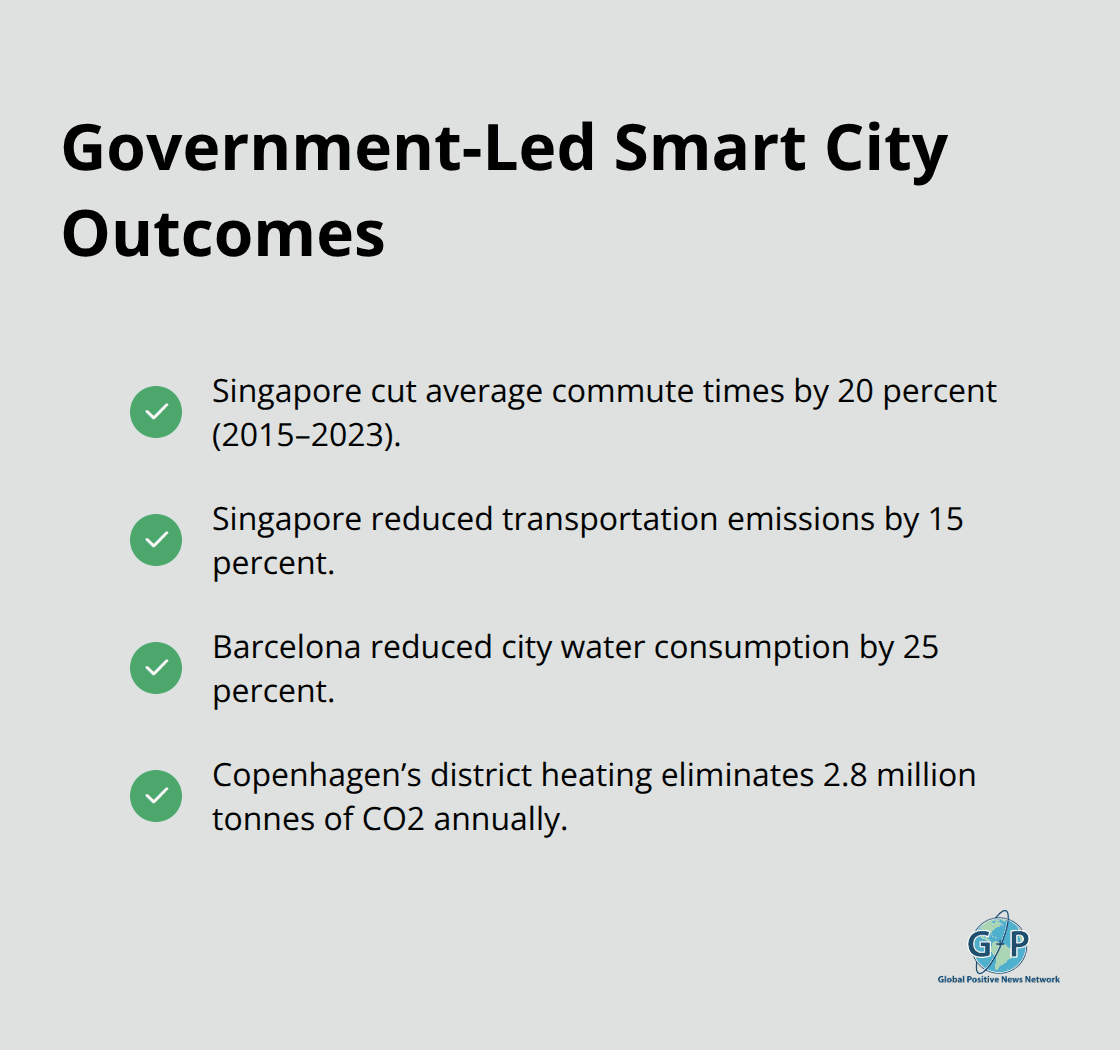
Singapore’s Smart Nation Program represents the most comprehensive government commitment to urban intelligence, with investments exceeding 1 billion SGD to connect every sector of city operations through integrated data systems. Rather than treating smart technology as isolated upgrades, the program coordinates transformation across transportation, utilities, healthcare, and public services through shared platforms. Singapore’s Land Transport Authority deployed its integrated mobility platform across the entire island, combining real-time data from buses, trains, taxis, and private vehicles into a single system that residents access through one app. This coordination prevented the fragmented approach many cities take, where each department builds separate systems that never communicate with others. The result speaks clearly: Singapore reduced average commute times by 20 percent while simultaneously cutting transportation-related emissions by 15 percent between 2015 and 2023. The government mandates that all new infrastructure projects include IoT capabilities from initial planning stages, ensuring that smart systems integrate rather than retrofit into existing urban fabric. Singapore’s approach proves that government-level commitment with sustained funding produces measurable outcomes that isolated municipal projects cannot achieve.
Barcelona Involves Citizens in Technology Decisions
Barcelona’s Urban Innovation Strategy prioritizes citizen participation alongside technological deployment, making residents active participants in how the city implements smart systems rather than passive recipients of government decisions. The city established citizen advisory boards that review proposed smart projects before implementation, addressing actual neighborhood problems rather than theoretical urban challenges. Barcelona’s 22@ innovation district demonstrates this philosophy through integrated smart infrastructure where startups, universities, and municipal departments collaborate on pilot projects that test solutions in real neighborhoods. The city reduced water consumption by 25 percent through IoT leak detection while simultaneously involving residents in water conservation programs, creating behavioral change alongside technological efficiency.
Copenhagen Links Climate Goals to Smart Infrastructure Investment
Copenhagen’s commitment to climate neutrality by 2025 depends entirely on smart city infrastructure, with the municipality investing heavily in intelligent district heating systems that optimize energy distribution across neighborhoods based on real-time demand. The government treats smart infrastructure as inseparable from climate targets, allocating specific carbon reduction budgets to each smart system implementation. The municipality reports that their integrated smart heating network reduces household heating costs while eliminating 2.8 million tonnes of CO2 annually. This climate-focused approach differs fundamentally from other cities because infrastructure investments directly support measurable emissions reductions rather than serving as general efficiency improvements.
Three Models, One Outcome: Sustained Government Commitment
Singapore’s comprehensive data integration, Barcelona’s citizen-centered innovation, and Copenhagen’s climate-focused infrastructure represent different government philosophies, yet all three produce concrete results because they move beyond pilot projects toward permanent, funded operational systems that continuously expand. Each city demonstrates that government commitment at scale transforms how urban systems function, with measurable improvements in congestion, emissions, resource consumption, and citizen participation that isolated municipal projects cannot match.
Final Thoughts
Smart cities hopeful tech delivers measurable improvements that residents experience immediately through shorter commutes, cleaner air, and lower utility bills. Singapore’s 20 percent reduction in commute times means people spend less time stuck in traffic, while Barcelona’s 25 percent water savings translates directly into lower household bills. Copenhagen’s district heating system cuts heating costs while eliminating millions of tonnes of CO2 annually, creating tangible progress that residents notice through their energy bills and the air they breathe.
Government commitment at scale separates successful smart city development from isolated pilot projects that never expand beyond initial neighborhoods. Singapore, Barcelona, and Copenhagen invested sustained funding into permanent infrastructure rather than temporary experiments, treating smart systems as essential urban operations instead of optional upgrades. This commitment created conditions for continuous improvement, where initial successes fund expansion into additional neighborhoods and services, building momentum that isolated projects cannot generate.
Cities that integrate climate goals, transportation efficiency, resource management, and public health through coordinated smart systems report the strongest results because their infrastructure functions as unified networks rather than disconnected technologies. We at Global Positive News Network track these transformations because they demonstrate how technology serves human wellbeing when governments commit to solutions that improve daily life.

Having a hard day?
The 2 Minute Hope Reset is a short free guide with three small practices for the days that feel heavy. Two minutes each, nothing to keep up with.
Get the free guideExplore more positive news:
Enjoying stories like this?
Global Positive News Network is reader-supported. If you’d like to support the mission, you can visit the Official GPNN store.