

Your mental health directly shapes how you experience life. At Global Positive News Network, we believe wellbeing-focused positivity tips aren’t luxuries-they’re practical tools that work.
This guide shows you exactly how to build habits that strengthen your mind and body, backed by research and designed for real life.
Daily Habits That Actually Change Your Mental Health
Gratitude shifts your brain chemistry
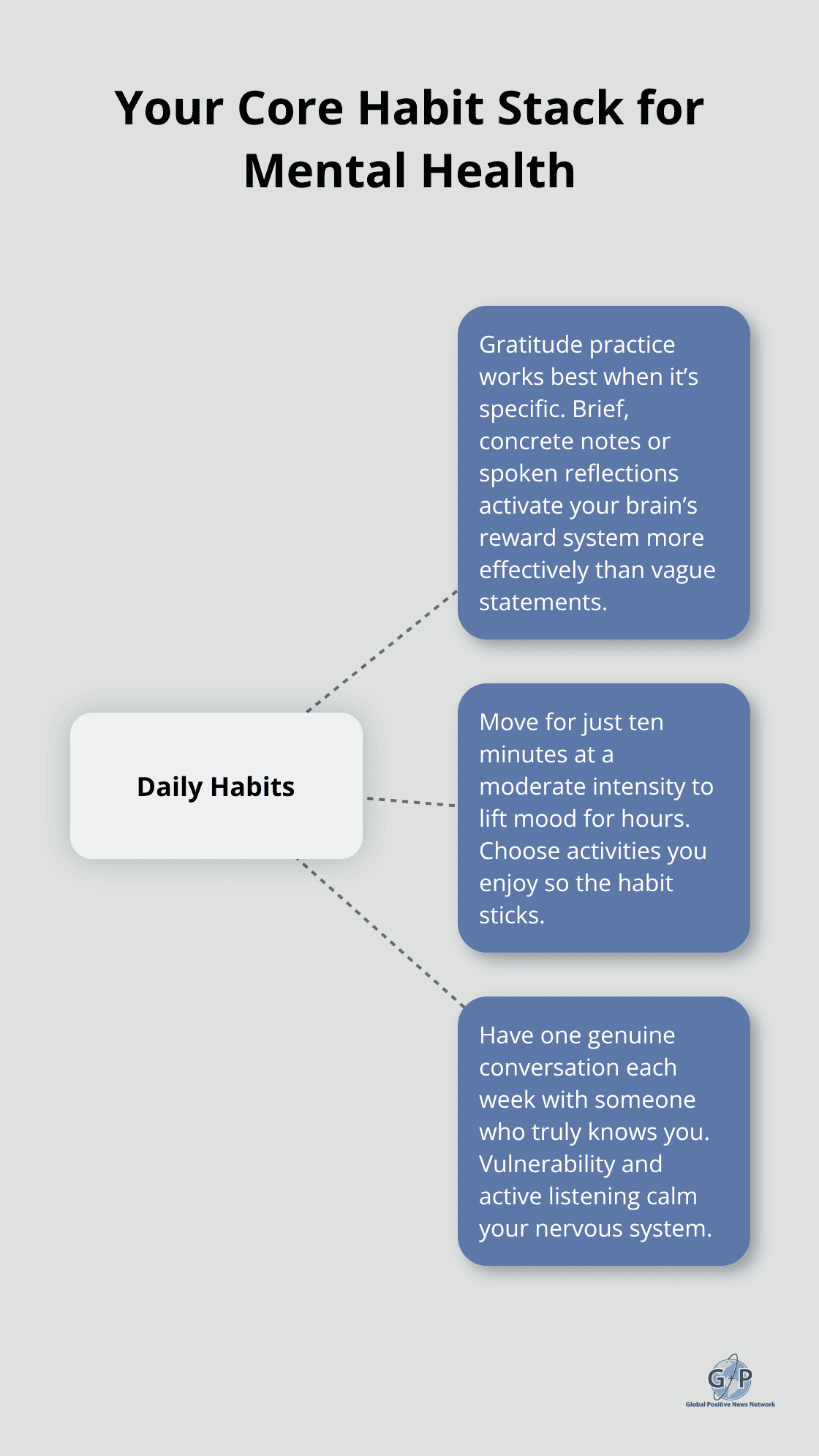
Gratitude rewires your brain faster than most people realize. Research from the University of California, Berkeley found that people who spent just five minutes writing about three things they appreciated showed measurable improvements in mood within two weeks. Specificity matters far more than elaborate journaling. Instead of writing “I’m grateful for family,” write exactly what happened: “My daughter made me laugh during breakfast today” or “A coworker listened without interrupting.” This concrete approach activates your brain’s reward system more effectively than vague statements.
Try three specific things three times weekly. If writing feels forced, speak your gratitude aloud during your morning coffee or shower. The format matters less than the consistency. Your brain responds to the practice itself, not the medium you choose.
Movement releases what no supplement can replicate
Physical activity triggers endorphin release, but the timing and type matter significantly. A 2023 study from McMaster University showed that just ten minutes of moderate-intensity movement-brisk walking, cycling, or dancing-produced measurable mood improvements that lasted hours. You don’t need gym memberships or intense workouts.
The most sustainable approach involves finding movement you actually enjoy, whether that’s walking a neighborhood route, dancing to specific playlists, or gardening. Morning movement proves particularly effective because it sets your nervous system’s tone for the entire day. If motivation struggles you, anchor movement to an existing habit: walk while listening to podcasts, stretch during phone calls, or dance while preparing meals.
Conversations rewire your stress response
Meaningful connection isn’t optional for mental health-it’s biological. Harvard’s Study of Adult Development, which tracked participants for over eighty years, identified quality relationships as the single strongest predictor of long-term wellbeing and life satisfaction. Surface-level small talk doesn’t count. Real connection requires vulnerability and active listening.
Schedule one genuine conversation weekly with someone who knows you well. Ask specific questions about their challenges and dreams, then listen without planning your response. This practice activates your parasympathetic nervous system (the biological system responsible for calming your body). If in-person conversations feel difficult, quality video calls or voice messages work similarly. The practice itself matters more than the medium.
These three habits form your foundation. What happens when you layer them together becomes the real transformation-and that’s where your environment steps in.
The Science Behind Positivity and Physical Health
Optimism strengthens your immune response
Optimism produces measurable biological changes that strengthen your immune response. Research from Carnegie Mellon University found that people with positive emotional styles had significantly stronger immune function and lower rates of cold and flu infections compared to those with negative outlooks. The mechanism works through your nervous system: when you practice positivity, your body produces fewer stress hormones like cortisol, which directly suppresses immune function. A 2019 study published in Scientific Reports tracked over 70,000 people and found that those who maintained optimistic perspectives had 35% lower risk of heart disease and stronger antibody responses to vaccines.
This isn’t about ignoring problems-it’s about your brain’s chemical response to how you frame challenges. When you view obstacles as temporary and manageable rather than catastrophic, your body literally produces different hormonal profiles. Track this yourself: notice your physical energy levels on days when you practice the gratitude and connection habits from the previous section, then compare them to days when you don’t. Most people report tangible differences within one to two weeks.
Your mental state controls sleep quality
Your mental state directly controls sleep architecture in ways most people underestimate. The National Sleep Foundation reports that people with higher stress and negative thought patterns experience 40% more sleep fragmentation and wake up more frequently throughout the night, even if they spend eight hours in bed. Sleep quality matters far more than sleep quantity-one person sleeping six hours with minimal disruption wakes more refreshed than someone sleeping nine hours with constant micro-awakenings.
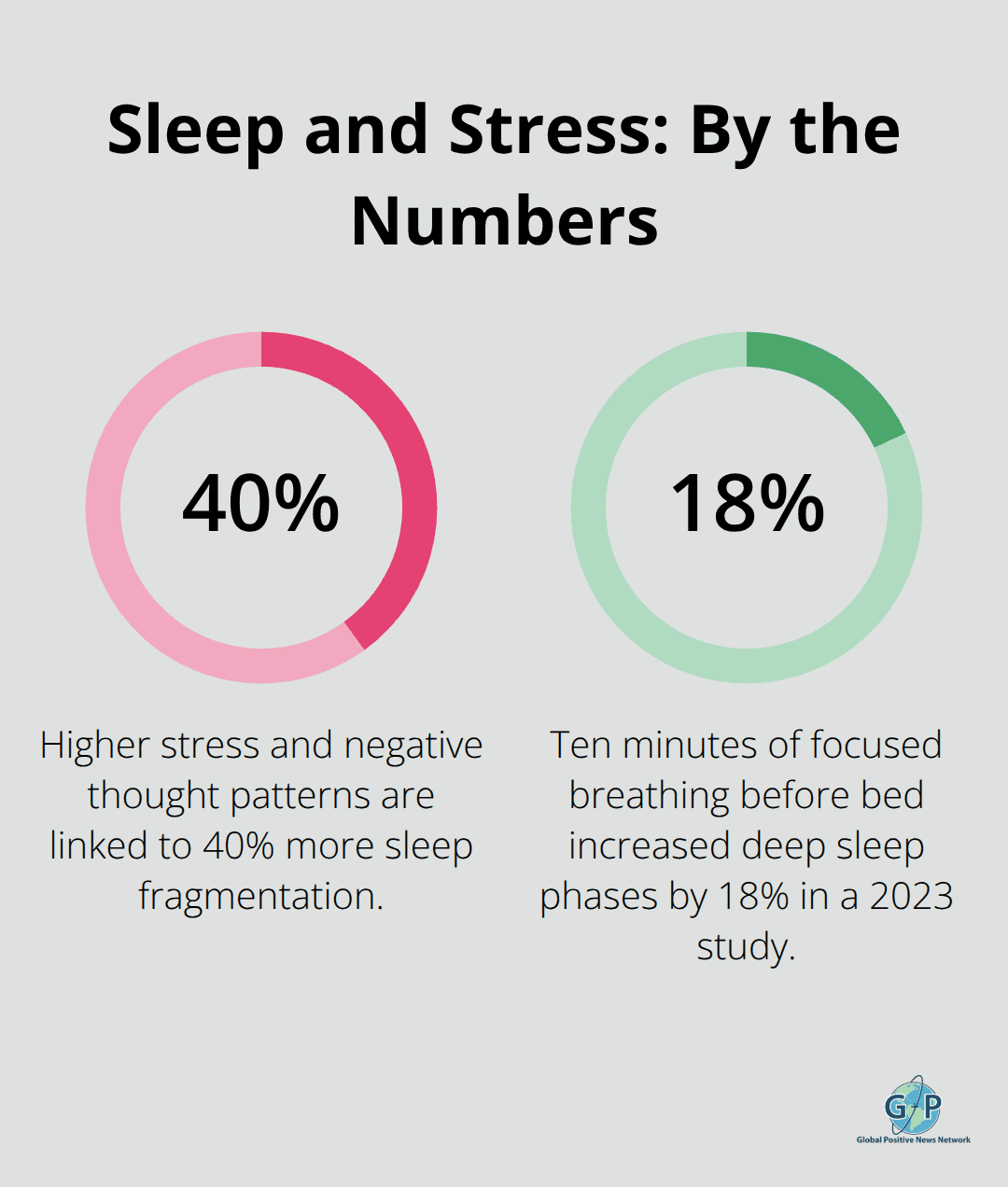
Stress reduction techniques grounded in research produce immediate results: a 2023 study from Johns Hopkins University showed that just ten minutes of focused breathing exercises before bed improved sleep onset time by an average of 23 minutes and increased deep sleep phases by 18%. Progressive muscle relaxation, where you systematically tense and release muscle groups from your toes upward, takes twelve minutes and produces measurable decreases in nighttime cortisol levels.
Implement stress reduction for measurable change
Try one stress reduction technique four nights weekly for two weeks, then assess your morning alertness and daytime energy. Most people notice improved cognitive function and mood within this timeframe because better sleep directly enhances your brain’s emotional regulation capacity. These physiological shifts create the foundation for building environments that amplify your wellbeing even further.
Your Environment Shapes Your Wellbeing More Than You Think
Physical spaces control your stress response
Your physical spaces exert constant biological influence on your nervous system. Research from the University of Michigan found that people who spent time in nature or nature-inspired spaces showed measurable reductions in cortisol levels within fifteen minutes, while those in cluttered indoor environments experienced elevated stress hormones throughout the day. This matters because your environment becomes your default mental state. If you spend eight hours daily in a chaotic, poorly lit workspace, your brain adapts to that stress level as normal. The inverse is equally true: intentional environmental design produces lasting neurological shifts.
Start with your immediate surroundings. Remove items that trigger negative memories or stress responses. Add one element that genuinely calms you-plants improve air quality and reduce anxiety, while soft lighting decreases cortisol more effectively than harsh overhead lights. Temperature matters too: spaces between 68-72 degrees Fahrenheit optimize cognitive function and mood stability. These aren’t aesthetic preferences; they’re biological requirements.
Your social circle determines your wellbeing trajectory
Your social circle directly determines your wellbeing trajectory. A 2024 study from Stanford Medicine showed that people who actively curate relationships, removing draining individuals and deepening connections with supportive people, experience 31% lower anxiety and depression rates compared to those who maintain obligatory relationships out of guilt. Stop treating all relationships as equally valuable. Identify the three to five people who genuinely listen, encourage your growth, and respect your boundaries. Spend more time with them.
The people who leave you emotionally exhausted after interactions actively suppress your immune function through stress hormones. This isn’t cruel; it’s biology. Your nervous system recognizes these relationships as threats and produces cortisol accordingly. Quality relationships act as biological medicine; toxic ones act as poison.
Media consumption directly shapes your threat perception
Your media consumption directly affects your mental state. A 2023 analysis from the American Psychological Association found that people who consumed news for more than two hours daily experienced 45% higher anxiety levels than those who limited intake to fifteen minutes. Social media algorithms specifically reward outrage and negativity because they increase engagement. Your brain doesn’t distinguish between real threats and algorithmically amplified fears, so your consumption choices directly shape your threat perception and stress response.
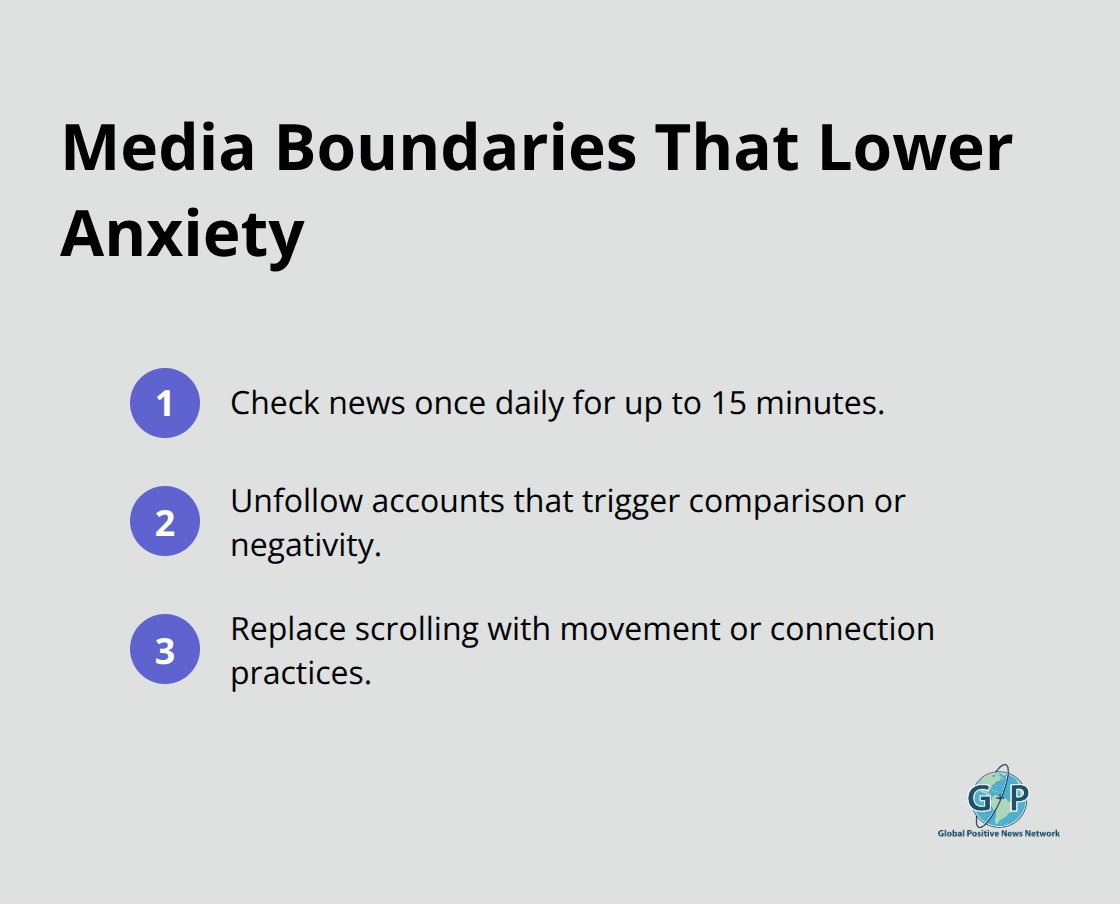
Set specific media boundaries: check news once daily for fifteen minutes maximum, unfollow accounts that trigger comparison or negativity, and replace scrolling time with one of the movement or connection practices from earlier chapters. Global Positive News Network offers an alternative approach-curated stories of genuine progress and human kindness that actually improve your mental state rather than destabilize it.
Final Thoughts
The three habits you’ve learned-gratitude, movement, and meaningful conversation-work because they’re rooted in biology, not motivation. When you layer them with intentional environmental design and conscious media choices, you create a system that sustains itself. Your brain responds to consistent, small actions that compound over weeks and months.
Start with one practice this week. Pick whichever resonates most: write three specific things you appreciated, take a ten-minute walk, or schedule one genuine conversation. After two weeks, add a second practice. This sequential approach builds sustainable habits rather than creating overwhelm that leads to abandonment. Your nervous system adapts better to gradual change than sudden transformation.
Your environment and social circle will either support or undermine your progress. Audit both ruthlessly and remove what drains you, add what calms you, and spend more time with people who genuinely matter. Visit Global Positive News Network for ongoing support-we curate stories of genuine progress and human kindness specifically designed to maintain your optimistic outlook while you build these wellbeing focused positivity tips into your daily life.
Having a hard day?
The 2 Minute Hope Reset is a short free guide with three small practices for the days that feel heavy. Two minutes each, nothing to keep up with.
Get the free guideExplore more positive news:
Enjoying stories like this?
Global Positive News Network is reader-supported. If you’d like to support the mission, you can visit the Official GPNN store.