

Most people believe positivity is something you either have or don’t. We at Global Positive News Network know better-it’s built through conscious consumption of what you let into your mind and how you respond each day.
The choices you make before breakfast, during work breaks, and before bed shape your entire outlook. These aren’t big, dramatic decisions. They’re small, deliberate shifts that compound over time.
Simple Daily Choices That Shift Your Mindset
Your first 30 minutes after waking determine whether your brain operates from a place of abundance or scarcity for the entire day. Most people reach for their phones immediately, flooding their minds with notifications, news alerts, and social media feeds before they’ve had a single conscious thought. This is a catastrophic mistake. Research from the University of California, Irvine found that it takes an average of 23 minutes to refocus after an interruption, meaning that early phone scrolling fragments your mental clarity before the day even starts.
Start Your Morning With Intention Instead of Scrolling
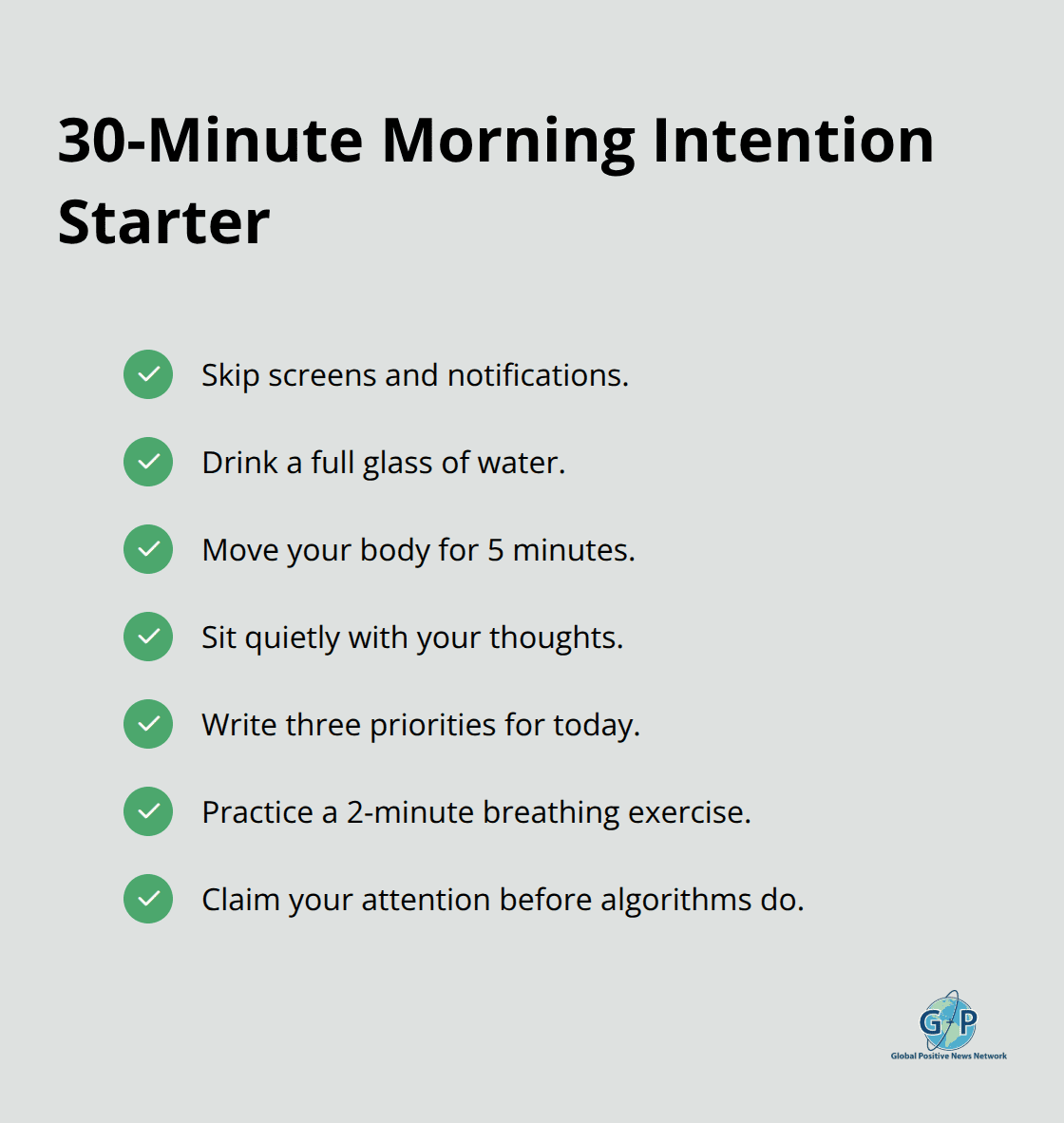
Spend those first 30 minutes with intention. This means no screens, no notifications, and no external voices. Drink water, move your body for even five minutes, or sit quietly with your thoughts. Some people write three things they want to accomplish that day; others practice a two-minute breathing exercise. The specific practice matters less than the principle: you establish that your mind belongs to you first, not to algorithms designed to capture your attention.
Choose Gratitude Practice Over Complaint Cycles
Complaint cycles are cognitive habits, not reflections of reality. When you complain about traffic, your boss, or the weather, your brain reinforces neural pathways that actively search for more things to complain about. A study published in the Journal of Personality and Individual Differences showed that people who practiced gratitude for just three weeks reported higher life satisfaction and lower depression scores. Gratitude and complaint activate different neural networks simultaneously-you cannot genuinely feel grateful and resentful about the same situation at the same moment.
Instead of fighting the urge to complain, redirect it. When you notice yourself about to complain, name one specific thing you’re grateful for instead. Not something vague like family or health, but something concrete from that day: the coffee tasted good, someone smiled at you, you finished a task. This trains your attention system to notice positive details you would otherwise overlook. Try this three times daily and you’ll notice your default mental state shifts within two weeks.
Select Media and Content That Uplifts Rather Than Drains
The media you consume becomes the lens through which you interpret your life. If you spend your lunch break scrolling through crisis coverage, outrage cycles, and doomsday narratives, your nervous system enters a state of chronic threat. Your amygdala, the brain’s threat-detection center, is highly reactive to negative content and requires significant mental energy to calm down afterward.
Choose one news source that balances reality with perspective rather than maximizing engagement through fear. Replace one social media app with content that teaches you something or makes you feel capable. If you follow 50 accounts that trigger comparison and inadequacy, unfollow them without guilt. Audit your media diet as seriously as you audit your food diet (people often spend more time thinking about what they eat than what they consume mentally, despite the latter having profound effects on mood, sleep, and decision-making).
Set a boundary: no doom-scrolling after 7 p.m. Your evening content shapes your sleep quality, and poor sleep destroys positivity faster than any external circumstance can. These small shifts in what you allow into your mind create the foundation for everything that follows-including how you show up for the people around you.
Building Positivity Into Your Routine Without Extra Time
Transform Your Inner Dialogue
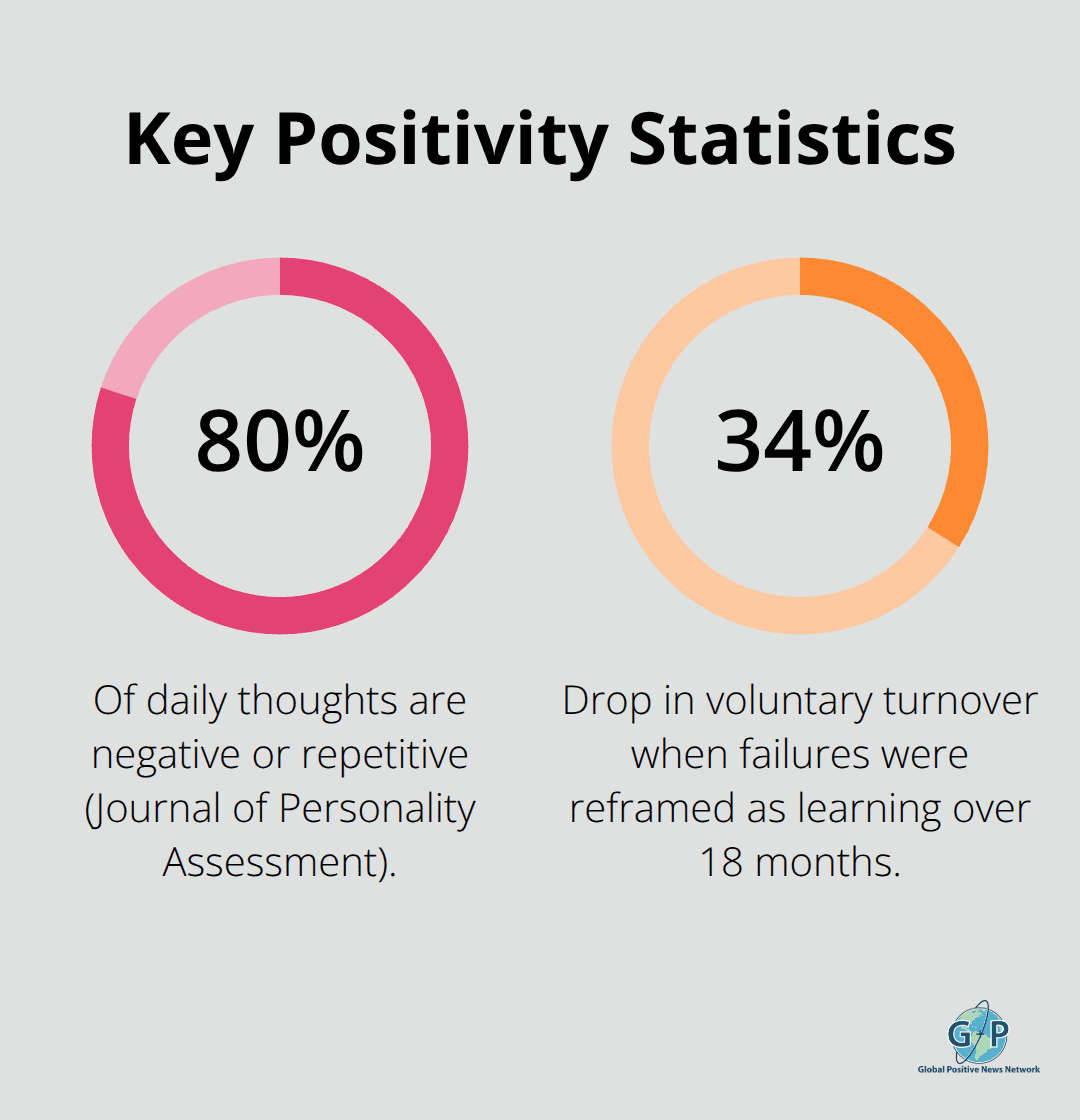
The biggest lie people tell themselves is that positivity requires extra time. It doesn’t. Positivity requires redirecting the time you already spend on internal dialogue and stress management. Your inner monologue runs constantly, whether you’re aware of it or not. Research from the Journal of Personality Assessment found that the average person experiences between 60,000 and 80,000 thoughts per day, with roughly 80 percent of them negative or repetitive. You cannot add more hours to your day, but you can transform the quality of the mental conversations already happening.
When you catch yourself thinking you’re incompetent after a mistake, pause and reframe it: you’re someone learning a new skill. When stress tightens your chest during a difficult meeting, spend 90 seconds with a grounding technique instead of spiraling. These swaps take no additional time because they replace existing mental patterns, not supplement them.
Swap Negative Self-Talk With Honest Encouragement
Your inner critic speaks constantly, and most people accept its harsh judgments as truth. They aren’t. When you make an error, your brain automatically generates shame-based narratives that reinforce feelings of inadequacy. Instead, talk to yourself as you would talk to a friend who made the same mistake: with honesty and compassion.
This shift sounds simple but requires practice. The next time you stumble, name what happened factually (I missed the deadline) rather than judgmentally (I’m irresponsible). Then add one specific thing you can do differently next time. This honest encouragement activates your problem-solving brain instead of your threat-detection system, making you more resilient and more likely to actually improve.
Use Transition Moments for Mental Reset
Your stress triggers are often embedded in transitions-moving from one task to another, switching between meetings, or shifting from work mode to home life. These moments typically pass in 30 to 60 seconds, and most people waste them by checking notifications or mentally rehearsing what went wrong. Use these gaps as mental reset buttons instead.
When you finish a call, take three deep breaths before opening your next email. When you close your laptop, spend 45 seconds naming one thing you handled well that day. Between tasks, stand up and do five shoulder rolls. These transition practices cost nothing but attention, yet they prevent the accumulation of stress that typically derails your positivity by day’s end.
The compounding effect matters far more than the individual practice. Someone who reframes self-criticism five times daily and uses three transition resets will experience measurable shifts in mood and resilience within two weeks, while someone who occasionally practices positivity sees minimal change. These small internal shifts prepare you to show up differently in your relationships and communities-which is where your positivity truly begins to matter beyond yourself.
How Your Choices Ripple Through Others’ Lives
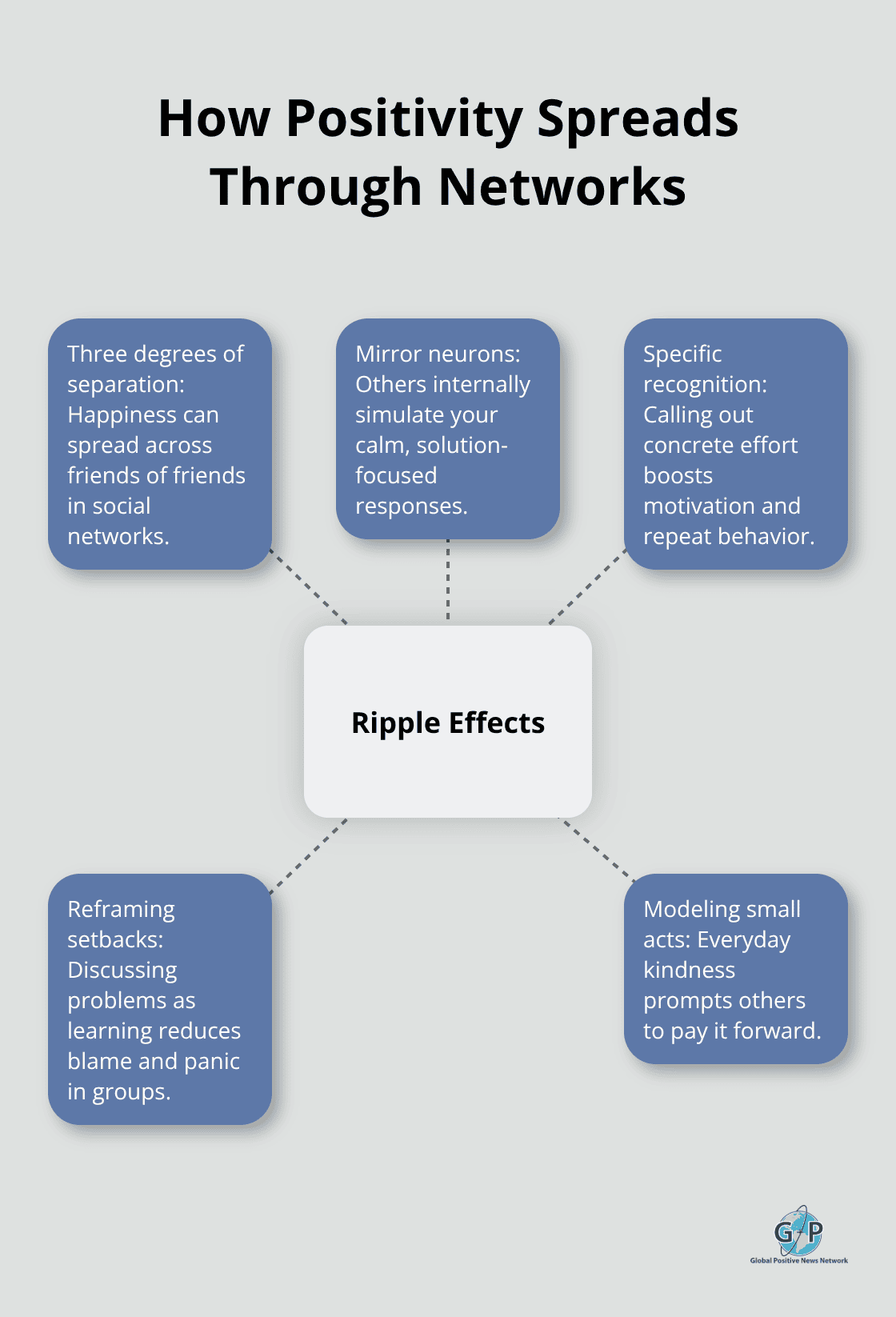
Your positivity isn’t contained within you. The moment you shift how you speak, what you prioritize, and how you respond to difficulty, the people around you experience a measurable change in their own emotional state. Research from the University of California, San Diego found that happiness spreads through social networks up to three degrees of separation-meaning your positive choices influence not just your direct contacts, but friends of friends and acquaintances you’ll never meet. This isn’t motivational theory; it’s neuroscience. Mirror neurons in other people’s brains activate when they observe your behavior, causing them to internally simulate your emotional state. When you respond to setbacks with solutions instead of panic, people watching you unconsciously adopt that same response pattern.
Positive Language Creates Ripple Effects in Relationships
When you acknowledge someone’s effort specifically rather than offering generic praise, their brain registers genuine recognition and they become more likely to repeat that behavior. A manager at a tech company reframed team failures as learning opportunities (rather than blaming individuals) and saw voluntary turnover drop 34% over 18 months according to internal metrics they shared publicly. She didn’t require extra meetings or implement new policies-she simply changed how she discussed problems during existing conversations.
When you thank someone for specific work they did, their motivation increases measurably. When you notice and name what someone did well after they made a mistake, you’re literally rewiring their brain’s response to failure. These shifts happen within the conversations you already have, not in addition to them.
Actions That Model Optimism Inspire Others Naturally
Communities shift when enough individuals make these choices consistently. Your choice to greet the neighbor you normally ignore, to acknowledge the barista’s effort, to text someone who’s struggling-these aren’t nice gestures that feel good afterward. They’re behavioral investments that change how people show up in their own relationships and communities (and often in ways you’ll never directly observe).
Small Acts of Kindness Shift Community Energy
The person you encourage today will encourage someone else tomorrow, extending your influence far beyond what you’ll ever directly witness. Small acts of acknowledgment compound faster than most people realize. When you notice what someone did well, you activate their motivation system. When you respond to their struggle with presence instead of dismissal, you model how they should treat others in similar situations.
Communities don’t transform through grand gestures or policy changes alone. They transform when individuals consistently choose to see each other, acknowledge effort, and respond to difficulty with solutions. Your everyday choices become the template that others unconsciously follow, creating patterns that ripple outward in ways that statistics only partially capture.
Final Thoughts
Positivity isn’t a personality trait you’re born with or without-it’s the accumulated result of hundreds of small decisions made consistently over time. Every morning you choose intention over scrolling, every moment you redirect complaint into gratitude, every piece of media you consciously consume instead of passively absorb, these decisions compound into a fundamentally different way of experiencing your life. The real power emerges when you recognize that your choices don’t stop with you.
The way you speak to yourself becomes the way others learn to speak to themselves. The way you respond to setbacks teaches people around you how to respond to theirs. Your commitment to conscious consumption of information, media, and internal dialogue creates a template that ripples outward through your relationships and community in ways you’ll rarely see directly.
Start with one practice today. If morning scrolling is your biggest obstacle, protect your first 30 minutes; if complaint cycles dominate your thinking, redirect three complaints daily into specific gratitude; if your media diet poisons your mood, unfollow one account that drains you. We at Global Positive News Network support your journey toward a more positive, intentional life through curated stories and resources that matter.
Having a hard day?
The 2 Minute Hope Reset is a short free guide with three small practices for the days that feel heavy. Two minutes each, nothing to keep up with.
Get the free guideExplore more positive news:
Enjoying stories like this?
Global Positive News Network is reader-supported. If you’d like to support the mission, you can visit the Official GPNN store.