
Environmental action is accelerating worldwide, and the results are becoming impossible to ignore. At Global Positive News Network, we’re tracking real progress across renewable energy, ecosystem restoration, and carbon reduction that’s reshaping our planet in 2026.
This isn’t wishful thinking-it’s measurable change driven by individuals, communities, and innovators working on solutions that actually work.
What’s Actually Changing for Our Planet in 2026
The Energy Transition Accelerates with Real Infrastructure
The energy transition isn’t a future promise anymore-it’s happening now with real numbers behind it. In 2023, the world sold 14 million electric vehicles, with projections reaching 18 million in 2025, and the infrastructure is catching up with 2.7 million public charging points globally. Battery costs have dropped roughly 90% over the past decade, making clean transport accessible rather than aspirational. Renewable energy supply and job creation now account for 33.8% of global electricity, with renewables overtaking coal power for the first time in 100 years. This shift matters because every percentage point of renewable energy replaces fossil fuel demand, and the momentum is accelerating faster than most predictions suggested just three years ago.
Amazon Protection and Ocean Safeguards Show What Policy Can Achieve
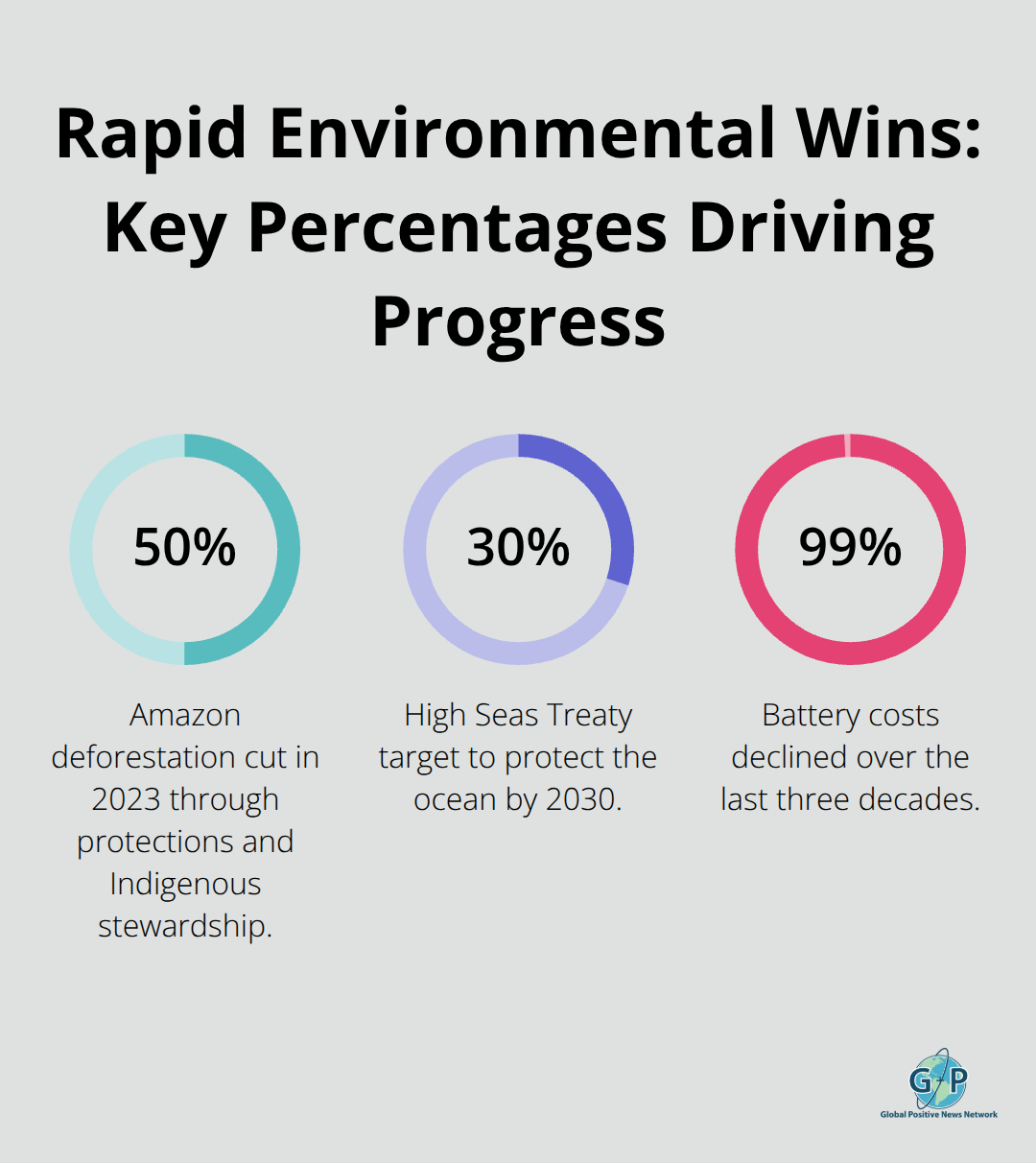
Ecosystem restoration is delivering measurable wins that go beyond conservation rhetoric. The Brazilian Amazon saw deforestation cut by approximately 50% in 2023 through strengthened protections and Indigenous stewardship, proving that aggressive environmental policy works when paired with community leadership. The High Seas Treaty, finalized in 2023, established legal frameworks to protect 30% of the ocean by 2030, directly addressing overfishing and deep-sea mining threats. These victories demonstrate that coordinated action produces tangible results within years, not decades.
Food Production and Soil Health Move Together
On land, the 30×30 Biodiversity Framework pushes nations to designate protected areas with genuine management plans and Indigenous co-leadership, not just paper designations. Regenerative agriculture is scaling globally-India’s Zero-Budget Natural Farming and Africa’s Evergreen Agriculture programs help smallholders increase yields while rebuilding soil health simultaneously. These aren’t experimental pilots; they’re operational programs showing that food production and planetary healing aren’t opposing forces.
The Ozone Layer Recovery Proves Long-Term Commitment Works
The ozone layer recovery driven by the Montreal Protocol is on track to return to approximately 1980 levels by 2040 across most of the world, around 2045 in the Arctic, and by 2066 in polar regions. This demonstrates that when the world commits to a single environmental goal with consistent policy, results follow within decades. These successes across energy, ecosystems, agriculture, and atmospheric protection set the stage for understanding how individuals and communities are translating these global wins into local action.
How Grassroots Action Scales Environmental Solutions
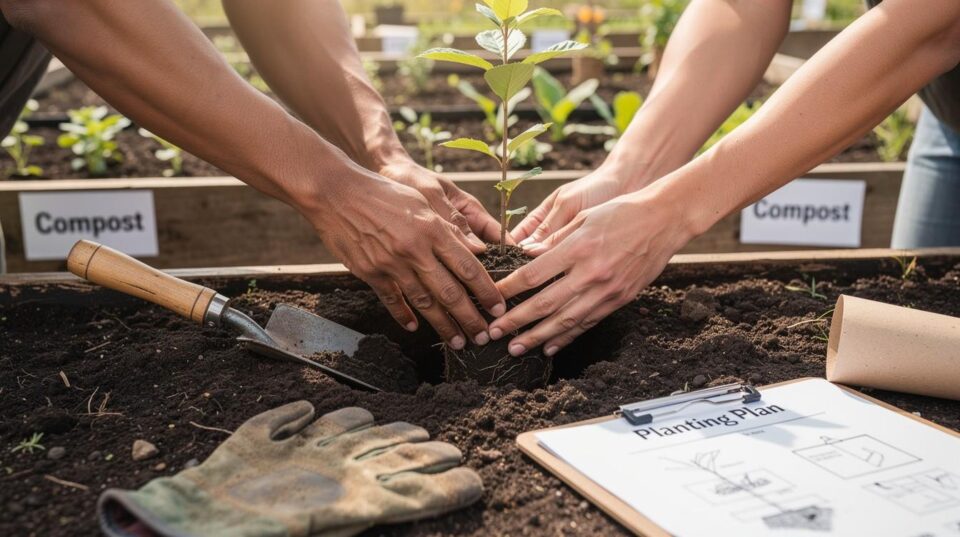
Reforestation Moves Beyond Symbolic Tree-Planting
The global wins we’re seeing in 2026 aren’t top-down mandates-they’re driven by millions of people making deliberate choices in their daily lives and communities. When India’s Zero-Budget Natural Farming reaches smallholders across rural regions, farmers themselves adopt the practices rather than waiting for government mandates. Similarly, the 50% reduction in Amazon deforestation happened partly through Indigenous stewardship and community-led protection, proving that local knowledge combined with environmental commitment outperforms distant policy alone.
Reforestation initiatives have moved far beyond symbolic tree-planting campaigns. Organizations now focus on native species restoration in degraded lands, which increases biodiversity recovery rates significantly compared to monoculture approaches. Communities in East Africa, Southeast Asia, and Latin America prioritize watershed protection through forest regeneration, directly improving water security for millions of people.
Circular Economy Practices Reshape Consumer Behavior
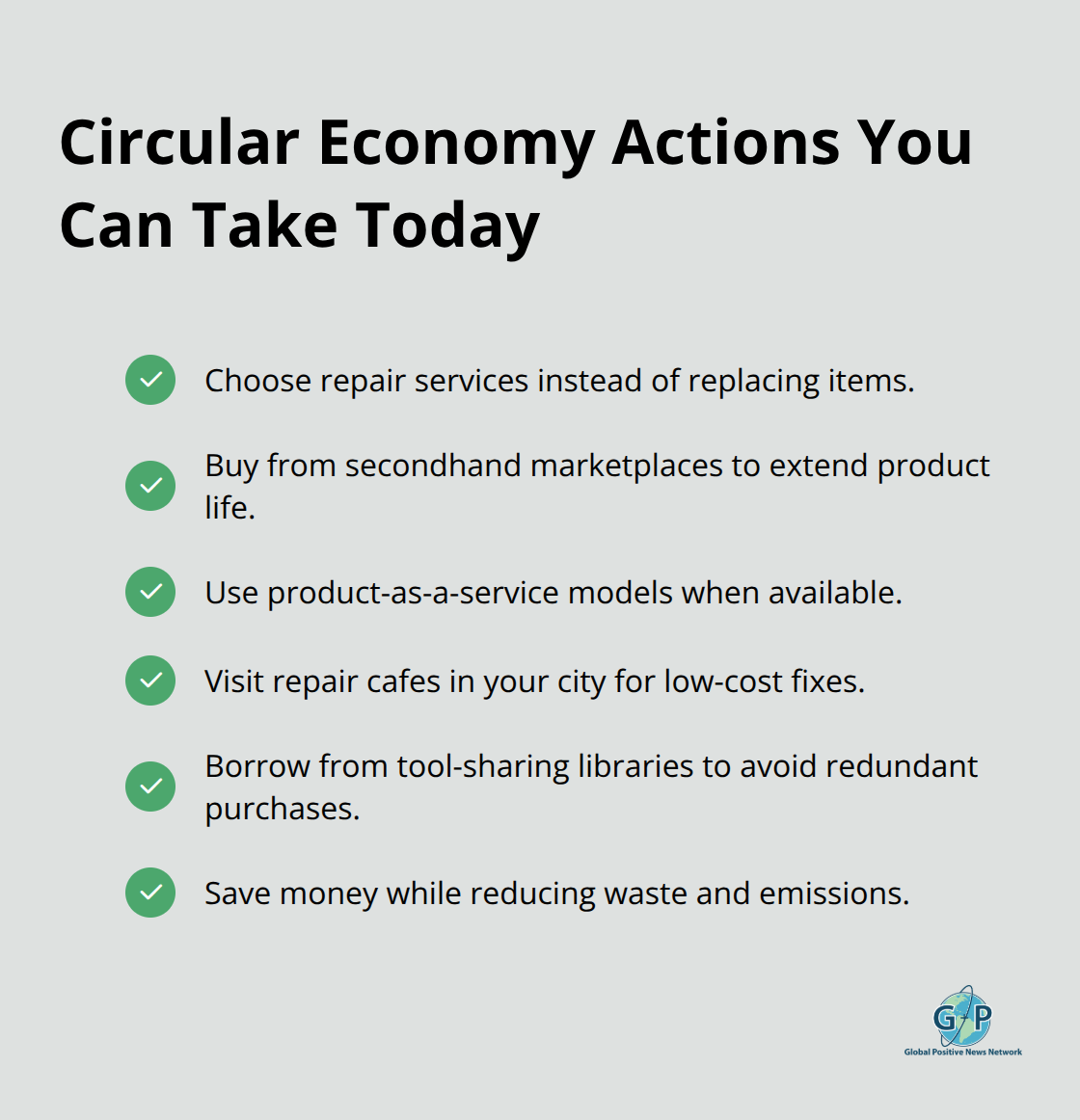
Circular economy practices reshape consumer behavior in measurable ways. The shift toward repair services, secondhand marketplaces, and product-as-service models reduces manufacturing demand and extends product lifecycles. In Europe and North America, repair cafes and tool-sharing libraries have moved from niche communities to mainstream infrastructure in major cities, making sustainable consumption accessible to ordinary households.
This transition matters because every product kept in use represents manufacturing emissions avoided and resources preserved. Individuals participate in these systems not through sacrifice but through convenience and cost savings-repair costs less than replacement, and shared tools eliminate redundant purchases.
Community-Led Climate Adaptation Protects and Restores
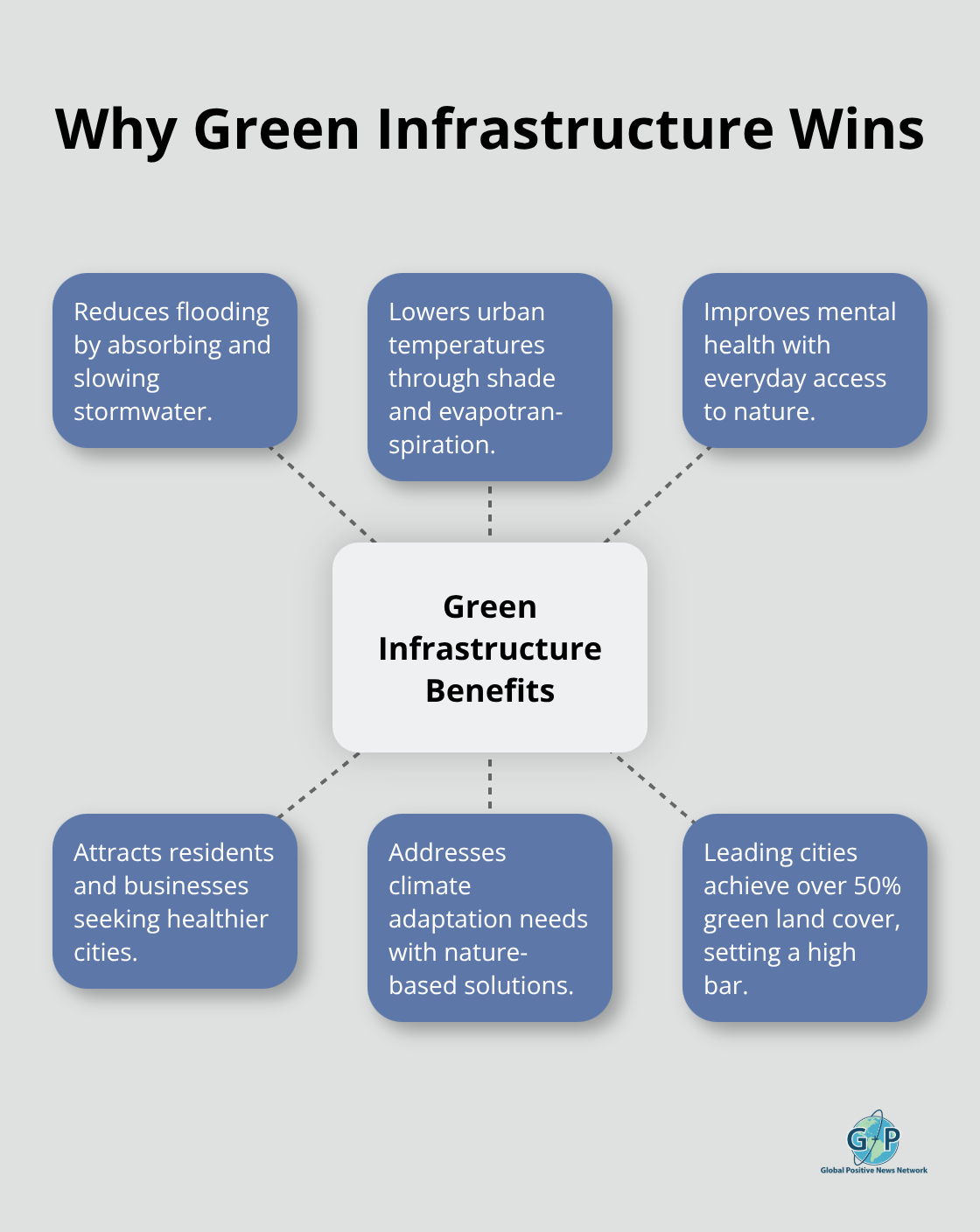
Community-led climate adaptation projects address immediate environmental threats while building long-term resilience. Coastal communities in Bangladesh, the Philippines, and Pacific island nations construct mangrove forests and living shorelines instead of concrete barriers, which simultaneously protects against storm surge, restores fish habitats, and sequesters carbon. Urban neighborhoods in cities like Copenhagen and Singapore implement green infrastructure-permeable pavements, rain gardens, and green roofs-that reduces flooding while lowering urban temperatures and improving mental health outcomes for residents.
These operational programs produce measurable results that individuals can join, support, or replicate in their own contexts. The infrastructure for environmental action now exists at the community level, making participation tangible rather than abstract.
Innovations Amplify Local Environmental Efforts
Technology amplifies what communities accomplish on the ground. Space-based internet from constellations like Starlink provides underserved regions with connectivity, supporting education and telehealth that strengthen communities tackling environmental challenges. Local conservation groups use satellite monitoring to track restoration progress, while digital platforms connect repair services and secondhand markets that reduce consumption pressure.
What started as isolated community efforts has become interconnected action, with individuals and neighborhoods now part of larger networks addressing planetary healing from multiple angles simultaneously.
What’s Making Planetary Healing Possible Right Now
Cost Collapse Removes the Friction Between Environment and Economics
Solutions that work scale rapidly because they solve real problems for real people, not because mandates force adoption. Battery costs have declined by 99% in the last three decades, which means electric vehicles and renewable energy storage now represent economically rational choices rather than environmental sacrifices. This price collapse matters more than any policy because it eliminates the tension between environmental responsibility and personal interest. Clean energy and carbon capture solutions now compete on cost alone, which accelerates adoption faster than subsidies ever could.
Regenerative Agriculture Proves Profitability and Sustainability Align
Major food brands commit to regenerative sourcing because regenerative agriculture delivers measurable yield increases and soil carbon sequestration simultaneously. India’s Zero-Budget Natural Farming and Africa’s Evergreen Agriculture demonstrate that smallholders gain higher yields while reducing input costs, making environmental restoration profitable at the farm level. These operational systems attract farmers because the economics work, not because environmental altruism motivates them. Profitability drives adoption faster than any environmental campaign could achieve.
Green Infrastructure Delivers Multiple Benefits at Once
Green infrastructure in cities like Copenhagen and Singapore achieves over 50% green land cover, which reduces flooding, lowers urban temperatures by measurable degrees, and improves mental health outcomes for residents simultaneously. The innovation advantage lies in multifunctional solutions that deliver environmental, economic, and social benefits at once. Cities that prioritize green infrastructure attract residents and businesses while addressing climate adaptation needs.
This convergence of benefits makes environmental investment the obvious choice for urban planners and policymakers.
Space-Based Internet Amplifies Local Environmental Action
Space-based internet from Starlink and competing constellations now provides underserved regions with connectivity that enables remote education and telehealth, which strengthens communities tackling environmental challenges locally. These technologies amplify what communities accomplish on the ground rather than replacing local action. Connectivity removes barriers that previously isolated communities from resources, expertise, and market access needed for environmental projects. Digital infrastructure becomes the foundation that allows grassroots environmental work to scale and connect with larger networks.
The Convergence of Incentives Accelerates Planetary Healing
Planetary healing accelerates when innovation makes the sustainable choice the easiest choice, the cheapest choice, and the most personally beneficial choice all at the same time. Solutions that align environmental outcomes with economic gain and personal advantage spread through markets and communities without requiring sacrifice or moral persuasion. This convergence of incentives represents the fundamental shift that transforms environmental action from niche commitment to mainstream adoption.
Final Thoughts
The environmental progress we’re tracking in 2026 proves that planetary healing happens right now through measurable wins across energy, ecosystems, and food systems. The 50% reduction in Amazon deforestation, the High Seas Treaty protecting 30% of our oceans by 2030, and renewable energy supplying roughly 30% of global electricity show that coordinated environmental action produces real results within years. Battery costs dropped 90% over a decade and regenerative agriculture delivers higher yields while rebuilding soil health, proving that sustainability and profitability now align.
Your contribution to planetary healing requires no sacrifice or waiting for government mandates. Environmental action scales fastest when solutions solve immediate problems for communities and individuals-repair services, secondhand markets, and tool-sharing reduce consumption without limiting access, while local reforestation initiatives focused on native species restoration and community-led climate adaptation projects like mangrove restoration or green infrastructure development produce measurable results you can join today. Space-based internet now connects underserved communities to resources and expertise for environmental projects, and digital platforms link repair services and secondhand markets that reduce manufacturing demand.
Innovation makes sustainable choices the easiest and cheapest option simultaneously, transforming planetary healing from niche commitment to mainstream adoption. We at Global Positive News Network track these stories of progress and community impact because environmental action thrives when people see what’s actually working. The innovations, policies, and grassroots efforts reshaping our planet in 2026 prove that planetary healing becomes possible when solutions align incentives, reduce costs, and deliver multiple benefits at once.

Having a hard day?
The 2 Minute Hope Reset is a short free guide with three small practices for the days that feel heavy. Two minutes each, nothing to keep up with.
Get the free guideExplore more positive news:
Enjoying stories like this?
Global Positive News Network is reader-supported. If you’d like to support the mission, you can visit the Official GPNN store.