
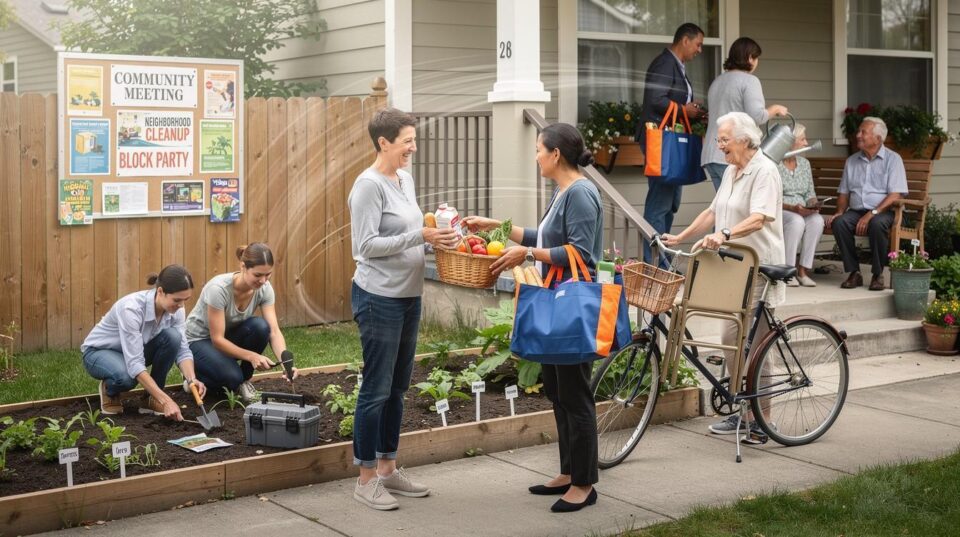
Strong neighborhoods don’t happen by accident. They’re built when neighbors take positive actions for neighbors-helping each other, showing up, and creating spaces where people feel supported.
At Global Positive News Network, we’ve seen firsthand how small gestures ripple outward. A meal shared, a tool borrowed, a community garden planted-these actions strengthen the bonds that hold neighborhoods together and make them safer, healthier, and more resilient.
How to Help Neighbors You Actually See Every Day
Elderly neighbors struggle with groceries, families juggle work and kids, people manage tasks alone-these are the neighbors you pass regularly, and they’re often the ones who need help most. A 2026 study in PLOS ONE found that neighbor contact can be more important for day-to-day well-being than distant family when relatives live far away. This means the person next door might depend on you more than you realize.
Practical Help That Elderly Neighbors Actually Need
Start with the tasks that pile up fast: yard work, grocery runs, and home maintenance. Raking leaves, carrying groceries, or watering plants sounds simple, but these chores become overwhelming for older adults. The KIND Challenge, a randomized trial across Australia, the UK, and the US, showed that even simple acts of kindness toward neighbors reduce loneliness and improve belonging. You don’t need to commit to hours weekly-offer specific help on specific days. Tell an elderly neighbor: I’m going to the store Tuesday morning; I’ll pick up what you need. Or: I’ll rake your yard this Saturday afternoon.
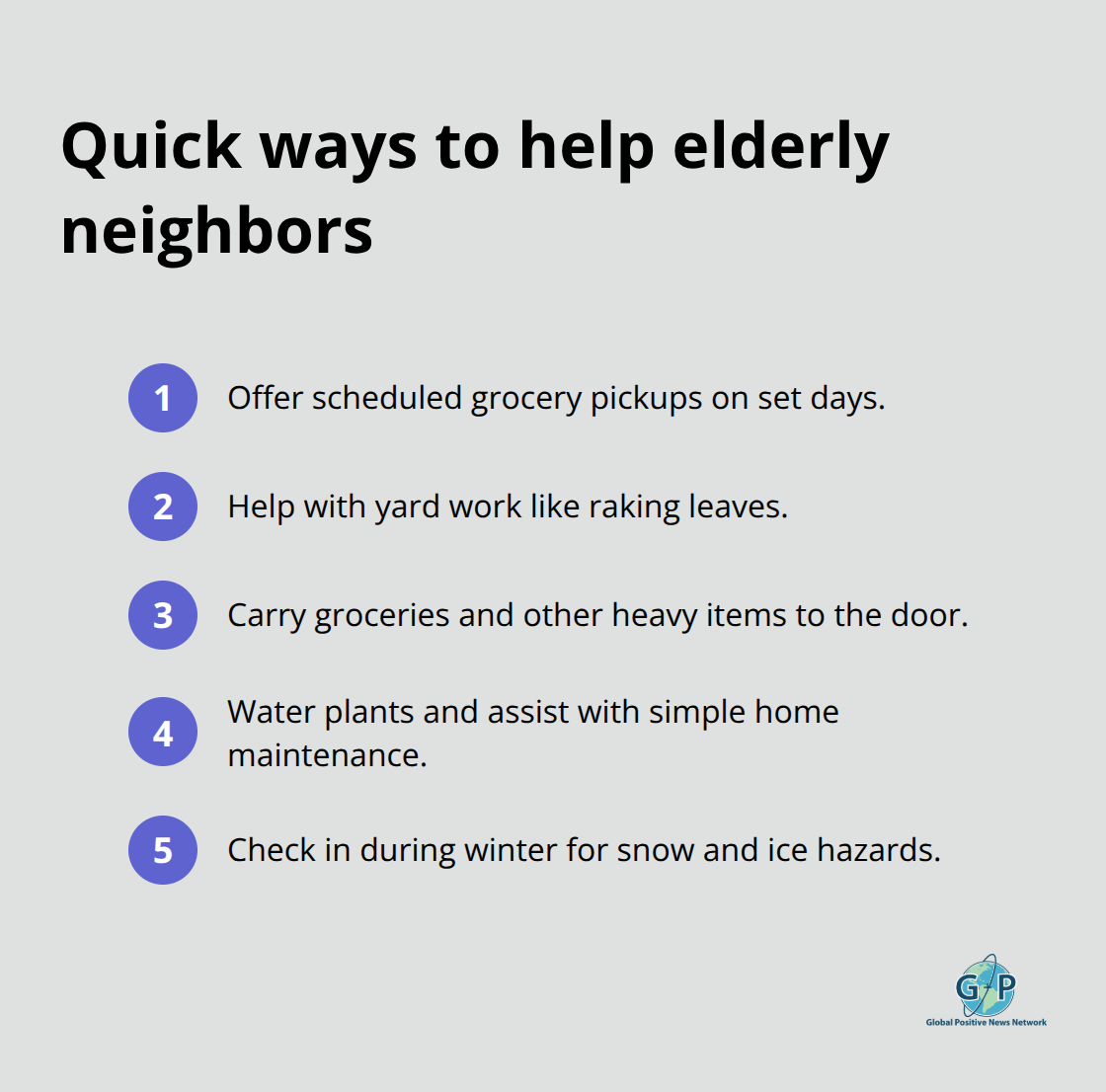
Concrete offers work better than vague gestures. If a neighbor lives alone, check in during winter months when snow removal and icy walkways become hazards. These seasonal moments matter most.
Sharing Food Builds Real Bonds
Food strengthens neighbor relationships because it requires nothing fancy. Homegrown vegetables, an extra dish from dinner, or fresh bread carry meaning because they’re personal. Cooking spaghetti and meatballs with a neighbor during weekly visits demonstrates connection through shared meals, and you can replicate this pattern. Invite a neighbor to a simple meal-not a formal dinner party. Sit outside on a porch, share leftovers, or bring over soup you made. People with serious mental health challenges report better connection and reduced exclusion from light neighbour interactions, according to research published in the American Journal of Orthopsychiatry. This tells you that showing up with food and presence matters across all circumstances.
Childcare That Gives Busy Families Real Relief
Parents managing work and family schedules face constant stress, and childcare help is gold. Offer specific support: I can watch your kids Wednesday afternoon while you run errands. Or: I’ll pick up your child from school on Thursdays. Knowing someone reliable can handle this task reduces anxiety significantly. You could also coordinate with other neighbors-rotate who picks up kids or watches them after school. This spreads the load and builds connections among families. Migrants and former refugees report better belonging and settlement when there is neighbourly engagement, while limited neighbour interaction worsens isolation, according to the Journal of Refugee Studies. Even new families in your neighborhood need this kind of practical support to settle in and feel secure.
Moving Beyond Individual Acts
These three forms of help-yard work, food, and childcare-create the foundation for stronger neighborhoods. When you act on these needs, you signal to others that mutual support matters. Your actions inspire neighbors to help each other, and soon the entire block operates differently. The next chapter explores how to organize these individual acts into larger community gatherings and shared spaces that multiply their impact.
How to Turn Individual Help Into Organized Community Strength
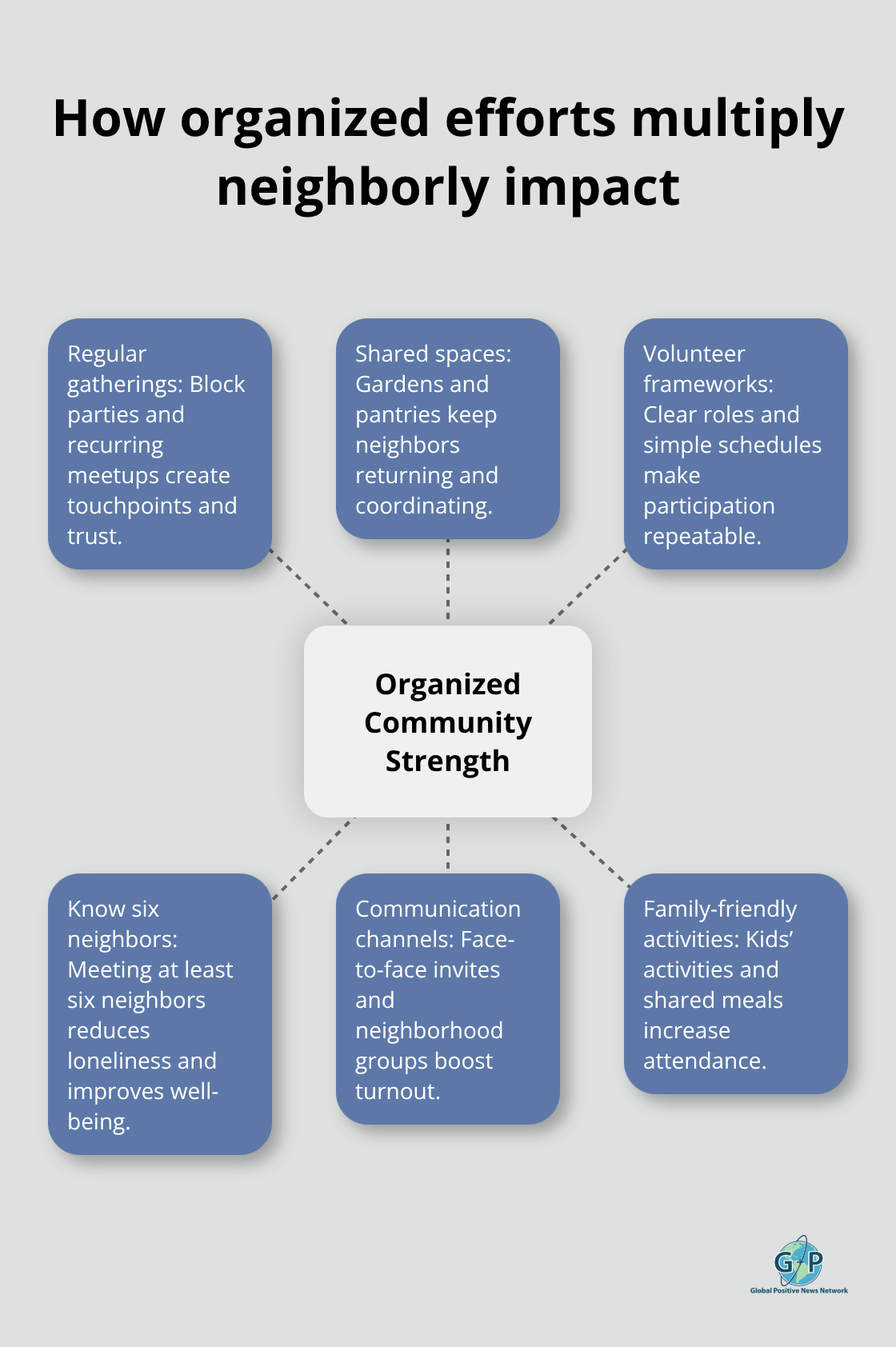
Individual acts of kindness matter, but they scatter. One neighbor rakes leaves, another brings soup, a third watches kids-and then what? The impact stays local and temporary. Organized gatherings and shared spaces multiply this effect because they create regular touchpoints where neighbors see each other, build trust, and coordinate larger efforts. A randomized trial called the KIND Challenge, conducted across Australia, the UK, and the US, found that knowing as few as six neighbors significantly reduces loneliness and improves well-being. Most people don’t naturally meet six neighbors without structured opportunities. You need events, spaces, and volunteer frameworks that bring people together repeatedly.
Start With a Neighborhood Gathering
Start with a simple neighborhood gathering-a block party, a seasonal meal, or a kids’ activity in a common area. A simple block party or informal gathering catalyzes long-term neighborhood networks, leading to groups like neighborhood watches, running clubs, and annual events. Pick a concrete date, invite neighbors face-to-face or through existing channels like your HOA or a neighborhood Facebook group, and keep the first event small and low-pressure. Serve food, let kids play, and focus on helping people learn names and faces.
Organize a seasonal event tied to holidays or weather-Easter egg hunts, Fourth of July bike parades, or Christmas parties with Santa. Seasonal events build tradition and give people reasons to show up year after year. Another option is to create a standing gathering, like a monthly potluck or a weekly coffee on someone’s porch. These recurring events work better than one-off parties because neighbors know when to expect you, and regularity builds familiarity. Research on belonging shows that familiarity-being able to recognize a neighbor’s face and having brief interactions-increases feelings of being valued in one’s community.
Create Shared Spaces That Keep People Connected
Community gardens and shared pantries work because they require ongoing participation and create informal gathering spots. A community garden gives neighbors a reason to show up weekly, tend plants together, and harvest food they’ve grown. If you don’t have land, start small with a shared pantry or a little free library in a common area or front yard. These low-cost initiatives create valuable opportunities to connect and signal that your neighborhood operates on reciprocity.
Walkable, connected spaces with shared areas boost social interactions among residents more than isolated yards or homes. If your neighborhood lacks natural gathering spots, advocate for park improvements or create your own shared space-a bench, a small herb garden, or a tool library where neighbors borrow and return items. A tool library eliminates the need for every household to own expensive equipment and creates repeated interactions when people borrow and return tools. You can start one with a simple shed or cabinet and a sign-up sheet, then expand as neighbors contribute tools and take turns managing it.
Build Volunteer Groups That Address Real Problems
Neighborhood volunteer groups work when they address a specific, visible problem. Organize regular park cleanups, coordinate neighborhood watch patrols, or start a group that helps homebound neighbors with yard work and snow removal. The domino effect of neighborly acts means one kind gesture inspires others to participate, scaling impact. When neighbors see organized groups taking action-picking up litter, removing graffiti, or helping an elderly resident-others join in.
Start by identifying a problem you notice: potholes, overgrown vacant lots, unsafe intersections, or isolated elderly residents without regular contact. Then recruit two or three neighbors who also care about it, set a specific time to act, and invite others to join. Volunteers are essential to community success, offering mentoring, event support, and outreach that expands impact year-round. Make participation easy by keeping volunteer shifts short-one Saturday morning per month, not a huge time commitment. Track what you accomplish and share results with neighbors; this visibility motivates continued participation and shows that collective action produces change.
These organized structures-regular gatherings, shared spaces, and volunteer groups-transform scattered kindness into sustained community strength. What happens next is that neighbors begin to rely on each other for more than just social connection. They coordinate resources, support vulnerable members, and build networks that address health, safety, and well-being across the entire neighborhood.
Real Examples of Communities Strengthened by Neighbor Support
Neighborhood Watch Programs That Reduce Crime
Neighborhood watch programs work when they focus on presence rather than confrontation. The goal isn’t to create amateur police forces but to establish regular foot traffic, visible neighbors, and communication networks that deter crime through familiarity. Research shows that neighborhoods with organized initiatives that reduce property crime through neighborhood watch experience measurable reductions in property crime and break-ins because potential offenders avoid areas where residents know each other and pay attention.
Start by recruiting five to ten neighbors willing to walk their block on a rotating schedule, especially during evening hours when crime typically peaks. Create a simple group chat or email list to report suspicious activity to local police rather than confronting strangers yourselves. Assign specific nights so neighbors know when watch patrols occur, making the presence consistent and visible.
Many neighborhoods discover that once watch programs establish themselves, residents naturally spend more time outside, which further reduces crime without any formal structure. This shift happens because neighbors feel safer and more connected when they see familiar faces regularly.
Tool Libraries and Resource Sharing Initiatives
Tool libraries eliminate the waste of duplicate ownership and create repeated reasons for neighbors to interact. Instead of every household owning a ladder, snowblower, or power drill used once yearly, a shared tool library keeps expensive equipment accessible while neighbors encounter each other during borrowing and return.
Start with a simple wooden cabinet or shed in a common area, inventory basic tools on a spreadsheet, and establish a sign-out system using paper or a free online app. Neighbors gain access to equipment they’d otherwise buy, and you build connections through practical exchanges. One Boston neighborhood expanded their tool library to include kitchen equipment, camping gear, and party supplies, discovering that neighbors borrowed items they never knew existed.
The repeated contact of returning tools creates the familiarity that research identifies as essential for belonging. Each interaction reinforces the sense that your neighborhood operates as a functioning community rather than a collection of isolated households.
Community Care Networks for Health and Wellness
Community care networks address health and wellness gaps by coordinating neighbors to support vulnerable residents. Rather than isolated individuals managing medical appointments, medication, or recovery alone, organized networks assign specific neighbors to check in weekly, help with errands, or provide meal support during illness or surgery.
Programs like FriendshipWorks in Boston operate models including Friendly Visiting for isolated seniors, Medical Escorts to appointments, and PetPals where neighbors care for pets during hospitalizations. These structured programs work because they match specific volunteers to specific needs rather than hoping someone will notice when a neighbor struggles.
Establish your network by identifying isolated or vulnerable neighbors, recruiting volunteers with relevant skills or availability, and creating a simple schedule that ensures regular contact. Document what works-which neighbors respond to phone calls versus in-person visits, who needs help with groceries versus medical support-and refine your approach based on what actually helps.
The combination of watch programs that establish presence, tool libraries that create repeated interaction, and care networks that support vulnerable members transforms neighborhoods into functioning communities where safety, connection, and wellness reinforce each other.
Final Thoughts
Small actions compound into neighborhood transformation. When you rake leaves for an elderly neighbor, share a meal, or watch someone’s child, you signal that your block operates on reciprocity and care. Others notice and begin helping too, and within months the entire neighborhood functions differently because mutual support becomes normal instead of exceptional. The KIND Challenge proved that knowing as few as six neighbors significantly reduces loneliness and improves well-being, yet most people never reach six because they wait for formal structures or perfect opportunities.
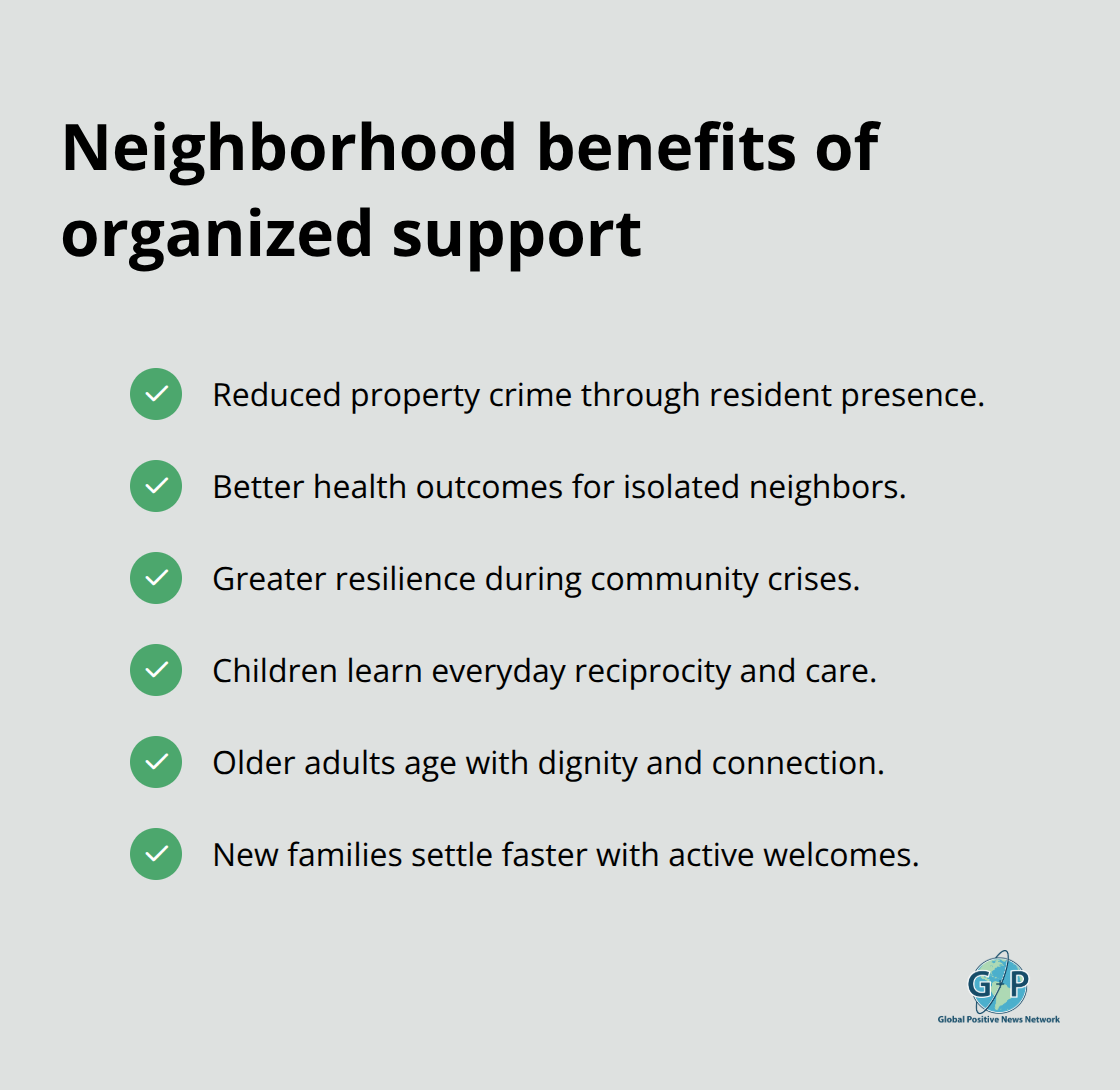
Positive actions for neighbors produce measurable long-term benefits that extend far beyond friendship. Neighborhoods with organized community support experience reductions in crime, better health outcomes for isolated residents, and stronger resilience during crises. Children grow up watching adults help each other, elderly residents age with dignity and connection rather than isolation, and new families settle in quickly because neighbors welcome them actively.
This is how communities strengthen-through neighbors deciding that their block matters enough to invest time and attention. We at Global Positive News Network believe these stories deserve to be told and celebrated, so visit our site to explore more stories of community impact and discover how neighborhoods worldwide are building stronger connections.
Having a hard day?
The 2 Minute Hope Reset is a short free guide with three small practices for the days that feel heavy. Two minutes each, nothing to keep up with.
Get the free guideExplore more positive news:
Enjoying stories like this?
Global Positive News Network is reader-supported. If you’d like to support the mission, you can visit the Official GPNN store.