

Calm doesn’t require hours of meditation or expensive retreats. We at Global Positive News Network believe that simple daily positivity rituals, practiced consistently, can transform how you feel and think.
The practices in this guide take minutes, not hours. They fit into your existing routine and deliver real results.
How to Start Your Morning With Calm and Purpose
Your morning sets the tone for everything that follows. The first 15 minutes after waking determine whether you’ll navigate the day with clarity or drift through it in a fog. Most people waste this window by checking their phones, scrolling through news, or jumping straight into stress. Mornings deserve better. Three specific practices-gratitude, breathing, and affirmations-work together to anchor your mind before the day pulls you in multiple directions.
Gratitude shifts your brain before breakfast
The moment you wake, name three specific things you’re grateful for before your feet touch the ground. Not vague gratitude like “I’m grateful for my family,” but concrete details: the softness of your pillow, the coffee waiting downstairs, a text you received yesterday. Research shows that people who perform intentional practices before their day begins experience positive affective benefits. This isn’t meditation-it’s strategic mental positioning. Spend 60 seconds on this. The specificity matters because your brain uses concrete details to rewire neural pathways toward positivity. One practical tip: keep a notepad on your nightstand and write them down. Writing creates a physical anchor that strengthens the practice. Energy auditing, a technique used by wellness practitioners, shows that identifying what energizes you first thing in the morning helps you make better choices throughout the day. Your gratitude items become your energy boosters.
Breathing resets your nervous system in two minutes
Before you leave your bedroom, place one hand on your chest and another on your belly. Inhale for a count of four, hold for four, then exhale for six. The longer exhale activates your parasympathetic nervous system, which calms your body. Do this five times. This takes 90 seconds and works better than coffee for mental clarity because it’s physiological, not chemical. Dr. John Ratey, a neuroscience researcher, explains that controlled breathing directly influences how your brain responds to stress throughout the day.
Affirmations address your real patterns
After this breathing reset, set a single affirmation tied to your actual challenges. If you struggle with perfectionism, say it: “Today, I choose progress over perfection.” If you battle self-doubt, use this: “Today, I trust my decisions.” The specificity works because generic affirmations like “I am strong” don’t rewire anything. Your brain ignores vague statements. Your affirmation should address a real pattern you want to shift. Repeat it three times while standing upright. This 120-second practice combined with your gratitude and breathing creates a 15-minute morning sequence that costs nothing and requires no equipment.
Why these three practices work together
Each practice targets a different part of your morning. Gratitude rewires your attention toward what’s working. Breathing calms your nervous system. Affirmations reprogram your response to specific challenges. Together, they create a foundation that carries through your entire day.
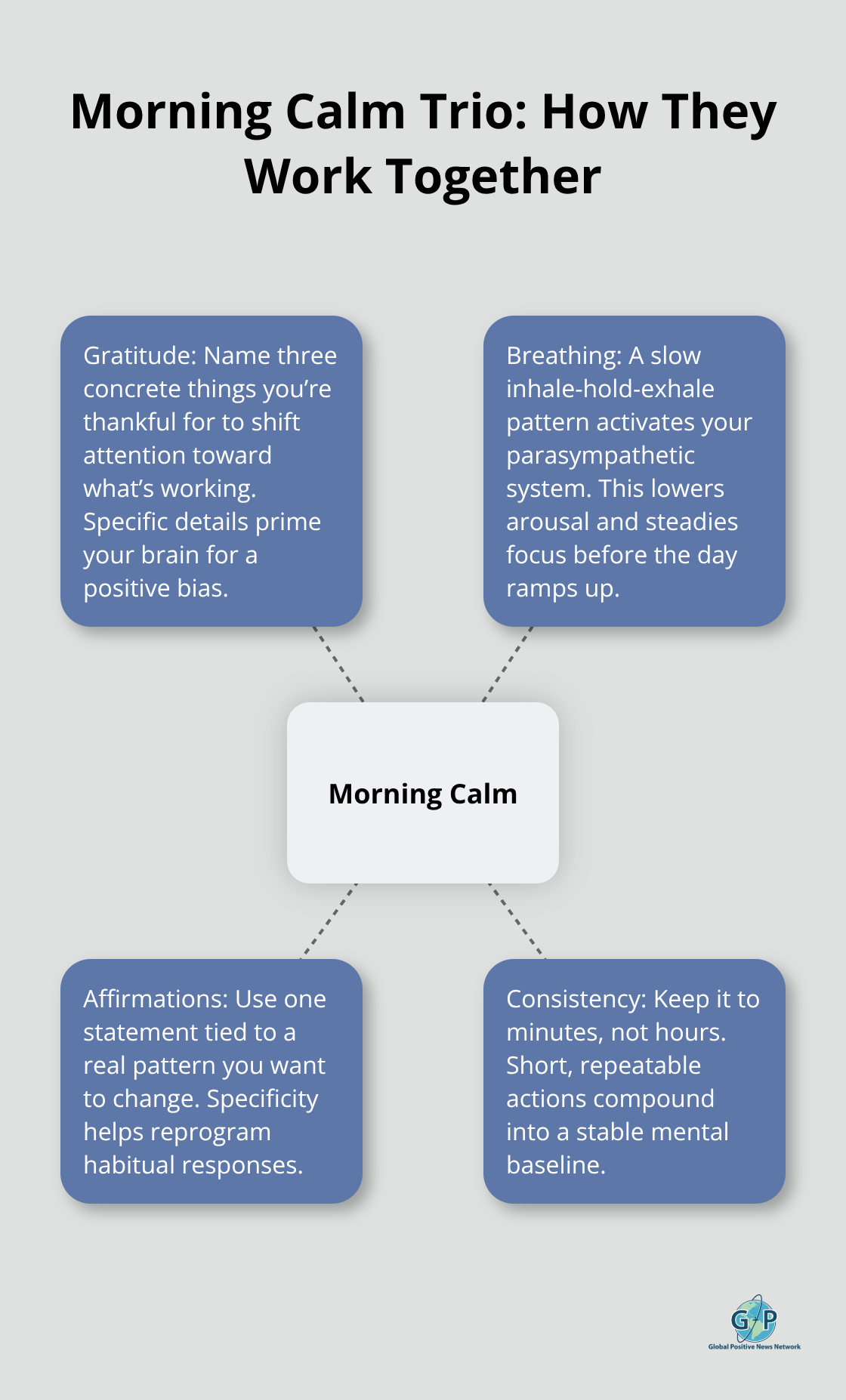
The consistency matters more than the perfection-even on days when you rush, these practices take less time than scrolling social media. Your midday reset practices will build on this morning foundation.
How to Reset Your Mind When Afternoon Energy Crashes
Midday brings a collision of fatigue and demand. Your nervous system has processed hours of decisions, notifications, and mental effort. The morning rituals you started with have worn down under the weight of meetings, emails, and competing priorities. Your attention fractures. Your focus splinters. This is when most people reach for their phones, scroll mindlessly for 20 minutes, and feel worse afterward. The afternoon slump isn’t a sign you need more caffeine-it’s a signal that your brain needs a tactical reset. Three specific interventions work: stepping away from screens with intention, practicing brief meditation, and performing acts that shift your emotional state through kindness.
The two-minute screen break that actually works
Stop what you are doing and leave your desk or workspace entirely. This matters. A study from the University of Illinois found that brief mental breaks improve performance on subsequent work. Two minutes away from screens produces measurable results. Walk to a window and focus on something at least 20 feet away for 30 seconds-this reduces eye strain and mental fatigue simultaneously. Then perform the 5-4-3-2-1 grounding technique: name five things you see, four you can touch, three you hear, two you smell, and one you taste. This 90-second practice interrupts the stress cycle before it deepens. The specificity of sensory engagement forces your brain out of rumination and into present awareness. You return to work with restored focus rather than compounded fatigue.
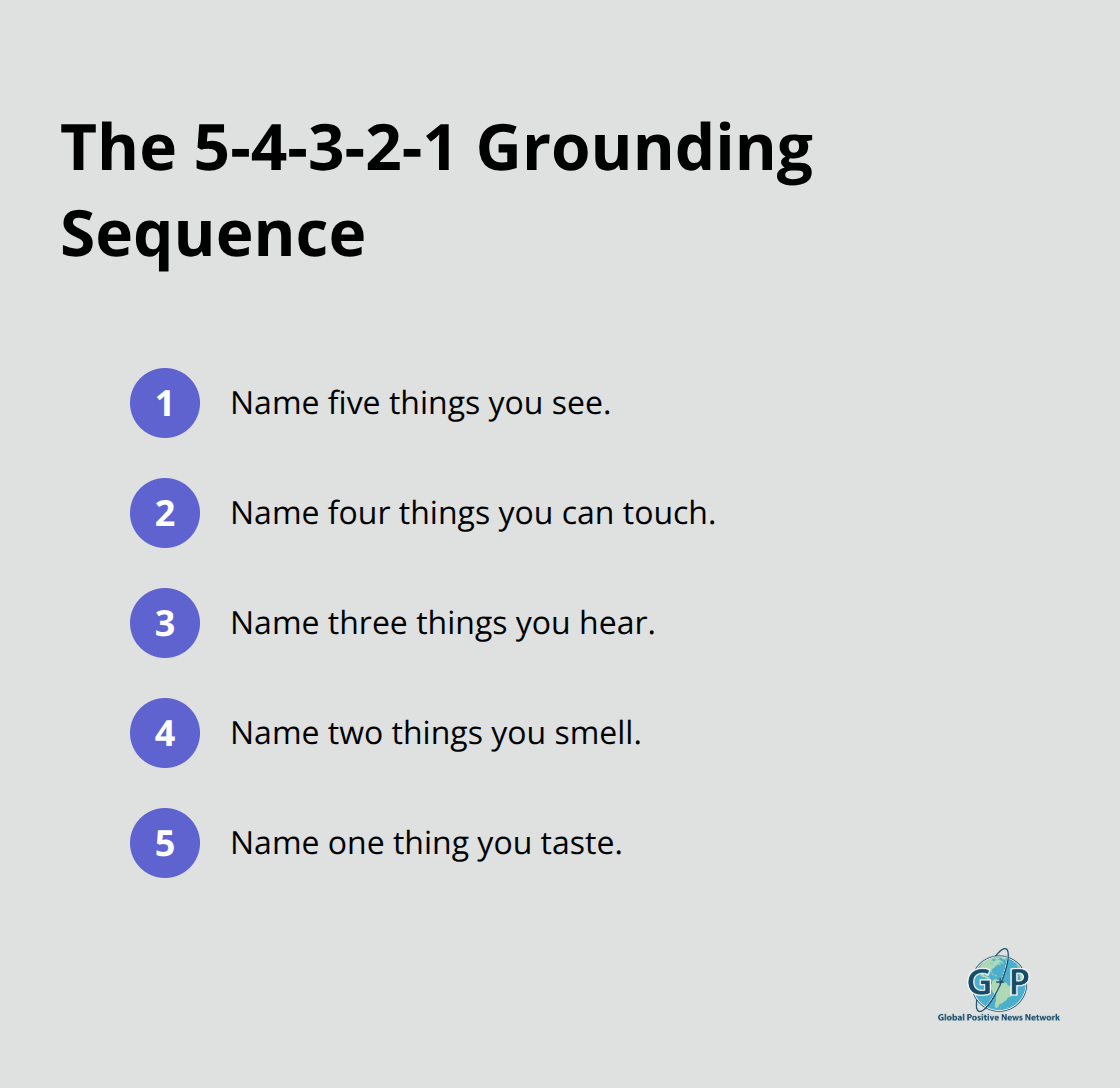
Try this once at 2 p.m. and once at 4 p.m., and your afternoon productivity shifts dramatically. Most people skip this because they think they lack time, but the time you gain through restored attention far exceeds the two minutes you invest.
Meditation without the meditation cushion
You do not need 20 minutes or a quiet room. Sit upright at your desk with your feet flat on the ground. Close your eyes for exactly three minutes. Focus entirely on your breath-notice the temperature of the air entering your nostrils, the expansion of your chest, the pause between exhale and inhale. When your mind wanders, which it will, simply return attention to your breath without judgment. This is meditation stripped of ritual and pretense. Research from Harvard Medical School shows that even three minutes of focused breathing reduces cortisol levels and lowers heart rate. The key is consistency over duration. Three minutes daily produces better results than sporadic 20-minute sessions. Schedule this at the same time each day-your brain recognizes the pattern and settles into focus faster. You can do this in a bathroom stall, at your desk with the door closed, or in your car during lunch. The location matters far less than the practice itself.
Kindness as a reset mechanism
Perform one deliberate act of kindness before 3 p.m. Send a specific compliment to a colleague about something they did well. Call someone and tell them you were thinking of them. Buy a coffee for the person behind you in line. This is not about being nice-it is about shifting your neurochemistry. Acts of kindness trigger dopamine release in your brain, the same neurotransmitter that drives motivation and pleasure. You feel better immediately, not eventually. The recipient benefits, but you benefit more. Your afternoon state improves because you have actively chosen connection over isolation, generosity over scarcity. This practice takes three to five minutes and costs almost nothing. It interrupts the afternoon pattern of self-focus and complaint that drains energy.
These three midday practices compound the work your morning rituals started. Your evening practices will complete the cycle by helping you process the day and prepare your mind and body for restorative sleep.
How to Close Your Day With Intention and Rest
Your evening determines whether you wake refreshed or groggy, whether tomorrow’s morning rituals land with power or fall flat. The three hours before sleep offer your final opportunity to process what happened and signal your body that recovery is coming. Most people waste this window by staying online until bedtime, their nervous systems flooded with blue light and digital stimulation. Your evening needs structure. Three specific practices work together: writing down what went well, disconnecting from screens deliberately, and using your body to trigger sleep. These practices reverse the afternoon’s accumulated stress and anchor your mind toward the positive moments worth remembering.
Write down three wins before the screen shuts off
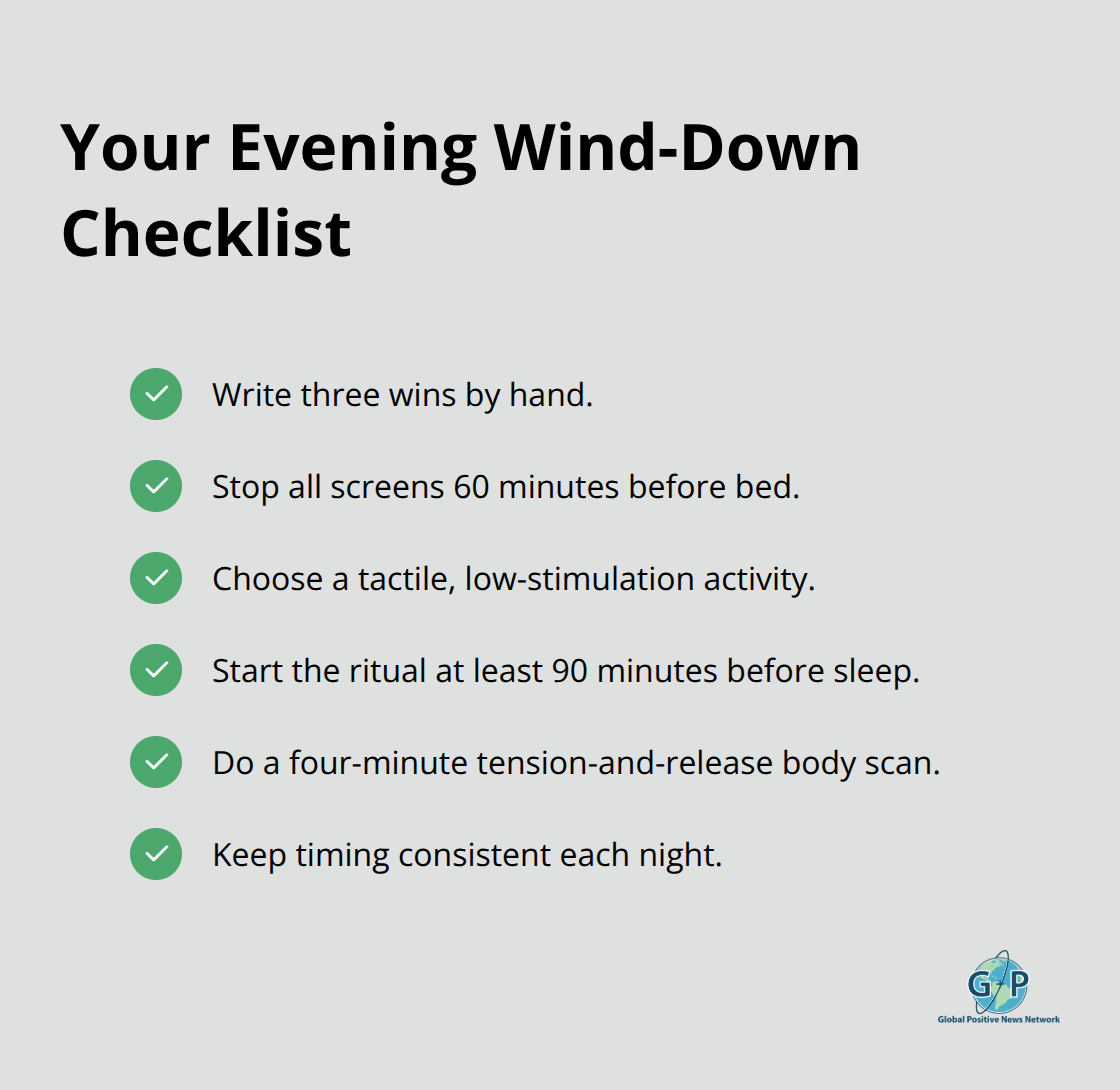
Spend three minutes writing about three specific positive moments from your day. Not vague summaries like “it was a good day,” but concrete details: a laugh with a coworker, a task completed, feedback you received, a meal you enjoyed. Write these in a notebook by hand-the physical act of writing strengthens memory formation far more than typing. Write down three wins before bed can reduce state anxiety, as well as trait anxiety and perceived stress for 4 weeks post-practice. Your brain needs this anchoring. Writing forces you to search your day for what worked rather than what went wrong, a deliberate reversal of the default negativity bias. Spend 30 seconds per moment. Make the details vivid. This practice takes four minutes total and costs nothing. Start this ritual at least 90 minutes before bed so your mind has time to settle afterward. The act of articulating positive moments rewires your neural pathways toward what’s worth celebrating, not what’s worth worrying about. Your subconscious continues processing these wins while you sleep, strengthening their emotional weight.
Disconnect completely 60 minutes before sleep
Set a hard boundary: all screens stop 60 minutes before your target sleep time. Not 30 minutes. Sixty. Your brain needs this window to shift from the activation state that screens create. Replace screens with tactile, non-stimulating activities: read a physical book, organize tomorrow’s clothes, flip through a magazine, or tidy a small area of your space. These activities occupy your hands and attention without triggering dopamine spikes or cortisol surges. Disconnect completely 60 minutes before sleep to allow melatonin to rise naturally and prepare your body for rest. The activities you choose during this window matter less than the consistency of the boundary itself. Your body learns to expect the shift and prepares for sleep automatically.
Activate your parasympathetic nervous system before sleep
Once your screen boundary becomes automatic, add a four-minute body scan to your routine. Lie in bed and tense each muscle group from your feet to your face for one second, then release completely. Notice where you hold tension. Release it consciously. This practice activates your parasympathetic nervous system and signals your body that rest is beginning. By combining your writing practice with this 60-minute screen disconnect, you create a two-hour evening sequence that costs nothing and produces measurable sleep improvements. The specificity of the timing matters-your body responds to patterns, and patterns require consistency.
Final Thoughts
The nine practices across your morning, midday, and evening routines share one essential quality: repetition makes them work. Consistency beats intensity every single time. A 60-second gratitude practice performed daily produces measurable shifts in how your brain processes stress and opportunity. A three-minute breathing reset done at the same time each afternoon trains your nervous system to calm faster. A four-minute body scan before sleep compounds into weeks of better rest. These aren’t dramatic interventions-they’re small, deliberate actions that accumulate.
Your brain rewires through repetition. Neural pathways strengthen when you use them consistently. Simple daily positivity rituals don’t transform your life on day one; they transform it across weeks and months through the compound effect of tiny, repeated choices. You don’t wait for motivation or the perfect moment. You build a structure that carries you forward regardless of how you feel. Start with one practice that addresses your biggest struggle. If mornings feel chaotic, start with gratitude. If afternoons drain you, start with the two-minute screen break. If sleep eludes you, start with evening journaling.
After two weeks, add a second practice. After four weeks, introduce a third. The timeline matters less than the progression-you build momentum through success, not through willpower. We at Global Positive News Network share stories of people who’ve transformed their lives through consistent, small actions. Start today. Pick one ritual. Commit to it for two weeks.
Having a hard day?
The 2 Minute Hope Reset is a short free guide with three small practices for the days that feel heavy. Two minutes each, nothing to keep up with.
Get the free guideExplore more positive news:
Enjoying stories like this?
Global Positive News Network is reader-supported. If you’d like to support the mission, you can visit the Official GPNN store.