

How you start your morning shapes everything that follows. Your first hours set the emotional and mental tone for the entire day, which is why morning daily positivity matters so much.
At Global Positive News Network, we’ve seen how intentional morning practices transform people’s lives. This guide shows you exactly how to build a routine that works.
Why Your Morning Habits Determine Your Day
Your Morning Sets Your Entire Day’s Trajectory
Your morning isn’t separate from the rest of your day-it shapes it entirely. The first few hours after waking establish your stress response, energy capacity, and emotional resilience for everything that follows. Research confirms that morning light exposure, physical activity, and hydration directly influence alertness and mood throughout the day. When you wake and immediately check emails or social media, your brain enters reactive mode, burning through decision-making energy before your workday even starts.
Hydration and Nutrition Create Your Foundation
The National Academies of Sciences, Engineering, and Medicine recommends 3.7 liters of daily water for men and 2.7 liters for women, yet most people skip hydration entirely in the morning, which immediately reduces cognitive performance. A protein-rich breakfast with healthy fats and fiber sustains energy and cognitive function far better than coffee alone. A consistent morning routine eliminates this energy drain and positions you to perform at your peak.
Your Cortisol Window Is Your Biological Advantage
Your cortisol levels peak naturally within 30 minutes of waking, then gradually decline throughout the day. This window is your biological advantage. If you waste it scrolling or rushing, you’ve already surrendered your peak cognitive hours. The brain’s most efficient time for complex work happens in late morning, according to research on circadian rhythms. This means your morning routine positions you to do your best work when your brain is primed for it.
Movement, Gratitude, and Mindfulness Drive Real Change
The CDC and WHO both recommend 20 to 30 minutes of brisk morning exercise to release endorphins and improve mood. Gratitude journaling for 5 to 10 minutes increases positive affect and life satisfaction according to Harvard Health Publishing, while 5 to 10 minutes of mindfulness or meditation from the NIH/NCCIH reduces stress and sharpens focus. The American Psychological Association found that people who maintain a repeatable morning sequence experience lower stress and better consistency in their emotional state.
Structure Your Morning for Maximum Impact
A 2-hour morning structure works best: wake, light movement or stretching, breakfast, brief reading or planning, then begin your workday. This approach reduces decision fatigue and builds momentum. Delay caffeine consumption until after your routine-limit yourself to 1 to 3 cups in the morning and avoid late-day intake to prevent sleep disruption while maintaining alertness.
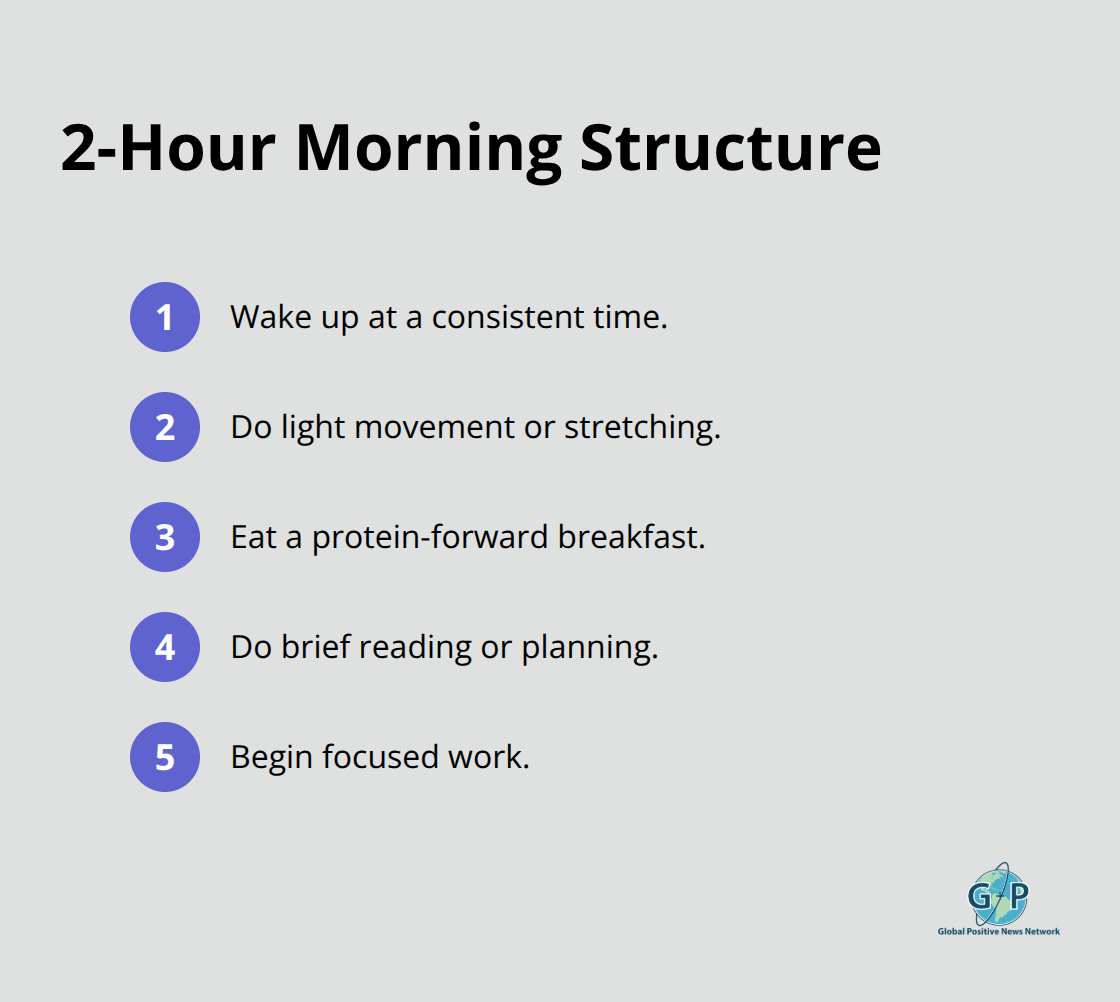
The National Sleep Foundation emphasizes that a consistent wake time every day stabilizes your internal clock and improves sleep quality. These aren’t suggestions; they’re biological facts that directly impact how you feel and perform. Now that you understand why mornings matter, the next step is building your daily positivity routine with specific practices that fit your life.
Build Your Three Core Morning Practices
Gratitude Anchors Your Mindset First
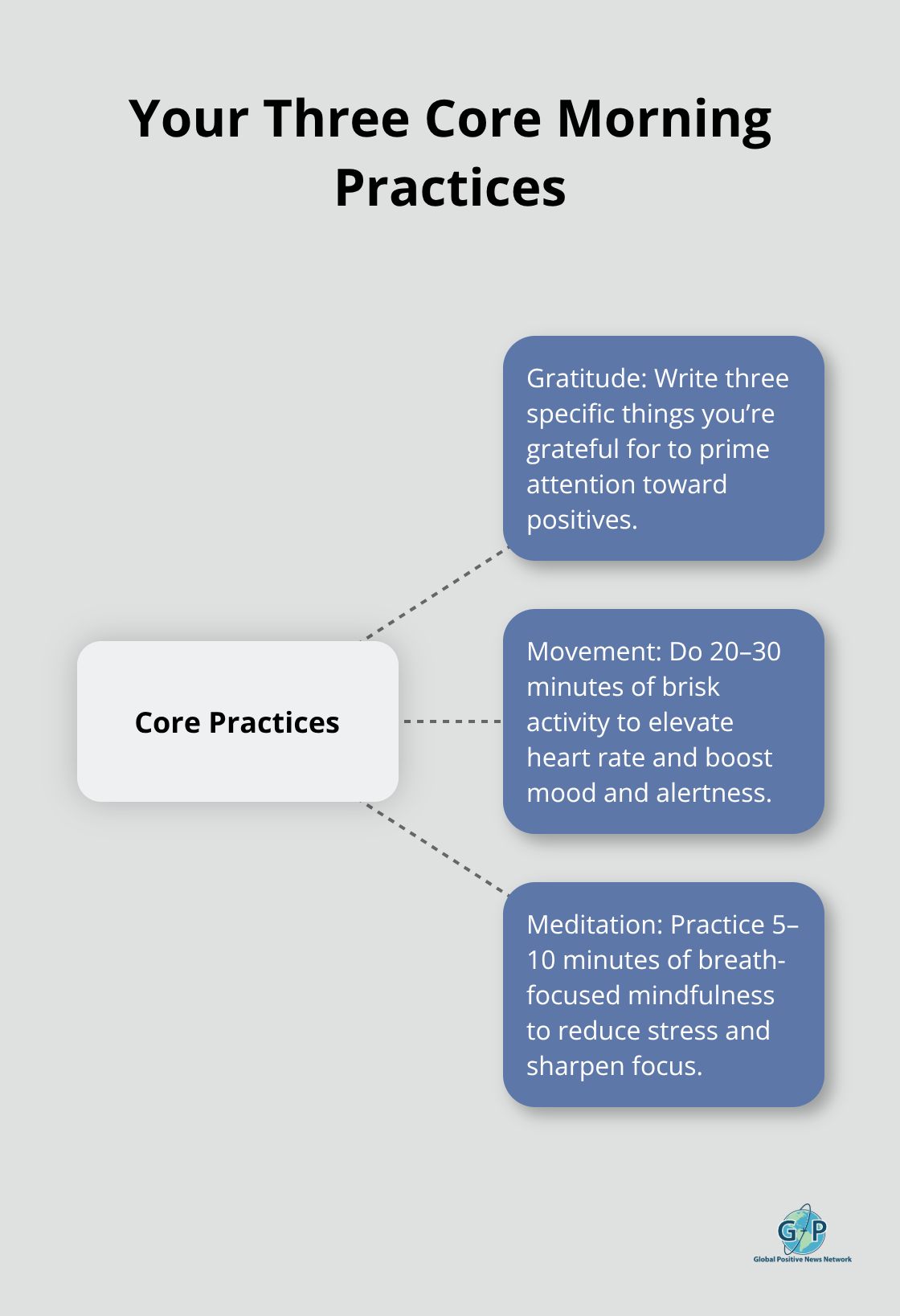
Gratitude anchors your morning mindset before anything else. Spend 5 to 10 minutes writing three specific things you’re grateful for-not vague statements like “my family” but concrete observations: the way sunlight hit your kitchen window, a conversation that made you laugh yesterday, a meal you enjoyed. This practice increases positive affect and life satisfaction measurably. Write in a physical journal or your phone’s Notes app; the medium matters less than consistency. Most people fail at gratitude because they make it too complicated. Start with one sentence per item. After two weeks, this becomes automatic, and your brain begins scanning for positive details throughout your day instead of threats. This shift in attention is the foundation everything else builds on.
Movement Elevates Your Energy and Mood
Movement comes next, and the CDC and WHO recommend 20 to 30 minutes of brisk exercise in the morning to release endorphins and improve mood for the entire day. This doesn’t mean joining a gym or following a video if that feels forced. A 20-minute walk at a pace where conversation becomes difficult, bodyweight exercises in your living room, or cycling to a destination all count. The key is intensity-your heart rate needs to elevate. Research shows that people who exercise in the morning experience greater creativity and productivity in the two hours after their workout, directly supporting that late-morning peak cognitive window you learned about. Pair movement with morning sunlight when possible; bright light resets your circadian rhythm and boosts alertness according to Harvard Health Publishing and the Mayo Clinic. If outdoor movement isn’t realistic, open your curtains wide or position yourself near a window during exercise.
Meditation Sharpens Your Focus in Minutes
Mindfulness and meditation require far less time than people think. The NIH and NCCIH confirm that 5 to 10 minutes of meditation reduces stress and sharpens focus. You don’t need an app or a perfect quiet space. Sit somewhere for five minutes and focus on your breath-count to four on the inhale, hold for four, exhale for four. When your mind wanders (it will), return to counting. That’s it. The American Psychological Association found that people maintaining a repeatable morning sequence experience lower stress and better emotional consistency. The repetition matters more than perfection. If meditation feels awkward initially, start with two minutes. Your brain will adapt faster than you expect.
Three Practices, One Powerful Result
These three practices-gratitude, movement, and meditation-take roughly 40 to 50 minutes combined and directly address the biological systems that control your mood, energy, and stress response. They work because they’re based on measurable physiological changes, not motivation or willpower. Once you establish these core practices, you’re ready to explore the specific tools and resources that help you track progress and stay consistent over time.
Tools and Resources to Support Your Practice
Apps That Track Your Progress Without Overwhelm
Tracking your morning practice matters far more than most people realize. When you measure something consistently, your brain treats it as important and your behavior follows. Apps like Habitica and Streaks let you log your gratitude, movement, and meditation sessions with visual progress indicators that show consecutive days completed. Habitica transforms your habits into quest rewards, which appeals to people who respond to achievement systems. Streaks uses a simple calendar view where you mark each day complete, and the app notifies you if you miss a day, creating accountability without pressure.
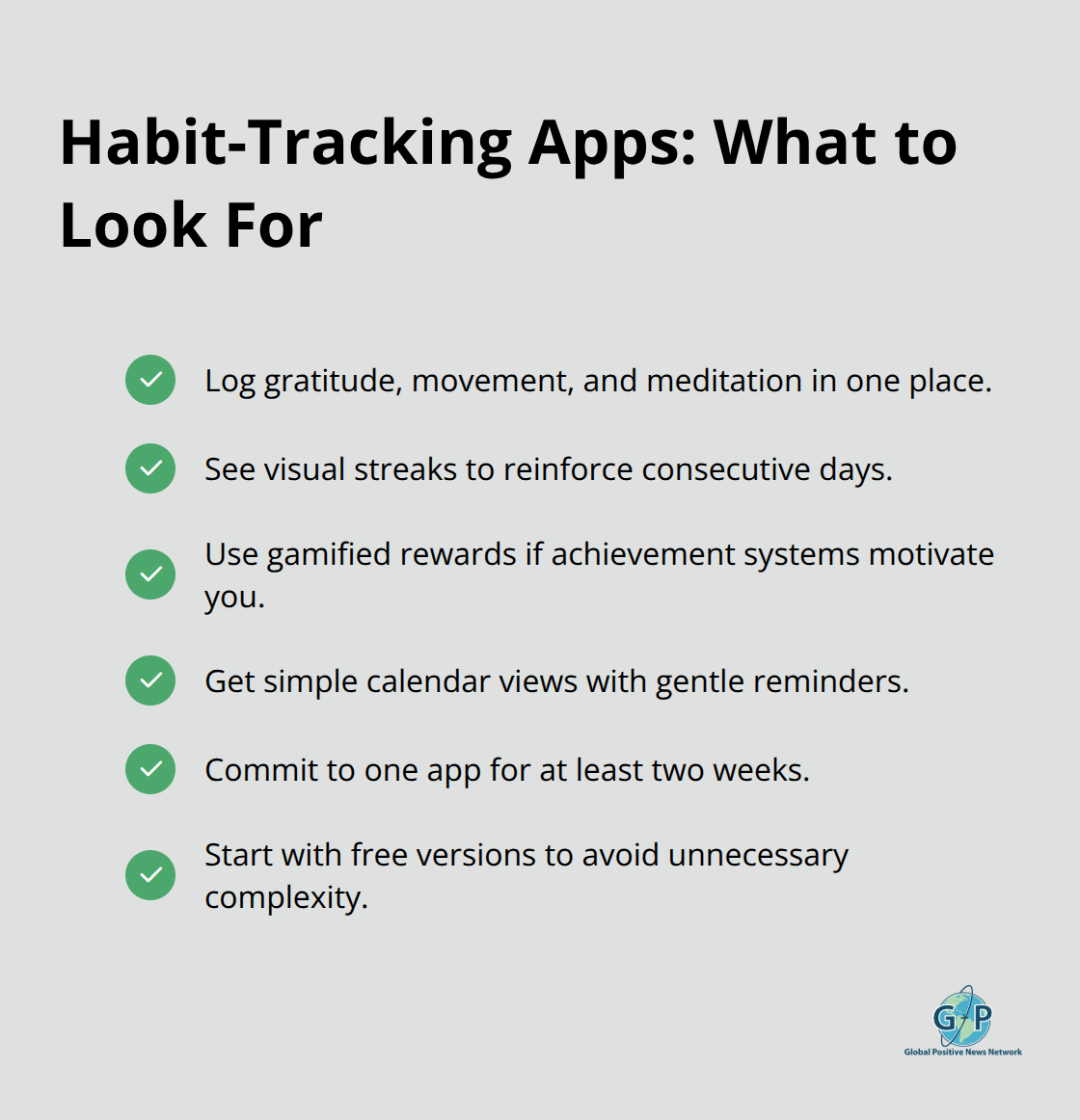
The key is selecting one app and using it for at least two weeks before evaluating whether it works for you. Most people abandon tracking because they switch tools too frequently or expect immediate mood shifts. Start with the free versions of these apps; they add complexity you don’t need initially.
Your Physical Space Shapes Your Habits
The physical environment where you practice matters significantly. A dedicated morning space-even just a corner of your bedroom with a chair facing a window-signals to your brain that this location belongs to your routine. This environmental consistency strengthens habit formation faster than willpower alone. Quality journals with prompts cost between 15 and 30 dollars and often include space for reflection beyond just listing gratitudes. If you prefer digital tracking, simple tools like your phone’s Notes app or Google Keep work equally well at zero cost. The product itself matters less than the consistency of use.
Community Accountability Transforms Your Practice
Connect with others who practice morning positivity through communities that share your goals. Finding even one person to share your progress with transforms your practice from an isolated routine into a supported habit. This social connection reinforces your commitment and makes the process enjoyable rather than obligatory.
Final Thoughts
Your morning daily positivity practice transforms your life without requiring perfection or hours of preparation. The three core practices-gratitude, movement, and meditation-take less than an hour combined and produce measurable changes in your mood, energy, and stress response within two weeks. Your brain adapts to repetition faster than you expect, and after 14 days of consistency, your routine becomes automatic.
The transformation happens quietly at first. You’ll notice you’re less reactive to frustrations at work, you’ll catch yourself smiling at small details throughout your day, and your sleep improves because your circadian rhythm stabilizes. One month of consistent morning practice reshapes how you respond to stress, and three months in, people around you notice the shift in your mood and energy.
Your morning sets the tone for everything that follows-this isn’t metaphorical, it’s neurological. When you invest in morning daily positivity, you invest in every interaction, every task, and every moment that comes after. Connect with Global Positive News Network to discover stories and community support that reinforce your commitment to positivity.
Having a hard day?
The 2 Minute Hope Reset is a short free guide with three small practices for the days that feel heavy. Two minutes each, nothing to keep up with.
Get the free guideExplore more positive news:
Enjoying stories like this?
Global Positive News Network is reader-supported. If you’d like to support the mission, you can visit the Official GPNN store.