
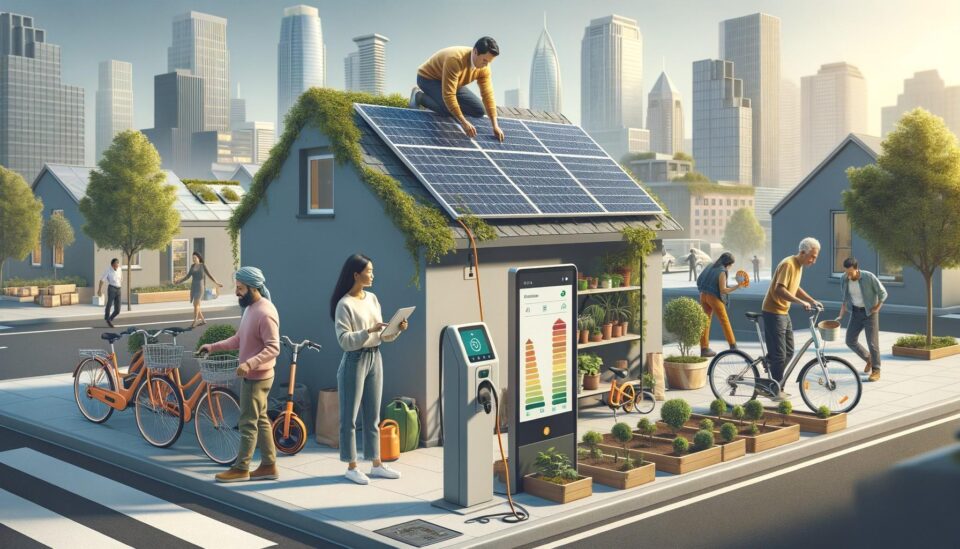
Communities worldwide are proving that green technology isn’t just an environmental luxury-it’s a practical solution delivering real results. Solar panels powering remote villages, wind farms creating local jobs, and waste reduction programs transforming neighborhoods show what’s possible when people commit to change.
At Global Positive News Network, we’ve gathered these green technology hope stories to show you exactly how communities are building healthier economies and cleaner air. The momentum is undeniable, and your community could be next.
How Communities Are Scaling Green Technology Today
Solar Power Transforms Rural Economies
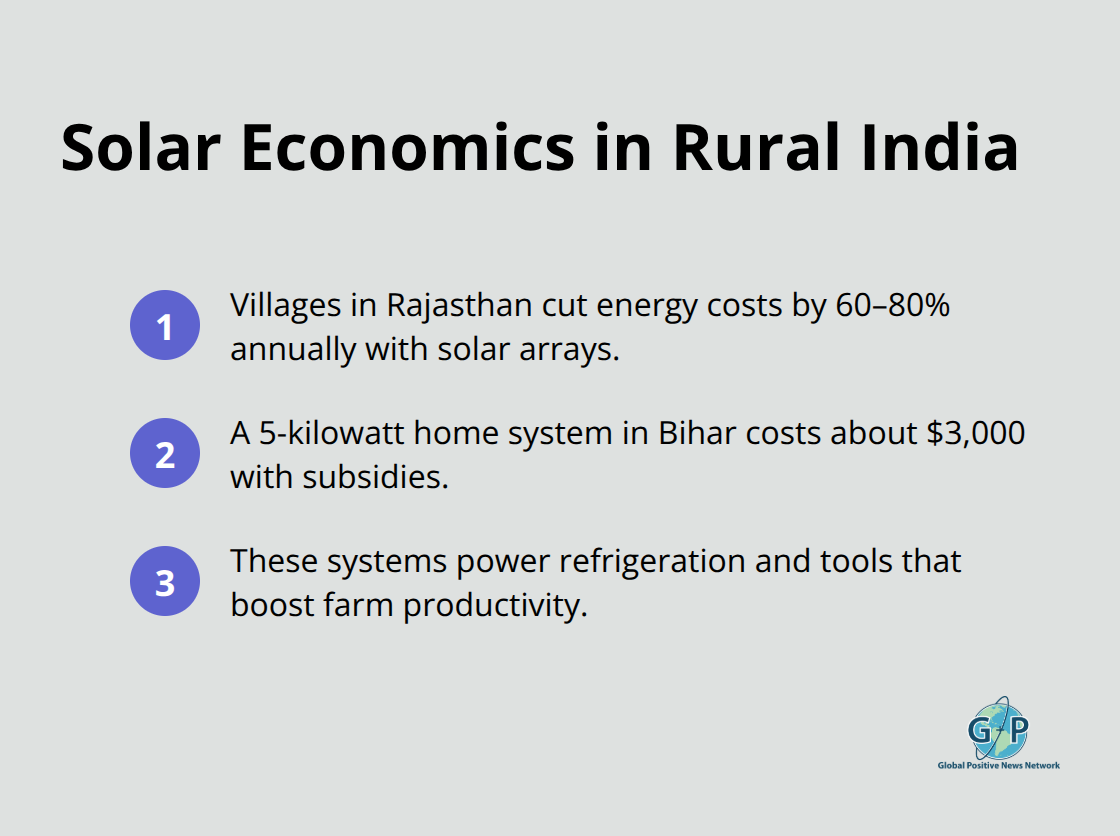
Solar installations across rural India grew significantly, with solar power cost reductions in rural India driving expansion. Villages in Rajasthan replaced diesel generators with solar arrays, cutting energy costs by 60 to 80 percent annually. The shift happened because solar became affordable, not because of ideology.
A household in Bihar can install a 5-kilowatt system for roughly $3,000 with government subsidies. This system produces enough electricity to run refrigeration units and power tools that increase farm productivity. Economic arguments convinced skeptics faster than any environmental pitch.
Wind Energy Creates Skilled Jobs
Wind energy employment Denmark demonstrates how green sectors generate sustained livelihoods. Communities near wind farms benefit directly through local tax revenue and job training programs. A single wind turbine technician in Denmark earns between $50,000 and $70,000 annually, attracting workers from neighboring countries.
These positions require skilled technicians who complete multi-year apprenticeships and remain in communities long-term. The jobs aren’t temporary construction positions that disappear after a project finishes.
Waste Reduction Builds Local Income
Waste reduction initiatives in São Paulo reduced landfill material by 35 percent over five years through neighborhood composting programs and material recovery cooperatives. Residents who separate organic waste at home sell compost to local farmers for $0.50 per kilogram, creating direct income while reducing methane emissions from landfills. The program works because it addresses immediate financial pressure on low-income households.
Rwanda’s plastic ban since 2008 eliminated single-use bags entirely. Communities now manufacture reusable alternatives, employing over 3,000 people in small manufacturing operations. What makes these examples effective is that they solve real problems first-air quality improves because fewer trucks haul waste, jobs appear because infrastructure needs maintenance and growth, and local economies strengthen because money stays in communities instead of flowing to distant corporations.
Why Communities Act Without Waiting
Innovations improving communities don’t wait for perfect conditions or massive government funding. They work with what’s available and measure results in dollars earned and air quality improved, not in abstract carbon credits. These concrete outcomes (improved health, stronger local economies, cleaner neighborhoods) create momentum that spreads to other regions and inspires similar action elsewhere.
Who’s Funding Green Technology in Communities
Governments alone cannot finance the green technology shift communities need, and waiting for top-down mandates wastes years when action happens faster through multiple funding sources working simultaneously. Local administrations in cities like Växjö, Sweden implemented carbon-neutral policies by 2030 through combining municipal bonds with private investment, reducing heating emissions by 62 percent since 2012. Officials tied green investments directly to budget savings-switching municipal buildings to biomass heating cut energy costs by 40 percent annually, freeing money for schools and infrastructure. Cities that frame green technology as economic efficiency rather than environmental ideology attract broader political support and faster implementation.
Corporate Investment Fills Infrastructure Gaps
Corporate funding fills critical gaps where government budgets fall short. Siemens invested $500 million in renewable energy projects across Southeast Asia between 2020 and 2024, creating infrastructure that benefits entire regions beyond single projects. These partnerships succeed when companies gain tax incentives or long-term contracts guaranteeing returns, aligning profit motives with community needs. Communities should negotiate contracts specifying local hiring requirements and technology transfer agreements-these terms ensure corporations train local workers rather than importing specialized labor from headquarters.
Grassroots Movements Drive Faster Adoption
Grassroots movements drive adoption faster than either government or corporate initiatives alone because residents understand neighborhood problems directly. Community solar cooperatives in Germany grew from 30 organizations in 2010 to over 1,600 by 2023, with members pooling resources to install rooftop panels on apartment buildings where individual ownership isn’t possible. These cooperatives distribute electricity profits to members, generating average annual returns of 3 to 5 percent while keeping capital within neighborhoods. Bangladesh’s Community-Based Organization network trained 85,000 people in solar installation and maintenance, creating technician networks that service systems across rural regions without relying on distant corporations.
Combining All Three Funding Sources
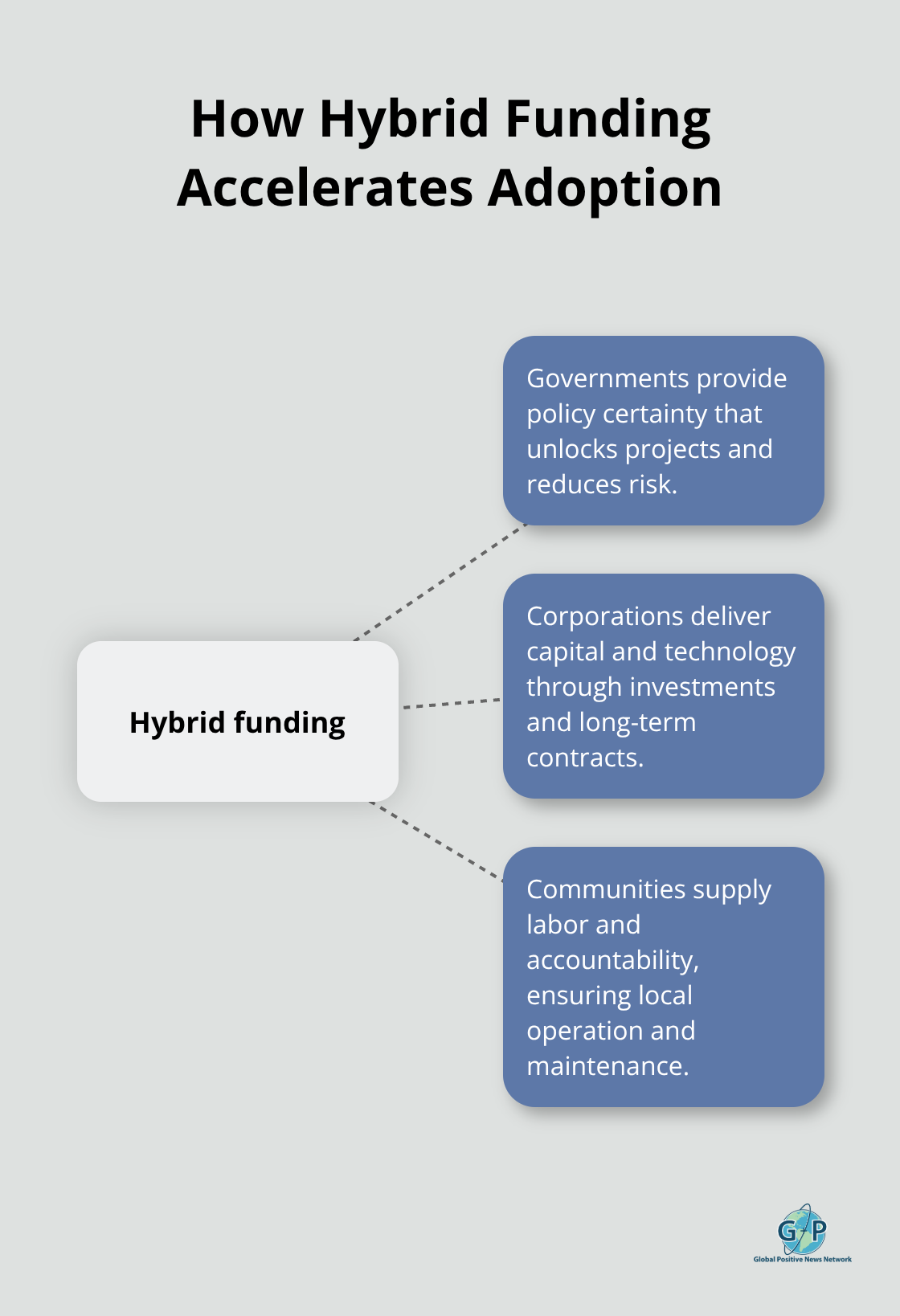
The most effective communities combine all three funding approaches-municipal tax incentives attract corporate investment, corporate funding enables infrastructure that grassroots organizations maintain and operate locally. This combination accelerates adoption because each sector addresses its strengths: governments provide policy certainty, corporations deliver capital and technology, and communities supply labor and accountability. Communities waiting for perfect conditions from any single source delay projects that could start immediately through hybrid funding combining available resources.
The next chapter reveals how these funding mechanisms translate into measurable health improvements and economic transformation across different regions.
What Green Technology Actually Delivers for Communities
Health Improvements Hospitals Can Measure
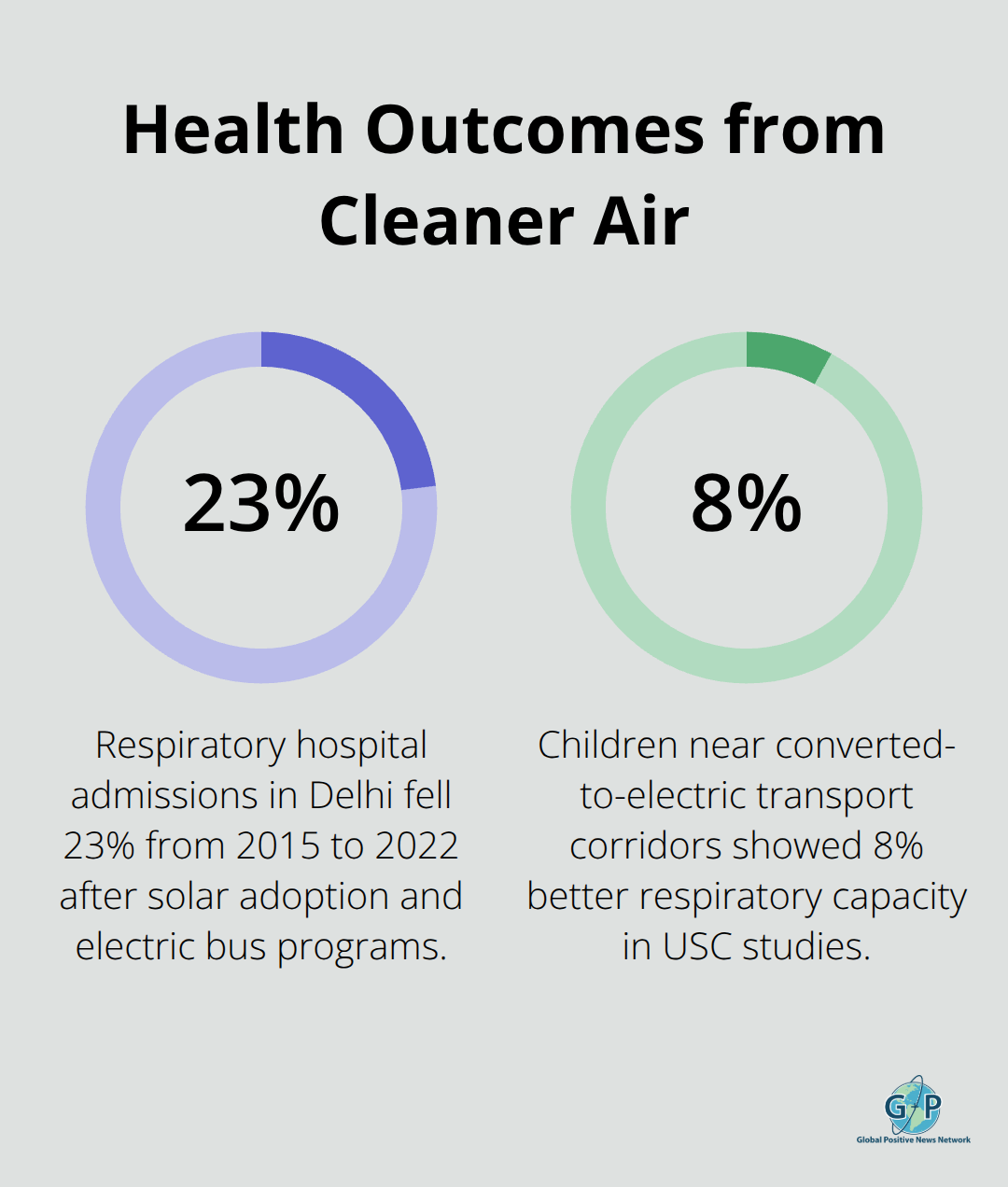
Green technology investments produce measurable health improvements that show up in hospital admissions and doctor visits within months of implementation. When Delhi reduced air pollution through solar adoption and electric bus programs, respiratory hospital admissions dropped 23 percent between 2015 and 2022. Children in neighborhoods with reduced diesel emissions show improved lung function tests, with studies from the University of Southern California tracking 8 percent better respiratory capacity in kids living near converted-to-electric transport corridors. These aren’t future projections-they’re current outcomes hospitals measure and insurance companies track in claims data.
Communities investing in air quality improvements see immediate returns through reduced medication costs, fewer missed work days, and lower public health spending that frees municipal budgets for other priorities.
Job Creation Happens Faster Than Expected
Economic gains from green technology operate on timelines measured in years, not decades, because job creation starts during construction and maintenance phases. Morocco’s solar investment created 16,000 jobs by 2023 according to the Moroccan Ministry of Energy Transition, with average wages 35 percent higher than agricultural work that workers previously performed. Wind technicians in Texas earn $60,000 to $75,000 annually, attracting workers from declining oil regions where similar skills became obsolete. Germany’s renewable energy sector employed 312,000 people in 2023, up from 160,000 in 2010, with wages supporting local retail, housing, and services that multiply initial employment gains across regional economies.
Revenue Streams From Carbon Markets
Communities capture carbon reduction benefits through international carbon credit markets and generate revenue streams that fund local development. Costa Rica earned $600 million through forest conservation carbon credits between 2010 and 2020, funding rural development programs that reduced poverty by 8 percent in participating regions. These financial mechanisms transform environmental protection into direct income for communities that implement conservation practices.
Environmental Gains Translate to Avoided Costs
The environmental gains-reduced carbon emissions, lower resource extraction, eliminated landfill expansion-translate directly into avoided costs: prevented climate disasters, avoided water treatment expenses from pollution cleanup, and eliminated health burdens from contaminated air and soil. Clean energy now accounts for roughly 40% of global electricity generation, making large-scale storage critical for grid stability. These concrete economic and health returns motivate community action far more effectively than abstract environmental goals, which explains why adoption accelerates when residents experience direct benefits within their lifetimes rather than waiting for theoretical future improvements.
Final Thoughts
The green technology hope stories throughout this article reveal a consistent pattern: communities that act generate measurable results within months, not decades. Solar installations cut energy costs by 60 to 80 percent in rural India, wind technicians in Denmark earn sustainable wages, and waste reduction programs in São Paulo created direct income for households while reducing landfill emissions by 35 percent. These outcomes residents experience through lower bills, better air quality, and job opportunities in their neighborhoods prove that environmental progress and economic prosperity aren’t competing goals.
What makes these successes replicable is their foundation in practical economics rather than ideology. Communities adopted green technology because it solved immediate problems: reducing energy expenses, creating skilled employment, and generating local revenue. Morocco created 16,000 jobs through solar investment, Germany’s renewable sector grew from 160,000 workers in 2010 to 312,000 by 2023, and Costa Rica earned $600 million through carbon credits that funded rural development (this expansion happens because success in one community inspires neighboring regions to implement similar approaches).
Your community possesses the same resources that transformed rural villages and industrial neighborhoods elsewhere. Local government support, corporate partnerships, and grassroots movements exist in your region-they simply need coordination toward green technology projects that deliver immediate returns. We at Global Positive News Network continue tracking communities implementing green technology solutions and the measurable improvements they achieve.
Having a hard day?
The 2 Minute Hope Reset is a short free guide with three small practices for the days that feel heavy. Two minutes each, nothing to keep up with.
Get the free guideExplore more positive news:
Enjoying stories like this?
Global Positive News Network is reader-supported. If you’d like to support the mission, you can visit the Official GPNN store.