
The news cycle often feels relentless and bleak. At Global Positive News Network, we believe 2026 offers a different narrative-one filled with genuine breakthroughs, human resilience, and real solutions taking shape across the world.
This preview highlights the uplifting news narratives that deserve your attention this year. From renewable energy advances to grassroots movements, we’ve identified the stories that show progress is happening right now.
Why Uplifting News Shapes How We See the World
The Negativity Trap in Traditional Media
Negative news dominates because it’s engineered to. Traditional media outlets prioritize conflict, disaster, and failure because these stories trigger stronger emotional responses and longer engagement times. This isn’t accidental-it’s the result of how attention works. Our brains are wired to notice threats, which means bad news naturally wins the competition for your focus. However, this relentless negativity comes with a measurable cost. Research shows that people who consume high volumes of negative news report higher levels of anxiety and depression. A study from the American Psychological Association found that excessive news consumption about crises correlates with increased stress symptoms, sleep disruption, and feelings of helplessness.
Reality Distortion Through Selective Reporting
The problem intensifies because traditional media’s negativity bias creates a distorted picture of reality. You’re far more likely to hear about a plane crash than the millions of safe flights that land daily. You’ll see stories about crime but rarely about the neighborhoods where crime rates have dropped significantly. This skewed representation shapes how people perceive the world, often making conditions seem far worse than they actually are.
Solutions-Focused Reporting Changes Everything
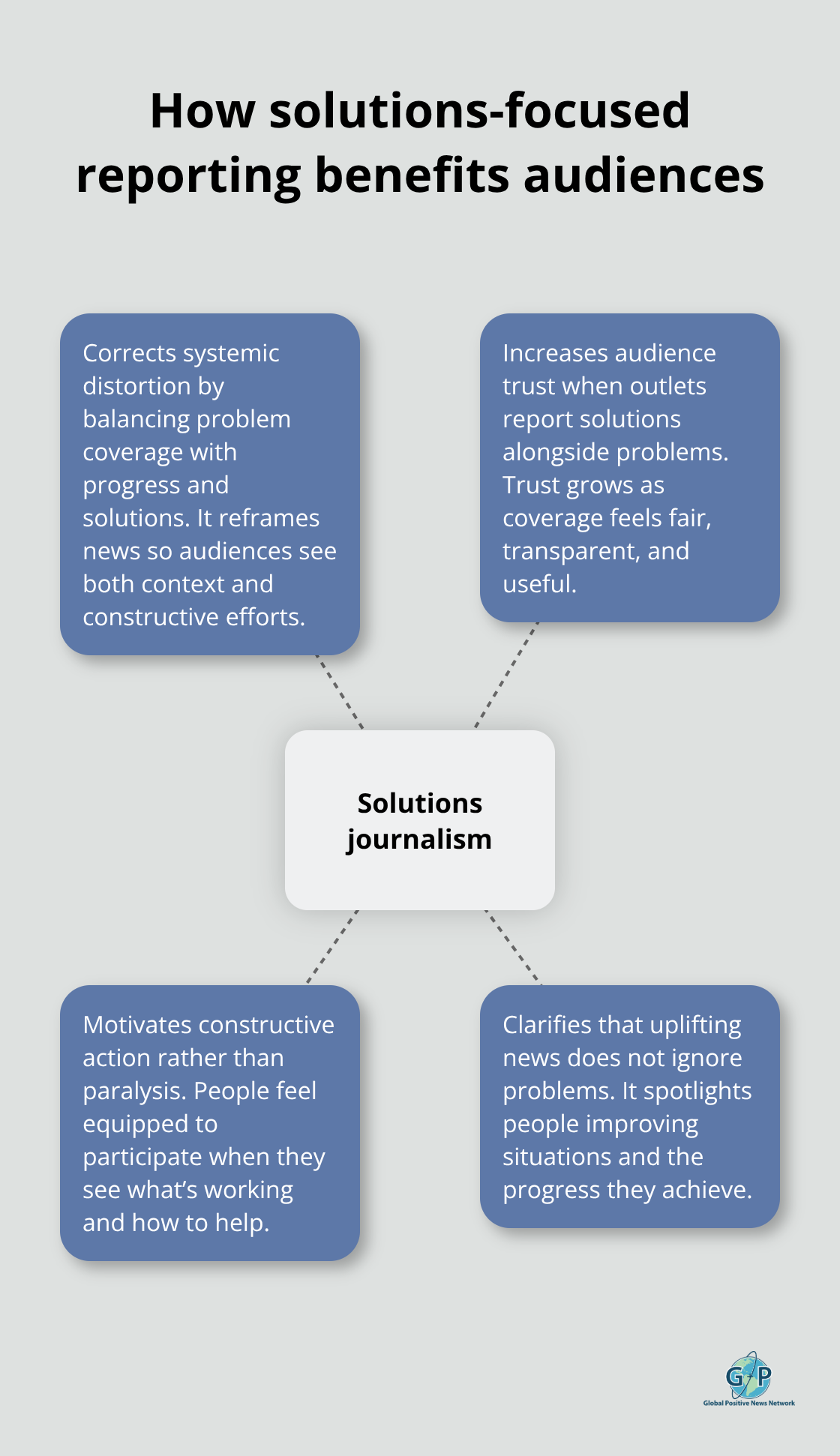
The shift toward constructive storytelling isn’t just feel-good content-it’s a correction to this systematic distortion. Audiences increasingly recognize that uplifting news doesn’t mean ignoring problems; it means reporting on solutions, progress, and people who work to improve situations. Research from the Constructive Institute shows that when news outlets include solutions-focused reporting alongside problem reporting, audience trust increases and people feel more motivated to take action rather than feel paralyzed.
What Audiences Actually Want in 2026
In 2026, demand for this type of journalism accelerates. Positive News magazine’s 2026 launch, centered on urban innovations that improve health, safety, and connectivity, reflects what audiences actually want to read. The practical benefit is clear: people who consume balanced news that includes progress narratives report better mental health outcomes and greater civic engagement. They volunteer more, support causes more actively, and participate in their communities because they see that change is possible. This isn’t optimism based on denial-it’s optimism rooted in real breakthroughs that are happening right now.
The Stories That Matter Most
The genuine developments we report on matter for how you understand your world and your role in it. These narratives show that progress isn’t theoretical or distant. Real people, organizations, and movements are solving problems today, and those stories deserve the same attention that traditional media reserves for crises. The next section explores the major positive trends that are already reshaping 2026 and the years ahead.
Major Positive Trends Shaping 2026
Clean Energy Transforms Power Systems
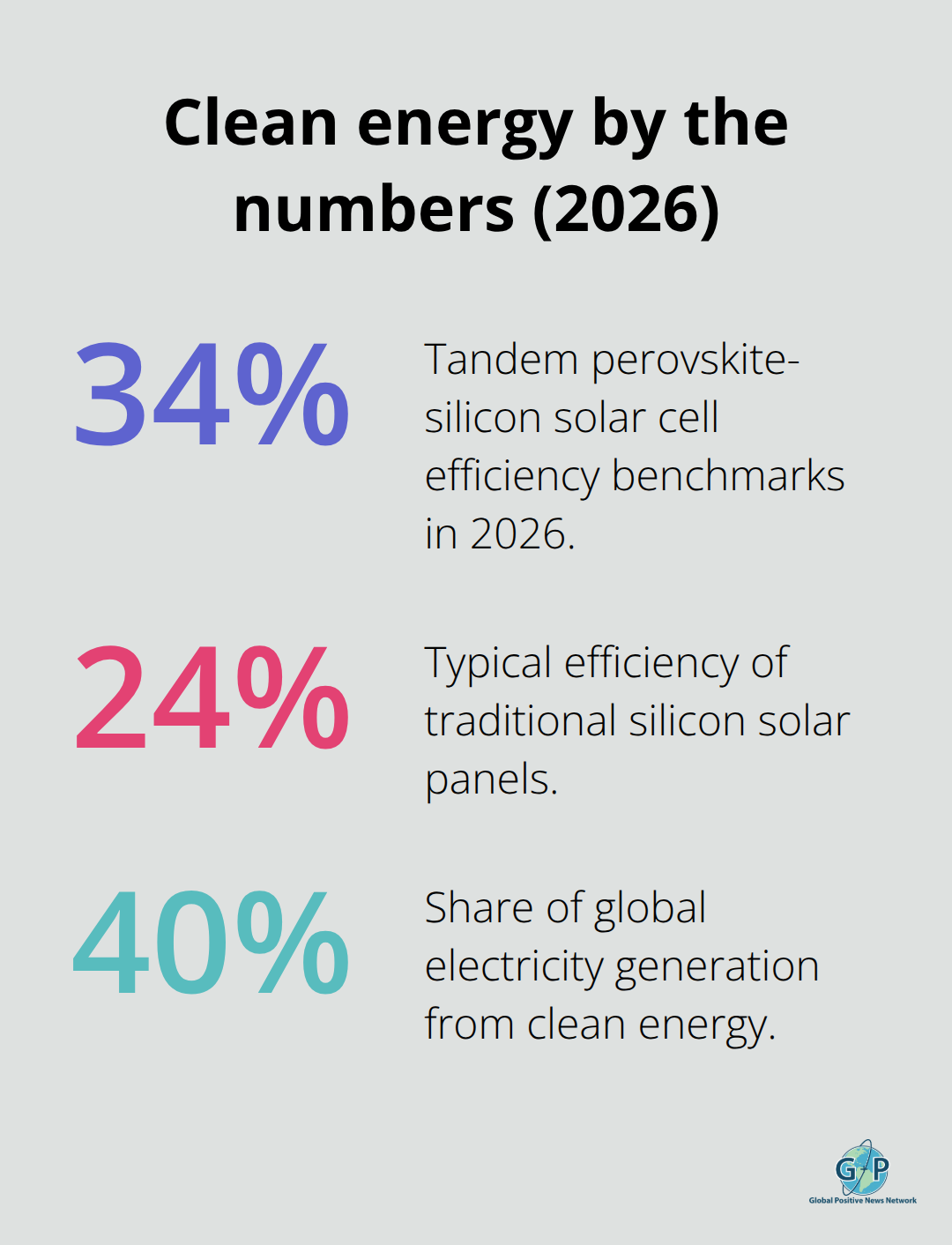
Clean energy is no longer a future promise-it reshapes power grids right now. Tandem perovskite-silicon solar cells surpass 34% power conversion efficiency, significantly outperforming traditional silicon panels at around 24%. This matters because higher efficiency means more energy from less space, making compact solar setups viable for homes, businesses, and portable applications.
Hybrid solar tandems leverage existing silicon infrastructure for faster commercialization, with first commercial versions launching in 2026. Multiple supply-chain options emerge, which reduces dependency on single manufacturers and accelerates adoption.
Grid-scale storage advances with iron-air and zinc-air battery systems now offer long-duration storage using abundant materials. Form Energy began scalable manufacturing in 2025, with demonstrations launching in 2026 and plans to reach 100,000 tons annually by decade’s end. Sodium-ion, zinc-ion, and magnesium-ion batteries approach commercial viability, offering safer alternatives with superior performance in extreme temperatures. Clean energy now accounts for roughly 40% of global electricity generation, making large-scale storage critical for grid stability. These aren’t incremental improvements-they represent foundational shifts that eliminate the storage bottleneck constraining renewable deployment for years.
Healthcare Breakthroughs Address Long-Standing Challenges
Healthcare innovation tackles problems that traditional medicine has struggled with for decades. Suzetrigine, approved by the FDA in January 2025, introduces a new sodium-channel blocker class for opioid-free pain relief, showing over 31,000-fold selectivity for pain pathways without respiratory depression. This directly addresses the opioid crisis-over 50,000 Americans died from opioid overdoses in the latest data.
Artificial intelligence accelerates cancer treatment selection: AstraZeneca and Tempus AI’s Predictive Biomarker Modeling Framework improved immuno-oncology trial patient selection, delivering about 15% survival benefit versus traditional designs through ensemble models combining large-language models, generative AI, and traditional machine learning. Cell-free biomanufacturing enables point-of-care production of proteins and enzymes without living cells, supported by DARPA and NSF, with companies like LenioBio advancing rapid drug discovery and vaccine development. This decouples biology from traditional bioreactors, enabling portable, real-time production for diagnostics and therapeutics.
Agriculture Adapts to Climate Pressures
In agriculture, CRISPR-edited drought-tolerant crops are being developed by modifying root architecture to improve deep water uptake in rice, wheat, and maize, enabling yields under drought without sacrificing productivity. These edits modify traits within the plant’s own genome, addressing regulatory and consumer concerns about traditional GMOs. Farmers gain climate resilience without waiting for regulatory approval of cross-species transfers. These advances demonstrate that solutions to food security and climate adaptation are already moving from laboratories into fields where they matter most.
Where Real Change Happens Every Day
Personal Triumphs That Reshape Communities
The most compelling stories of 2026 unfold in neighborhoods, hospitals, and community centers where ordinary people solve tangible problems. Personal triumphs matter because they show what becomes possible when someone refuses to accept the status quo. A teacher in rural Kenya trains farmers to use drought-resistant crops, improving yields and creating food security that prevents migration and keeps families intact. A nurse in Brazil organizes monthly health clinics in favelas, reaching residents annually who otherwise lack preventive care and catching diseases early to reduce emergency room costs. These aren’t theoretical examples-they represent documented outcomes with measurable impact.
Kindness That Compounds Across Communities
Acts of kindness create momentum because they spread. When a neighborhood watch program in South Africa prevents 40% of petty theft through coordinated patrols and communication apps, residents feel safer and engage more openly in public spaces. When a retired engineer in India mentors 15 young technicians annually in renewable energy installation, those technicians each train others, creating exponential skill transfer. These ripple effects compound across years, multiplying impact far beyond the initial action.
Organizations That Measure What Matters
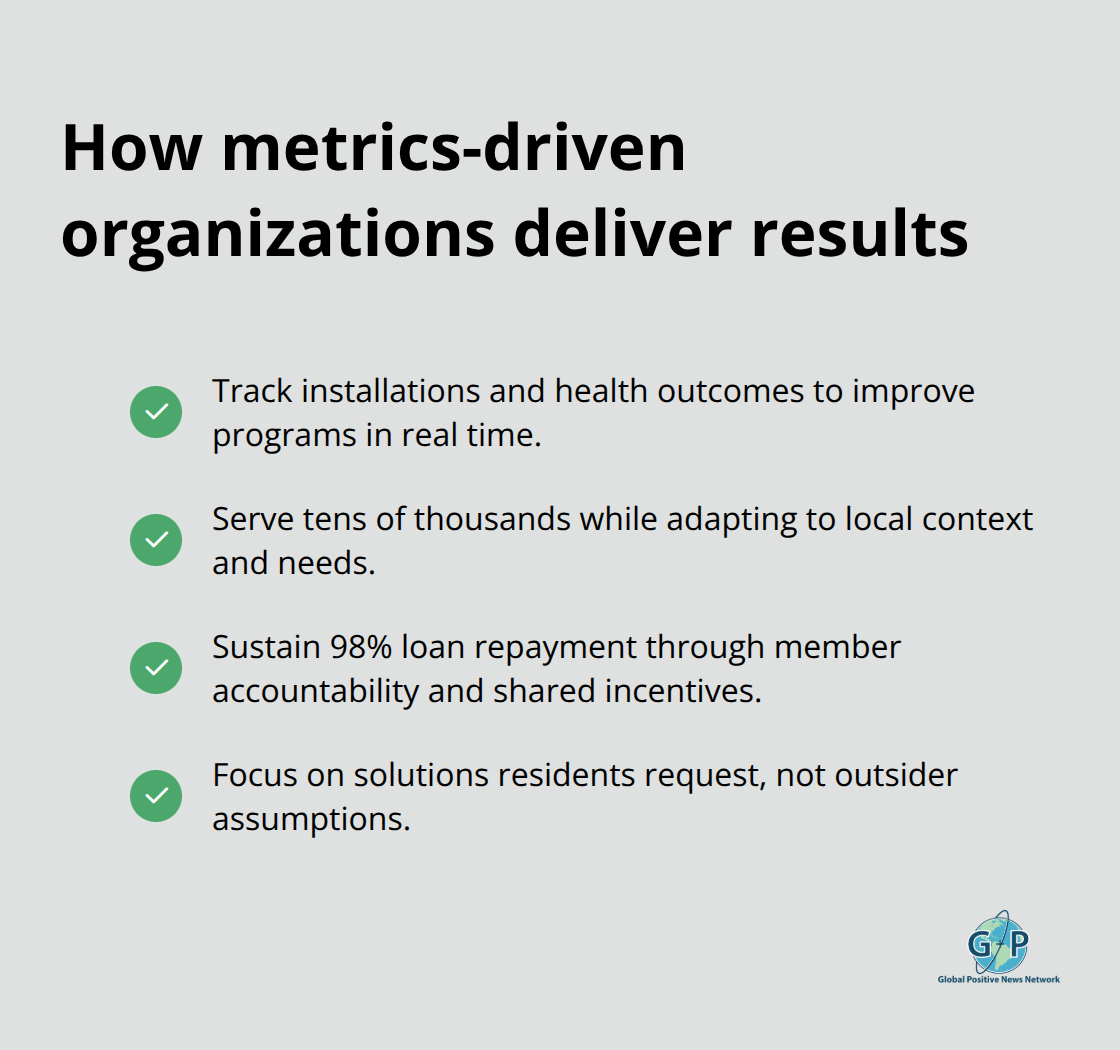
Organizations making real impact in 2026 operate with specific metrics and accountability. Community-led organizations outperform top-down interventions because they understand local context and adapt quickly. A water sanitation nonprofit in Uganda serves 50,000 people while tracking every installation and measuring health outcomes quarterly to adjust methods based on data. A microfinance cooperative in Guatemala serves 3,000 members and maintains 98% loan repayment rates because members know their peers depend on them. These organizations succeed because they focus on solutions that residents actually want, not what outsiders think they need.
Grassroots Movements Leading Climate Adaptation
Communities across Africa, Asia, and Latin America lead adaptation to climate pressures through local knowledge combined with new technology-not waiting for global agreements. Young activists in Indonesia organize community-based ocean cleanup projects that remove 200 tons of plastic monthly while training 100 youth in environmental monitoring. Women’s cooperatives in Rwanda process and export specialty coffee beans, generating income that funds school scholarships for 400 children annually. Grassroots movements in 2026 demonstrate that change doesn’t require permission from distant institutions.
Starting With What You Have
The people driving these changes don’t wait for perfect conditions or complete solutions. They start with what they have, measure what works, and scale what succeeds. That pattern reshapes communities in 2026 and proves that progress isn’t something that happens to us-it’s something we build together.
Final Thoughts
The uplifting news narratives shaping 2026 reveal something fundamental: progress happens when people act on what they can control. Renewable energy breakthroughs, healthcare innovations, and grassroots movements unfold right now in laboratories, communities, and neighborhoods where real people solve real problems. These developments deserve the same attention that traditional media reserves for crises, and that visibility shifts how you understand what’s possible.
What makes 2026 different is that these stories matter for how you engage with your own life and community. When you see that tandem solar cells convert 34% of sunlight to electricity, that opioid-free pain relief exists, and that communities across Africa and Asia lead climate adaptation without waiting for global permission, your perspective on change transforms. At Global Positive News Network, we curate stories of personal triumphs, acts of kindness, and community impact to help you maintain an optimistic outlook grounded in real breakthroughs.
The power of hope in building a better future isn’t abstract sentiment-it’s the practical recognition that change requires people who believe change is possible. When you consume news that includes solutions alongside problems, you volunteer more, support causes more actively, and participate in your community because you see that your actions matter. That balanced perspective builds momentum for the better future we’re already creating together.
Having a hard day?
The 2 Minute Hope Reset is a short free guide with three small practices for the days that feel heavy. Two minutes each, nothing to keep up with.
Get the free guideExplore more positive news:
Enjoying stories like this?
Global Positive News Network is reader-supported. If you’d like to support the mission, you can visit the Official GPNN store.