Kindness through creativity isn’t just feel-good sentiment-it’s a proven force that rebuilds fractured communities and strengthens the bonds between neighbors.
At Global Positive News Network, we’ve seen firsthand how strategic acts of generosity create measurable shifts in local wellbeing, from reduced isolation to stronger social networks. This post shows you exactly how creative kindness initiatives work and how you can launch one in your own neighborhood.
What Makes Creative Kindness Initiatives Actually Work
Art Projects That Solve Real Community Problems
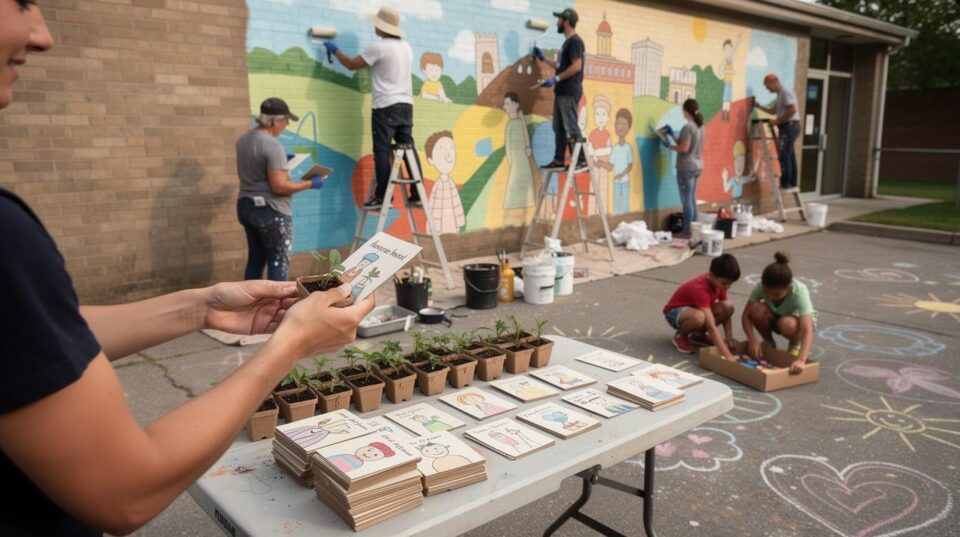
Community art projects thrive when they address actual needs rather than serve as decoration alone. The San Francisco Museum of Modern Art attracts thousands annually, but the initiatives that transform neighborhoods operate at smaller, localized scales. Kindness Rocks campaigns place hand-painted stones in parks and on trails, inviting passersby to pause and participate in something tangible. These projects work because they require minimal resources, welcome participation from all skill levels, and create visible markers of community care. Open studio tours in neighborhoods like RISD’s architecture showcase connect residents directly with artists, building relationships that extend far beyond the gallery.
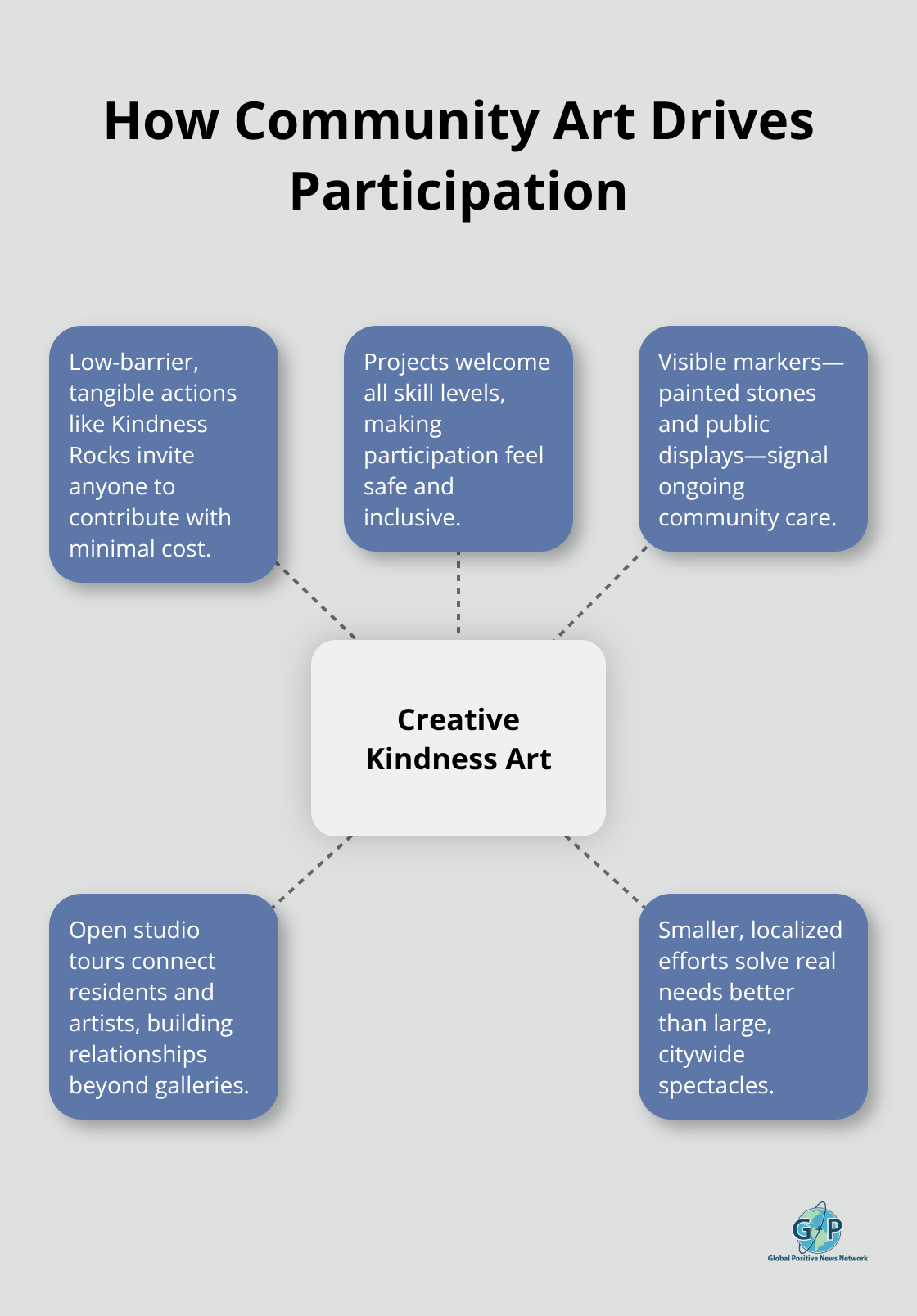
When art becomes a conversation starter between neighbors rather than something to observe passively, it shifts from entertainment to community infrastructure.
Health Outcomes From Volunteer Work
Volunteer programs deliver measurable health outcomes that justify the effort required to organize them. Research shows that volunteering offers significant health benefits, especially for older adults. Meditation practices are associated with an increase in positive affect and a decrease in negative affect. The 2024 Kindness Effect Summit identified kindness as a potential vital sign for social-emotional wellness, suggesting that brief kindness surveys could become routine health assessments. These findings demonstrate that volunteer work produces tangible benefits beyond emotional satisfaction.
How Local Businesses Amplify Impact
Local business owners amplify impact when they tie giving to their core operations rather than treat charity as separate from their work. A bookstore that donates used inventory to libraries simultaneously supports literacy, clears inventory, and strengthens community ties. Coffee shops that host poetry readings or open mic nights provide free venues where local talent performs, reducing barriers to cultural participation. These businesses report stronger customer loyalty and employee retention because staff feel connected to meaningful work. The framework works best when generosity aligns with what the business already does well, which means your community’s next creative kindness initiative could start with a conversation with a local business owner who already shares your values.
How Kindness Physically Heals Communities
The Survival Advantage of Regular Generosity
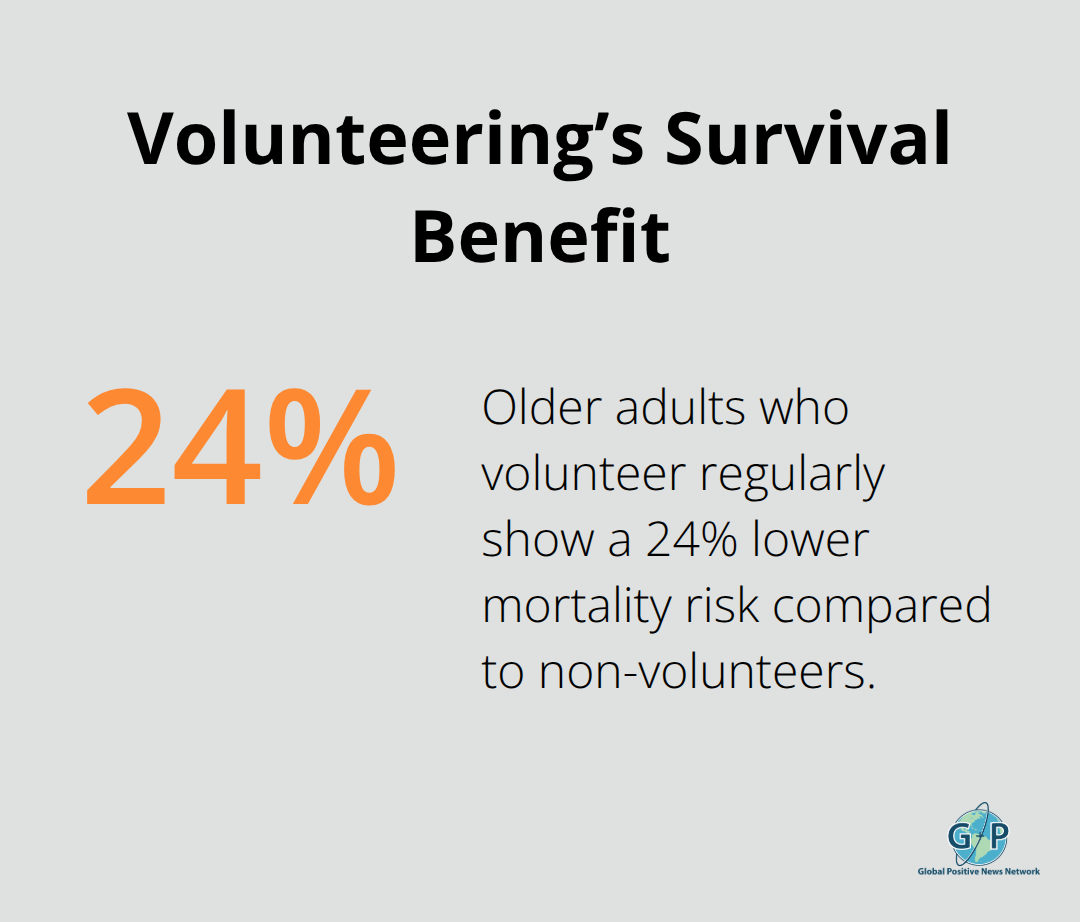
Isolation kills. The data is stark: older adults who volunteer regularly show a 24% lower mortality risk compared to those who don’t, according to research on kindness and longevity.
This isn’t metaphorical wellness-it’s measurable survival. When you organize a community art project or host an artist date with neighbors, you activate the vagus nerve through acts of kindness, which increases feelings of altruism and social connectedness. Brief loving-kindness practices lasting just 7 to 15 minutes daily help nurses report both physical and emotional health improvements. The mechanism works like this: when people engage in regular acts of service, pain interference with daily activities drops significantly, and self-compassion directly correlates with lower pain disability. This means the person organizing the Kindness Rocks campaign in your neighborhood isn’t just improving others’ moods-they’re literally reducing their own chronic pain through the act of generosity.
How Relationships Amplify Mental Health Gains
The mental health payoff compounds when kindness builds actual relationships rather than remaining anonymous gestures. Friendships strengthened through kindness acts produce greater happiness, resilience, and adaptive coping because they deliver genuine emotional support and shared time. When a local business owner invites community members to poetry readings or art showcases, they create the conditions for cross-group friendships that shift attitudes and reduce prejudice. The 2024 Kindness Effect Summit positioned kindness as a potential vital sign for social-emotional wellness, suggesting that a simple 3-minute kindness survey could become part of routine health assessments alongside blood pressure checks. This reframing matters because it moves kindness from optional lifestyle choice to medical necessity.
The Ripple Effect Beyond Direct Participants
Witnessing acts of kindness boosts bonding behaviors and increases oxytocin levels, meaning the ripple effect extends to people who simply observe generosity in action. A single kind gesture (whether a painted stone left on a trail or a free poetry reading at a local café) influences observers to engage in their own prosocial acts. Communities that prioritize creative kindness initiatives-whether through art projects, volunteer programs, or business partnerships-implement a proven health intervention that works across age groups and socioeconomic backgrounds. These measurable health outcomes raise an important question: what practical steps can individuals actually take to launch their own kindness projects?
Starting a Kindness Project in Your Community
Identify One Specific Problem Your Neighbors Actually Face
The gap between wanting to launch a creative kindness initiative and actually doing it comes down to one thing: knowing exactly where to start. Most people fail because they try to solve everything at once instead of identifying one specific problem their community actually faces. Walk through your neighborhood and talk to residents directly. Ask seniors what isolates them most, ask parents what their kids lack access to, ask service workers what would make their jobs feel less invisible.
Once you’ve identified a real problem-maybe it’s that your neighborhood has no public art, or elderly residents rarely interact with younger people, or local talent has nowhere to perform-you can build backward from that need. Document what you hear in conversations. Write down names of people who express frustration or longing. These conversations become your founding group. A community art project succeeds when it solves isolation. A volunteer program works when it fills a genuine service gap. A business partnership thrives when it aligns with what that owner already cares about.
Open mic nights at coffee shops succeeded because local performers had nowhere else to share work. Start with one specific problem your neighbors actually mentioned to you, not what you think they should want.
Leverage Existing Resources and Institutions
Organizing resources happens fastest when you leverage what already exists rather than starting from zero. Reach out to local businesses first-they have space, they have customers, and many want to strengthen community ties without knowing how. A bookstore might donate shelf space for a community art display in exchange for foot traffic. A library might host volunteer training sessions for free. Schools often have unused classroom space after hours. Churches, community centers, and recreation departments have budgets specifically for community programming. Contact your city’s parks department about placing art installations on public land.
When you approach these institutions, come with one specific ask, not a vague request for support. Don’t say you need help with a kindness project. Instead, say you want to organize a volunteer group that paints a mural on the community center wall on Saturday mornings, and you need permission and possibly paint supplies. Concrete requests get concrete answers.
Build Your Volunteer Team Through Existing Networks
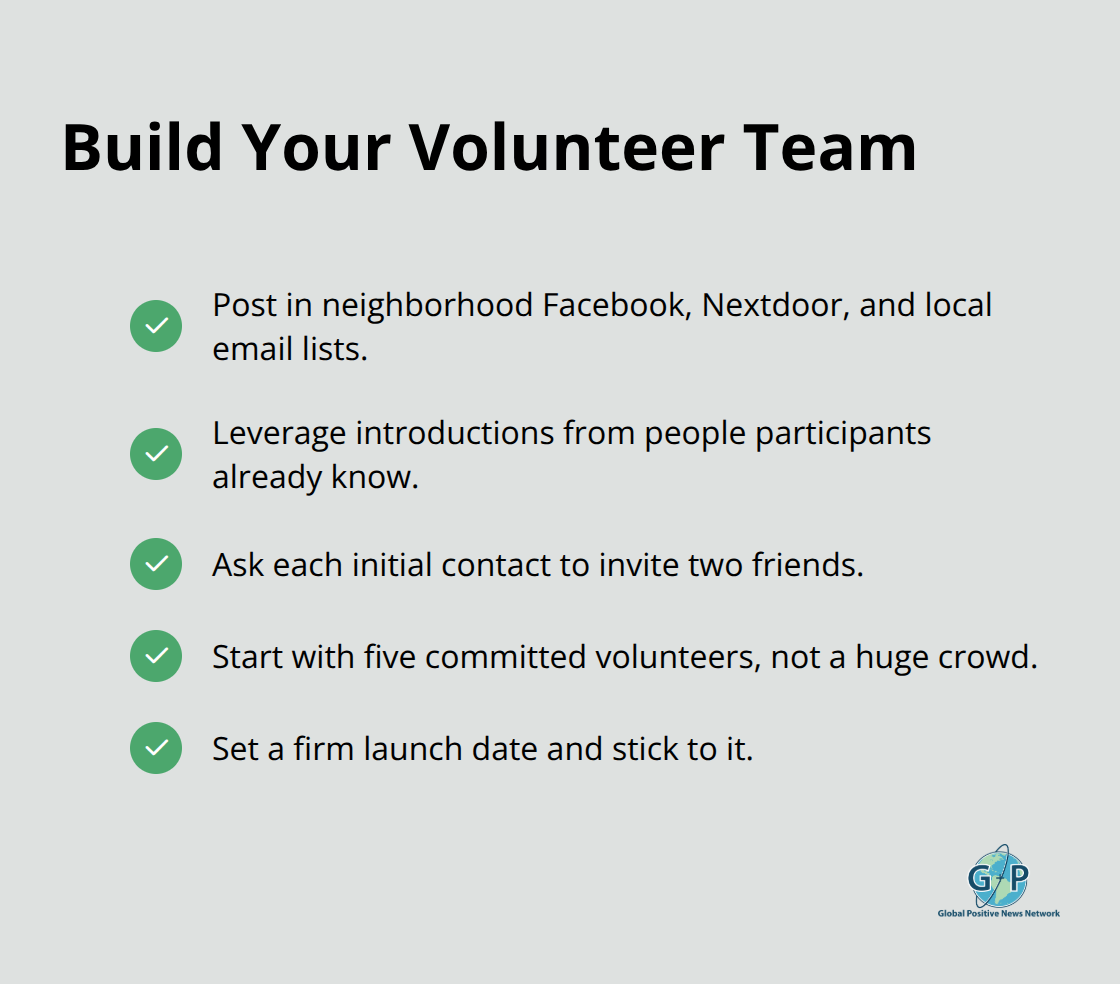
Recruit volunteers through the networks that already exist: neighborhood Facebook groups, NextDoor, local parent groups, church bulletins, and community email lists. Research shows that people join initiatives when they hear about them from someone they already know, not from strangers. Ask your initial conversation partners to invite two people each. Start small-five committed volunteers outperform fifty people who feel obligated. Set a specific launch date and stick to it.
Vagueness kills momentum.
Amplify Your Impact on Social Media
Social media amplifies reach only after you’ve built something real to share. Post photos of your first random acts of kindness before and after, or video from your first poetry reading, or testimonials from volunteers who felt less isolated after joining. Use hashtags that match existing kindness movements like #RAKWeek or #WorldKindnessDay to connect with broader networks. Your social media content becomes proof that kindness works in your specific neighborhood, which motivates others to participate.
Final Thoughts
Communities thrive when kindness through creativity becomes the default rather than the exception. Neighborhoods with active creative kindness initiatives report lower isolation, stronger social bonds, and measurable health improvements that extend far beyond emotional satisfaction. Individual actions create lasting change because they shift how people see themselves and their neighbors-a single painted stone on a trail inspires someone else to create one, and a poetry reading at a local café becomes a weekly gathering.
Start by identifying one real problem in your neighborhood, then leverage existing spaces and networks to address it. Recruit volunteers through people you already know and document what you build to share with others. Connect with broader kindness movements happening right now (World Kindness Day arrives November 13, 2026, and RAK Week runs February 14–20, 2027) to gain momentum and community support.
We at Global Positive News Network believe your neighborhood is waiting for exactly what you can create. Visit Global Positive News Network to find stories of communities transformed by kindness and discover resources that fuel your own initiatives.
Having a hard day?
The 2 Minute Hope Reset is a short free guide with three small practices for the days that feel heavy. Two minutes each, nothing to keep up with.
Get the free guideExplore more positive news:
Enjoying stories like this?
Global Positive News Network is reader-supported. If you’d like to support the mission, you can visit the Official GPNN store.