

Most people chase productivity hacks and expensive wellness programs, but they miss something simpler: gratitude works. Research shows that a consistent gratitude daily routine reduces anxiety, sharpens focus, and builds emotional strength-without requiring hours of your time.
At Global Positive News Network, we’ve seen how small daily practices transform mental clarity. This guide gives you concrete methods to build a routine that actually sticks.
How Gratitude Rewires Your Brain for Calm and Focus
The Neuroscience Behind Gratitude
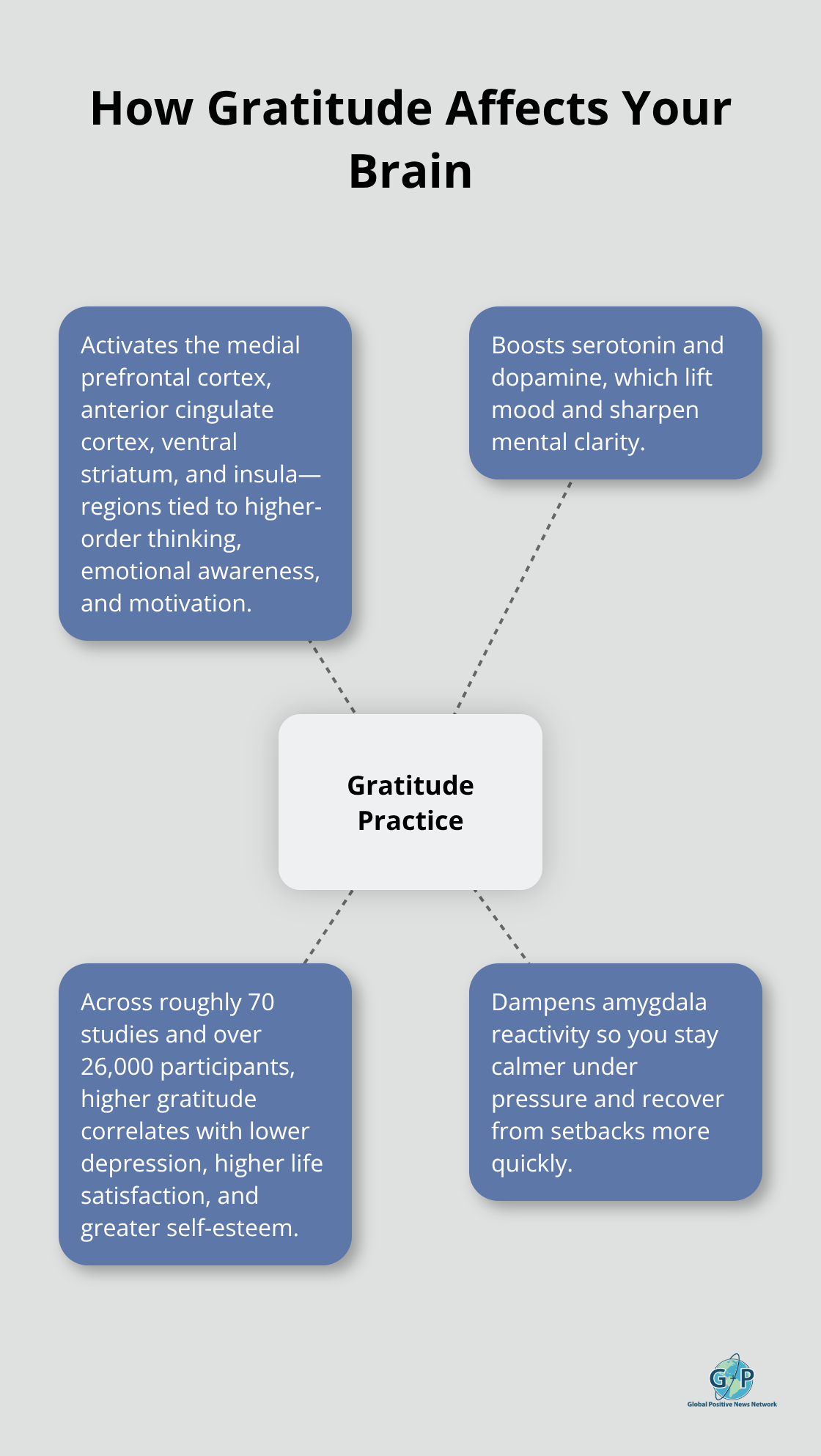
Gratitude physically changes how your brain processes stress and attention. When you practice gratitude consistently, your brain activates the medial prefrontal cortex, anterior cingulate cortex, ventral striatum, and insula-regions responsible for higher-order thinking, emotional awareness, and motivation. Your limbic system responds by boosting serotonin and dopamine, the neurotransmitters that directly improve mood and mental clarity. This isn’t theoretical. Research covering about 70 studies with more than 26,000 participants links higher gratitude with lower depression, higher life satisfaction, and greater self-esteem.
How Your Brain Responds to Stress
The mechanism works through your amygdala, the brain’s threat detector. When you acknowledge what you’re grateful for, your amygdala becomes less reactive to stress. This means you stay calmer under pressure and recover faster from setbacks. Gratitude may influence diastolic blood pressure by increasing parasympathetic tone, demonstrating that the mental shift translates into measurable physical changes. Your parasympathetic nervous system activates, lowering your heart rate and breathing rate. People who practice gratitude report fewer headaches, digestive issues, and infections-the body simply functions better when stress hormones like cortisol drop.
Measurable Results in Six Weeks
Fifteen minutes a day, five days a week, for at least six weeks produces measurable mental wellness benefits. Many people see results faster by pausing before saying thanks and specifying exactly what they’re grateful for-this deepens awareness and strengthens neural pathways. When frustration hits, redirect your thoughts to a positive aspect of the situation to break negative spirals before they take hold. You can feel anxious and grateful simultaneously; gratitude does not invalidate difficult emotions. Sleep improves because your brain experiences less stress and fewer negative thoughts at bedtime. Focus sharpens because dopamine-driven attention naturally improves.
Building the Habit That Sticks
Consistency matters more than the method. Weave grateful thoughts into everyday thinking and actions to make the habit natural rather than forced. Start small with a dedicated gratitude journal or a mirror practice where you note five things you value about yourself. Share gratitude with others through quick notes or dinner conversations to strengthen the habit and social bonds simultaneously. These small actions create the foundation for lasting change. The next step involves structuring these practices into your actual daily routine-morning, midday, and evening rituals that fit seamlessly into your life.
How to Structure Your Day Around Gratitude
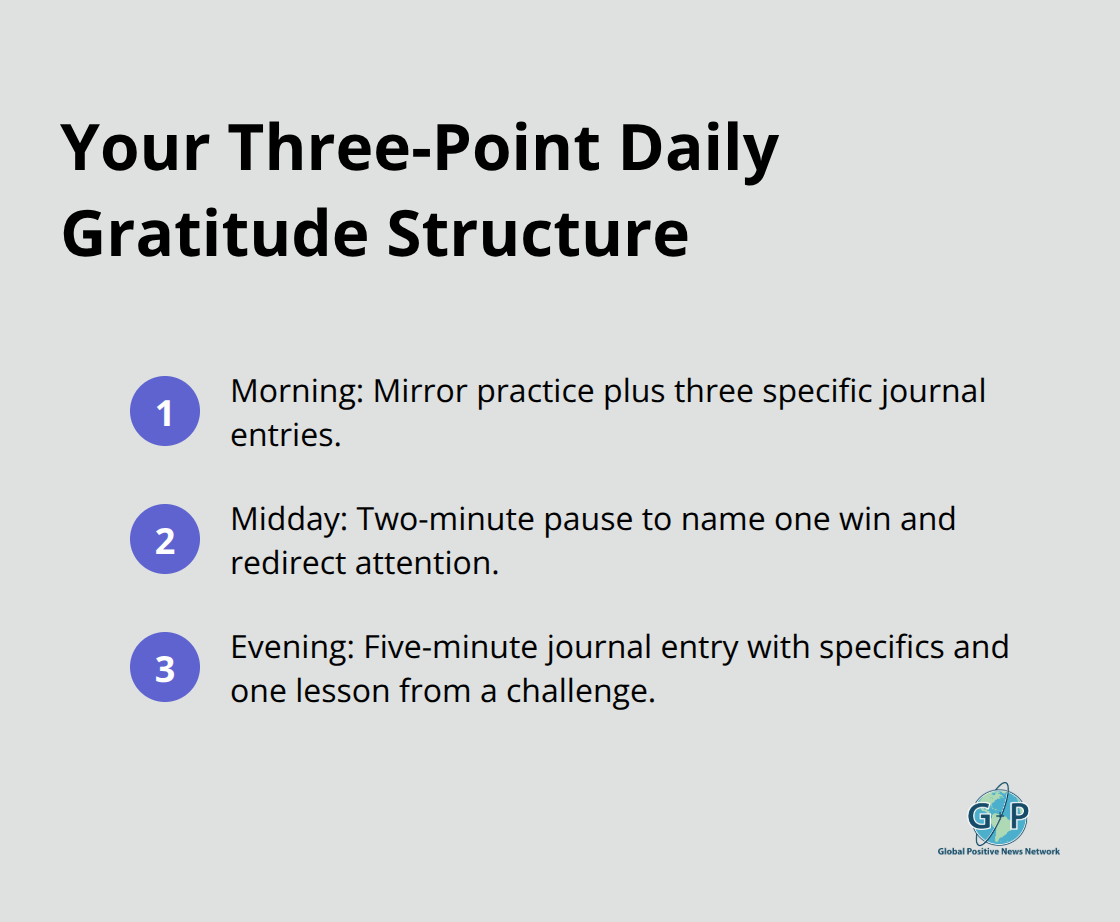
The timing of your gratitude practice matters as much as the practice itself. Morning gratitude sets your nervous system toward calm before stress accumulates. Midday reflection prevents the afternoon mental fog that derails focus. Evening journaling processes the day so your brain doesn’t cycle through problems at night. This three-point structure works because it interrupts stress at different stages rather than trying to fix everything at once.
Start Your Morning Before Stress Builds
You should start your morning with five minutes before checking your phone. Stand in front of a mirror and name five specific things you value about yourself, not generic affirmations. This activates your prefrontal cortex before cortisol spikes from checking emails. Morning gratitude practices reduce anxiety by keeping attention focused on the present rather than dwelling on upcoming tasks. After your mirror practice, write three concrete things you’re grateful for and why in a dedicated journal. Specificity matters-instead of writing grateful for family, write grateful that my partner made coffee this morning because it showed they were thinking of me. This precision deepens neural pathways far more than vague entries.
Reset Your Focus at Midday
At midday, you should take a two-minute pause between tasks. Step away from your desk or workspace and name one thing that went well in the last few hours, no matter how small. This breaks the negative spiral pattern that typically builds through the afternoon. People who practice this midday reset report sharper afternoon focus because dopamine reinforces the positive moment rather than letting stress accumulate unchecked. If frustration hits during your workday, redirect your attention to a positive aspect of the situation immediately. This active redirection trains your amygdala to respond less reactively to pressure.
Process Your Day Before Sleep
Evening journaling should happen at least two hours before bed. You should write about three moments from your day with specific details about why each mattered. Include one challenge and what you learned from it, since gratitude does not mean ignoring difficulty. This processing prevents rumination at bedtime and supports the sleep quality improvement that comes from fewer negative thoughts cycling through your mind. Keep your journal entries brief-three to five sentences per moment-so the practice stays sustainable long-term. Consistency matters more than length, and fifteen minutes daily across all three sessions produces measurable results within six weeks.
Once you establish this three-point rhythm, you’ll notice that your nervous system responds faster to stress and your focus sharpens throughout the day. The next step involves selecting the right tools and frameworks that make these practices stick without requiring willpower or complicated systems.
How to Make Your Gratitude Practice Stick
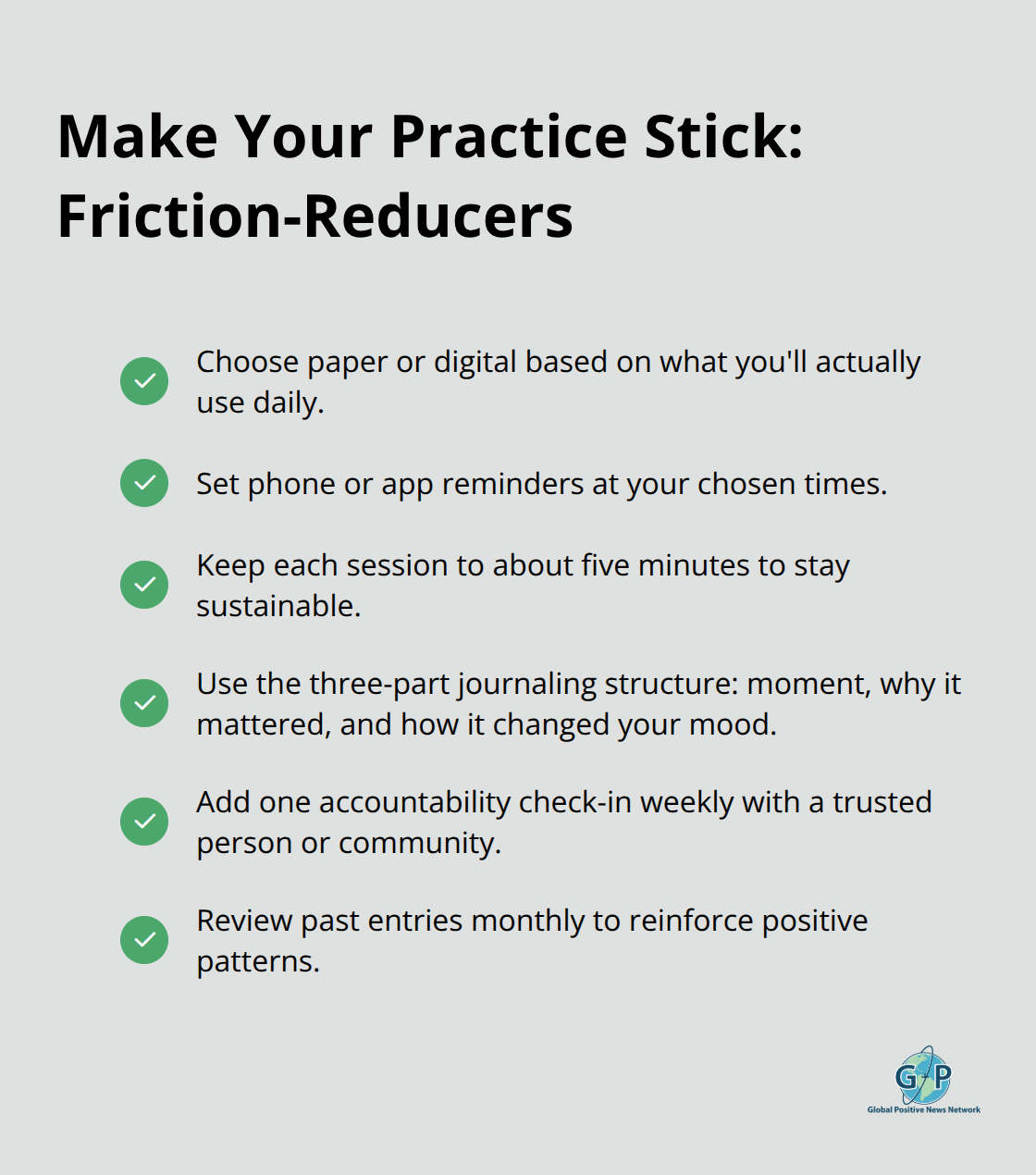
The most effective gratitude systems work because they remove friction, not because they’re complicated. Your mirror practice and journaling take fifteen minutes daily, but consistency depends on selecting frameworks that fit your actual life rather than forcing your life around the practice. Structure matters more than motivation.
Research shows that keeping a gratitude journal positively affects biomarkers associated with heart disease risk when the practice becomes automatic. This means selecting tools that match how you already work, not tools that demand you change everything about your routine. A paper journal works better than a digital app if you hate typing. A phone reminder works better than willpower if you forget without prompts. The framework exists to serve you, not the other way around.
Create a Simple Journaling Structure
Start with a three-part journaling structure that takes five minutes per session. First, write the specific moment you’re grateful for with concrete sensory details: what you saw, heard, or felt. Second, write why that moment mattered to you personally, connecting it to your values rather than generic reasons. Third, note how that moment changed your mood or perspective in that exact moment. This structure activates your brain’s emotional awareness regions far more effectively than vague gratitude entries.
Many people abandon journaling because their prompts are too open-ended, leaving them staring at a blank page. Instead, use targeted prompts like: What small action did someone take today that showed they cared? What problem did I solve that felt good? What moment made me laugh or feel calm? What did I learn about myself today? These specific questions bypass the mental friction that kills consistency. Your midday reset requires zero journaling, just a two-minute mental pause where you name one win. Your evening session gets the five-minute structured entry. That’s it. If you miss a day, you simply resume the next day without guilt or restarting. Research on habit formation shows that one missed day doesn’t derail progress; only repeated abandonment does.
Choose Tools That Match Your Preferences
Digital tools should amplify consistency, not replace the practice. Apps like Stoic, Reflectly, or Day One offer reminders at your chosen times and preserve your entries for long-term review. The reminder function matters most because your brain defaults to stress patterns without external cues. However, the app itself doesn’t create the benefit; your actual writing and reflection do. Many people waste time searching for the perfect app when a simple notebook and a phone alarm work identically well. Choose based on whether you prefer digital or paper, not based on app features.
One critical advantage of digital journals is the ability to reread past entries over time. Periodically reviewing your previous gratitude moments reinforces their emotional impact and reminds your brain of patterns in what matters to you. This review process strengthens neural pathways more than initial writing alone. If you choose paper, take five minutes monthly to reread your journal entries aloud or share them with someone you trust. This amplifies the long-term mental health benefits beyond what writing alone produces.
Build Accountability Into Your Practice
Accountability transforms consistency from a personal struggle into a social commitment. Sharing your gratitude practice with one trusted person (whether a partner, friend, or colleague) increases follow-through dramatically. This doesn’t mean sharing your entire journal; it means telling someone your practice exists and checking in weekly about whether you maintained it. Research shows that public accountability increases success rates compared to private goals.
You can also join communities focused on gratitude or mental wellness through platforms like Reddit communities dedicated to gratitude practice or local wellness groups that meet weekly. These communities provide both accountability and normalization; you realize you’re not alone in struggling with consistency. Community support works best when it’s low-pressure and judgment-free. You’re sharing a practice, not competing or confessing failures. The social connection itself becomes part of the mental health benefit because expressing gratitude with others strengthens social bonds and boosts oxytocin, the hormone that enhances trust and reduces anxiety. Start with one accountability method: either one person you check in with weekly or one online community you engage with monthly. Adding multiple accountability layers often creates overwhelm rather than improvement.
Final Thoughts
Your gratitude daily routine works because it interrupts stress at three critical points throughout your day rather than trying to fix everything at once. The morning mirror practice activates your prefrontal cortex before cortisol spikes, the midday reset prevents afternoon mental fog from derailing your focus, and evening journaling processes the day so your brain doesn’t cycle through problems at night. This structure produces measurable results within six weeks when you commit to fifteen minutes daily, five days weekly.
Research covering 70 studies with over 26,000 participants shows that consistent gratitude practice lowers depression, increases life satisfaction, and strengthens self-esteem. Your amygdala becomes less reactive to stress, meaning you stay calmer under pressure and recover faster from setbacks. Sleep improves because your brain experiences fewer negative thoughts at bedtime, and your cardiovascular system benefits through better sleep, reduced stress hormones, and lower blood pressure.
Starting your routine requires only three decisions: choose paper or digital journaling, select one accountability method, and commit to the three-point daily structure. You don’t need expensive apps or complicated systems-you need consistency and specificity in what you write about and why it matters to you personally. Visit Global Positive News Network to explore more resources that support your journey toward a calmer, more focused life.
Having a hard day?
The 2 Minute Hope Reset is a short free guide with three small practices for the days that feel heavy. Two minutes each, nothing to keep up with.
Get the free guideExplore more positive news:
Enjoying stories like this?
Global Positive News Network is reader-supported. If you’d like to support the mission, you can visit the Official GPNN store.