

How you start your morning shapes everything that follows. At Global Positive News Network, we’ve found that morning positivity practices aren’t luxuries-they’re foundational tools that rewire your brain for better focus, lower stress, and genuine emotional resilience.
This guide walks you through proven techniques, the science backing them, and the specific tools that make them stick.
Three Practices That Shift Your Morning Mindset
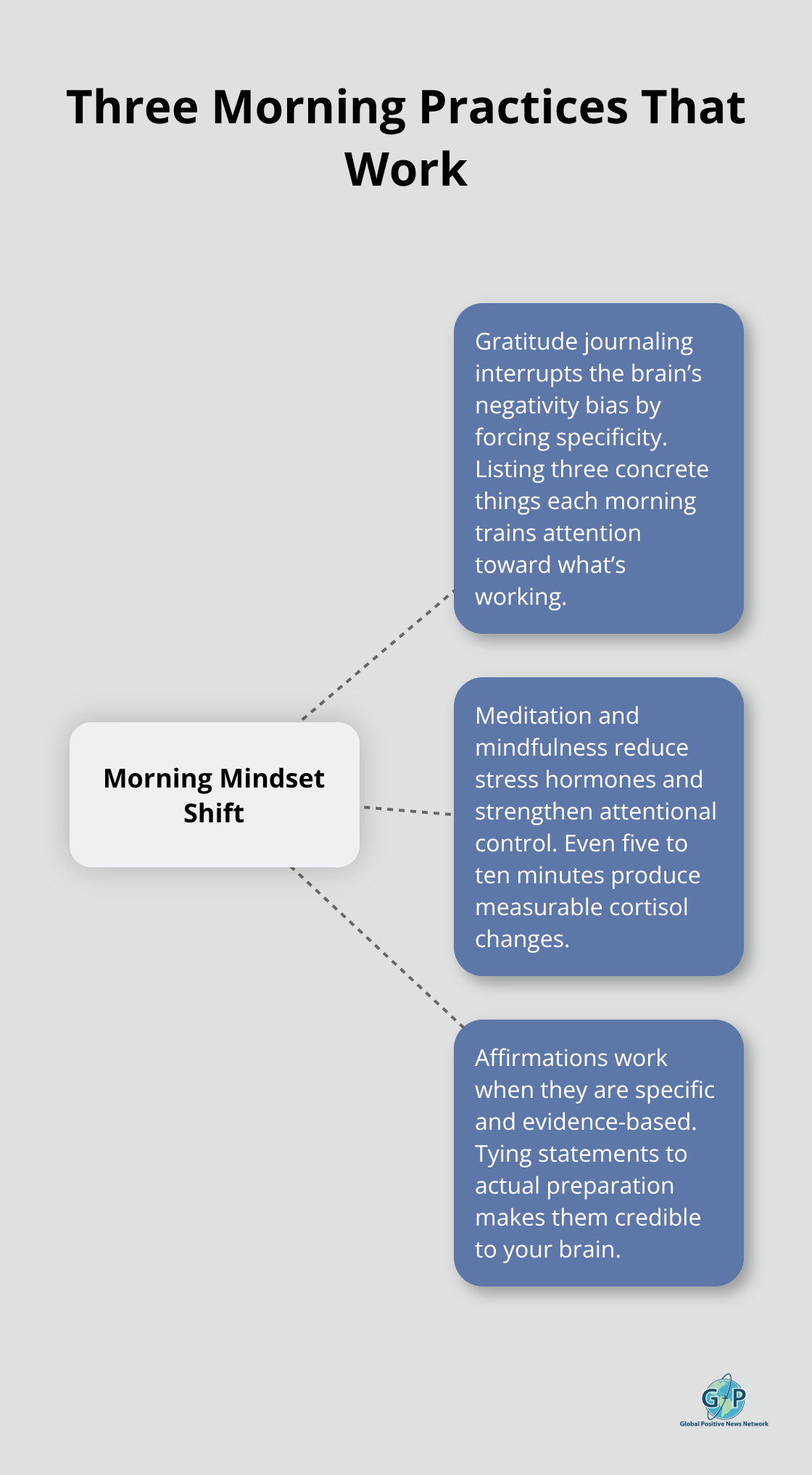
Gratitude Journaling Rewires Your Brain
Gratitude journaling interrupts the brain’s default negativity bias. Research shows that gratitude interventions lead to greater feelings of gratitude and better mental health outcomes. The mechanism is straightforward: writing forces specificity. Instead of vaguely thinking you’re grateful, you name three concrete things-a warm cup of coffee, your partner’s text from earlier, the fact that you didn’t hit snooze.
This specificity rewires your neural pathways away from rumination. Start with a simple notebook (nothing fancy required) and write for five minutes before breakfast. The goal isn’t eloquence; it’s naming real things that matter to you that morning.
Meditation and Mindfulness Reduce Stress Hormones
Meditation and mindfulness work through a different mechanism. A randomized clinical trial published in JAMA Psychiatry showed that mindfulness-based stress reduction is noninferior to escitalopram in the treatment of anxiety disorders. Morning meditation doesn’t require sitting in silence for an hour. Research indicates that even five to ten minutes of focused breathing produces measurable changes in cortisol levels, the stress hormone.
Apps like Insight Timer or Calm offer guided sessions specifically timed for mornings, and the structure removes decision-making from your routine. The practice trains your attention muscle, making it easier to stay focused on one task instead of jumping between email, news, and worries.
Affirmations Work Best When Specific and Evidence-Based
Affirmations and positive self-talk are the most misunderstood practice because they fail when they’re generic. Saying “I am confident” won’t work if you don’t believe it. Instead, affirmations function best when they’re specific and rooted in evidence. If you’re anxious about a presentation, your affirmation might be “I have prepared well for this meeting and I know my material.” This connects to actual facts about your preparation, making it credible to your brain.
Self-affirmation activates the brain’s reward centers and increases activity in areas associated with self-evaluation. The timing matters too. Speak your affirmations while looking in the mirror right after your meditation or journaling session, when your nervous system is already calmer. The combination amplifies the effect far more than any single practice alone.
Building Momentum Through Consistent Practice
Most people skip affirmations because they feel awkward, but awkwardness fades within two weeks of consistent practice. The neurological shifts become noticeable within three to four weeks (and often sooner for those who combine all three practices). These three techniques work independently, but their real power emerges when you stack them together in sequence. Your morning transforms from a rushed scramble into a structured window where your brain actually shifts toward resilience and focus-which sets the stage for why these habits matter so much for your entire day.
How Morning Practices Shape Your Entire Day
Your Brain’s Peak Performance Window
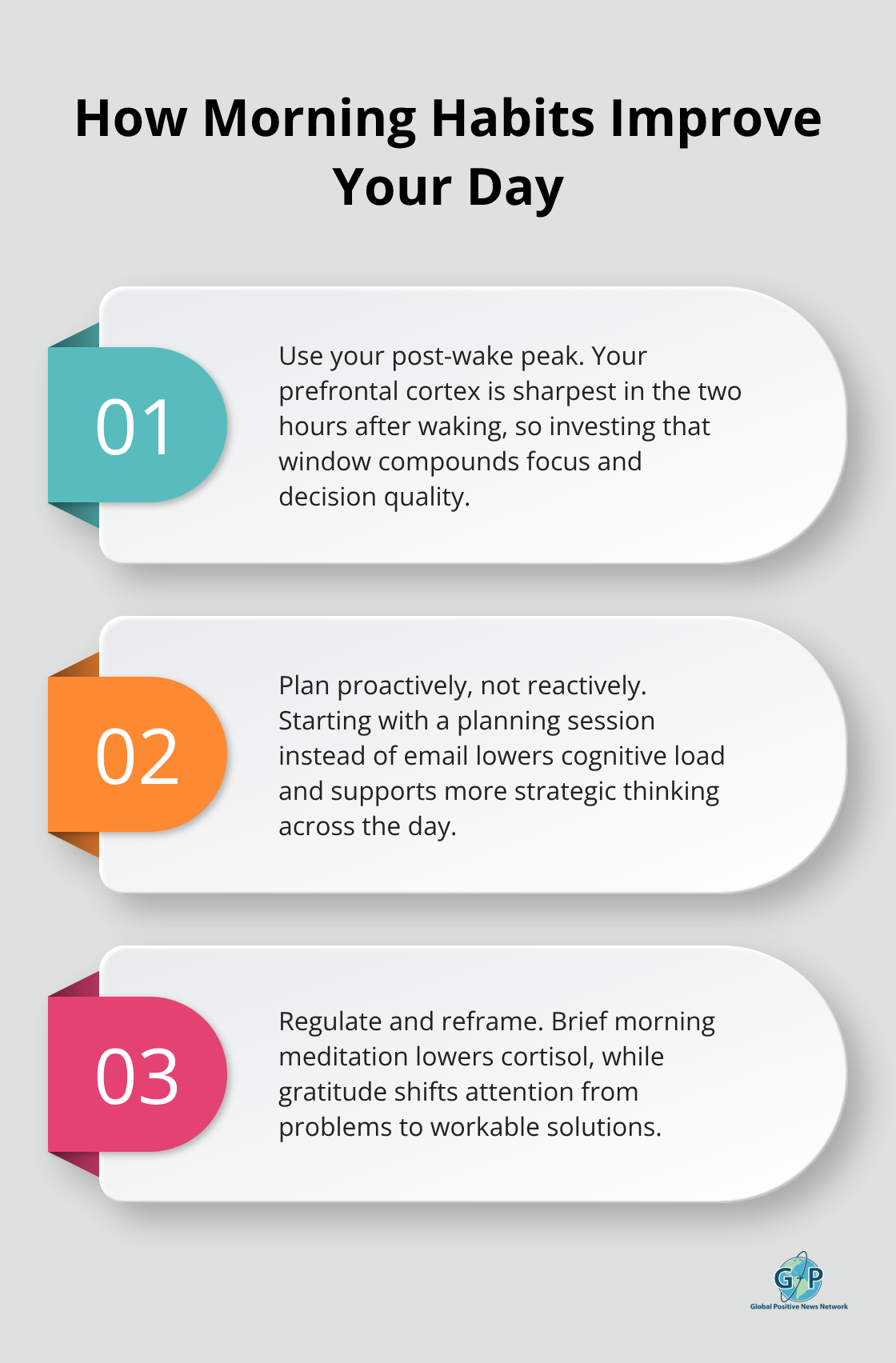
Your morning routine doesn’t just affect the next hour-it fundamentally alters your cognitive performance and emotional baseline for the next eight to ten hours. Your prefrontal cortex, the brain region responsible for focus and decision-making, reaches its sharpest state in the two hours after you wake. When you invest those hours in gratitude journaling, meditation, or affirmations, you prime your brain to handle complexity and stress more effectively. Research from Harvard Business Review demonstrates that people who start their workday with a proactive planning session instead of immediately checking email show significantly lower cognitive load and more strategic thinking throughout the day.
This distinction matters enormously because your mental energy is finite, and morning practices protect it.
How Meditation Regulates Your Nervous System
A study published in JAMA Psychiatry found that mindfulness-based stress reduction produces results comparable to escitalopram in treating anxiety disorders. The five to ten minutes of meditation you practice each morning creates measurable neurological changes that persist throughout your day. The mechanism operates through cortisol reduction-morning meditation lowers your stress hormone baseline, which means you start your workday with your nervous system already regulated. Someone who wakes up, scrolls their phone, and rushes out the door experiences an immediate cortisol spike and spends the entire day playing catch-up. Your regulated nervous system, by contrast, handles frustration and pressure with greater composure.
Gratitude Interrupts Your Brain’s Negativity Bias
When you journal about three specific things you’re grateful for, you interrupt your brain’s natural negativity bias (a survival mechanism that overweights negative information). This single practice shifts your attention toward what’s working in your life rather than what’s broken, and that shift compounds throughout your day. If you encounter a frustrating email at 10 a.m., your brain has already been trained by morning practice to notice solutions rather than catastrophize. Research shows that consistent morning routines reduce decision fatigue and preserve mental energy for high-stakes moments later in the day.
The Real-World Impact on Stress and Performance
People who maintain morning positivity practices report fewer stress-related health issues, better work performance, and stronger emotional regulation during conflict. The evidence suggests that thirty to sixty minutes invested in morning practices yields returns across your entire waking day, making it arguably the highest-ROI time investment most people can make. This neurological foundation explains why the tools and products you choose matter so much-they either support your practice or create friction that derails it.
Tools That Actually Support Your Morning Practice
The difference between a morning routine that sticks and one that fizzles comes down to removing friction. Your tools either make the practice effortless or they create enough resistance that you skip it after two weeks.
Meditation Apps That Eliminate Decision-Making
Mindfulness apps like Insight Timer and Calm dominate the meditation space because they offer pre-recorded guided sessions specifically timed for mornings, which eliminates the decision of what to do or how long to sit. Insight Timer’s free tier includes thousands of guided meditations, while Calm’s paid subscription runs about $15 monthly and offers sleep stories and music tracks designed to support nervous system regulation through meditation. Neither app is perfect, but both remove the barrier of staring at a blank wall wondering if you’re doing it right.
Journals That Match Your Actual Habits
For journaling, the most effective tool isn’t an expensive leather-bound notebook-it’s whatever you’ll actually write in. Leuchtturm1917 notebooks cost around $15 and include numbered pages and an index, which appeals to people who like structure. Moleskine offers similar quality at slightly higher prices. A $2 composition notebook works identically well if you’re more likely to use it. The specificity of what you write matters far more than the aesthetic. Write down three things you’re grateful for each morning, and the notebook becomes secondary to the practice itself.
Guided workbooks designed for morning reflection combine journaling prompts with affirmation templates and run between $12 and $20. These work well for people who want structure without overthinking what to write.
Building Your Complete System Without Overthinking
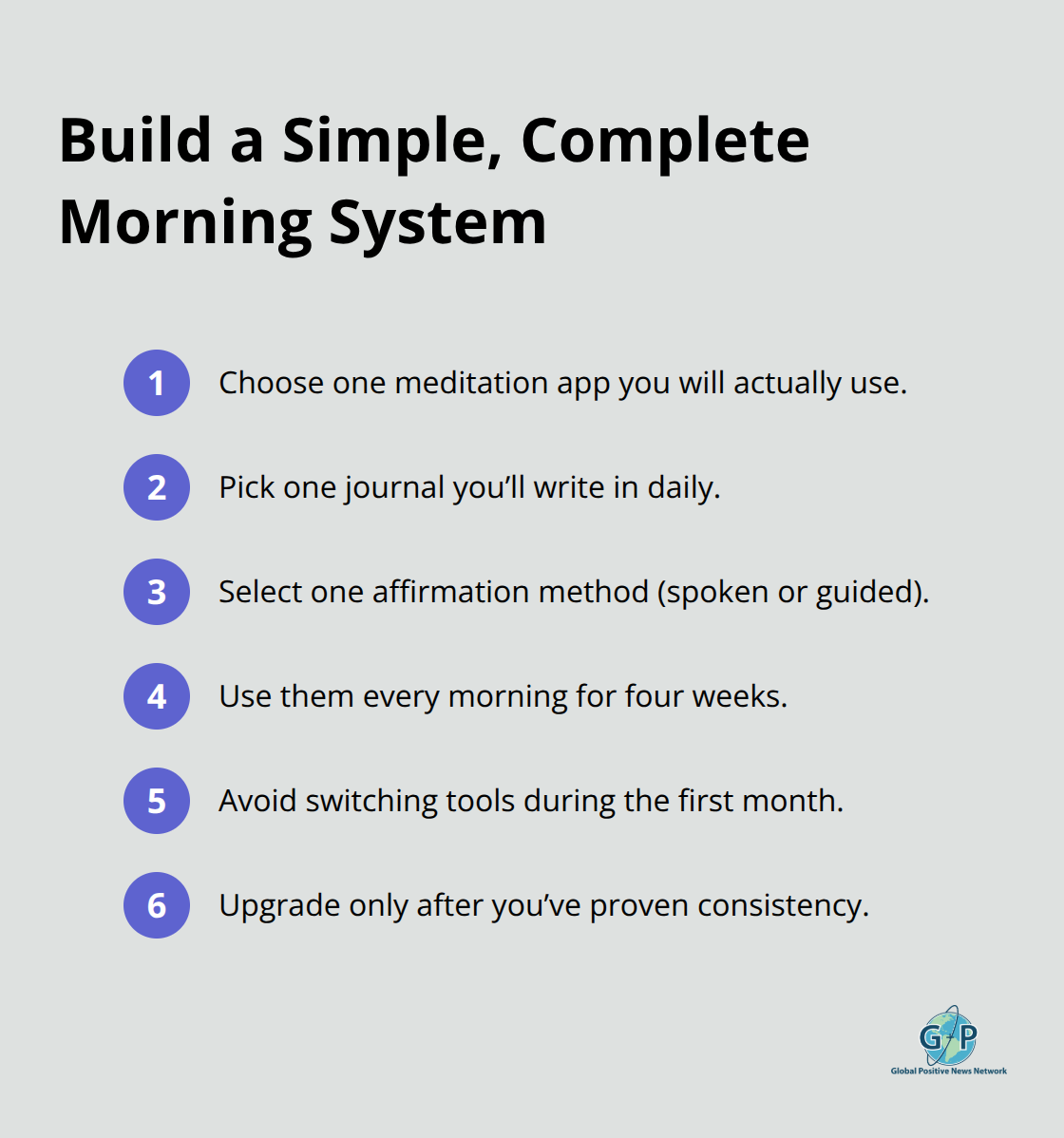
The mistake most people make is buying multiple tools and expecting them to work together seamlessly. You need one meditation app, one journal, and one affirmation method. That’s it. Pairing Insight Timer with a basic notebook and a mirror for your affirmations creates a complete morning system that costs almost nothing and requires zero troubleshooting.
If you want guided affirmations rather than speaking them yourself, affirmation apps offer personalized daily affirmations based on your goals, though subscriptions typically cost around $20 monthly. The real expense comes from overthinking the setup. Most people spend $200 on journals, apps, and wellness products they never consistently use.
Commit to Consistency Before Upgrading
Commit to one tool in each category for at least four weeks before changing anything. Your nervous system needs consistency to rewire itself, and constantly switching apps or notebooks interrupts that process. After four weeks, you’ll know which tools actually fit your life and which ones created friction. That’s when you can confidently invest in upgraded versions or complementary products (if you want them at all).
The neurological shifts from morning practice are real and measurable, but they only happen if your tools get out of the way and let you actually show up. Your positivity-themed products should support your practice, not complicate it.
Final Thoughts
Your morning sets the trajectory for everything that follows. The three practices we’ve outlined-gratitude journaling, meditation, and affirmations-work because they’re grounded in neuroscience, not wishful thinking. When you commit to morning positivity practices, you rewire how your brain processes stress, focus, and emotional resilience.
Four weeks of daily practice produces measurable changes in cortisol levels, attention span, and how you respond to frustration. Six months in, these practices become automatic, and your nervous system stays regulated without conscious effort. Your brain’s peak cognitive window in the two hours after waking transforms from reactive time into protected time, and that protection compounds across years.
Start with one tool in each category-one meditation app, one journal, one affirmation method-and commit for four weeks without switching anything. The barrier isn’t understanding why morning positivity practices matter; it’s showing up on day three when motivation fades. Explore our resources on building sustainable positivity habits to deepen your practice and stay inspired throughout your journey.
Having a hard day?
The 2 Minute Hope Reset is a short free guide with three small practices for the days that feel heavy. Two minutes each, nothing to keep up with.
Get the free guideExplore more positive news:
Enjoying stories like this?
Global Positive News Network is reader-supported. If you’d like to support the mission, you can visit the Official GPNN store.