
Communities worldwide are proving that renewable energy isn’t a distant dream-it’s happening right now. At Global Positive News Network, we’ve gathered renewable energy hopeful stories showing how towns, businesses, and neighborhoods are building sustainable futures.
From solar installations in underserved areas to wind projects revitalizing rural economies, real people are taking action. This post shares concrete examples and practical steps you can use in your own community.
How Communities Are Taking Control of Their Energy
Moving Beyond Utility Dependence
Across the globe, communities move beyond waiting for utility companies to build renewable infrastructure. They build it themselves. In rural areas of India, interconnected solar minigrids power homes and businesses with reliable, affordable clean energy, directly boosting livelihoods. Organic Valley, a farmer-owned cooperative, achieved 100% renewable electricity through community solar, proving that agricultural regions can transition entirely from fossil fuels. These aren’t theoretical projects or pilot programs-they’re operational systems delivering real power to real people.
The shift matters because about 80% of the global population lives in fossil fuel net-importing countries, making energy independence a financial and security priority. Communities that generate their own renewable power eliminate vulnerability to price shocks and supply disruptions.
Global Models Proving Scalability
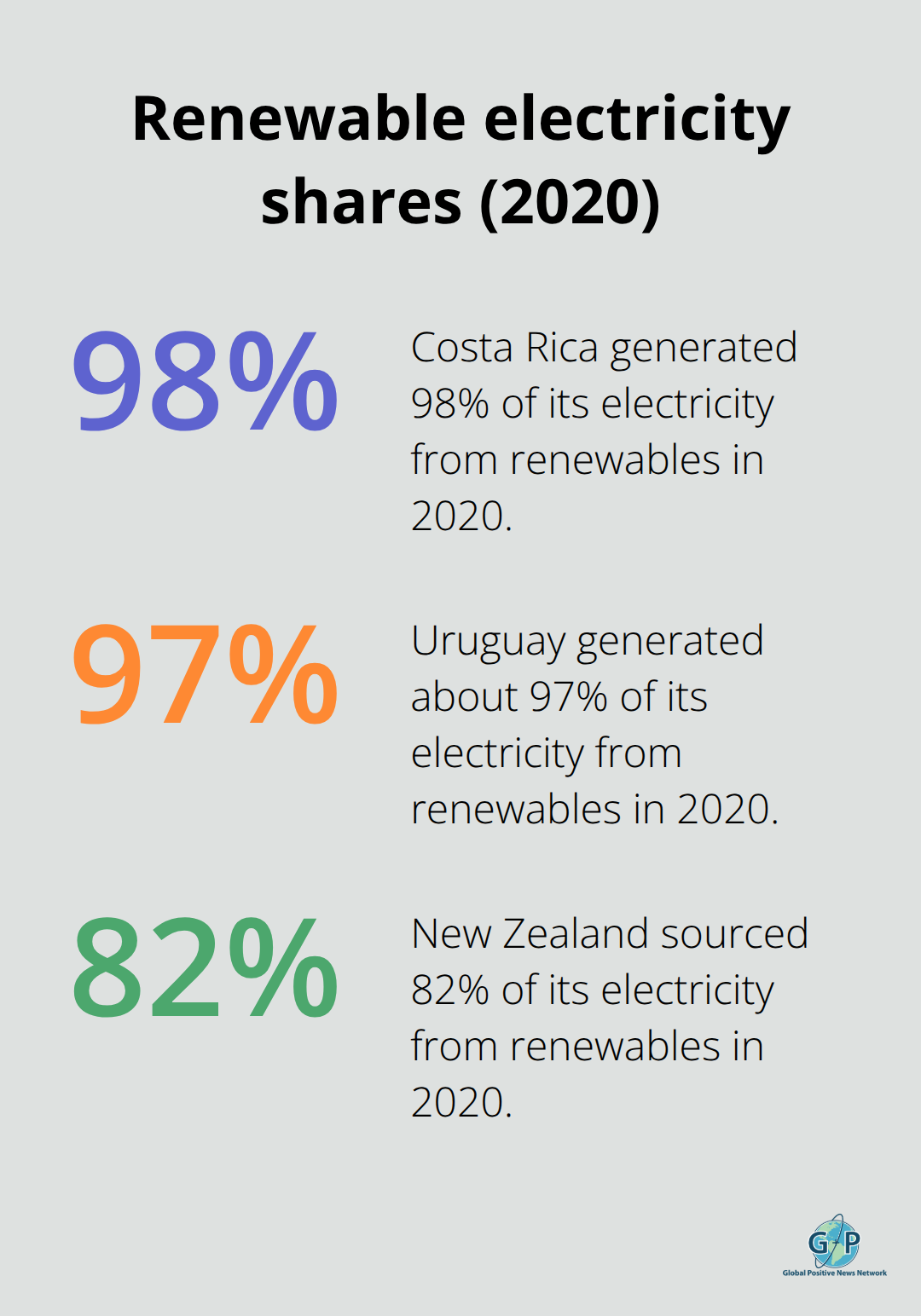
Costa Rica demonstrates what’s possible at scale, generating over 98% of its electricity from renewables as of 2020 and targeting 100% renewable electricity by 2030. Uruguay reached about 97% of power generation from renewables by 2020. New Zealand sourced 82% of its electricity from renewables by 2020 and targets 100% renewable electricity by 2035. These countries prove the model works across different climates and economic conditions.
The Economics Have Shifted
The economic case for community-led renewable projects has transformed dramatically. Over 90% of new renewables now cost less than fossil fuels, with solar and offshore wind proving especially cost-competitive. This cost advantage means communities recover their investment faster and redirect savings into other local needs.
Small towns like Denton, Texas have more wind power per capita than any other U.S. city, illustrating that municipalities don’t need to be wealthy to lead this transition. Farmers install solar on their land, cut operational costs, and gain energy independence-practical benefits that improve resilience during extreme weather and power outages. Small businesses adopt solar systems and see immediate reductions in electricity bills, with payback periods often under seven years.
Employment and Economic Circulation
The clean energy sector already employs about 35 million people worldwide. For every dollar invested in renewable energy, roughly three times as many jobs are created compared to fossil fuel projects. Communities that support local renewable projects don’t just get clean power-they build local employment, keep money circulating within their economies, and develop skilled workforces that attract other green businesses.
These economic realities set the stage for understanding how individual communities and households can participate directly in this transition.
Where Real Communities Prove Energy Independence Works
Remote Communities Eliminate Fossil Fuels Entirely
Kodiak Island, Alaska operates on 100% renewable energy through a microgrid that combines hydro, wind, and storage systems, proving that remote communities with challenging climates can eliminate fossil fuels entirely. El Hierro in the Canary Islands uses hybrid hydro-wind-storage systems to balance variable renewable generation, supplying nearly all its electricity from renewables. These aren’t aspirational targets-they’re functioning systems delivering power reliably. Malmö, Sweden demonstrates how eco-friendly neighborhoods integrate renewables with green buildings and alternative transportation, showing that urban density and sustainability coexist. What separates these communities from others isn’t luck or exceptional geography; deliberate investment in local renewable infrastructure and commitment to energy independence drive their success.
Farmers and Small Businesses Cut Costs While Building Resilience
Farmers adopting solar installations cut operational costs significantly and gain energy independence that protects them during extreme weather and power outages. Jesse’s auto shop installed battery storage alongside solar panels, reducing electricity expenses while gaining resilience during grid disruptions-a practical combination that small businesses across North America increasingly adopt. These real-world examples show that renewable energy delivers immediate financial returns, not just environmental benefits. The payback periods often fall under seven years, meaning business owners recover their investment quickly and redirect savings into growth or community reinvestment.
Community Investment Platforms Scale Local Renewable Projects
Climatize, a U.S. investment platform, funded 22 renewable energy projects across 12 states with more than $10 million invested by a community of over 2,400 members as of September 2025. Investors received at least $2.4 million in principal and interest returns from funded projects.
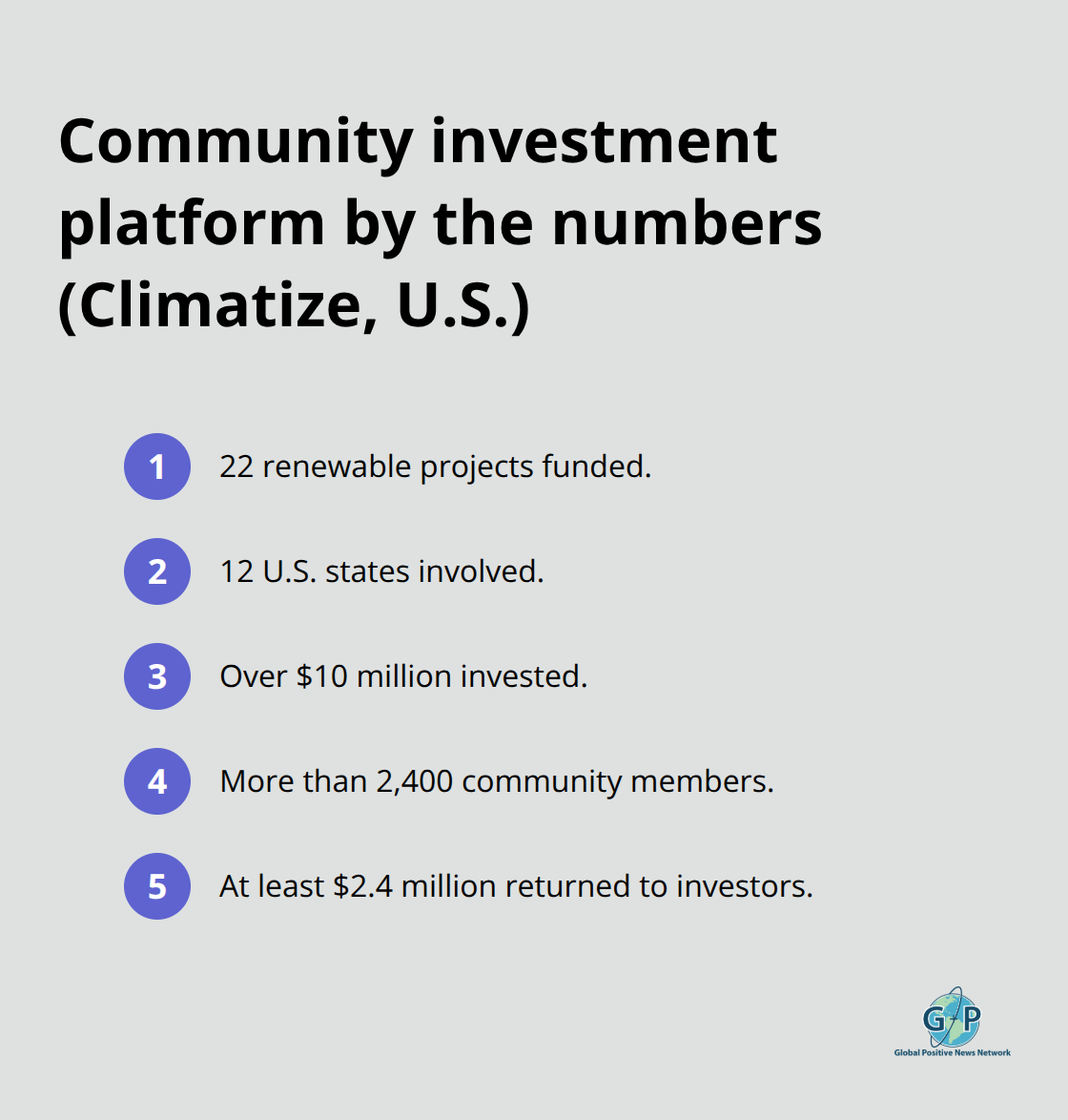
Project types include solar installations on farms, battery storage for auto shops, energy efficiency upgrades for low-income households, and EV charging at community markets. This model proves that communities don’t need to wait for utility companies or government mandates-they can fund renewable projects directly and capture both financial returns and tangible community benefits.
Employment Growth Strengthens Local Economies
The clean energy sector already employs about 35 million people worldwide, with employment growing substantially. For every dollar invested in renewable energy, roughly three times as many jobs emerge compared to fossil fuel projects. Communities that prioritize local renewable development build skilled workforces, attract additional green businesses, and keep capital circulating locally rather than flowing to distant utility companies or fossil fuel suppliers. The International Renewable Energy Agency estimates that 90% of the world’s electricity can come from renewables by 2050, yet communities don’t need to wait for that transition-they can start today with project-level investments that deliver immediate returns.
These success stories across continents and climates reveal a consistent pattern: communities that take control of their energy infrastructure gain financial independence, create local jobs, and build resilience. The next section explores the specific actions your community can take to join this movement.
How Your Community Can Start Building Renewable Energy Today
Solar and Wind Systems: Understanding the Practical Foundation
Solar installation costs have dropped approximately 64-82% over the past decade, making residential and small-business systems genuinely affordable. Cost competitiveness has eliminated the primary barrier that once prevented widespread adoption. Communities should start by conducting a solar assessment for their region using free online tools that calculate potential generation based on roof orientation, weather patterns, and local electricity rates. For wind projects, communities need sustained average wind speeds above 10 mph to justify installation, which limits viability to specific geographic areas but proves highly profitable where conditions align.
The real action starts with obtaining multiple quotes from certified installers in your area, comparing equipment warranties (typically 25 years for panels), and understanding your local utility’s net metering policies, which determine how much credit you receive for excess power generation. Communities serious about scaling these projects should investigate whether your state offers tax credits, rebates, or performance incentives that reduce upfront costs by 20% to 40%. The payback period typically falls between five and seven years, meaning your investment recovers quickly and generates returns afterward.
Community Financing Makes Projects Accessible
Crowdfunding platforms like Climatize have demonstrated that communities don’t need traditional bank loans to fund renewable projects. Climatize funded 22 projects across 12 states with over $10 million invested by 2,400 members, with investors receiving at least $2.4 million in principal and interest returns as of September 2025. This model allows non-accredited investors to participate directly in solar installations on farms, battery storage systems for small businesses, and EV charging infrastructure at community markets.
Green energy cooperatives function differently but achieve similar outcomes: member-owned structures where communities collectively finance, build, and operate renewable installations while sharing financial returns. Your community should explore whether a local cooperative already exists or whether conditions favor starting one. Cooperatives require legal formation, member agreements, and governance structures, but they eliminate profit extraction by outside corporations and keep all financial benefits circulating within your community.
Policy Change Creates Infrastructure for Scale
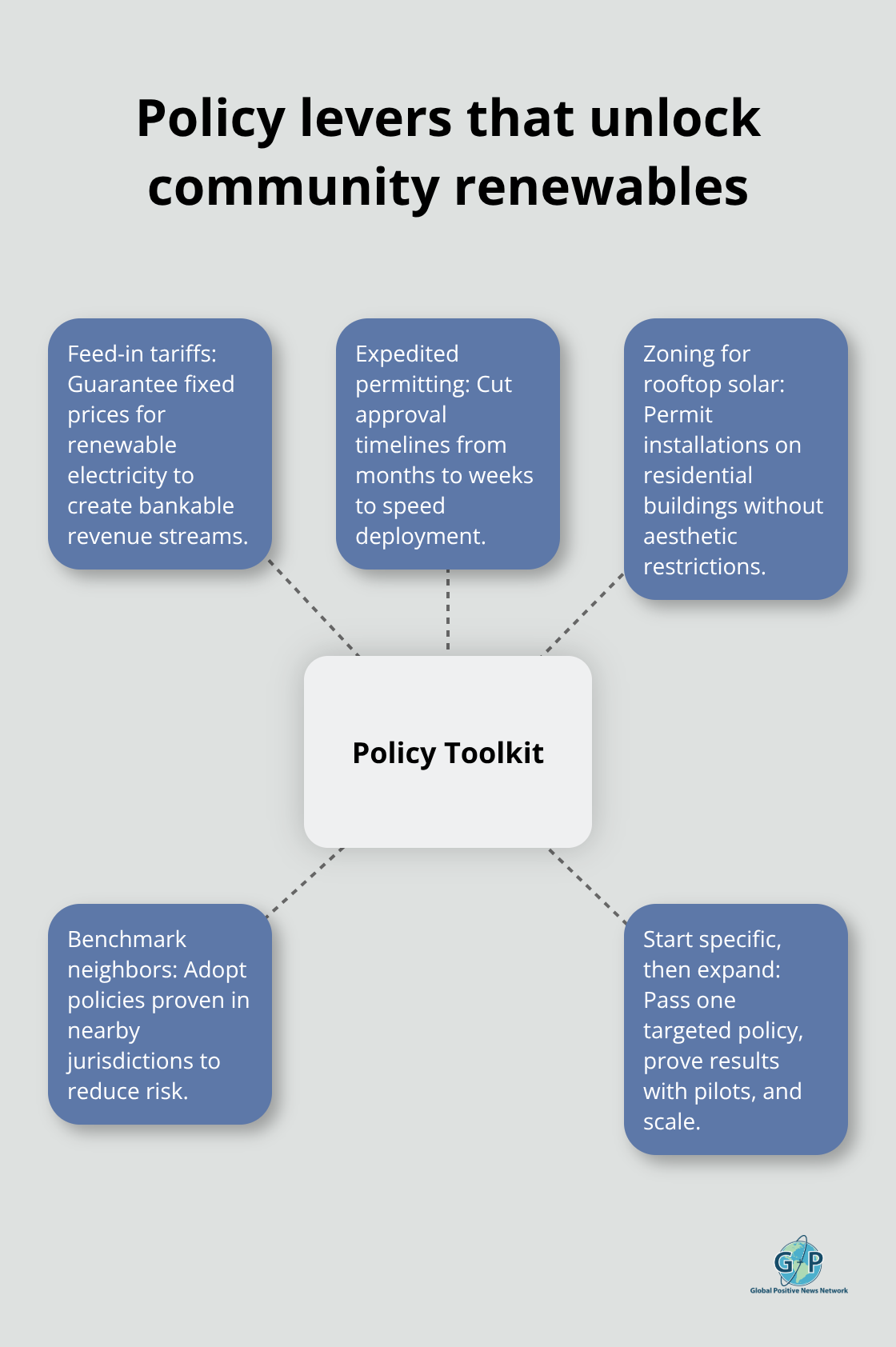
Advocating for renewable energy policies addresses the structural barriers that prevent communities from expanding solar and wind adoption. Specific policies matter far more than general sustainability commitments: feed-in tariff programs that guarantee fixed prices for renewable electricity, expedited permitting processes that reduce approval timelines from months to weeks, and zoning changes that permit rooftop solar on residential buildings without aesthetic restrictions.
Communities should identify which policies your municipality currently lacks and which neighboring jurisdictions have successfully implemented. Request that your city council or county commission adopt these specific policies rather than proposing vague sustainability goals. Renewables could deliver 85% of power generation by 2050, but achieving this requires policy frameworks that remove installation barriers rather than simply encouraging voluntary adoption. Communities that successfully shifted to renewables typically started with one specific policy change, demonstrated results through pilot projects, then expanded to additional policies. This incremental approach proves more politically viable than comprehensive overhauls and generates visible proof that renewable energy delivers financial and employment benefits.
Final Thoughts
The renewable energy hopeful stories throughout this post reveal a fundamental shift happening across continents and climates. Communities worldwide no longer wait for distant governments or utility companies to build sustainable energy systems-they build them themselves, capture financial returns, create local jobs, and prove that energy independence works in practice. Global emissions growth slowed to about 0.8% in 2024 while the global economy grew by more than 3%, demonstrating that economic expansion and emissions reduction move in opposite directions when communities prioritize renewables.
Your community’s role in this transition matters far more than most people realize. Individual solar installations, local policy advocacy, and participation in community investment platforms directly influence whether your region achieves energy independence or remains dependent on fossil fuel imports. The International Energy Agency projects that the net-zero transition will create about 14 million clean energy jobs by 2030, with fossil fuel employment declining by 5 million-your community can capture these opportunities through action today.
Start with one concrete step: assess your roof for solar potential, attend a city council meeting to advocate for expedited renewable permitting, or explore whether a community cooperative exists in your area. Share these renewable energy hopeful stories with your neighbors, local leaders, and community organizations through Global Positive News Network, where communities see proof that sustainable energy works rather than hearing theoretical promises about distant futures.
Having a hard day?
The 2 Minute Hope Reset is a short free guide with three small practices for the days that feel heavy. Two minutes each, nothing to keep up with.
Get the free guideExplore more positive news:
Enjoying stories like this?
Global Positive News Network is reader-supported. If you’d like to support the mission, you can visit the Official GPNN store.