

At Global Positive News Network, we believe in the transformative power of positivity.
Sending positive vibes isn’t just a feel-good phrase; it’s a genuine way to uplift others and create a ripple effect of joy.
In this post, we’ll explore practical ways to boost someone’s mood and the science behind why it works.
The Contagious Nature of Positivity
The Science of Emotional Contagion
Positive vibes transcend mere feel-good concepts; they represent a powerful force that significantly impacts our mental health and the well-being of those around us. Research demonstrates that happiness and other emotions spread between people in direct contact, although it’s unclear if this applies to massive online social networks. This phenomenon, known as emotional contagion, means your mood directly influences the emotions of those you interact with. Your conscious choice to spread positivity not only improves your own mental state but potentially uplifts an entire community.
Positivity as a Mental Health Booster
The impact of positivity on mental health proves profound. Research has shown that physical, mental, and social well-being are important interconnected components for complete health. The cultivation of a positive mindset essentially provides a mental health boost to yourself and others.
Creating a Positivity Ripple Effect
The beauty of spreading joy lies in its multiplicative effect. When you uplift someone’s mood, they become more likely to pass on that positivity to others. This creates a chain reaction of good vibes that can extend far beyond your immediate circle. A simple act of kindness or a shared moment of laughter can set off a domino effect of positivity that touches countless lives.
Practical Steps to Harness Positive Vibes
To harness the power of positive vibes, try incorporating small acts of kindness into your daily routine. Share an inspiring story, offer a genuine compliment, or simply lend a listening ear to someone in need. Every positive interaction holds the potential to create a lasting impact, not just on individuals but on entire communities.
The Role of Media in Spreading Positivity
Media plays a crucial role in shaping our perceptions and emotions. Platforms that focus on sharing uplifting news and stories (such as Global Positive News Network) contribute significantly to the spread of positivity. These outlets provide a counterbalance to the often negative news cycle, offering readers a refreshing perspective and inspiring hope.
As we move forward, let’s explore specific, practical ways to boost someone’s mood and spread those positive vibes far and wide.
Effective Mood-Boosting Techniques
The Art of Active Listening
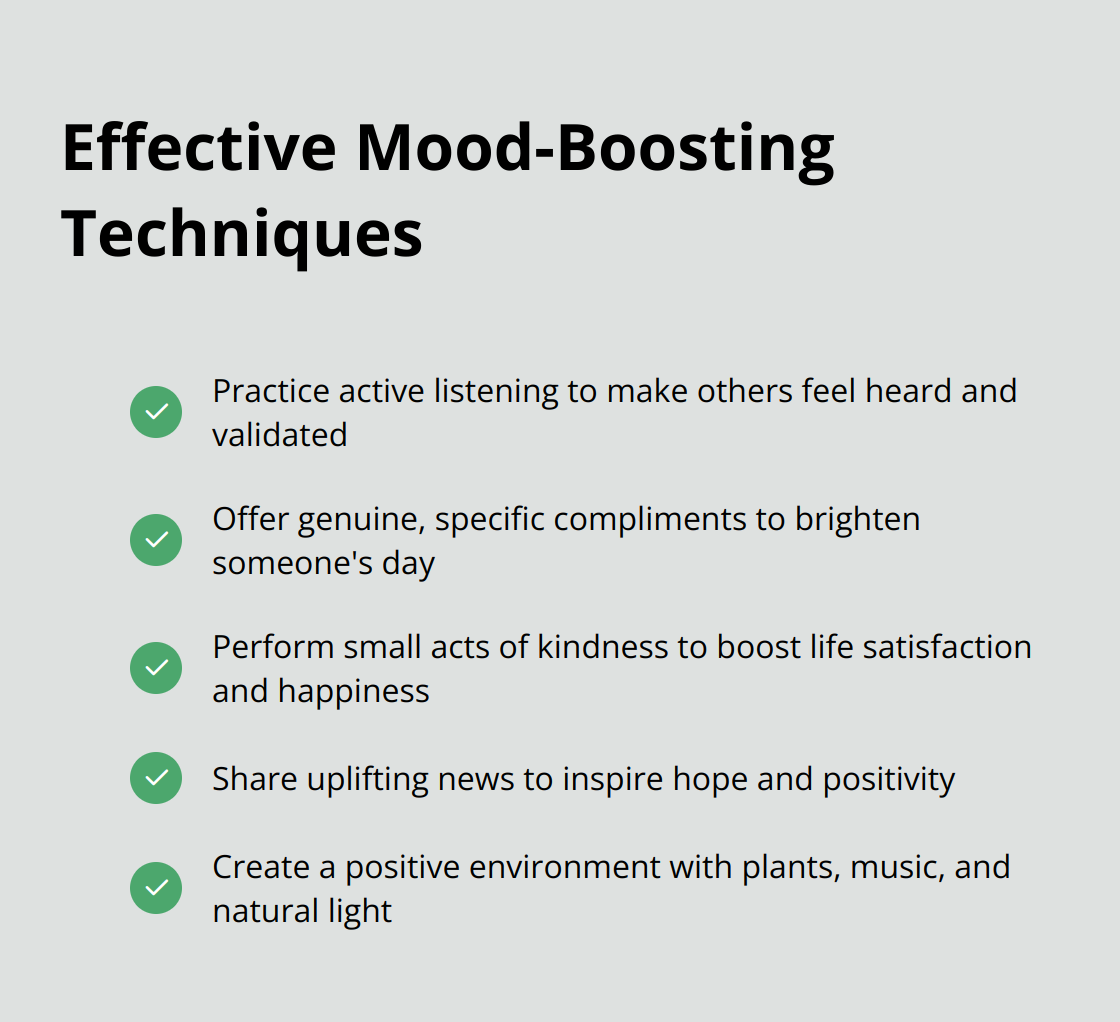
Active listening stands as one of the most impactful ways to boost someone’s mood. This technique involves giving your full attention to the speaker, maintaining eye contact, and providing verbal and non-verbal cues that show engagement. Active listening is a fundamental aspect of professional interaction, and mastery requires cultivating deliberate practice. To practice active listening, repeat key points back to the speaker and ask thoughtful questions. This approach not only helps the person feel heard but also validates their feelings.
The Power of Genuine Compliments
Offering sincere compliments can instantly brighten someone’s day. Research from the National Institutes of Health shows that receiving a compliment activates the same area of the brain as receiving a monetary reward. When giving compliments, be specific and authentic. Instead of a generic “good job,” try “I really admire how you handled that difficult client situation with such patience and professionalism.” This specificity shows that you’ve truly noticed and appreciated their efforts.
Small Acts of Kindness
Surprising someone with a small act of kindness can have a significant impact on their mood. A study published in the Journal of Social Psychology found that performing kind acts boosts life satisfaction and happiness. These acts don’t have to be grand gestures (simple actions like bringing a colleague their favorite coffee, offering to help with a task, or sending a thoughtful text message can make a big difference). The key is to tailor these acts to the individual’s preferences and needs.
Sharing Positive News
In a world often dominated by negative headlines, sharing uplifting news can be a breath of fresh air. Curating stories that inspire hope and positivity can help shift focus from personal worries to the good happening in the world. Recent studies have reported negative effects of social media use on mental health of young people, including social comparison pressure. Try sharing an inspiring article or a heartwarming video with a friend or colleague who might need a mood boost.
Creating a Positive Environment
The environment we inhabit plays a crucial role in our mood and overall well-being. Simple changes to one’s surroundings can have a profound impact on emotional state. This could involve adding plants to a workspace, playing uplifting music, or ensuring adequate natural light. Research has shown that exposure to nature, even in small doses, can reduce stress and improve mood. Encourage those around you to create spaces that promote positivity and well-being.
As we explore these mood-boosting techniques, it’s important to understand the science behind why they work. Let’s examine the neurological processes that occur when we engage in positive interactions and how they contribute to our overall well-being.
The Brain’s Response to Positivity
The Happiness Chemicals
Our brains release a cocktail of neurotransmitters that contribute to feelings of happiness and well-being during positive interactions or experiences. These include dopamine, serotonin, endorphins, and oxytocin. You can boost levels of these hormones with some simple lifestyle changes, like diet, exercise, and meditation.
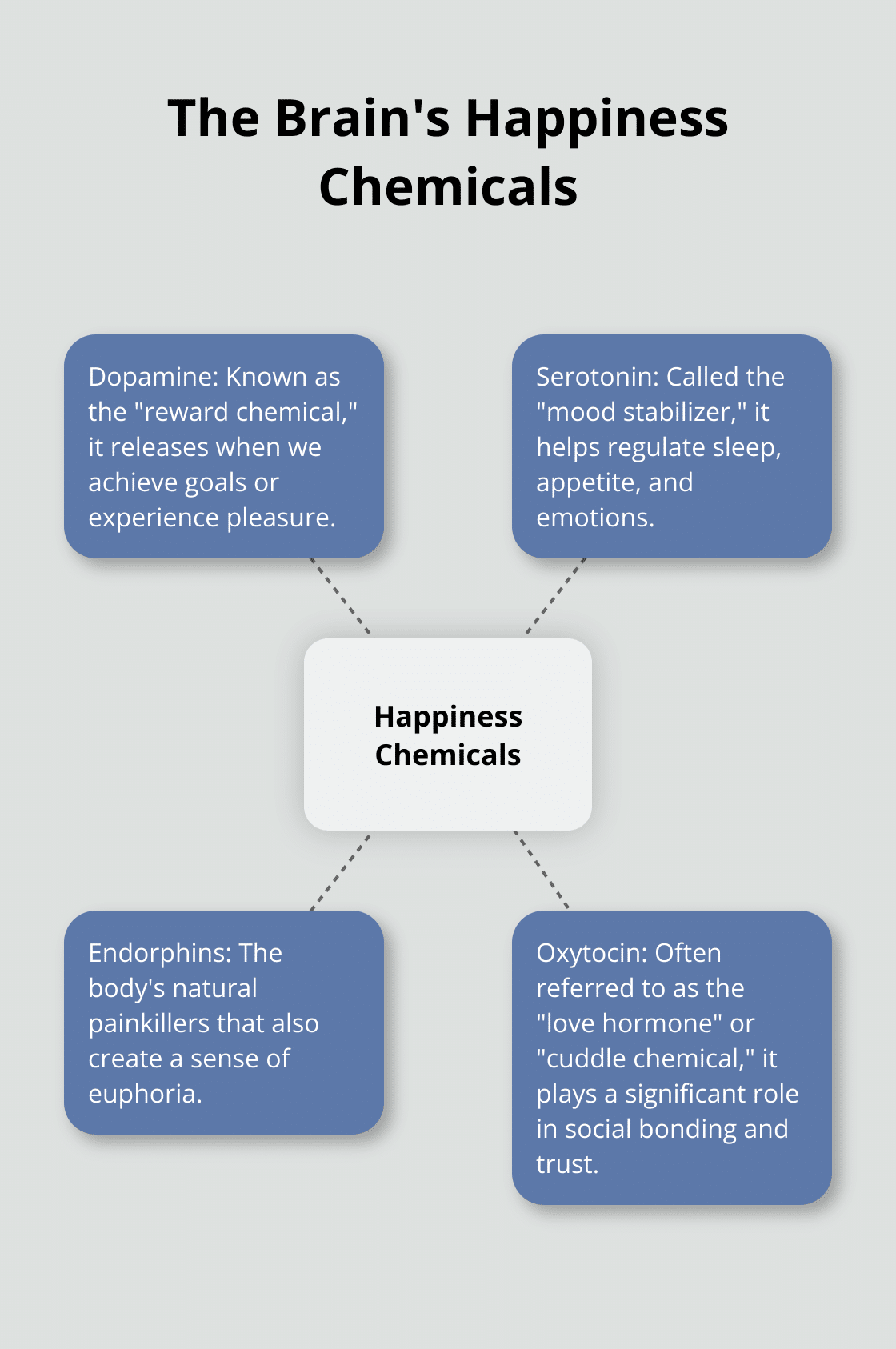
Dopamine, often called the “reward chemical,” releases when we achieve goals or experience pleasure. To boost dopamine naturally, set small, achievable goals throughout your day and celebrate their completion.
Serotonin, known as the “mood stabilizer,” helps regulate sleep, appetite, and emotions. Exposure to sunlight and regular exercise can increase serotonin levels. Take a short walk outside during your lunch break to get a natural mood boost.
Endorphins, our body’s natural painkillers, also create a sense of euphoria. Physical activity stimulates endorphin release. Even a 10-minute high-intensity workout can trigger this feel-good response.
The Bonding Hormone
Oxytocin, sometimes referred to as the “love hormone” or “cuddle chemical,” plays a significant role in social bonding and trust. It releases during physical touch (like hugs or handshakes) and even through positive social interactions.
A study published in the journal Psychoneuroendocrinology found that simple acts of kindness can increase oxytocin levels. This explains why volunteering or helping others often leaves us feeling good. Try organizing a community service event with friends or colleagues to harness this effect.
Rewiring the Brain for Positivity
Neuroscientists have discovered that our brains are more plastic than previously thought, meaning they can change and adapt based on our experiences and habits. This concept, known as neuroplasticity, suggests that we can train our brains to be more positive. Neuroplasticity builds on top of the benefits that positive thinking provides by allowing you to create new neural pathways in your brain.
Dr. Rick Hanson, a neuropsychologist, recommends a practice he calls “taking in the good.” This involves consciously focusing on positive experiences for 20-30 seconds, several times a day. This practice can strengthen neural pathways associated with positive emotions, making it easier for our brains to access these feelings in the future.
Practical Applications
Understanding the biological basis of mood allows us to make more informed choices about how to boost our own spirits and those of others around us. Here are some practical ways to apply this knowledge:
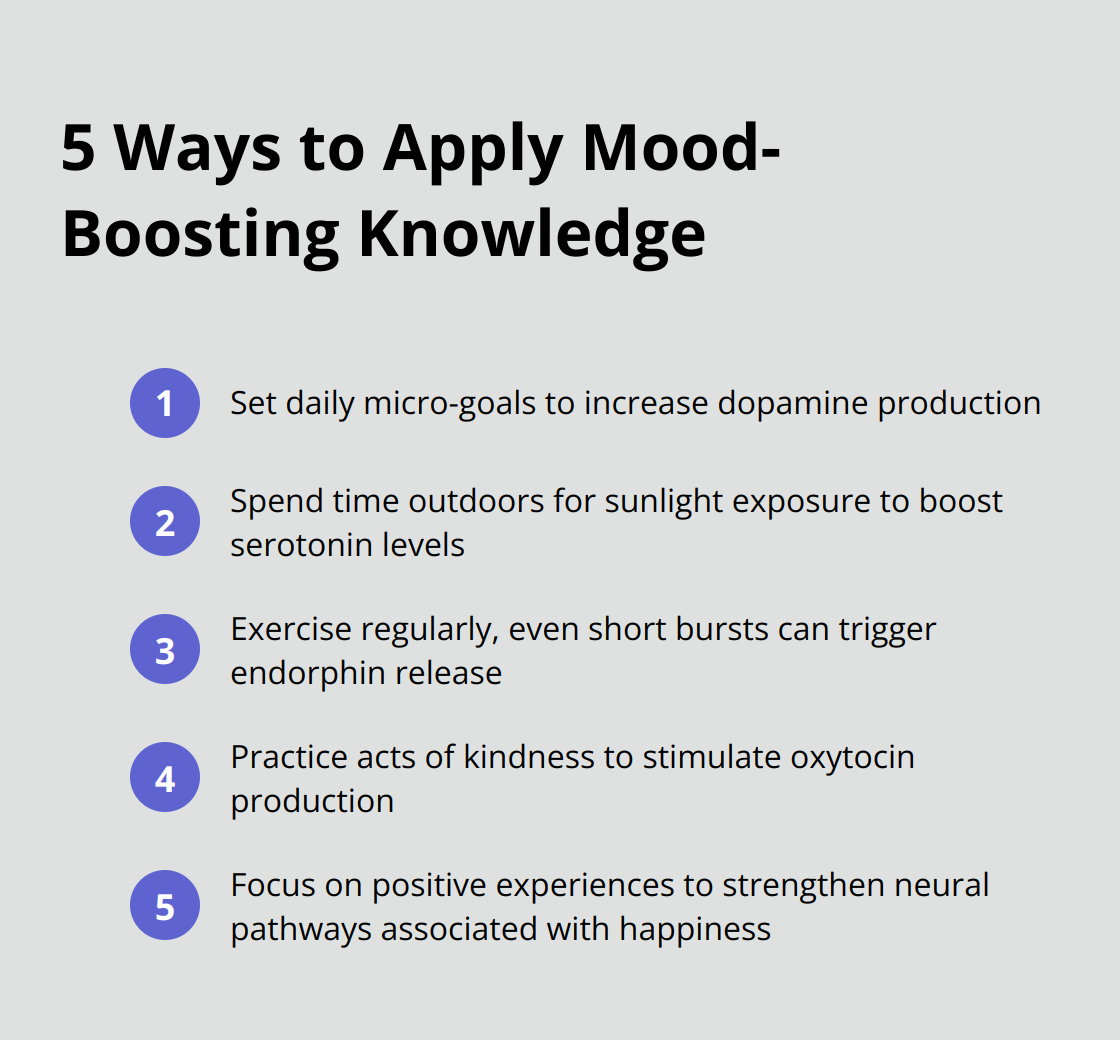
The science behind mood-boosting offers valuable insights into how we can effectively uplift others and ourselves. By incorporating these scientific principles into our daily lives, we can create more positive environments and foster better mental well-being.
Final Thoughts
Small actions create significant changes in our lives and the lives of those around us. Active listening, genuine compliments, and acts of kindness provide powerful tools to boost moods and spread joy. Understanding the science behind these techniques reveals how our brains respond to positivity, allowing us to make informed choices about cultivating happiness in our daily lives.
We at Global Positive News Network believe in the transformative power of positivity to inspire peace and hope. We encourage you to embrace these mood-boosting techniques and make “sending you positive vibes” more than just a phrase. Every interaction presents an opportunity to uplift someone’s spirits through a kind word, thoughtful gesture, or shared smile.
You have the power to make a difference by spreading positivity in your daily life. For more inspiring stories and ways to maintain an optimistic outlook, visit Global Positive News Network. Together, we can create a brighter, more hopeful future for all.
Enjoying stories like this?
Global Positive News Network is reader-supported. If you’d like to support the mission, you can visit the Official GPNN store.