

Your work environment shapes how you feel and perform every single day. At Global Positive News Network, we’ve found that positivity habits for work aren’t about grand gestures-they’re about small, consistent rituals that rewire how you approach your job.
The difference between a draining workday and an energizing one often comes down to three things: how you start your morning, what you do at midday, and how you close your evening. This post walks you through practical rituals you can implement immediately.
How to Start Your Workday With Real Purpose
The first hour of your workday sets the tone for everything that follows. Rather than jumping straight into emails, spend the first five minutes clarifying what actually matters today. Write down one to three specific outcomes you want to achieve, not a sprawling to-do list. This isn’t about productivity theater-it’s about directing your mental energy toward what moves the needle.
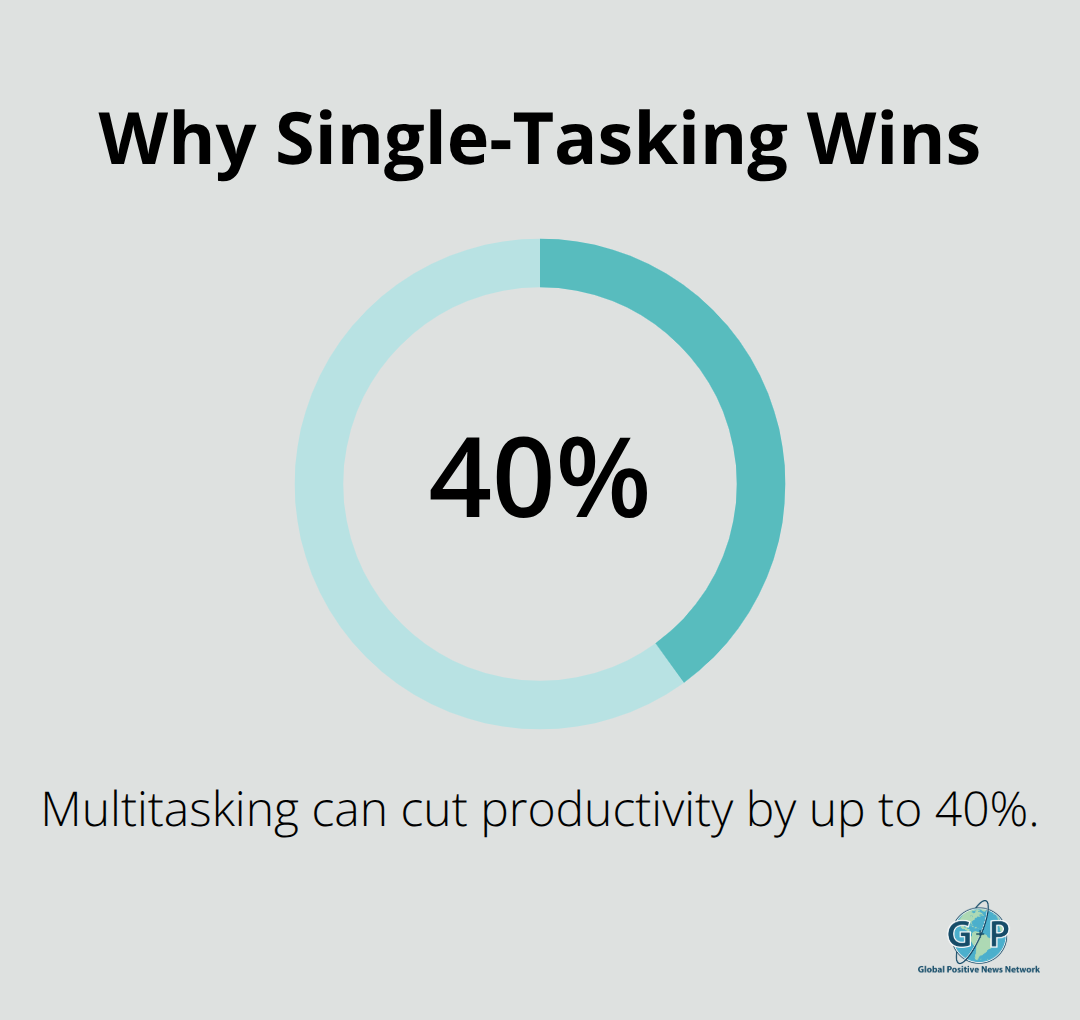
Research shows that multitasking can cut productivity by up to 40%. When you know your intention before the day floods in, you stay less likely to drift into reactive mode.
Anchor Your Nervous System Before Pressure Builds
Your physical state influences your mental clarity. Box breathing-inhaling for four counts, holding for four, exhaling for four, holding for four-activates your parasympathetic nervous system and lowers cortisol before meetings or stressful moments. The 7-11 energizer works differently: stand, inhale for seven counts with arms raised, then exhale for eleven counts while lowering them. This triggers oxygen saturation and delivers a natural energy boost without caffeine. Both take under two minutes and work best when you perform them before checking your inbox. Once you’re reactive, resetting becomes harder. Start proactive instead.
Make Your Workspace Reflect How You Want to Feel
Your environment isn’t decorative-it’s functional. Add three specific items to your desk that matter to you: a plant, a photo that makes you smile, or a quote that grounds you. Every hour, spend 60 seconds aligning your spine, pulling shoulders back, and engaging your core. Better oxygen flow reduces back pain and lifts energy.
Build Automaticity Through Implementation Intentions
Consistency matters more than duration. Habit stacking makes rituals automatic: attach your morning intention-setting to your coffee ritual and your posture reset to checking the clock at the top of each hour. Research found that higher daily automaticity of a new work habit predicted greater daily work engagement. Implementation intentions-concrete if-then plans like “If I pour my first cup of coffee, then I set my three daily intentions”-raise how often you perform the habit and increase its automaticity over two to three weeks. These small anchors transform scattered effort into seamless routine, freeing mental energy for the work that actually demands your attention.
How to Sustain Your Energy When Afternoon Slumps Hit
Step Away From Your Desk Before the Crash Hits
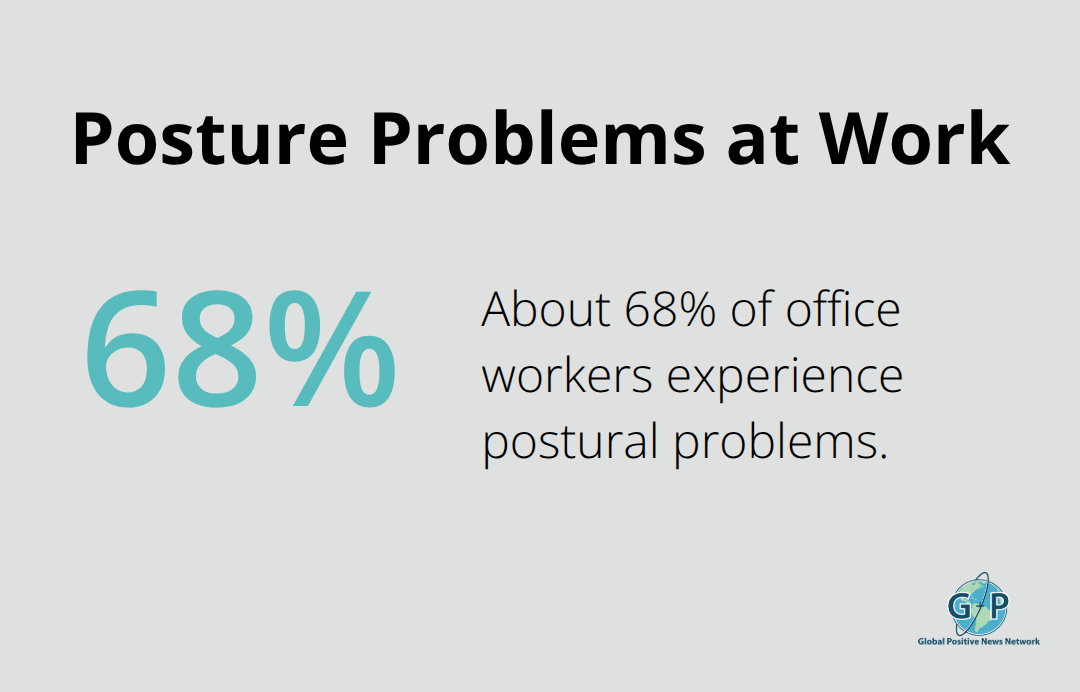
The midday crash is real. Short breaks boost productivity by 16%, yet most workers skip them entirely. This is where your afternoon unravels. Step away from your desk for ten minutes between 2 and 3 p.m.-not for email on your phone, but for actual movement. Walk outside if possible, or find a quiet space to perform the desk mobility sequence: neck rolls, shoulder circles, seated spinal twists, and ankle rotations. This isn’t self-care theater. About 68% of office workers experience postural problems, and these three-minute sequences directly counteract the physical tension that tanks your mood and focus.
When you return to your desk, your nervous system has reset, and your capacity to think clearly has returned. The movement itself triggers a physiological shift that no amount of willpower can replicate.
Connect With a Colleague on Something Real
Connection matters more than proximity. Instead of lunch at your desk or scrolling alone, spend fifteen minutes with one colleague on something unrelated to work. Ask about their weekend, their side project, or what they’re learning right now. This isn’t forced team bonding-it’s genuine conversation that reminds you that you’re not working in isolation. Meaningful workplace connections strengthen engagement and buffer against burnout. These moments of real human interaction act as a reset button for your mental state and restore your sense of purpose.
Acknowledge Your Progress Out Loud
The final midday practice is the one most people dismiss: celebrate small wins the moment they happen. Finished a difficult email? Close a small task? Shipped a deliverable? Say it out loud or write it in a dedicated Slack channel. This isn’t arrogance; it’s neurochemistry. Celebrating progress, even minor progress, lifts mood and builds momentum for the afternoon stretch ahead.
These three practices-movement, connection, and acknowledgment-work together to prevent the 3 p.m. energy crash. But sustaining momentum through the afternoon requires one more critical shift: how you close your workday shapes whether tomorrow starts strong or starts depleted.
How to Close Your Workday Without Carrying It Home
Write Down What You Actually Accomplished
The moment you stop working matters more than when you start. Most people finish their day by scanning one last email or mentally replaying a conversation that went wrong. This is the opposite of what your brain needs. Instead, spend the final ten minutes of your workday on three specific actions that shift your mental state before you leave.
Open a document or notebook and write down three concrete accomplishments from today, no matter how small. Not the tasks you didn’t finish or the meetings that ran long, but what you actually completed. Research shows that employees who regularly acknowledge their progress report higher job satisfaction and build momentum for the next day. The neurochemistry of recognition matters: celebrating wins, even minor ones, lifts mood and creates psychological closure. Write them down because writing activates different neural pathways than thinking alone.
Create a Physical Barrier Between Work and Home
Set a hard stop time and actually leave your workspace. This isn’t about logging off your computer; it’s about physically moving away from where you work. If you work from home, close the door or change rooms entirely. Set a boundary that your work device stays off-limits after 6 p.m. or whatever time you choose.
About a third of remote workers are working from home all of the time, but the danger is that work never actually ends. You must create a physical and temporal barrier. If your employer expects responses outside work hours, this is a culture problem that needs addressing, not a personal failing. Your recovery time directly impacts whether you show up tomorrow depleted or energized.
Plan Tomorrow With Specificity, Not Anxiety
Spend five minutes planning tomorrow with clarity rather than worry. Write down your three daily intentions for tomorrow morning, just as you did today. This simple act transfers your mental load onto paper, allowing your brain to actually rest. Your unconscious mind processes information while you sleep, and giving it a clear target makes tomorrow’s start automatic rather than reactive.
These three practices, performed consistently for two weeks, become automatic through the same implementation intention mechanism that works for morning rituals (concrete if-then plans that anchor habits to existing routines). The key difference is that evening routines protect your recovery time, which directly impacts your energy and focus the following day.
Final Thoughts
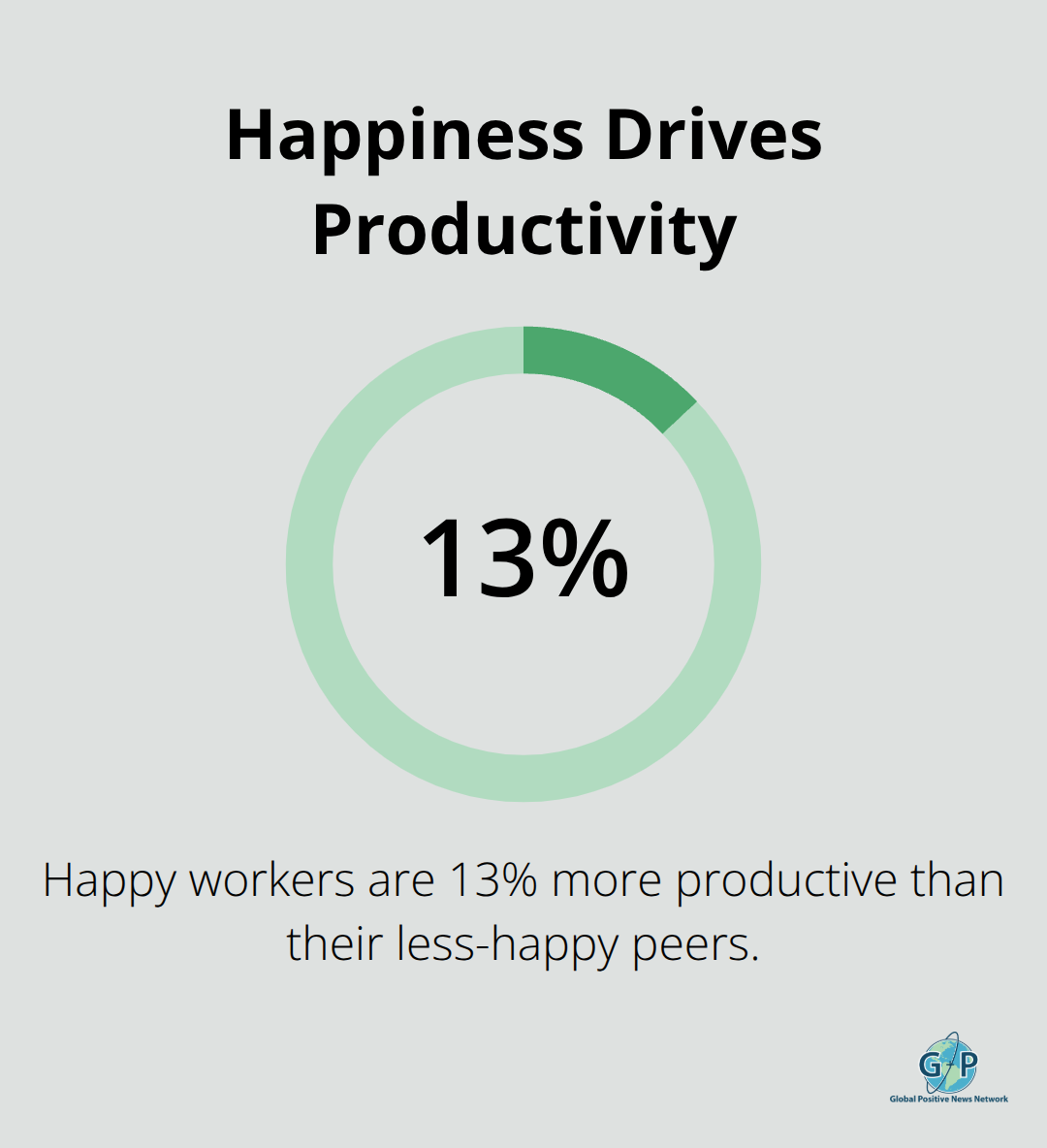
The rituals you’ve read about work because they’re small enough to actually stick. A two-minute breathing exercise before your first meeting, a ten-minute walk at 2 p.m., and five minutes of reflection before you leave reshape how you work without demanding hours of your time. Research from a six-month study at BT contact centers found that happy workers are 13% more productive than their less-happy peers, and this productivity boost occurred without longer working hours-the workers simply performed better within the same scheduled time.
Start with one positivity habit for work, not five. Pick the morning intention-setting or the midday walk or the evening accomplishment review, then attach it to something you already do every day using an if-then plan (if you pour your coffee, then you set your three daily intentions). This implementation intention approach takes two to three weeks to become automatic, but once it does, the habit requires almost no willpower, and the cumulative effect compounds over time.
One week of consistent rituals won’t transform your workday, but two weeks will. A month shifts how you experience your entire week, and three months becomes your baseline. Visit Global Positive News Network to explore more stories of personal transformation and community impact that show why maintaining your own positivity matters.
Explore more positive news:
Enjoying stories like this?
Global Positive News Network is reader-supported. If you’d like to support the mission, you can visit the Official GPNN store.