
Young people today face constant negativity in their feeds and news cycles. Yet positive news for youth has the power to reshape how they see themselves and their world.
At Global Positive News Network, we’ve seen firsthand how uplifting stories build resilience, reduce anxiety, and spark real action among teenagers and young adults. This post explores why these stories matter and where young people can find them.
How Positive News Reshapes Youth Mental Health
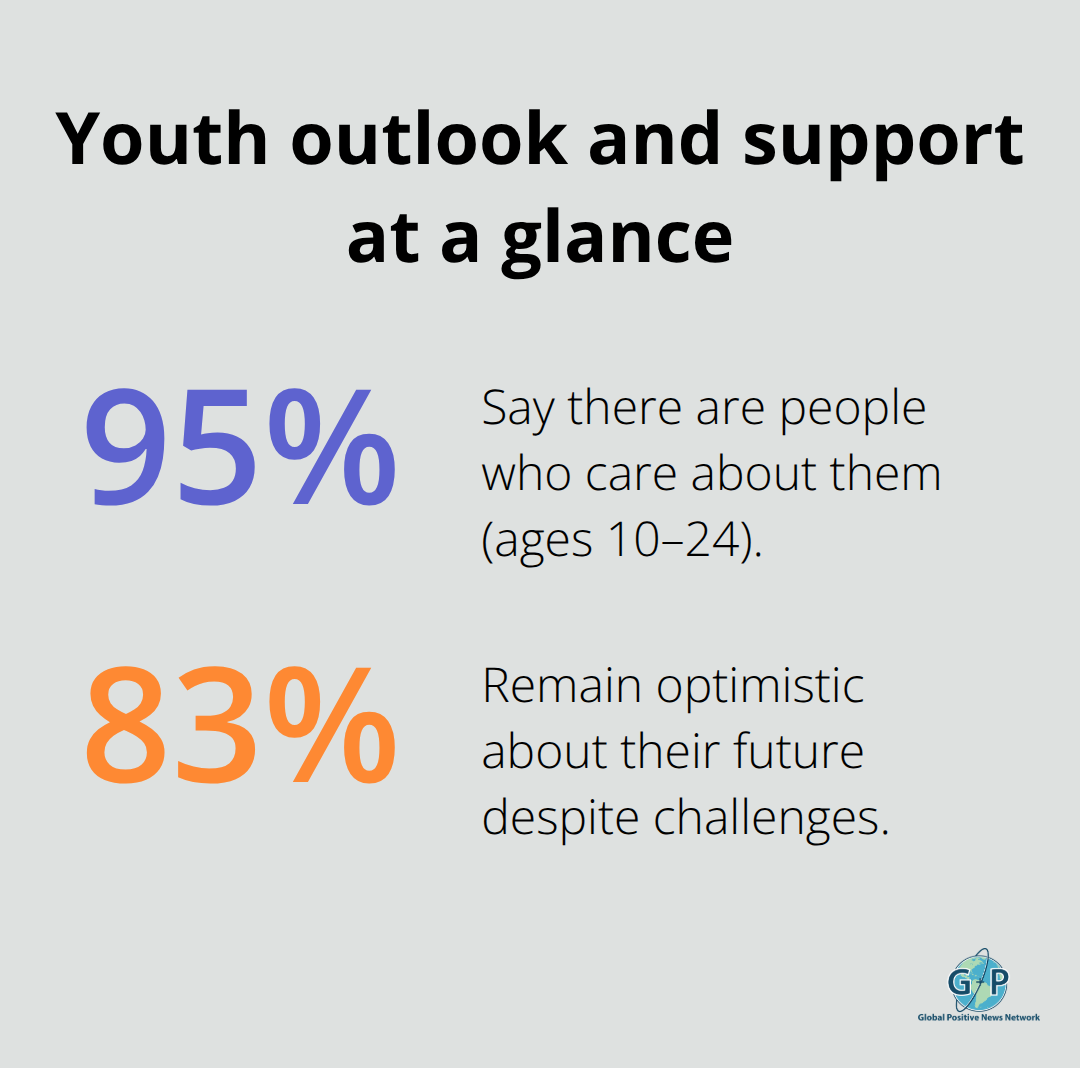
The data on youth mental health reveals both challenges and real progress. According to the CDC Youth Risk Behavior Survey, young people face documented mental health challenges. Yet the same survey shows improvement: rates of sadness dropped from 42% in 2021 to 40% in 2023, with girls seeing a decline from 57% to 53%. This shift matters because it reveals something important about the power of narrative. When young people encounter stories of real progress and genuine human achievement, their neurological response shifts. The Youth Mental Health Tracker found that 95% of youth ages 10–24 say there are people who care about them, and 83% remain optimistic about their future despite real challenges. This isn’t naive positivity. It’s grounded resilience built on exposure to evidence that change happens and people matter.
Schools using evidence-based programs like the JED Campus initiative saw concrete results: 10% fewer students with suicidal thoughts, 13% fewer who made a suicide plan, and 25% fewer who attempted suicide in the past year across a 10-year study. These improvements came partly through shifting the narrative environment young people inhabit, moving from crisis-focused messaging to solution-focused storytelling.
How Positive Stories Rewire Expectations
Positive news works because it counters the negativity bias hardwired into human psychology. Young people exposed to balanced information that includes stories of problem-solving and community action report lower anxiety levels than those consuming only crisis reporting. When a 17-year-old in Wolverhampton tackles knife violence through youth leadership or when teens in Grimsby help shape an £8 million youth centre, these aren’t feel-good distractions. They’re proof that young people have agency. This matters because approximately half of youth surveyed say they lack adequate skills for the current and future workforce, creating real anxiety about their future. Stories of youth entrepreneurs solving social problems or students creating community support programs directly counter that learned helplessness. The mechanism is straightforward: exposure to evidence that people your age are creating change rewires expectations about what’s possible.
The Real Impact on Youth Behavior and Outlook
Young people who regularly encounter positive news shift how they see themselves and their role in society. Stories of real change don’t just make them feel better-they inspire action. A youth in Somerset reported that a mentoring scheme gave them a new outlook on life. Nature-based activities like campfires and stargazing in Gloucestershire reduced isolation among young people. Youth centres reopening across the UK received praise from attendees who rated their experiences as “10 out of 10.” These aren’t isolated incidents. They represent a pattern where positive narratives translate into measurable improvements in how young people engage with their communities and invest in their own futures. The connection between what young people read and hear, and how they show up in the world, is direct and powerful.
Youth Solving Problems Their Own Way
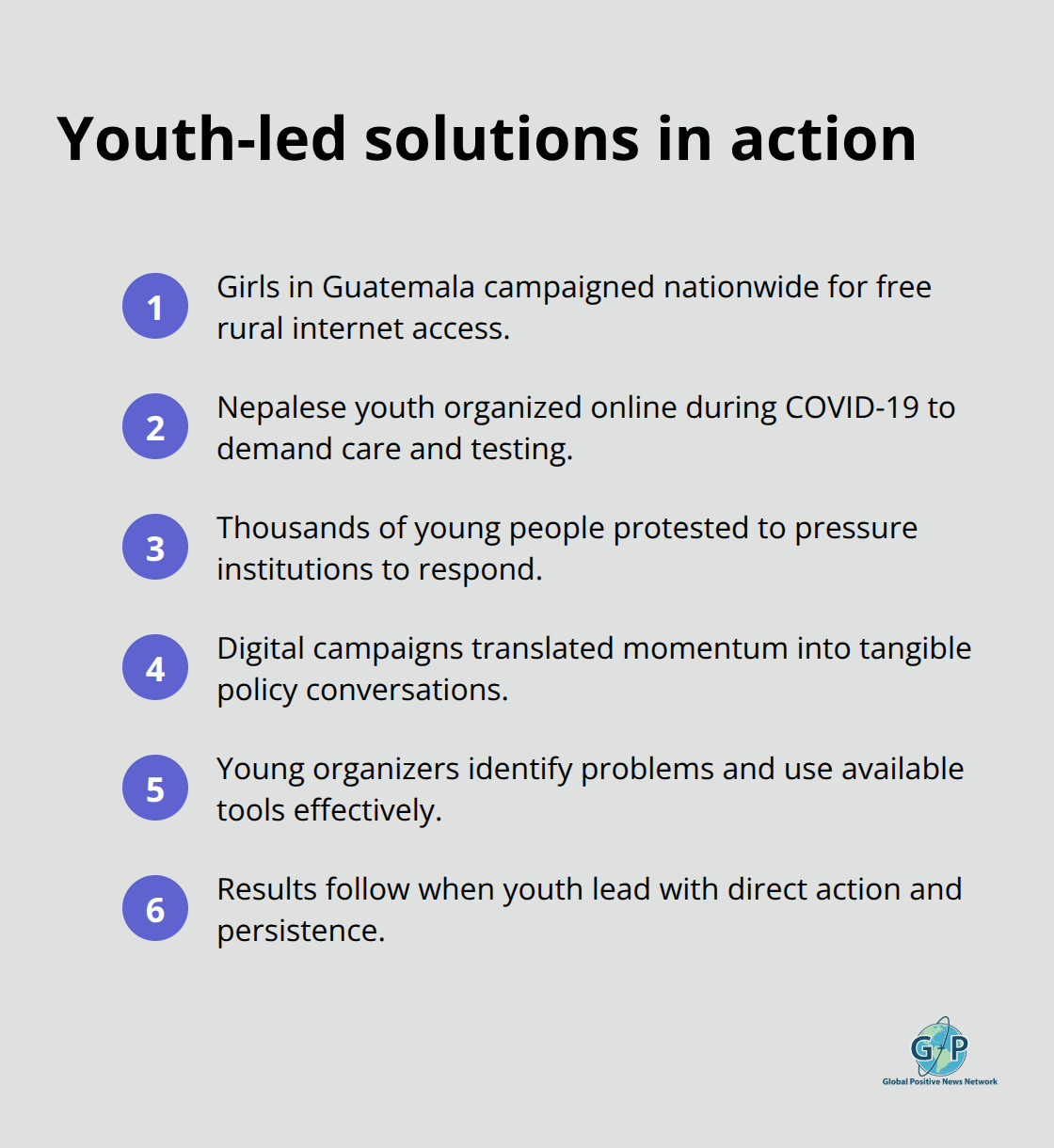
Young people aren’t waiting for adults to fix what’s broken. They build solutions themselves, and the scale of what they accomplish reshapes entire communities. In Guatemala, Coincidir mobilized 75 girls and adolescents in a nationwide online campaign to press for free internet access in rural areas so students could participate in distance learning. That wasn’t a theoretical exercise or a school project-it was direct action that changed policy conversations around digital equity. Similarly, youth in Nepal organized online campaigns during COVID-19, and thousands of young people protested government responses while demanding free medical care and testing. These campaigns translated digital momentum into tangible pressure on institutions to respond. The pattern holds across regions: when young people identify a problem, they use available tools, and results follow.
Social Media as an Organizing Platform
Social media functions as a youth organizing platform, not just a scrolling space. Instagram, Twitter, and TikTok enable rapid coordination that traditional organizing structures took months to achieve. A 17-year-old Youth MP in Wolverhampton tackles knife violence directly rather than waiting for government initiatives. Teens in Grimsby shaped an £8 million youth centre development, proving that meaningful youth involvement in major local projects produces better outcomes than top-down planning. Youth music projects in Northamptonshire received cash lifelines to support young musicians because young people advocated for what they needed. These aren’t exceptional cases-they represent a documented shift where youth-led initiatives now drive community development across the UK and beyond.
The Global Shapers Community demonstrates this at scale. Young people under 30 across multiple countries implement locally impactful projects ranging from disaster relief to combating poverty to fighting climate change to building inclusive communities. In the latest year, Global Shapers organized dialogues in 146 cities, reaching more than 2 million people with youth-driven policy discussions. Young people lead, and institutions follow their direction rather than the reverse.
Why Youth Solutions Outperform Adult Plans
Youth entrepreneurs solving social problems operate with a distinct advantage: they understand their generation’s actual needs because they live them. A youth charity in Kent bought its own home, bringing stability and capacity to help more young people avoid homelessness. That decision came from understanding that temporary solutions fail. Young activists leading environmental movements make concrete demands rather than abstract arguments about climate policy. They call for boards to halt coal, oil, and gas exploration and for leaders to transition to cleaner energy. They ask for action, not rhetoric.
When students create community support programs, they design them around what their peers actually use rather than what adults assume young people need. The Creativity Lab in Yerevan offers activities for children ages 7–9 to boost creative thinking and early learning because youth organizers identified the gap. The Water for Life project from the Cartagena Hub provides water filters to families to remove toxins and reduce preventable diseases because young people spotted a concrete health problem and solved it. Youth solutions work because they rest on direct observation and lived experience, not assumptions.
The Scale of Youth-Led Change
What started as isolated youth initiatives has become a movement. Young people across regions now lead campaigns that shift policy, reshape institutions, and build infrastructure their communities need. A youth in Somerset reported that a mentoring scheme gave them a new outlook on life. Nature-based activities like campfires and stargazing in Gloucestershire reduced isolation among young people. Youth centres reopening across the UK received praise from attendees who rated their experiences as “10 out of 10.” These outcomes stem from youth leadership, not charity or goodwill from above.
The evidence shows that when young people control the narrative around their own problems, solutions emerge faster and stick longer. They don’t wait for permission or funding approval. They organize, mobilize, and create change. This shift-from youth as passive recipients of adult solutions to youth as active architects of their own futures-marks a fundamental change in how communities address their challenges. As young people continue to prove their capacity to lead, the question shifts from whether they should have a seat at the table to how institutions can move fast enough to keep pace with what youth are already building.
Where Young People Find Positive Stories
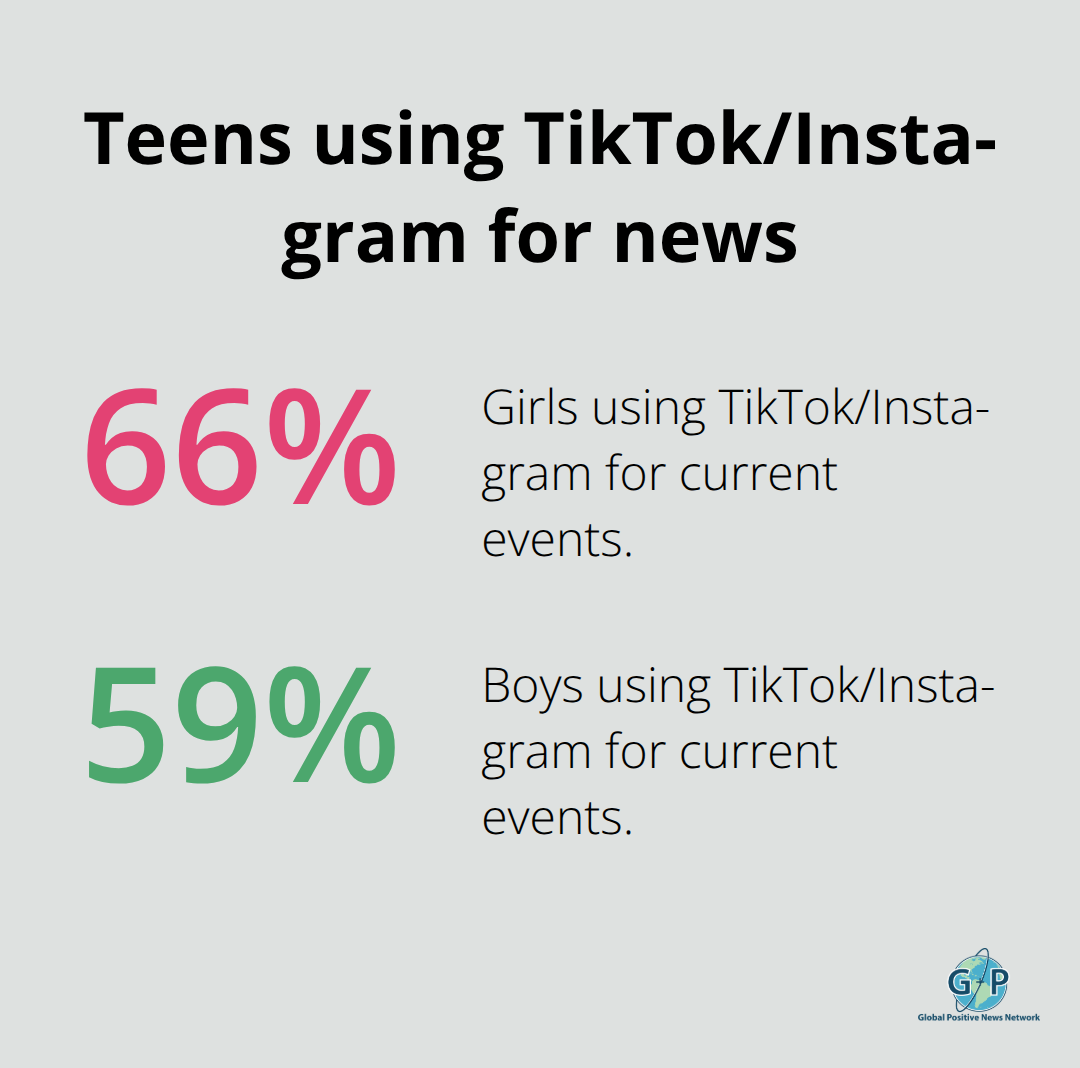
TikTok and Instagram serve as primary news sources for young people, with 66% of girls and 59% of boys using these platforms for current events. Content creators on these platforms shape which positive narratives reach youth audiences. Creators post short-form content highlighting real achievements, community projects, and peer-led initiatives.
A single TikTok video about a youth-led campaign reaches millions within hours, making social media the fastest distribution channel for stories that inspire action. The Global Shapers Community (over 8,000 young people under 30 across 165 countries) shares project work through social channels, reaching more than 2 million people in their latest year of organized dialogues. Young people engage directly with these stories, share them within their networks, and often join the movements they discover online. This direct pipeline from discovery to participation makes social platforms fundamentally different from traditional news outlets.
Schools and Community Programs Reinforce Positive Narratives
Schools and community programs operate as secondary channels where positive narratives take root. When youth centres reopen or expand, staff program activities that highlight youth achievement and community contribution. Programs like JED Campus integrate positive storytelling into their mental health curriculum, producing measurable outcomes: schools implementing these programs saw 10% fewer students with suicidal thoughts and 25% fewer suicide attempts over a decade. Youth music projects, skateboard workshops, and nature-based activities across the UK function as spaces where young people encounter peers making real contributions. These spaces normalize the idea that their age group drives meaningful change.
Dedicated Positive News Outlets Offer Verified Stories
Dedicated positive news outlets and newsletters serve youth who actively seek alternatives to crisis-focused reporting. These platforms differ fundamentally from social media because they employ editorial standards and fact-checking, ensuring that positive stories young people encounter are verified and substantive rather than sensationalized or misleading. A young person subscribing to a positive news newsletter receives weekly stories of real solutions, community victories, and youth-led initiatives without the algorithm-driven distraction that social platforms create. The advantage is clarity: newsletters deliver concentrated doses of actionable inspiration rather than scattered posts competing for attention.
Building a Balanced Information Diet
Young people who combine these three sources-social media discovery, community program participation, and dedicated positive news outlets-develop a balanced information diet that counters the documented negativity bias of traditional news cycles. Start with one platform that matches how a young person already consumes information, then expand to include community spaces where they see peers embodying these stories in real time. This approach creates exposure to evidence that change happens and people matter, which directly strengthens resilience and shifts expectations about what’s possible.
Final Thoughts
Positive news for youth isn’t a luxury or a distraction from real problems. It’s a documented necessity for building the resilience, agency, and hope that young people need to navigate their futures. When young people encounter stories of real change, their mental health improves, their expectations shift, and their willingness to take action increases.
Supporting youth in finding inspiring stories means meeting them where they already are. Most young people discover positive narratives through social media, so starting there makes sense. Help them move beyond scrolling into active participation by encouraging them to join community programs where they see peers embodying these stories in real time. Access to dedicated positive news sources that provide verified, substantive stories (rather than algorithm-driven content) completes the picture and creates a balanced information diet that counters the negativity bias of traditional news cycles.
At Global Positive News Network, we believe that growing up with hope isn’t naive. Young people who regularly encounter evidence that change happens develop different expectations about their own capacity to contribute and see themselves as agents rather than victims. A generation raised on positive narratives about what’s possible builds institutions differently, makes different choices, and creates different futures.