

Positive life quotes to live by have real power. They reshape how you think, react, and move through your day.
At Global Positive News Network, we’ve seen how the right words at the right moment can shift someone’s entire perspective. This collection covers resilience, gratitude, and growth-the three pillars that matter most when building a life you actually want to live.
Resilience Through Real Action
What You Do Matters More Than How You Feel
Resilience isn’t about staying positive when everything falls apart. It’s about what you actually do when pressure hits. Resilience research from the American Psychological Association found that people who recover fastest from setbacks take immediate, small actions rather than waiting for motivation to arrive. This matters because waiting paralyzes you. Norman Cousins said the greatest loss is what dies inside us while we live, and he was right. When you face a challenge, your first move determines whether you shrink or expand.
The Micro-Action Method
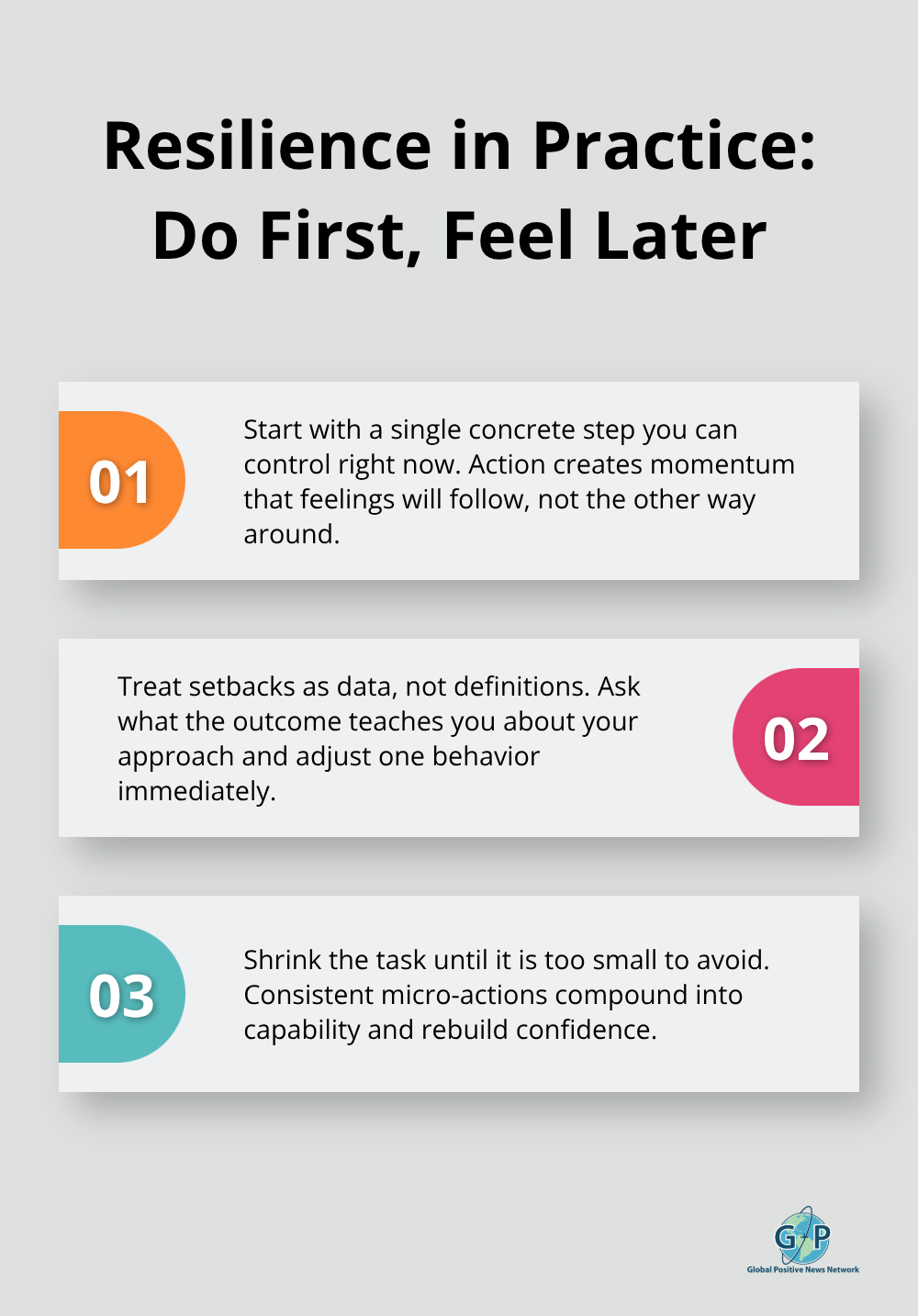
Take the approach used by trauma survivors studied by psychologist Bessel van der Kolk: they identify one concrete step they can control today, then execute it. Not tomorrow. Not when conditions improve. Today. This creates momentum that shifts your entire nervous system from shutdown mode to problem-solving mode. If you lose a job, your action isn’t to rewrite your resume perfectly. It’s to contact one person in your network. If you fail a project, your action isn’t to analyze what went wrong for hours. It’s to schedule a conversation with someone who succeeded at something similar. These micro-actions rewire how your brain responds to adversity.
Failure as Feedback, Not Identity
Failure becomes data, not identity, when you treat it as feedback rather than judgment. Growth mindset research by Carol Dweck documented that people with a growth mindset see failure as information and are more open to reflect, learn, and grow from challenges. The difference is stark. When you fail, ask what the failure teaches you about your approach, not about your worth.
Frederick Douglass stated that without struggle there is no progress, and the mechanism behind this is straightforward: struggle forces adaptation. Your brain literally rewires itself when you push through difficulty. This is neuroplasticity in action. Write down three specific things you learned from your last significant failure within 48 hours of it happening. Not vague lessons. Specific, actionable insights. Then apply one of those insights to your next attempt. This habit turns failure into your competitive advantage because most people avoid examining what went wrong. They repeat the same mistakes. You won’t.
Moving From Adversity to Growth
The quotes you’ll encounter in the next section speak directly to this transformation. They offer language for the moments when your resolve wavers, and they anchor you to the truth that what you do today shapes who you become tomorrow.
Gratitude Rewires Your Brain for Better Outcomes
Specificity Activates Neural Pathways
Gratitude isn’t sentiment. It’s a neurological reset that changes what your brain prioritizes. Research from UC Davis psychologist Robert Emmons found that people who practice gratitude consistently tend to be happier and less depressed, sleep better, and exercise more regularly. The mechanism is simple: gratitude shifts your reticular activating system, the part of your brain that filters what you notice. When you actively acknowledge what’s working, your brain stops fixating on what’s broken.
Most people operate in scarcity mode, constantly scanning for threats and problems. Gratitude flips that switch. Start with specificity, not vagueness. Don’t write “I’m grateful for my family.” Write “I’m grateful my partner made coffee this morning without being asked.” The specificity activates a different neural pathway than generic gratitude. Do this daily for two weeks and you’ll notice you naturally spot more small wins. You’ll become someone who sees opportunity instead of obstacle.
How Difficulty Reveals What Matters
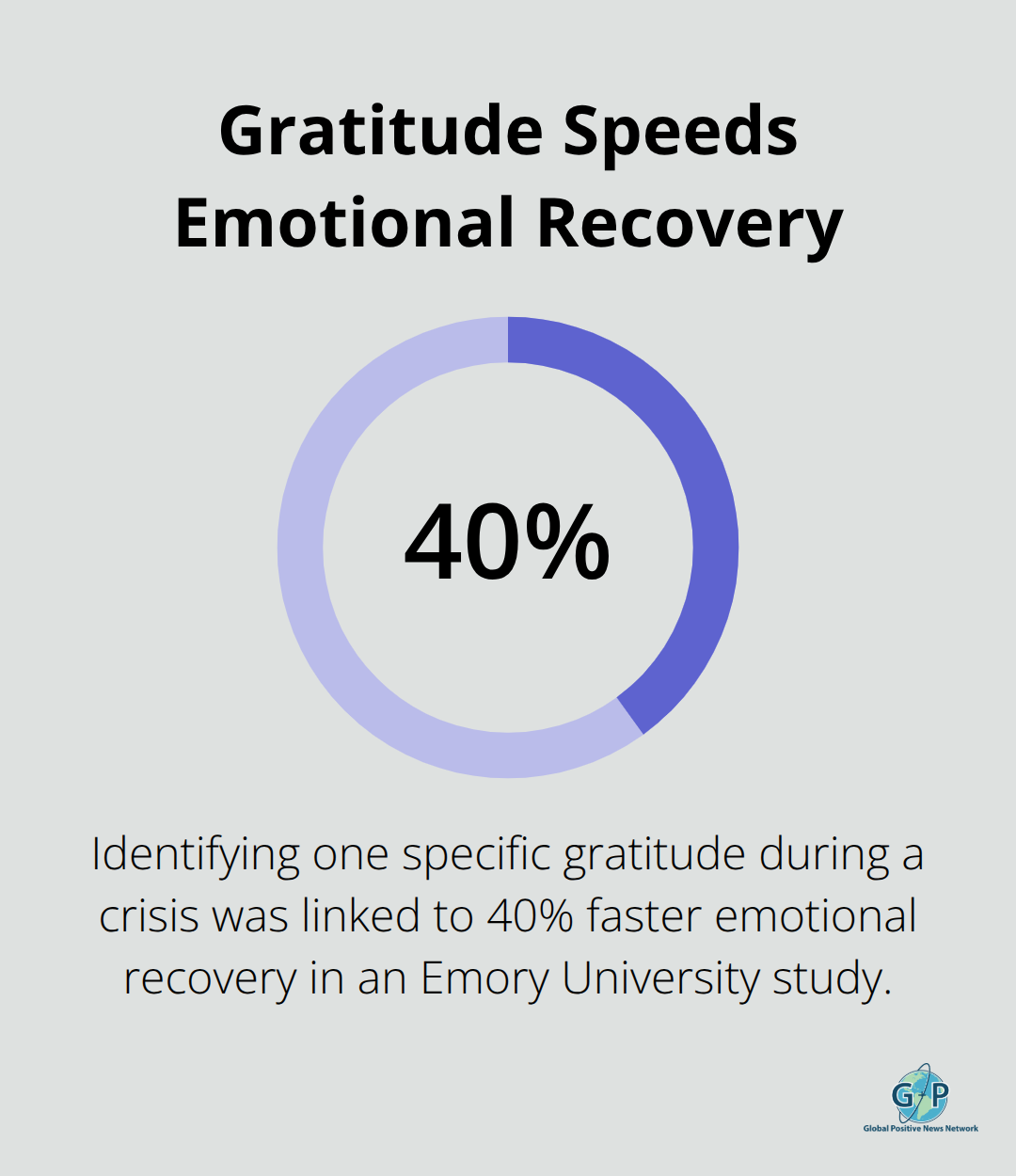
Perspective shifts happen fastest when you attach gratitude to difficulty, not comfort. A study from Emory University tracked people going through major life challenges. Those who identified one specific thing they were grateful for, even amid crisis, recovered emotionally 40 percent faster than those who didn’t. This isn’t about toxic positivity or pretending hardship is good. It’s about refusing to let difficulty steal everything.
When you lose income, you’re grateful your skills remain intact. When a relationship ends, you’re grateful for what you learned. When you fail publicly, you’re grateful it happened where people could witness your recovery instead of in isolation where shame grows unchecked. This practice rewires how you respond to setbacks because your brain adapts to whatever you train it to notice.
Express Appreciation Out Loud
Tell one person today something specific you appreciate about them. Not a compliment about their appearance or status. Something they did that mattered. This trains your brain to notice contribution and character. It also strengthens relationships because most people rarely hear specific acknowledgment of their actions. They hear surface-level praise constantly but rarely hear “Your honesty in that conversation changed how I see that situation.” That specificity lands differently. It builds real connection.
Over thirty days of this practice, you’ll notice your relationships deepen and your own resilience increases because you’re surrounded by people who feel genuinely seen. This foundation of gratitude and connection prepares you for the next critical element: the personal growth that comes when you stop waiting for the right moment and start taking action toward what actually matters to you.
Growth Happens When You Stop Waiting
Action Separates Intention From Results
Action separates people who talk about change from people who actually change. The gap between intention and execution is where most personal growth dies. Stanford researcher BJ Fogg studied behavior change across thousands of people and found that motivation is unreliable. Willpower depletes. Emotion fluctuates. What works is attaching new behaviors to existing routines through what he calls habit stacking.
If you want to develop confidence, you don’t wait until you feel confident. You take one small action today that builds evidence of your own capability. Applied to your goals, this means identifying the smallest version of what you want to accomplish and doing it tomorrow. Not next week. Not when circumstances align. Tomorrow.
The Power of Micro-Actions
If your goal is to write a book, you write 100 words. If your goal is to start a business, you contact three potential customers. If your goal is to improve your skills, you spend 30 minutes learning one specific technique. Psychologist Albert Bandura documented that self-efficacy builds through direct experience with small wins. Each micro-action creates neural evidence that you’re capable.
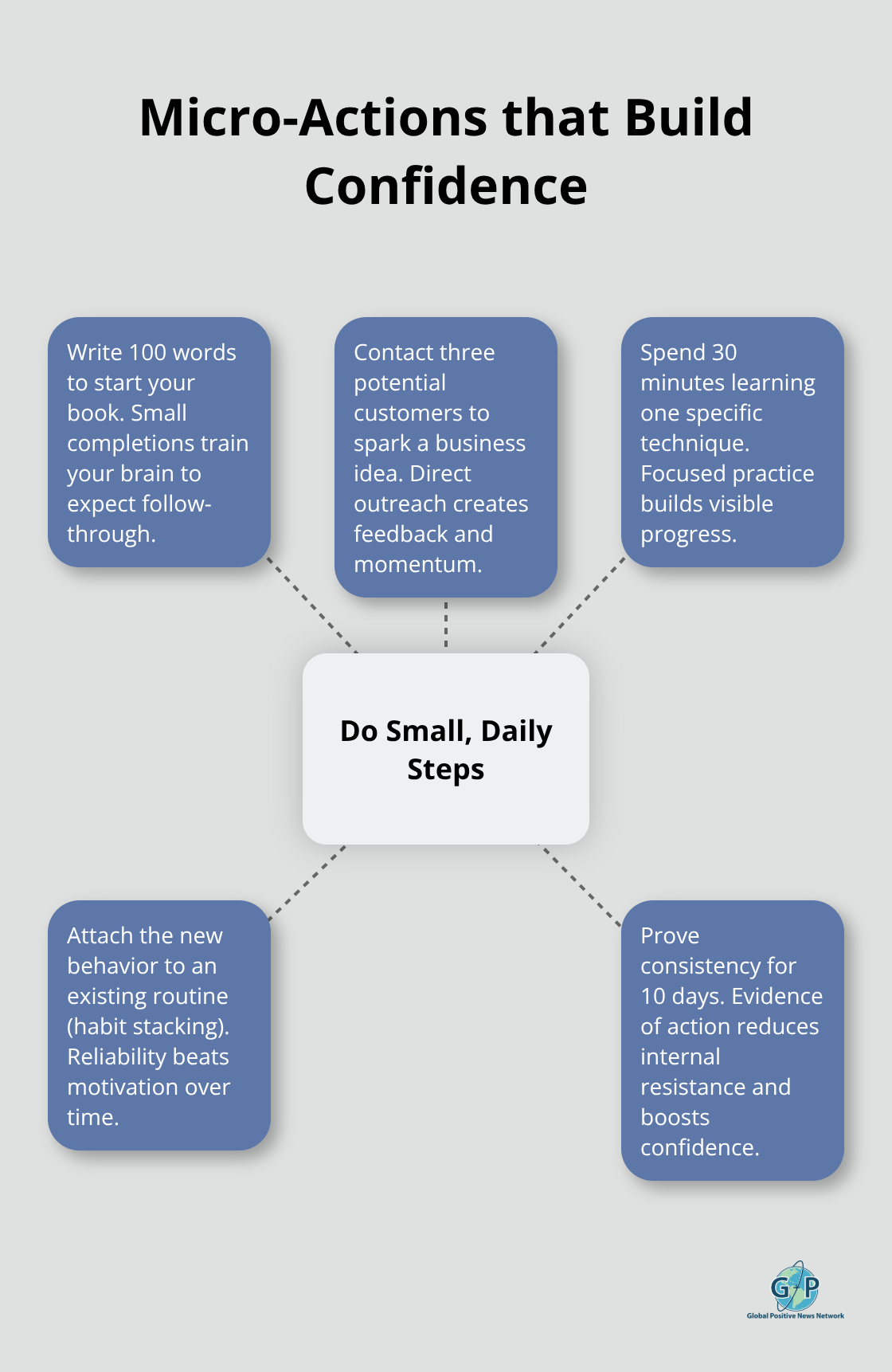
After ten days of this practice, your brain stops fighting you because you’ve proven to yourself that you follow through. Confidence isn’t a feeling that arrives before action. It’s a byproduct of repeated action. Most people have this backwards.
Question Your Existing Identity
Change accelerates when you stop protecting your current identity. Organizational psychologist Adam Grant studied people undergoing major transitions and found that those who actively questioned their existing beliefs and behaviors adapted faster than those who clung to how things used to be. This means examining what you’ve been telling yourself about your limits and testing whether that story is actually true.
If you’ve believed you’re not a creative person, take one creative action this week and observe what happens. If you’ve believed you can’t speak in public, join a single conversation where you share one genuine idea. If you’ve believed you’re not disciplined, complete one small commitment you make to yourself. These aren’t large identity shifts. They’re experiments that gather real data about who you actually are versus who you’ve assumed you are.
Your Behavior Rewrites Your Beliefs
The research shows this approach works because your brain updates its self-concept based on your behavior, not the other way around. You become what you repeatedly do. This means your next action is more important than your current belief system because your action will reshape your beliefs.
Start today with something so small it feels almost trivial. That’s the point. Trivial actions compound into extraordinary results because most people never start. They wait for perfect conditions, complete clarity, or overwhelming motivation. None of that arrives. You move forward anyway.
Final Thoughts
The quotes you encounter throughout this piece function as tools that rewire how you respond to your actual life. When you read a quote about resilience, your brain activates the same neural regions as when you experience the challenge itself, which means the right words at the right moment genuinely shift your capacity to act. Positive life quotes to live by work because they compress years of human experience into single sentences and give you language for moments when your own words fail.
Select one quote from each section you’ve read and write it somewhere you’ll see it daily-not on your phone where it disappears into notification noise, but somewhere physical like your bathroom mirror or desk. Each morning, read it and ask yourself one question: what’s one action can I take today that aligns with this idea? This habit takes ninety seconds and compounds into measurable change within weeks. The second practice involves sharing one quote weekly with someone in your life through text, conversation, or a written note, which deepens your own understanding while strengthening your relationships simultaneously.
We at Global Positive News Network believe positivity isn’t about ignoring difficulty but about building the mental and emotional foundation to move through difficulty with intention. Daily quotes work alongside the actions you take, the people you surround yourself with, and the habits you build. Together, these elements create a life where you improve yourself regardless of circumstances.
Explore more positive news:
Enjoying stories like this?
Global Positive News Network is reader-supported. If you’d like to support the mission, you can visit the Official GPNN store.