

How you start your morning shapes everything that follows. At Global Positive News Network, we’ve seen how morning positivity routines transform people’s entire days-boosting mood, sharpening focus, and building resilience.
The science backs this up. Your cortisol levels, mood stability, and productivity all respond directly to what you do in those first hours after waking.
How Your Morning Sets Your Mental Trajectory
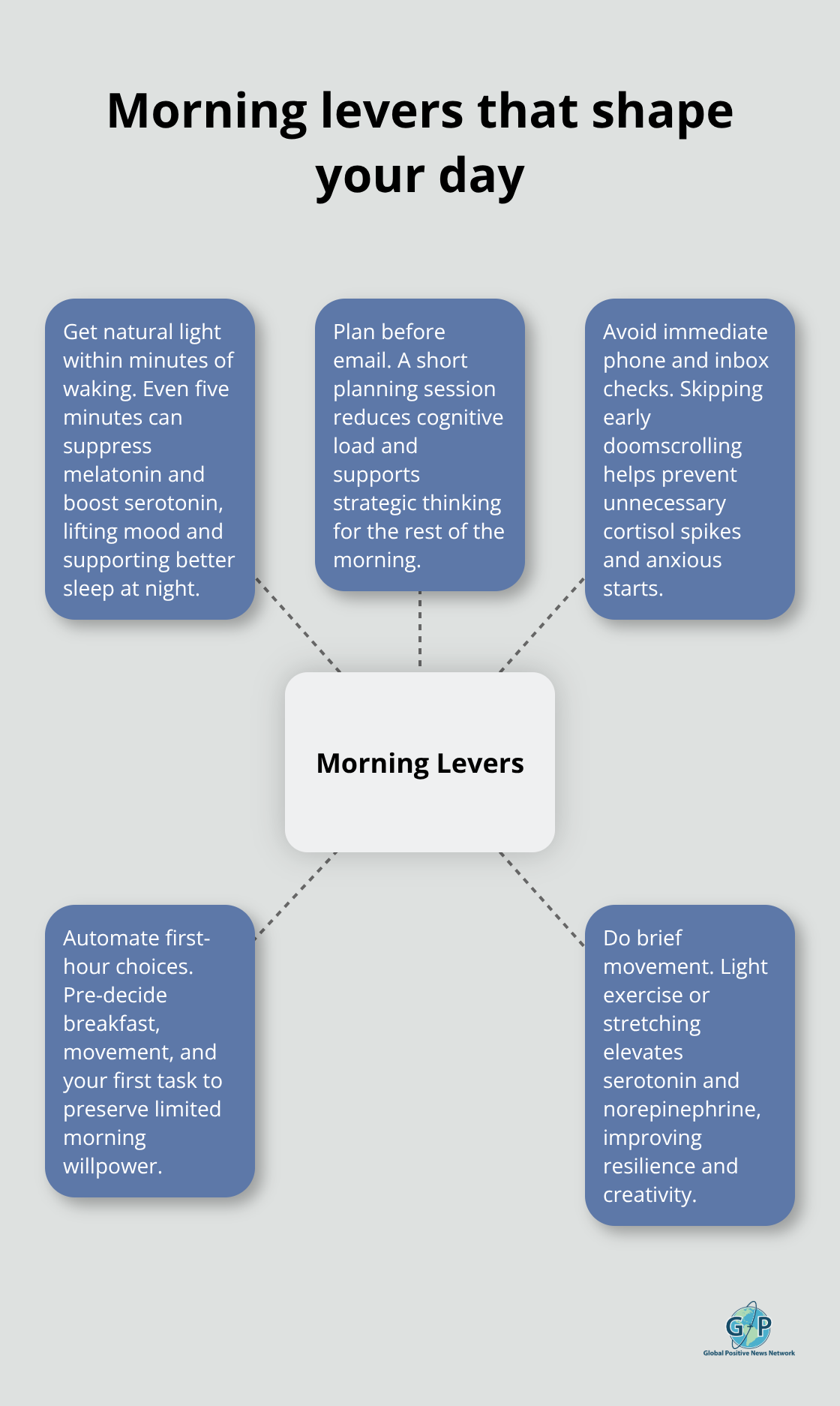
Your morning routine directly controls your cortisol levels, the stress hormone that peaks within 30 to 60 minutes of waking. When you wake and immediately grab your phone or rush into tasks, cortisol spikes higher than it should, leaving you anxious and scattered before 9 a.m. Research from The Guardian highlights that exposure to natural morning light suppresses melatonin and boosts serotonin, which improves mood and nighttime sleep quality. This means opening your curtains or stepping outside for even five minutes matters far more than most people realize.
The cumulative effect of these small actions proves significant: people who establish consistent morning routines report higher energy, better focus, and measurably less stress throughout their workdays. One critical insight from Harvard Business Review shows that starting your day with a planning session rather than immediately checking emails reduces cognitive load and supports strategic thinking. Your brain has a limited willpower reserve each morning, so automating decisions about what to eat, when to move, and what to focus on first preserves mental energy for actual work.
Morning Movement Activates Your Brain’s Problem-Solving Network
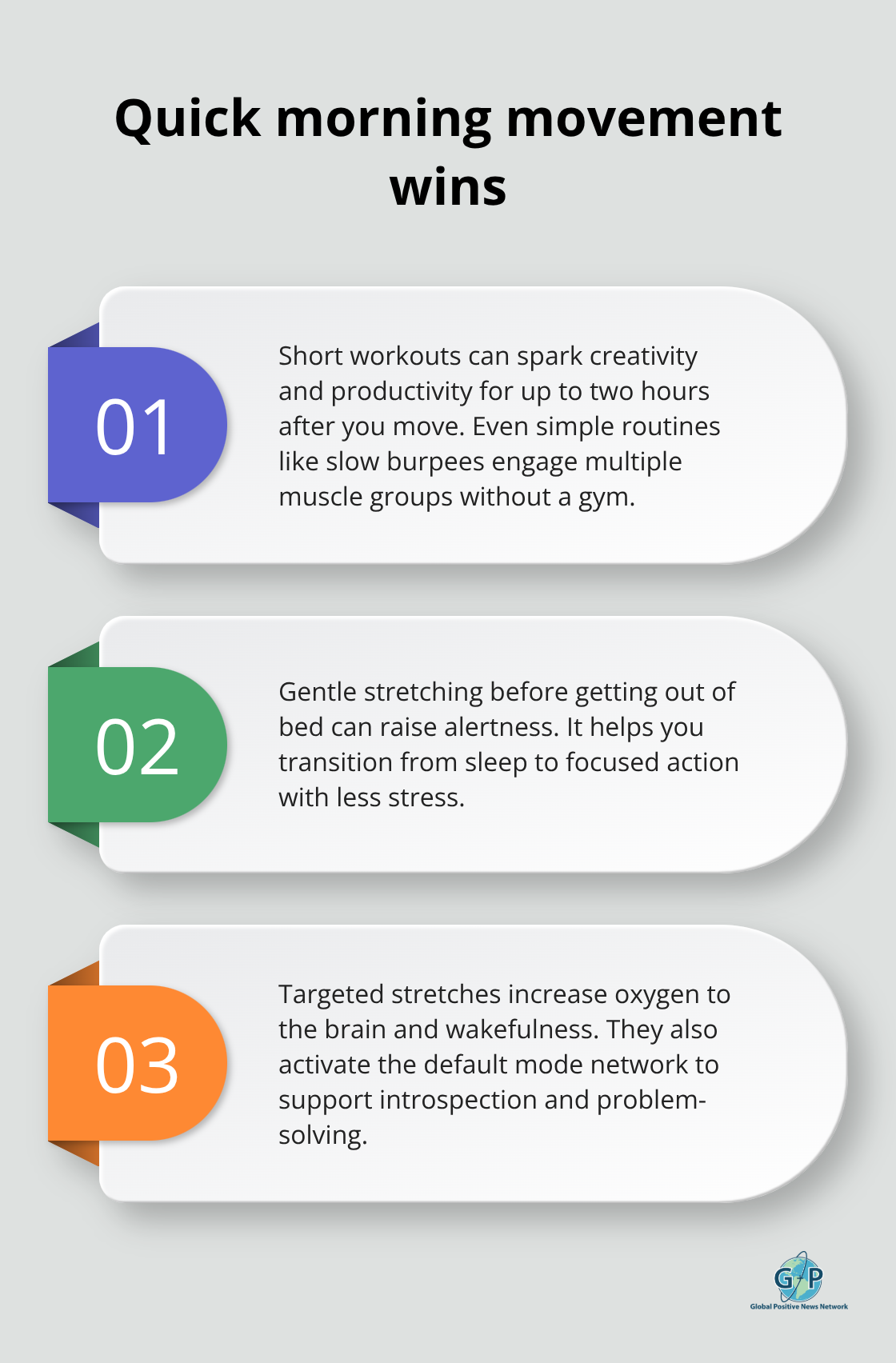
Physical activity in the morning raises serotonin and norepinephrine, improving mood and resilience to stress. Research shows that morning exercise boosts creativity and productivity for up to two hours after a workout, and people who exercise regularly tend to be less stressed at work and better able to maintain work-life balance. You don’t need a full gym session either. A simple home routine like slow burpees hits arms, legs, and core, starting with five reps and building up. Even light stretching before you get out of bed works.
Prevention magazine recommends a full-body stretch where you inhale arms overhead, clasp fingers, flip palms outward, and push away for 5 counts, repeated 3 times. The bed-to-floor stretch swings feet to the floor with knees bent, letting your head and arms dangle for 5 breaths to increase brain oxygen and wakefulness. These take minutes but activate what Ellie Hambly at The Guardian calls the brain’s default mode network, supporting introspection and creative problem-solving.
Consistency Beats Perfection Every Single Time
Dr. Heather McKee told The Guardian that the perfect morning routine doesn’t exist, but consistency does. Add one change at a time to create quick wins rather than attempting drastic overhauls. A three-layer goal plan works best: must-do tasks on busy days, nice-to-have additions on slower days, and optional extras when time permits. This approach prevents overwhelm and improves adherence.
Most adults need 7 to 9 hours of sleep, so pick a wake time aligned with your chronotype and try to wake without an alarm where possible. Chronotype matters significantly because your biology determines peak functioning times. Some people excel around 5 a.m., others around 8 to 10 a.m., so design your routine to match your natural rhythm rather than forcing yourself into early-riser culture. Katherine Jahnke’s ADHD-focused coaching emphasizes that embedding habits requires consistency, not intensity. A consistent first hour after waking reduces decision fatigue and boosts daily energy, productivity, and positivity across the board.
What Comes Next in Your Routine
These foundational shifts in how you manage cortisol, activate movement, and build consistency create the foundation for deeper practices. The next chapter explores specific techniques-gratitude work, journaling, and mindfulness-that you can layer into these morning hours to amplify your mental clarity and emotional resilience.
Three Techniques That Shift Your Morning Mood
Gratitude and journaling work best when you treat them as conversations with yourself rather than tasks. The Guardian reports that morning pages-judgment-free writing about whatever occupies your mind-improve both physical and psychological health, even in brief sessions. Open a notebook and write for five to ten minutes using prompts like “What’s the biggest thing I’m worried about today?” or “What’s one thing I want to focus on today?” This isn’t about eloquence or perfect sentences. Write badly if you need to. The point is externalizing the mental clutter that otherwise hijacks your morning. A 2018 journaling review found that this practice organizes thoughts and reduces anxiety before your day officially starts.
Keep Your Journal Simple
If you prefer structure, use a simple template: one thing you’re grateful for, one challenge you’re facing, and one intention for the day. That’s it. Three lines. Five minutes. Done. This approach sidesteps the overwhelm that derails people who attempt elaborate morning journals they abandon after week two. The template removes decision fatigue and lets you focus on what matters-getting your thoughts out of your head and onto paper.
Use Breathing Techniques to Regulate Your Nervous System
Meditation and mindfulness don’t require sitting in silence for thirty minutes or achieving some mystical state of calm. The 4-7-8 breathing technique-inhale for four counts, hold for seven, exhale for eight-can trigger your body’s relaxation response and help regulate your nervous system without any special training. Do this three times when you first wake, and your cortisol response flattens noticeably. Alternatively, practice the Ease routine developed by mindfulness experts: Exhale tension, Anchor your attention to one thing, Shift your perspective, then Engage with intention. This four-step sequence takes under two minutes and works whether you’re standing in your kitchen or sitting on your bed.
Anchor Your Attention to Sensory Details
A Florida State University study found that focusing on sensory experiences during routine tasks-washing your face, brushing your teeth, making coffee-elevates positive affect and reduces nervousness without requiring dedicated meditation time. Feel the water temperature. Notice the smell of coffee. Taste the texture of breakfast. This sensory anchor prevents your mind from spiraling into worry before 7 a.m. The strength of these techniques lies in their simplicity and accessibility.
Stack Your Practices Gradually
You won’t rewire your brain with one session. You’ll build a repeatable pattern that compounds over weeks. Start with one technique this week, add another next week, and stack them gradually rather than attempting all three simultaneously. Once these three practices become automatic, you’ll have the mental clarity and emotional stability to tackle the deeper work of building accountability systems and connecting with others who share your commitment to morning positivity.
Building Your Morning Practice Without Overwhelm
The tools you select matter far less than the ones you actually use. Too many people download five meditation apps, buy three journaling notebooks, and join two accountability groups, then abandon everything within weeks because they’re drowning in options. Start with one tool in each category and stick with it for at least four weeks before switching. Insight Timer offers over 100,000 free guided meditations and requires zero subscription, making it the practical choice for beginners who don’t want financial commitment before knowing if morning meditation practice sticks. For journaling, a simple blank notebook beats templated systems that force rigid structures onto your morning. The Productive app or Streaks habit tracker work well because they show you a visual chain of consecutive days, and research on habit formation shows that seeing progress compounds motivation faster than any other reward.
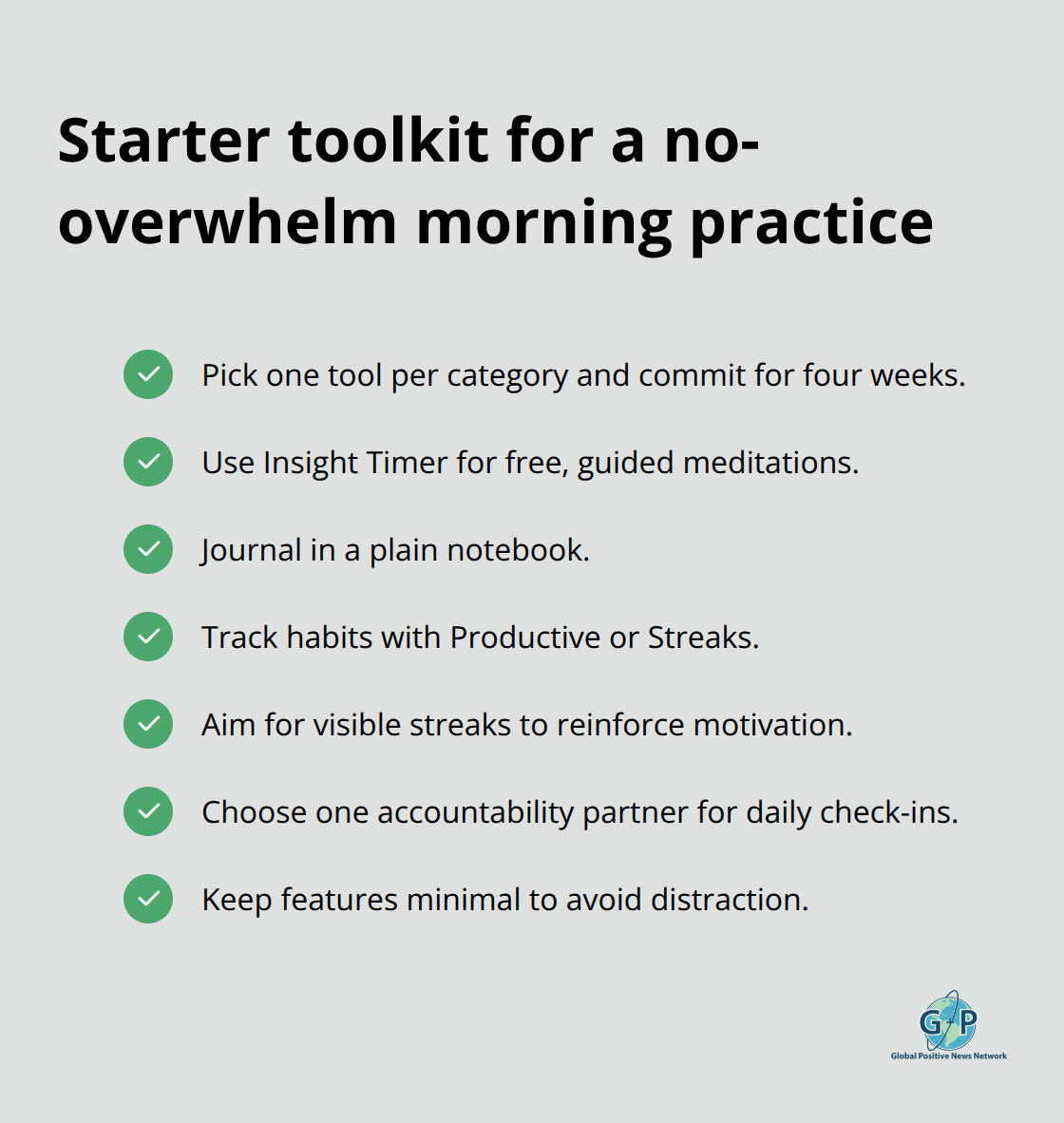
These aren’t fancy tools, but they’re reliable and won’t distract you with features you don’t need.
Pick One Accountability Partner Over Group Communities
The accountability piece trips most people up because they assume they need a structured group or coach. In reality, one accountability partner who texts you daily about whether you completed your morning routine outperforms joining a Facebook group where hundreds of people post motivational quotes. Find one person willing to check in with you five days a week, morning to morning, asking one question: did you do it? That’s accountability. If you prefer digital accountability without the personal connection, Streaks lets you invite friends to compete on the same habit, turning your routine into a low-stakes challenge that keeps you engaged.
Data Shows Personal Accountability Works Best
Research on personal accountability for habit formation shows that people who reported their progress to someone else were significantly more likely to complete their goals than those who kept them private. This gap matters because it separates people who sustain morning routines from those who quit after two weeks. Skip the overwhelming communities and pick one tool that fits how you actually live, not how you think you should live (your real schedule, your actual preferences, your genuine constraints).
Final Thoughts
Your morning positivity routine transforms through one small change and consistent action, not perfection. Research confirms that people who establish morning routines report measurably higher energy, sharper focus, and less stress throughout their days-this shift happens because you manage your cortisol response, activate your brain’s problem-solving network, and protect your limited willpower for work that matters. Pick one practice that resonates with you: the 4-7-8 breathing technique if your mind races at dawn, five minutes of judgment-free journaling if mental clutter weighs you down, or sensory awareness if motivation eludes you.
Four weeks of consistent practice compounds faster than you’d expect. After a month of morning work, you’ll notice you stay calmer under pressure, solve problems more creatively, and feel genuinely optimistic about your day before it starts-that shift reflects your nervous system actually regulating itself because you’ve created the conditions for it to do so. A blank notebook, three minutes of breathing, and attention to how your coffee tastes will reshape your entire morning trajectory without elaborate systems or expensive tools.
We at Global Positive News Network recognize that small, consistent actions create the foundation for lasting change. Your morning positivity routines represent one of the most powerful levers you control, so use it.
Explore more positive news:
Enjoying stories like this?
Global Positive News Network is reader-supported. If you’d like to support the mission, you can visit the Official GPNN store.