
Most people wake up stressed, already behind before their day begins. At Global Positive News Network, we’ve seen how morning gratitude routines transform this pattern by shifting your mindset before anything else can derail it.
The science is clear: gratitude rewires your brain toward positivity and resilience. When you practice it first thing, you set a foundation that carries through every challenge ahead.
How Gratitude Shifts Your Stress Response
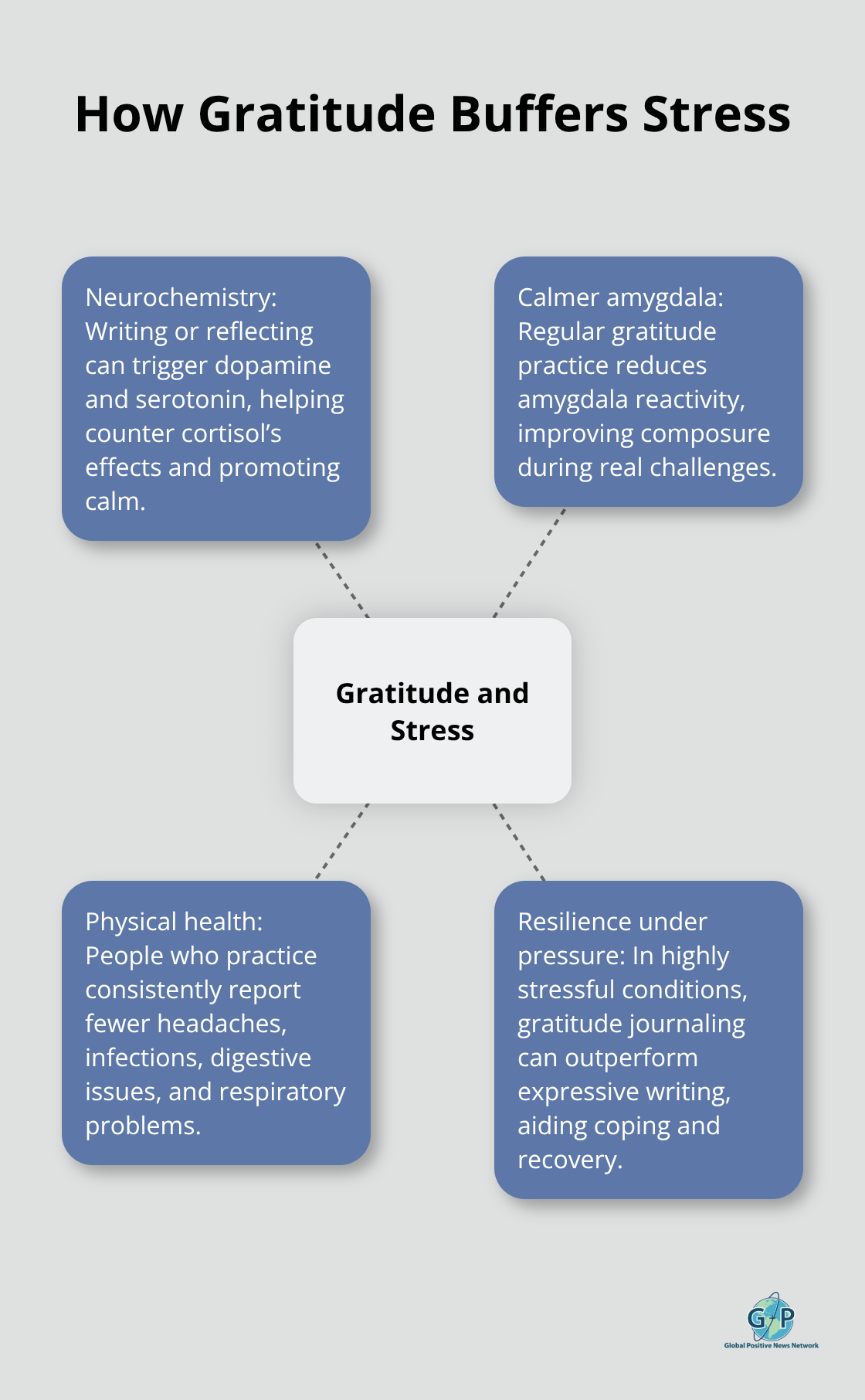
Gratitude doesn’t just feel nice-it actively changes how your nervous system handles stress. When you write about or reflect on what you’re grateful for, your brain releases dopamine and serotonin, the same chemicals that reduce cortisol, the stress hormone flooding your system. Research shows that gratitude writing may be a better resource for dealing with stress and negative affect than traditional expressive writing methods under extremely stressful conditions. This matters because chronic stress damages your immune system, disrupts sleep, and accelerates aging. The amygdala, your brain’s alarm center, becomes less reactive when you practice gratitude regularly, meaning you stay calmer in genuinely difficult situations. People with consistent gratitude habits report fewer headaches, infections, digestive issues, and respiratory problems according to multiple studies tracking physical health outcomes.
Your Morning Window of Opportunity
The first 30 minutes after waking are when your brain is most malleable. Cortisol naturally spikes in the morning to wake you up, but if you immediately check your phone or think about your to-do list, that spike becomes anxiety instead of activation. Gratitude writing in this window redirects that neurochemical surge toward positive framing. Try spending 5–10 minutes writing three to five specific things you’re grateful for and why they matter, focusing on people and concrete moments rather than abstract ideas. Quality beats quantity here-writing deeply about why you appreciate one person in your life produces stronger neural changes than listing 100 surface-level items.
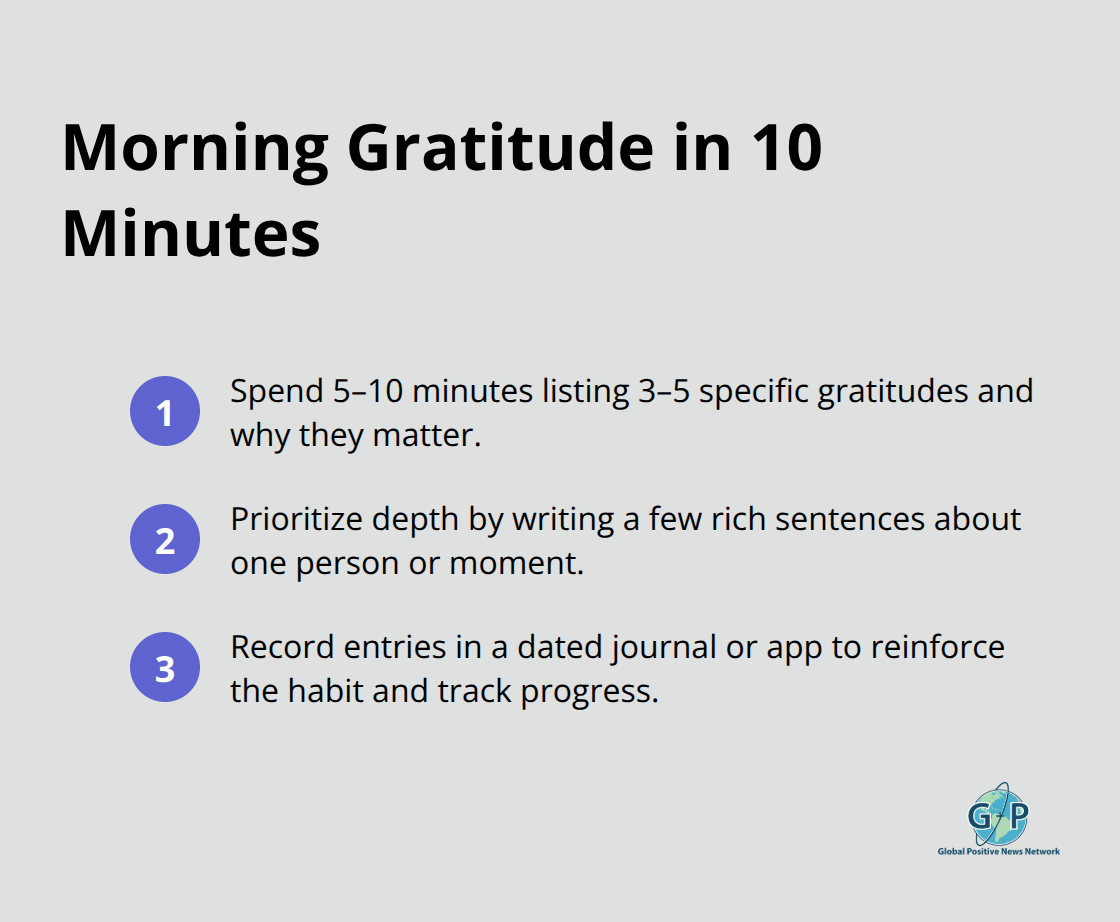
A dated record in a physical journal or dedicated app creates a visual anchor that keeps you accountable and lets you revisit moments of genuine appreciation later, which reinforces the neural pathways you’re building.
How Morning Gratitude Shapes Your Entire Day
Your mental state in the first hour determines your emotional baseline for the next 16 hours. When you start with gratitude, you activate the brain regions involved in motivation and higher-order thinking (the medial prefrontal cortex and ventral striatum) before stress or obligations can hijack your attention. This creates a cognitive buffer. Throughout the day, when frustration or setback arrives, your brain has already established a gratitude-based framework for interpreting events, making you more likely to notice what’s working rather than fixate on problems. People who maintain morning gratitude routines for even two weeks report measurable shifts in how they respond to conflict, delays, and disappointment. The practice isn’t about denying real problems; it’s about training your attention toward solutions and resources that exist alongside the difficulties.
What Happens Next in Your Routine
These neurochemical shifts set the stage for the specific exercises that anchor your morning practice. The next section walks you through three concrete techniques you can implement immediately, each designed to deepen the stress-reduction benefits you’ve just learned about.
Three Gratitude Techniques That Actually Work
Why Writing Beats Thinking
The gap between knowing gratitude helps and actually practicing it daily is where most people fail. Gratitude writing works better than thinking about it because the act of writing forces your brain to organize thoughts into concrete language, deepening the neural encoding. Research demonstrates that patients who underwent gratitude interventions experienced greater feelings of gratitude, better mental health, and fewer negative outcomes.
Specificity determines whether your practice sticks. Participants who wrote about why they appreciated particular people and what those relationships meant to them experienced stronger benefits than those listing generic items. Start with one person you genuinely appreciate and write two to three sentences about a specific moment you shared or a quality you value. Then add one concrete object or convenience you normally take for granted (hot water, your phone, or a comfortable bed) and explain why it matters to your daily life. This takes under five minutes and creates a dated record you can review monthly to track how your perspective shifts.
Gratitude Breathing and Present-Tense Affirmations
Meditation paired with gratitude breathing amplifies the stress reduction you gain from writing. Sit upright for three to five minutes and breathe slowly while mentally naming one thing you’re grateful for on each exhale. This synchronizes your nervous system activation with gratitude, training your body to associate calm breathing with positive thinking. Then speak three affirmations aloud before leaving your room, using present-tense language such as “I am grateful to be alive,” “I attract meaningful opportunities,” or “I appreciate the people around me.”
Speaking aloud engages more of your auditory and motor cortex than silent repetition, making the affirmations stick faster. Present-tense affirmations activate neural circuits related to positive feelings, making gratitude a more natural response over time. The combination of five minutes writing, three to five minutes of gratitude breathing, and two minutes of spoken affirmations totals roughly ten to twelve minutes and covers the three pathways your brain uses to encode new patterns: linguistic, kinesthetic, and auditory.
Creating Environmental Cues for Consistency
Do this sequence in the same location each morning to create an environmental cue that signals to your brain it’s time to shift into gratitude mode. Your physical space becomes part of the habit itself, making the routine feel automatic rather than forced. Once you establish this anchor, you’re ready to move beyond daily practice and build the systems that keep gratitude alive across weeks and months.
How to Make Gratitude Stick
Most people abandon gratitude routines within two weeks because they treat it like a New Year’s resolution instead of a genuine habit. The difference between success and failure comes down to three concrete decisions: how much time you actually commit, how you track what happens, and whether you involve other people. Research from the Journal of Happiness Studies shows that gratitude writing interventions delivered online during COVID-19 produced measurable stress reduction within one week when participants wrote for just 5–10 minutes daily, but only if they maintained the practice consistently.
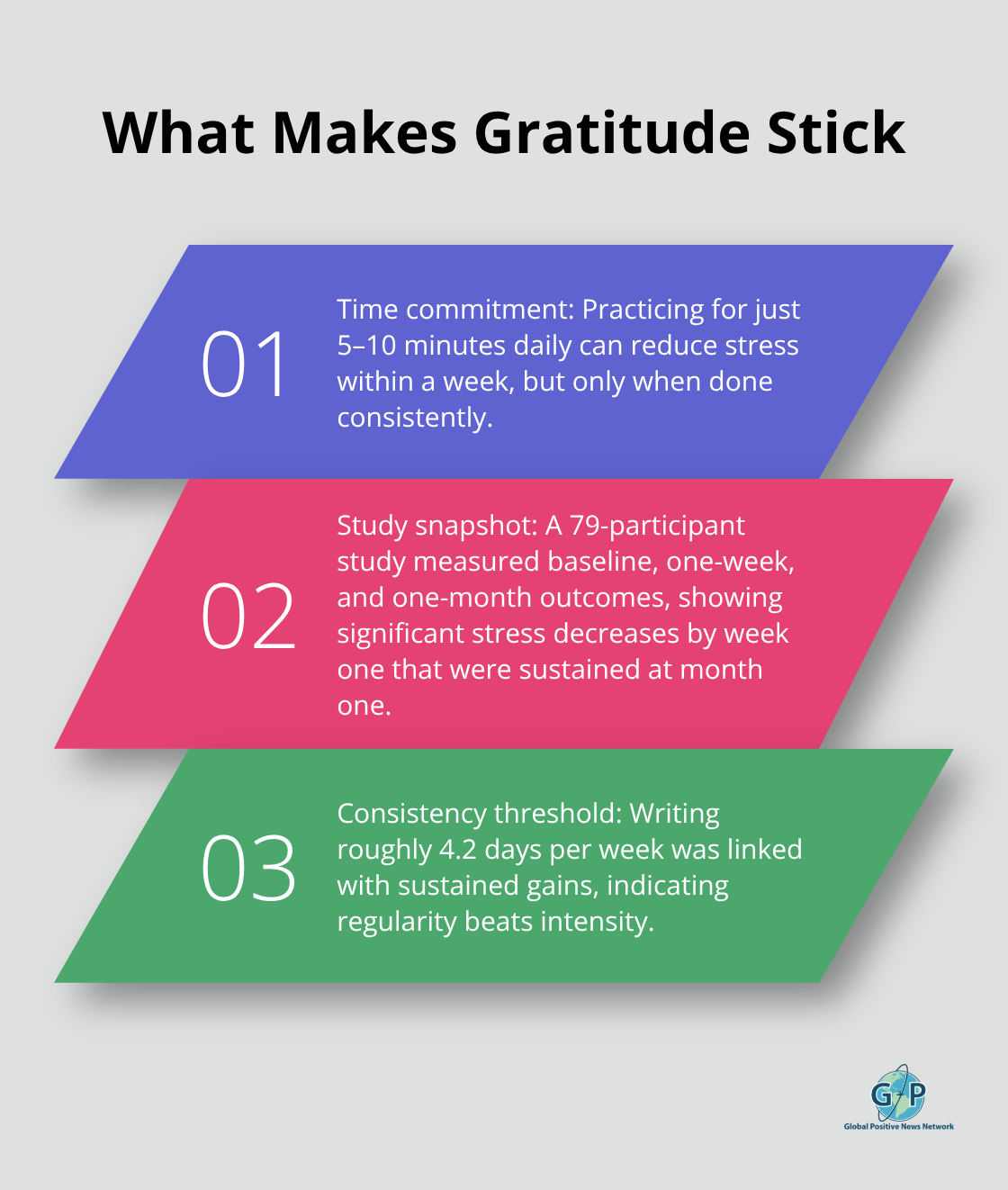
The study tracked 79 participants through baseline, one-week, and one-month follow-ups, revealing that those who wrote about gratitude on roughly 4.2 days per week showed significant stress decreases from baseline to one week and sustained those gains through month one. The key insight: consistency matters more than intensity. A brief daily practice produces stronger neural changes than occasional extended sessions because your brain needs regular repetition to rewire its default attention patterns.
Set Up Your Physical Journal
Start with a physical journal rather than a phone app because the act of handwriting engages more motor cortex and creates a stronger memory trace. Place the journal somewhere you see it during your morning routine, not hidden on a shelf where you’ll forget it exists. Write at the same time each morning, ideally within thirty minutes of waking when your brain is still in its malleable state. The specific format is simple: date the entry, name one person you genuinely appreciate and why, then add one concrete object or convenience you normally overlook. That’s it. Fekete and Deichert’s 2022 research found that quality beats quantity decisively, meaning three sentences about why your partner’s laugh matters outperforms listing fifty generic things.
Review Your Entries Monthly
After two weeks, you’ll have fourteen dated entries showing your specific moments of appreciation. After two months, you’ll have roughly sixty entries that reveal patterns in what actually nourishes you. Review these entries monthly to reinforce the neural pathways you’ve built. This practice transforms abstract gratitude into concrete evidence of what sustains you emotionally and relationally.
Share Your Gratitude With Others
The second decision is sharing your gratitude with one specific person each week. Text, call, or write a brief message to someone you listed in your journal, mentioning a concrete reason you appreciate them. This transforms gratitude from a solo mental exercise into a relational practice that strengthens your actual connections. Research consistently shows that people who express gratitude to others experience stronger reciprocity, meaning those relationships deepen and provide more genuine support when you face genuine difficulty. This is not about performative kindness; it’s about training your brain to notice and articulate what’s actually working in your life, then letting people know it matters.
Final Thoughts
The evidence is straightforward: morning gratitude routines create measurable shifts in how your brain responds to stress, how you interpret daily events, and how you connect with people around you. Five to ten minutes of writing about what you genuinely appreciate produces stress reduction within one week when you practice consistently. Speaking affirmations aloud and pairing gratitude with breathing techniques engage multiple neural pathways simultaneously, making the practice stick faster than thinking alone.
The real power lies in consistency, not perfection. A brief daily practice produces stronger neural changes than occasional extended sessions because your brain needs regular repetition to rewire its default attention patterns. Start with a physical journal placed where you’ll see it each morning, write one person you appreciate and why, add one concrete object you normally overlook, and date the entry.
After two weeks, you’ll have fourteen entries showing your specific moments of appreciation, and after two months, you’ll have roughly sixty entries revealing patterns in what actually nourishes you. These aren’t abstract ideas anymore; they’re concrete evidence of what sustains you emotionally and relationally. Visit Global Positive News Network to explore uplifting content and join a community focused on genuine well-being.
Explore more positive news:
Enjoying stories like this?
Global Positive News Network is reader-supported. If you’d like to support the mission, you can visit the Official GPNN store.