

Most people struggle to find peace in their daily lives, caught between work stress and endless distractions. At Global Positive News Network, we believe positivity short prayers offer a simple yet powerful way to reclaim calm and mental clarity.
This guide shows you exactly how to weave these prayers into your routine, create ones that match your values, and build lasting inner peace through consistent practice.
What Makes Short Prayers Work
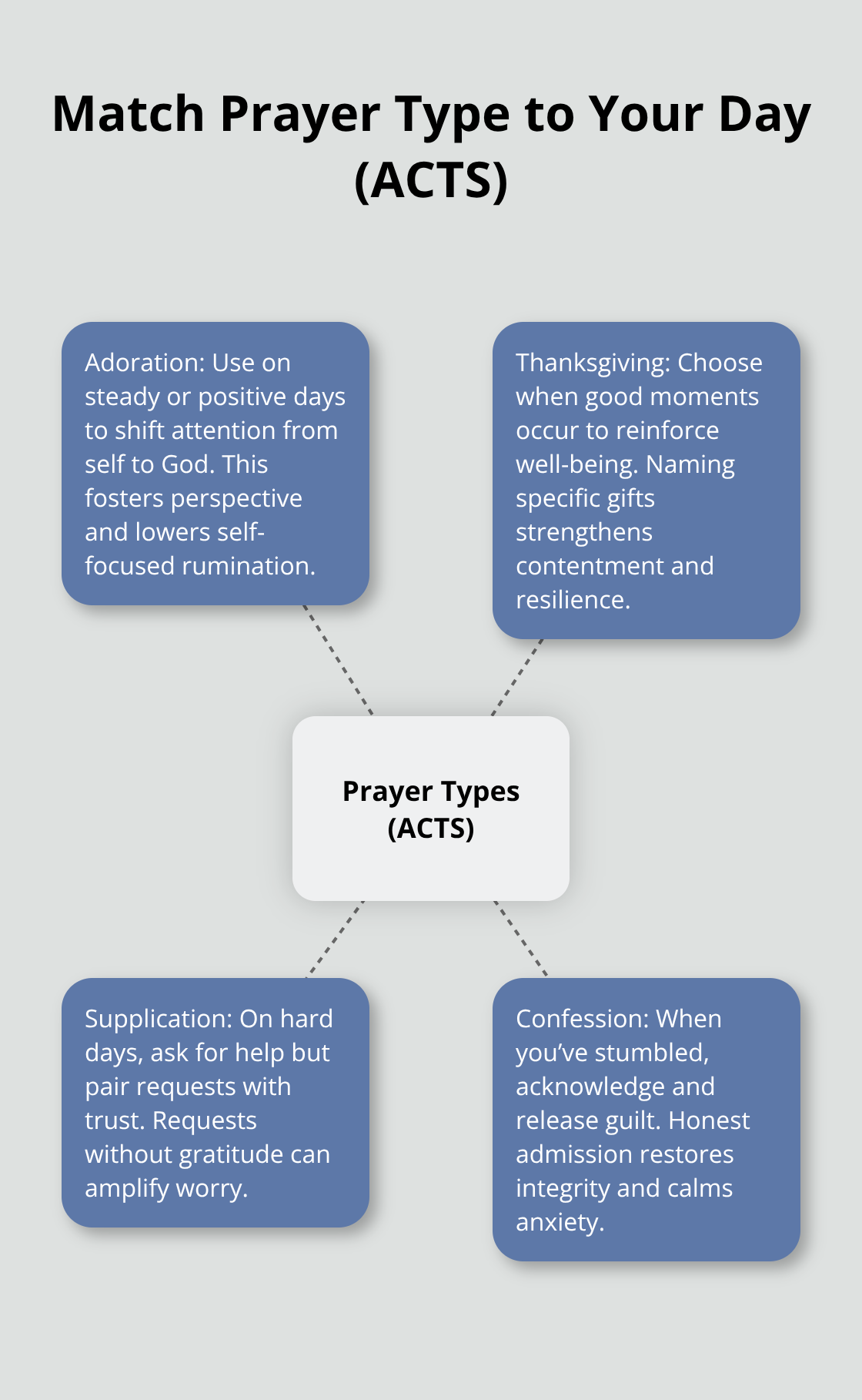
Effective short prayers match your emotional state and immediate need rather than follow a template. Research from three daily diary studies involving approximately 350 participants tracked prayer patterns using the ACTS framework-Adoration, Confession, Thanksgiving, and Supplication-and found that people who aligned their prayer type to their day’s events reported better outcomes. On days with positive events, thanksgiving and adoration prayers strengthened well-being; on difficult days, supplication and confession felt more authentic. Your short prayer works best when it reflects what you actually need in that moment, not what you think you should pray.
How Prayer Type Shapes Your Mental State
The research reveals clear patterns about which prayer approaches protect your peace. Devotional prayers that emphasize adoration and relationship with God shift your focus away from your own problems toward something larger, which neuroscience supports through reduced self-referential thinking. Conversely, believing that prayer is the best way to solve personal problems correlates with higher anxiety levels according to the Baylor Religion Survey of 823 respondents. This does not mean you should never ask God for help; it means constant supplication without gratitude or trust amplifies worry.
The Baylor data showed that praising God frequently correlates with lower anxiety levels, while prayers focused solely on problem-solving link to higher anxiety. This distinction matters enormously: prayers centered on trust and gratitude reduce stress, whereas prayers fixated on requesting solutions can amplify it.
Why Consistency Trumps Perfection
Daily diary studies revealed that people who prayed every day buffered themselves against next-day mood dips, even when they included supplication, because consistent prayer practice buffers the effects of stress and can act as a coping mechanism that promotes well-being. Infrequent prayer created a different pattern: sporadic supplication or confession without regular gratitude and praise predicted lower well-being the following day.
Short prayers thrive because they force you to be specific and honest about what you truly need. Your prayer practice works because consistency matters more than perfection-and this foundation prepares you to identify exactly what you need to pray about each day.
When to Pray Throughout Your Day
Start Your Morning Before Distractions Take Over
Start your morning before checking your phone. The first 10 minutes of consciousness shape your entire day’s emotional baseline, according to neuroscience research on attention and mood regulation. A single sentence focused on gratitude or trust works better than a lengthy prayer when you’re groggy and distracted.
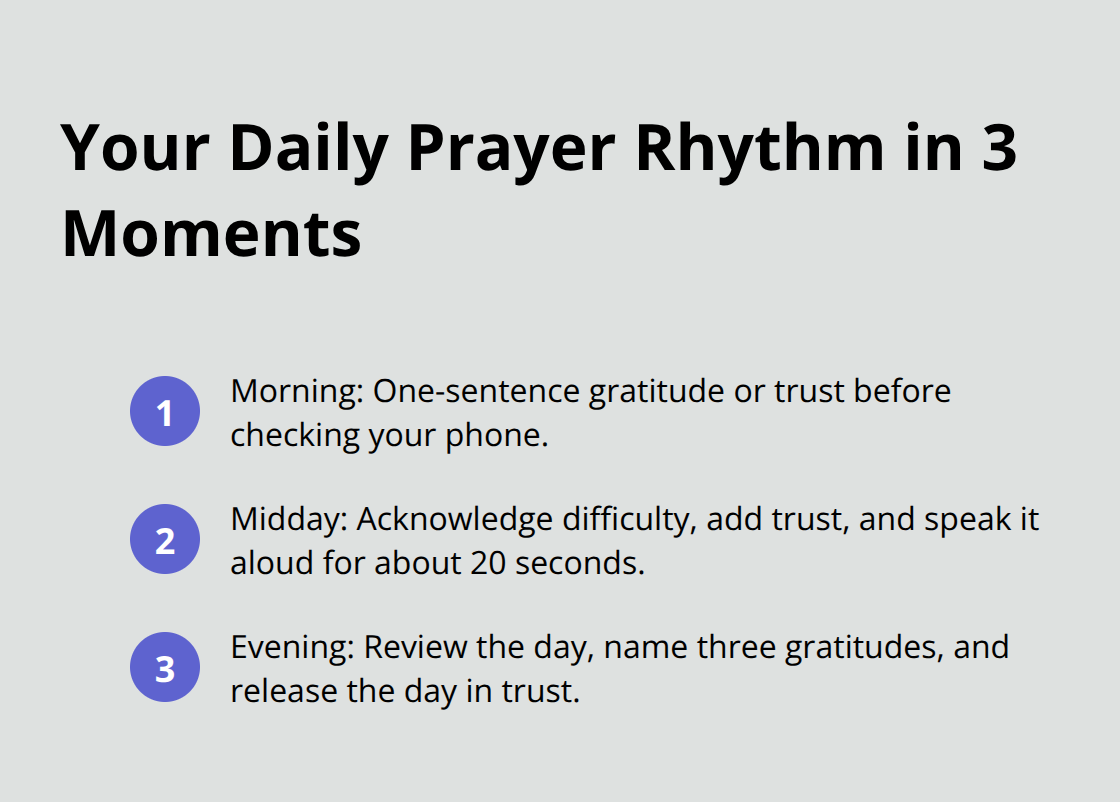
Try something like “God, I trust your provision today” or “I’m grateful for another chance to live well.” Morning gratitude prayers tap directly into protective effects, with research showing that prayer leads to lower heart rate, reduced muscle tension, and slower breathing rate. Your brain hasn’t yet flooded with cortisol from work emails and news feeds, so this moment is your strongest window for genuine connection.
Interrupt the Midday Stress Spiral
Midday prayers interrupt the stress spiral before it compounds. Around 2 or 3 p.m., most people hit an anxiety peak when deadlines loom and fatigue sets in. Research on daily prayer patterns shows that supplication prayers focused solely on problem-solving amplify worry, but brief prayers acknowledging difficulty while affirming God’s presence reduce that amplification. Instead of praying only for the problem to vanish, add a layer: “God, help me stay calm and trust you’re working this out.” This combines honest acknowledgment with the protective element of trust. Speak this prayer aloud if you’re alone, even for 20 seconds. The physical act of vocalizing strengthens the neural pathway more than silent thought alone.
Transform Your Evening Into Reflection
Evening reflection transforms your day from a blur into a coherent story. Before bed, spend three minutes reviewing what went well and what challenged you. Thanksgiving and adoration prayers work best here because your nervous system is naturally winding down and receptive to gratitude. Prayer helps manage negative emotions, and evening is when you have full clarity about what happened. Name three specific things you’re grateful for, even if they’re small: a good coffee, a kind text from a friend, or simply making it through a hard day. Close with a trust statement like “I release today to you and rest in your care.” This ritual prevents stress from bleeding into sleep and primes your brain for better recovery.
Your prayer timing now matches your body’s natural rhythms and emotional needs. The next step is learning how to craft prayers that speak directly to your own values and circumstances.
Craft Prayers That Speak to Your Life
Match Your Prayer to Your Actual Emotion
The most powerful short prayers sound like you, not like someone else. Start by identifying the specific emotional or spiritual need you face most often. If you struggle with control, your prayer might focus on trust rather than requesting a specific outcome. If you battle comparison and envy, a prayer centered on gratitude for what you have works better than asking God to change your circumstances.
Research shows that discrete emotions map directly onto prayer types: envy increases supplication, gratitude increases thanksgiving, guilt increases confession, and awe increases adoration. This means your prayer should match your actual emotional reality, not the emotion you think you should feel.
Build Your Prayer From Honest Inventory
Write down three situations that stress you most this week-perhaps a difficult conversation, a deadline, or family tension. Next to each, name the core emotion underneath: Is it fear, inadequacy, overwhelm, or resentment? Your prayer skeleton emerges from this honest inventory. If you’re afraid, build your prayer around trust.
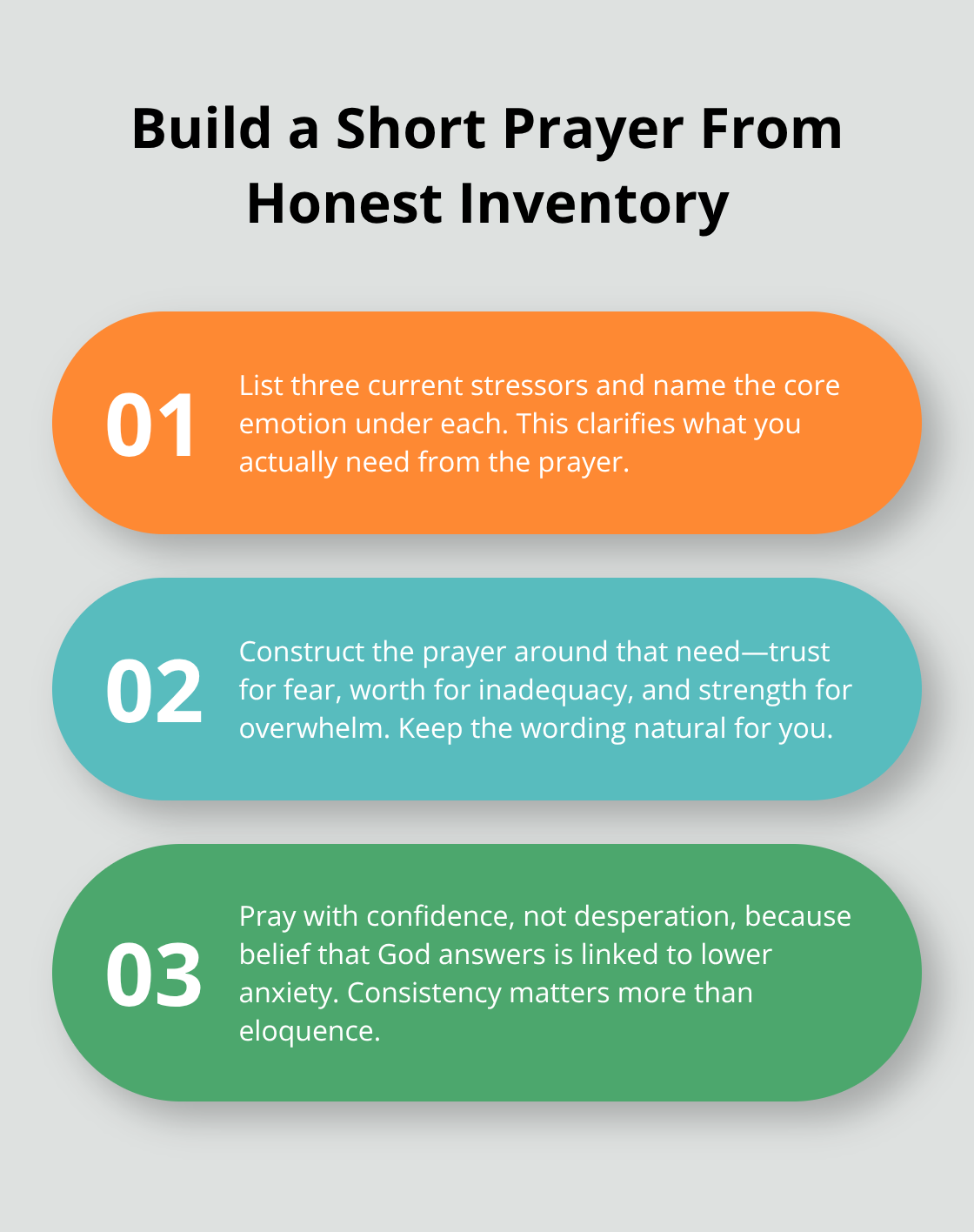
If you feel inadequate, anchor it in affirmation of your worth. If overwhelmed, center it on God’s strength.
Research shows that people who believed God answers prayers reported lower anxiety levels. This belief matters because it shifts your prayer from desperate pleading to confident conversation. Your words should reflect that confidence, not desperation.
Use Language That Fits How You Actually Talk
Choose language that actually fits how you speak. Avoid archaic or formal phrasing unless that’s how you naturally talk. If you say I’m stressed instead of I am experiencing distress, use the first version. If you pray best using scripture, select one verse that resonates with your core need and weave it in naturally.
A grief-stricken parent might pray: “God, hold my child close today and show me your love through this pain.” Someone facing a work deadline might say: “Help me stay calm and trust you’re guiding this project.” The specificity matters far more than eloquence. Research on prayer shows that people who prayed daily buffered themselves against mood shifts even when prayers included difficult emotions like supplication or confession. This means your short prayer can be messy and incomplete-what matters is that you show up daily with honest words.
Adjust Your Prayer as Your Needs Shift
Test your prayer for three days, then adjust if it feels stale or inauthentic. A prayer that works stops feeling like a performance and becomes as natural as breathing. Your evening reflection prayer might shift from week to week depending on what happened, but your morning trust prayer could remain identical for months because it anchors your day.
Personalization means matching prayer type to situation: use adoration on peaceful mornings, supplication on crisis days, thanksgiving during good moments, and confession when you’ve stumbled. This flexibility keeps your practice alive and prevents rote repetition that dulls its impact.
Final Thoughts
Short prayers build long-term peace through steady, daily practice that rewires how you respond to stress. Research shows that people who prayed every day buffered themselves against mood dips the following day, even during difficult seasons. This protection accumulates over weeks and months, creating resilience that doesn’t depend on your circumstances changing.
The real power emerges when you treat prayer as your daily breath rather than something you do only when crisis hits. Morning prayers set your emotional baseline before stress arrives, midday prayers interrupt anxiety spirals before they compound, and evening prayers transform scattered experiences into gratitude and reflection. This rhythm trains your nervous system to expect peace rather than panic.
Your next step is simple: choose one prayer from this guide or craft your own using the framework you learned, then speak it daily for seven days. A short, honest positivity short prayer spoken consistently outperforms elaborate prayers spoken sporadically, and you can explore more resources for maintaining peace and positivity by visiting Global Positive News Network.