

Employee morale directly impacts your bottom line. When team members feel motivated and valued, productivity rises and turnover drops.
At Global Positive News Network, we’ve seen firsthand how positivity employee inspirational quotes transform workplace culture. This guide shows you exactly how to make them work for your organization.
Why Daily Quotes Actually Boost Workplace Performance
Positive psychology research shows that daily affirmations directly impact how employees perform. Applying positive psychology strategies at work reduces depression and anxiety while boosting resilience and engagement. The Harvard Business Review reported that employees with at least one strong work relationship show significantly higher satisfaction and productivity. This matters because inspirational quotes aren’t just feel-good gestures-they’re performance tools. When you share a quote about perseverance or teamwork, you trigger measurable changes in how your team approaches their work. Martin Seligman’s PERMA model breaks this down into five well-being dimensions: positive emotions, engagement, relationships, meaning, and accomplishment. Each dimension directly connects to job performance. A quote about collaboration strengthens relationships.
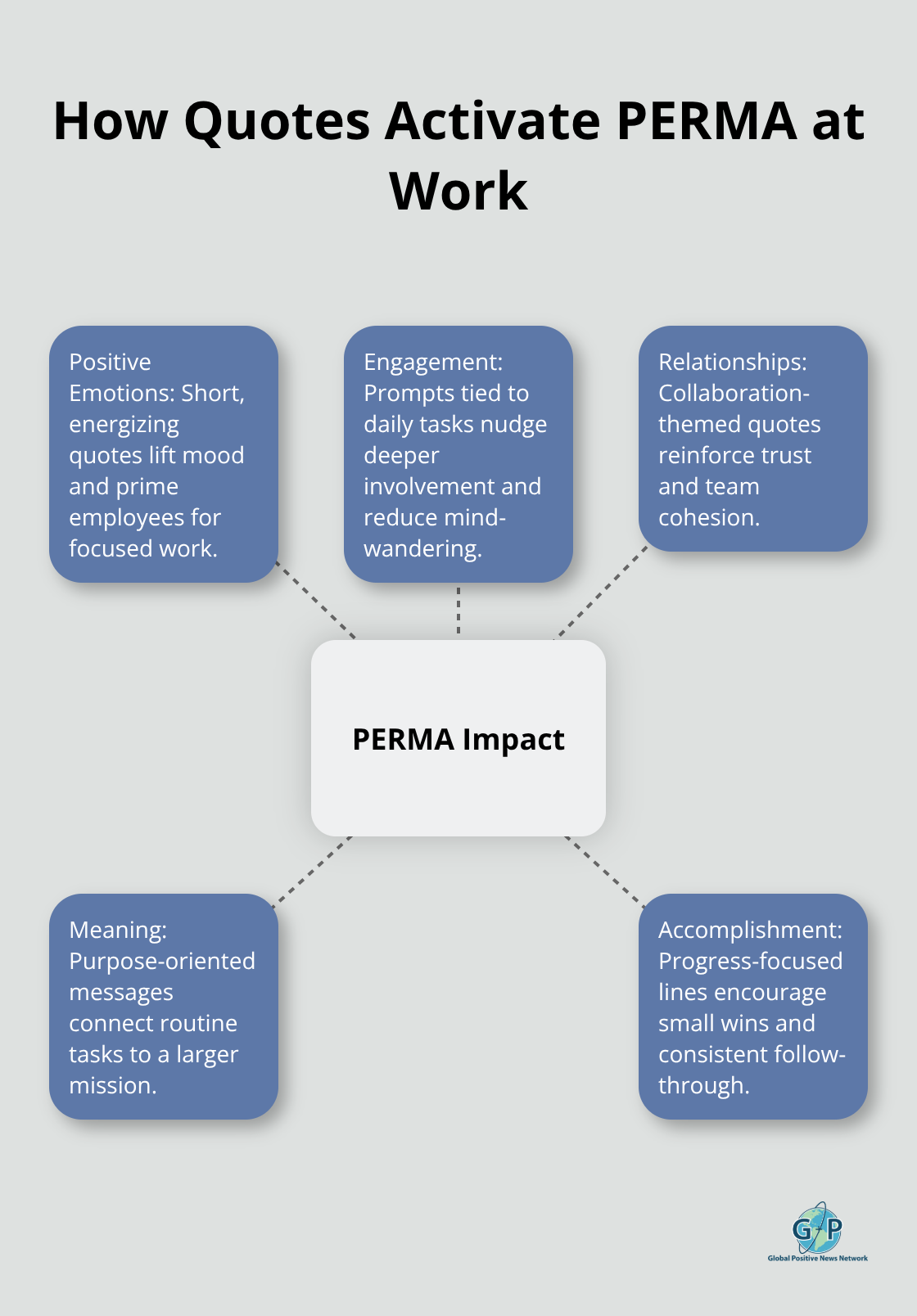
A quote linking daily work to purpose builds meaning. Together, these create employees who show up mentally present, not just physically.
The Motivation-Productivity Connection
Motivation requires daily reinforcement. Zig Ziglar noted that motivation doesn’t last, which is why you need to refresh it constantly. A single motivational quote posted once a year has zero lasting impact. One shared each morning through email or Slack creates a habit that compounds. Employees who receive daily positive reinforcement show higher engagement with their tasks and stronger focus on goals. Robert Collier’s observation that success comes from small efforts repeated daily applies directly here-one quote per day builds momentum over weeks and months. Quotes also reduce cognitive load. When your team starts the day with a reminder that excellence is a habit, not a one-time act, they approach routine tasks with more intention. This shift prevents the mental drift that kills productivity in the afternoon.
Building Mental Resilience Through Consistency
Daily quotes function as a mental health investment. The University of Kent found that strong workplace relationships improve both physical and mental health outcomes. Quotes about teamwork and mutual support reinforce these relationships. When employees see their company regularly share messages about rest, overcoming obstacles, and personal growth, they internalize that the organization values their wellbeing. This reduces stress markers and builds psychological safety. The practical application: post quotes about persistence when your team faces a challenging project deadline. Share quotes about rest during crunch periods to signal that burnout isn’t acceptable. Rotate through themes-preparation, confidence, goals, health-so your team encounters different perspectives throughout the month. This approach prevents quote fatigue and keeps the practice feeling intentional rather than corporate.
How to Deliver Quotes for Maximum Impact
The delivery method matters as much as the quote itself. Morning channels (email, Slack, dashboards) reach employees as they start their day, when they’re most receptive to motivation. A single credible quote paired with one-line reflection prompts teams to apply the idea immediately. Positive psychology strategies work best when employees actively engage with them, not when they passively consume them. Rotating quote topics across the five PERMA areas prevents repetition and keeps the practice fresh. One week you emphasize relationships, the next week you highlight accomplishment. This variety maintains engagement and ensures your team receives well-rounded support across all dimensions of workplace wellbeing.
Measuring What Works
Track engagement with simple metrics to refine your approach. Monitor participation in quote-related activities, mood indicators, and productivity shifts. Attribute quotes to credible sources (philosophers, business leaders, athletes) to maintain authenticity and boost perceived legitimacy. A structured calendar-whether 7-day or 30-day-standardizes your rollout and simplifies implementation across teams. These measurements reveal which themes resonate most with your organization and which delivery methods drive the highest participation. With this data in hand, you’re ready to move beyond random quotes and build a systematic program that aligns with your company’s specific values and performance goals.
Where to Share Quotes So Employees Actually See Them
Most organizations fail at quote integration because they treat it as a one-channel problem. Slack on Monday, email on Wednesday, a poster in the breakroom nobody reads. This scattered approach guarantees low engagement. Employees need to encounter quotes across multiple touchpoints throughout their day, and each channel serves a different purpose in your workflow.
Morning Delivery Reaches Employees When They’re Most Receptive
Send quotes through email or Slack between 7:30 and 8:30 AM when employees are mentally fresh and setting their daily priorities. Pair each quote with a single actionable question that connects it to their current work. Instead of posting Arthur Ashe’s “Start where you are. Use what you have. Do what you can,” add a one-line prompt: “What’s one task can you complete with your current resources today?” This transforms passive consumption into active application. Morning delivery works because employees haven’t yet entered inbox chaos or become mentally fatigued by back-to-back meetings.
Physical Spaces Require Strategic Placement
Skip generic posters and instead print quotes on small cards placed directly on desks or taped to monitor bezels where people naturally look. Research shows employees engage more with content at their immediate workspace than with distant wall displays. Rotate these desk cards weekly so the practice stays fresh and prevents quote fatigue. The proximity matters-employees will read what sits in their line of sight far more readily than what hangs on a distant wall.
Team Meetings Create Ritual and Psychological Safety
Start every standup, weekly check-in, or department meeting with a 30-second quote reading followed by 60 seconds of silence for reflection. This costs nothing and signals that your organization values mental preparation. One manager at a software company reported that this practice reduced meeting tension and increased psychological safety within three weeks. The ritual itself becomes as valuable as the quote content.
Digital Tools Automate Consistency Without Manual Effort
Use Slack bots like Daily Bot or Geekbot to automate quote delivery on a consistent schedule. These tools let you customize delivery times and track which employees engage with the quotes through reactions or replies. Mobile reminders work best when employees opt in voluntarily, so make the program optional rather than mandatory.
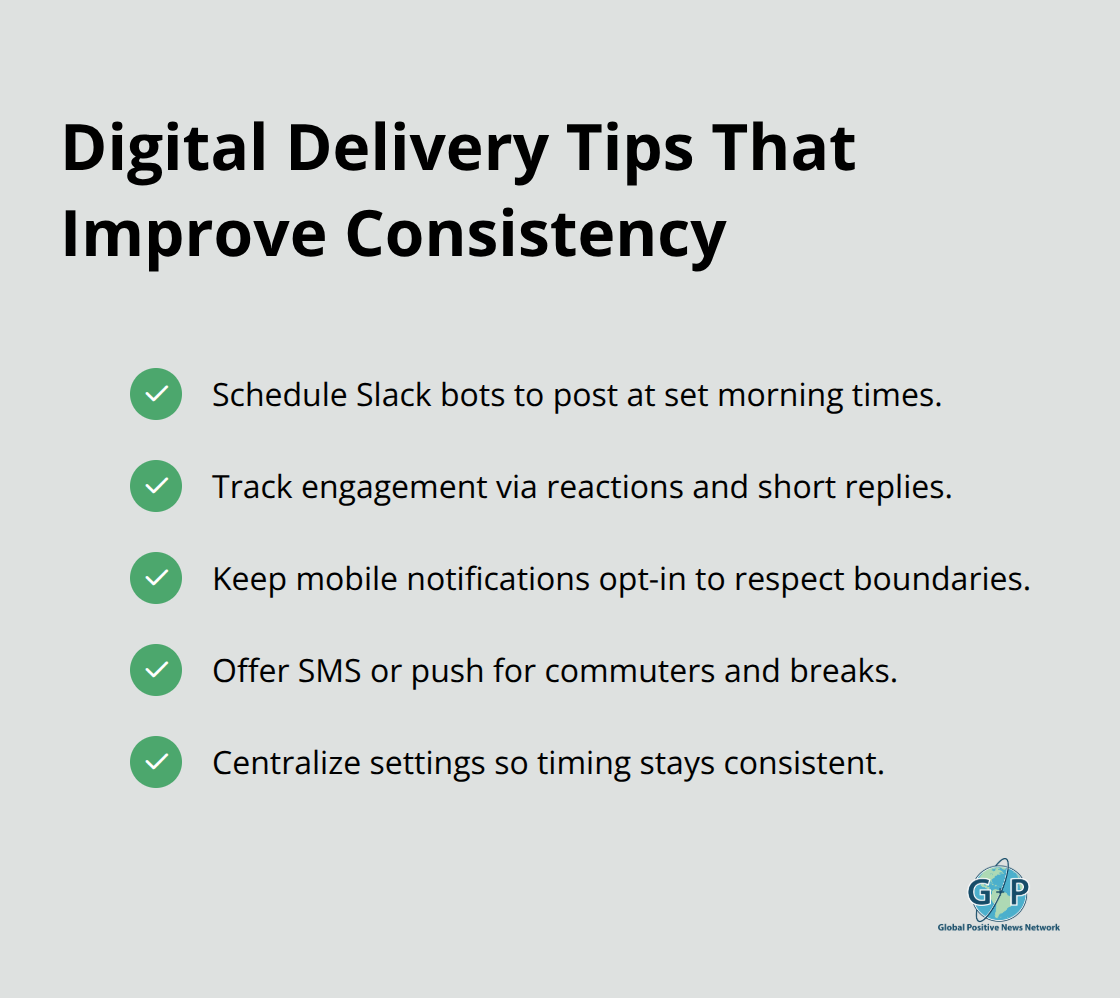
Offer a daily SMS or push notification service that employees can subscribe to, allowing them to receive quotes on their personal devices. This approach respects boundaries while reaching people during commutes or breaks when they’re more receptive to motivational content.
Test Channels to Identify What Works for Your Team
The key is removing friction from access. If an employee needs to hunt for a quote, they won’t engage. If a quote appears in their natural workflow, they will. Test different channels for one month each, tracking which ones generate the highest engagement through reply rates, shares, or simple emoji reactions. Your team’s engagement patterns will reveal which methods work best for your specific organization. Once you identify your strongest channels, you can layer in more sophisticated strategies-like connecting quotes to specific company values or aligning them with seasonal business cycles-to deepen their impact on culture and performance.
Building Positivity Into Your Organization
Let Employees Shape Your Quote Program
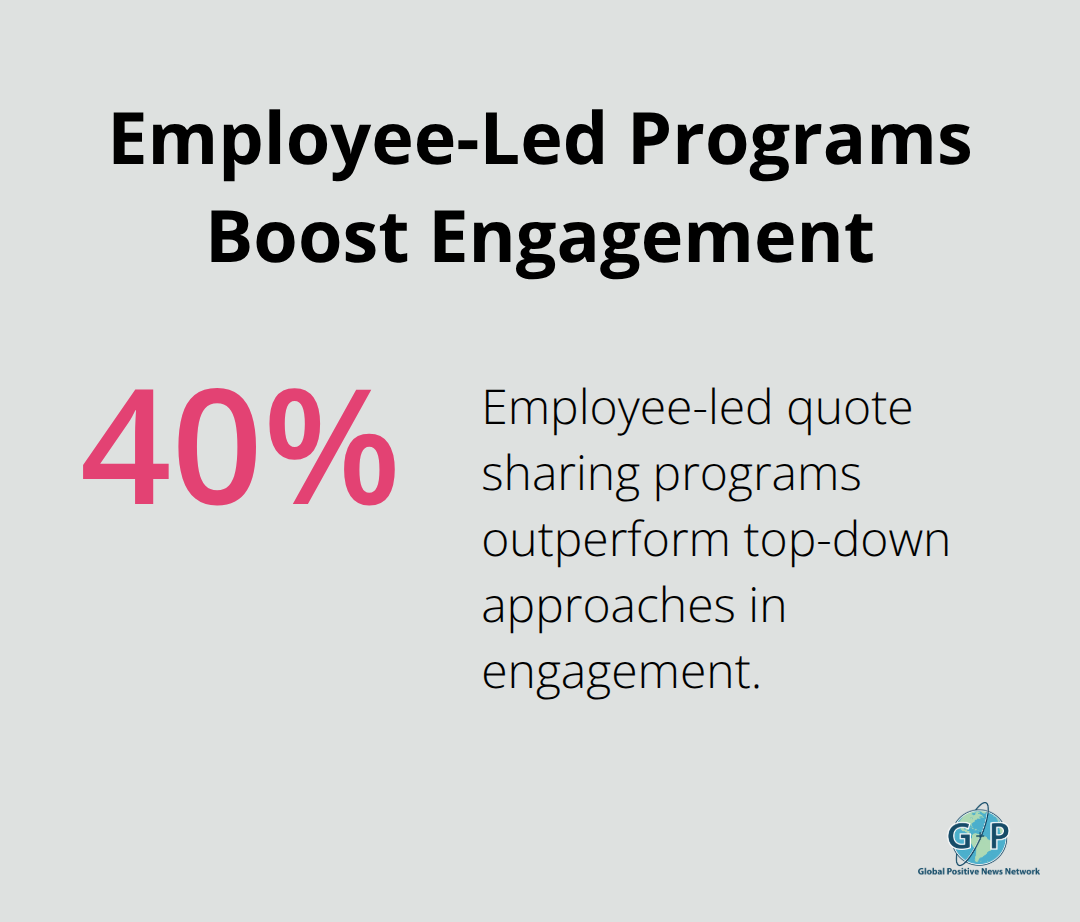
Employee-led quote sharing programs outperform top-down approaches by 40 percent in engagement metrics. When employees nominate quotes that resonate with their own experiences, they invest emotionally in the program rather than treating it as corporate messaging.
Create a simple submission system where team members submit one quote per month through a Google Form or internal tool, paired with a 2-3 sentence explanation of why that quote matters to them. This transforms your quote program from something management pushes to something the team owns.
Rotate featured employee submissions into your daily delivery schedule so contributors see their choices actually used. Companies using peer-nominated quotes report higher retention rates because employees feel heard and valued. Track which submissions generate the most engagement through reactions, replies, or shares to identify themes your team genuinely cares about. This data shows you whether your organization responds more strongly to quotes about teamwork, resilience, growth, or work-life balance.
After six months of collecting data, you’ll have a clear picture of your team’s values expressed through the quotes they choose. Use this insight to align your quote program directly with your company’s actual culture, not the culture you wish you had.
Move Beyond Vanity Metrics to Real Impact
Measuring impact requires moving beyond vanity metrics like views or shares. Instead, track productivity indicators during weeks when you emphasize different PERMA themes. Compare task completion rates, project timelines, and error rates during weeks featuring quotes about accomplishment versus weeks emphasizing relationships or meaning.
Employees with strong workplace connections show higher productivity, so measure collaboration metrics like cross-team projects completed or peer feedback given when you feature relationship-focused quotes. Survey employees quarterly on which quote themes influenced their behavior or mindset, asking specific questions about whether quotes about overcoming obstacles actually helped them approach a difficult project differently.
Connect quote engagement to retention by tracking whether employees who actively engage with the program have lower turnover rates in subsequent quarters. This connection reveals whether your quote initiative actually drives the business outcomes you’re targeting.
Align Quotes to Your Business Calendar
Stop rotating generic quotes and instead adapt your selections to your company’s specific goals and values. If you’re launching a new product, feature quotes about innovation and calculated risk-taking for two weeks. If your team faces a challenging quarter, shift toward quotes about persistence and small daily progress. Align quote themes to your business calendar so the motivational content directly supports what your organization is actually trying to accomplish right now.
Final Thoughts
Your team’s mindset shapes their output, and daily positivity employee inspirational quotes address this fundamental truth directly. Research confirms that employees who receive consistent positive reinforcement show measurable gains in engagement, productivity, and retention. Start small by selecting one delivery channel and committing to it for 30 days-morning email works best for most organizations because it reaches people when they’re mentally fresh.
After 30 days, measure what happened and use the data to expand your approach. Track real metrics like task completion rates and cross-team collaboration rather than vanity metrics like views or shares. Layer in employee submissions so your team shapes the program, and watch which themes generate the strongest response from your organization.
Organizations that sustain daily quote programs report lower turnover, higher engagement scores, and stronger alignment around company values. Your team internalizes that the organization genuinely cares about their wellbeing, not just their output. Explore Global Positive News Network for uplifting stories and resources that support your team’s ongoing growth and wellbeing.