

Negative thoughts can trap us in cycles that feel impossible to break. Research shows that 80% of our daily thoughts are negative, creating stress and limiting our potential.
We at Global Positive News Network believe learning how to turn negativity into positivity transforms not just your mindset, but your entire life experience.
The strategies ahead will give you practical tools to shift your perspective and build lasting positive habits.
What Triggers Your Negative Thoughts
Negative thoughts arise from three main sources that most people overlook. Social media algorithms deliberately show you content that triggers emotional reactions, with studies from the University of Pennsylvania showing that people who limit social media to 30 minutes daily experience decreased well-being. News consumption amplifies this effect because media outlets know negative stories generate more engagement than positive ones, according to research from McGill University.
Your Brain’s Negativity Bias
Your brain processes negative information five times faster than positive information, a survival mechanism that once protected humans from danger. This negativity bias means you naturally focus on threats, criticism, and problems. Harvard psychologist Matt Killingsworth found that people spend 47% of their waking hours thinking about something other than what they’re currently doing, and this mind-wandering typically leads to unhappiness. Sleep deprivation worsens this pattern – getting less than seven hours of sleep increases negative thought processing by 60% (according to UC Berkeley research).
Environmental and Social Influences
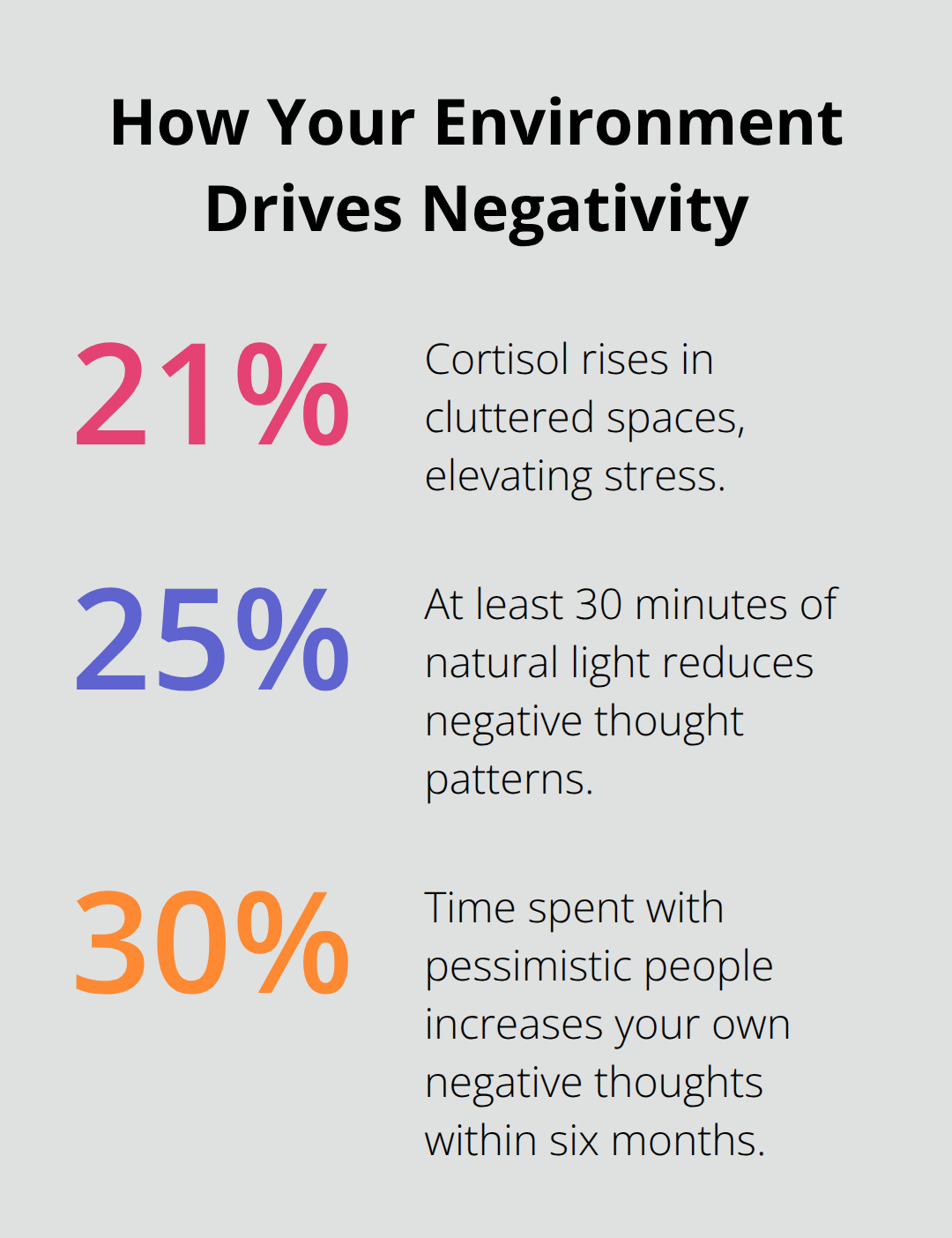
Your physical environment directly impacts your mental state. Cluttered spaces increase cortisol levels by 21%, while exposure to natural light for at least 30 minutes daily reduces negative thought patterns by 25%. The people around you matter more than you realize – spending time with pessimistic individuals increases your own negative thoughts by 30% within six months, based on research from the University of Notre Dame.
Workplace stress contributes significantly, with 83% of workers experiencing daily stress that triggers automatic negative responses.
Breaking the Automatic Response
Most negative thoughts happen automatically because your brain creates neural pathways through repetition. These pathways become stronger each time you follow the same thought pattern. Stress hormones like cortisol make these negative pathways even more dominant (they increase activity in the brain’s fear center by 40%). The good news is that you can rewire these patterns with specific techniques that interrupt the automatic cycle and create new, positive neural pathways instead.
How to Rewire Negative Thought Patterns
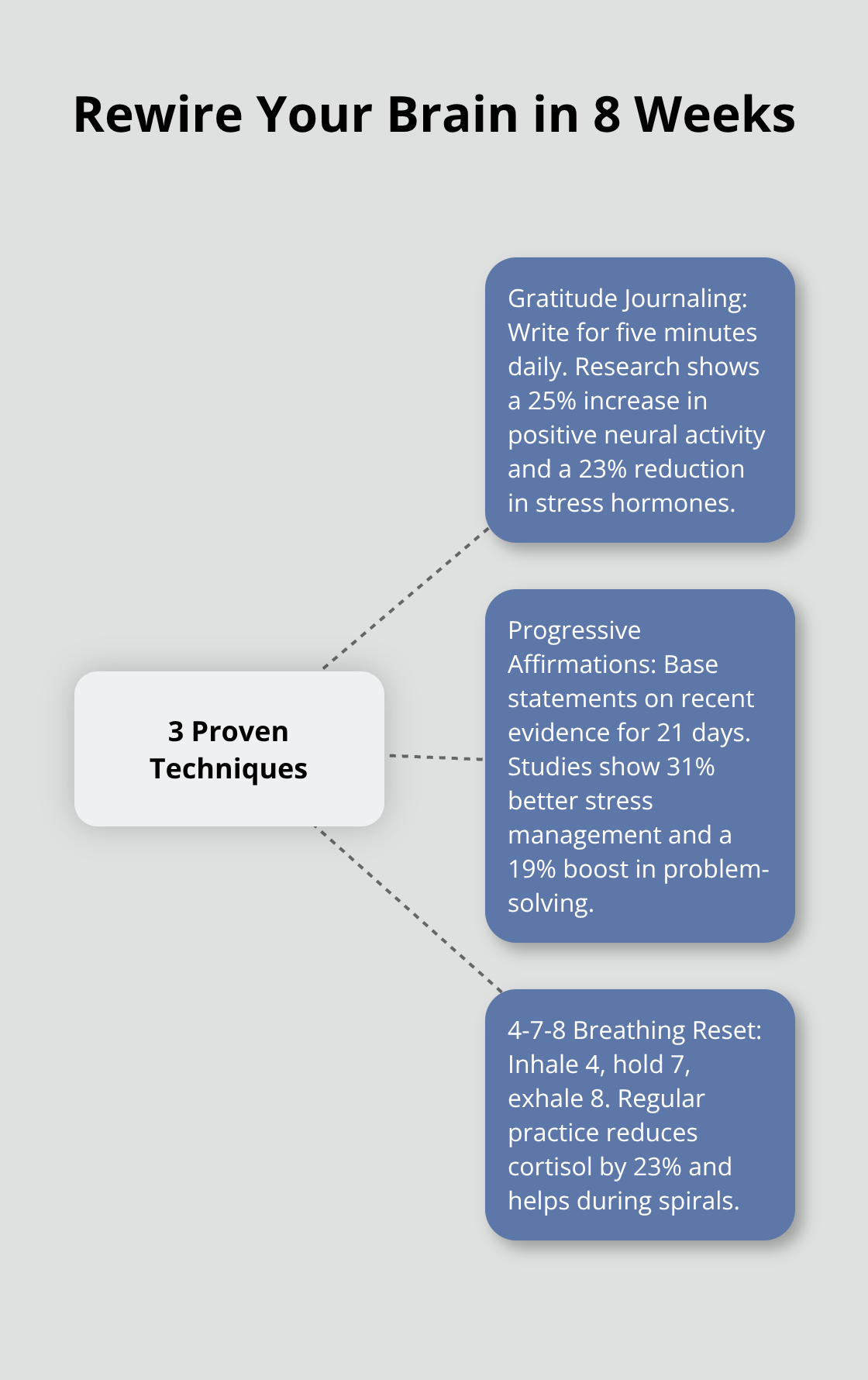
Three specific techniques change brain structure within eight weeks and help you shift from negative to positive thinking patterns. Stanford University research demonstrates that people who write in gratitude journals for five minutes daily increase positive neural activity by 25% and reduce stress hormones by 23%. Write down three specific things you appreciated each day, and focus on details rather than general statements.
Instead of writing “grateful for family,” specify “grateful that my sister called to check on my presentation today.” UCLA studies show this specificity activates different brain regions and creates stronger positive associations.
Transform Your Inner Dialogue
Replace negative self-talk with evidence-based affirmations that your brain can actually believe. Generic phrases like “I am amazing” fail because your subconscious rejects unrealistic statements. Instead, use progressive affirmations based on recent accomplishments: “I handled that difficult conversation professionally yesterday, so I can manage challenging situations effectively.” University of Pennsylvania research found that people who practiced this approach for 21 days showed 31% improvement in stress management and 19% increase in problem-solving abilities. Address yourself by name when you practice positive self-talk (saying “Sarah, you handled that well” creates emotional distance and activates the prefrontal cortex, the brain region responsible for rational thinking).
Master the 4-7-8 Reset Technique
When negative thoughts spiral, use the 4-7-8 breathing method that Navy SEALs employ for instant stress reduction. Inhale for four counts, hold for seven, exhale for eight. This technique reduces cortisol by 23% through regular breathing practices. Practice this three times when you notice negative thought patterns start. Follow with perspective questions: ask yourself if this thought helps you reach your current goals or if worry about this situation will change the outcome. A Cornell University study found that 85% of worries never materialize, and 79% of people handle difficult situations better than they initially expected.
Create Your Daily Mindfulness Practice
Set aside ten minutes each morning to observe your thoughts without judgment. Sit quietly and notice when negative thoughts arise, then label them simply as “thinking” before you return focus to your breath. Harvard research shows that people who practice this technique for eight weeks develop 23% more gray matter in areas associated with emotional regulation. This practice doesn’t eliminate negative thoughts but changes your relationship with them (you become the observer rather than the victim of your thoughts). The key lies in consistency rather than perfection.
These mental rewiring techniques work best when you combine them with environmental changes that support your new positive habits.
How Do You Make Positivity Stick
Your daily routine determines whether positive changes become permanent or fade within weeks. Research shows that waking up by seven in the morning is strongly linked to improved mental and physical health. Wake up 15 minutes earlier to practice gratitude writing, complete five minutes of movement (jumping jacks or stretching), and set one specific positive intention for the day. These actions activate your prefrontal cortex before stress hormones flood your system.
Build Evening Reflection Habits
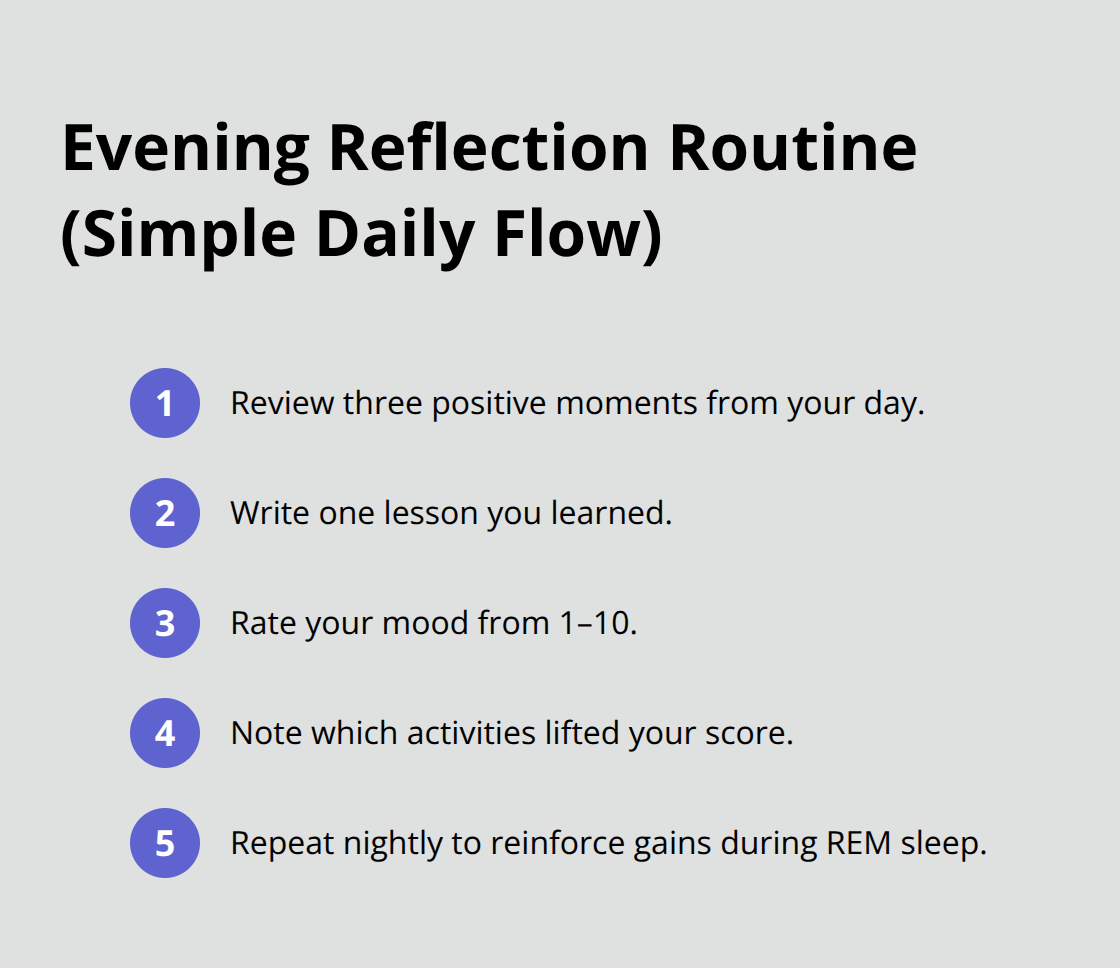
Evening routines matter equally for long-term success. Spend ten minutes each night to review three positive moments from your day and write down one lesson you learned. This combination creates neural pathways that strengthen overnight during REM sleep. Rate your mood from 1-10 each evening and note which activities contributed to higher scores.
This data reveals your personal positivity patterns and helps you replicate successful strategies over time.
Cut Toxic Influences Without Compromise
Stop consuming negative media and limit contact with persistently pessimistic people immediately. Research demonstrates that negativity spreads more than positivity in social situations. Unfollow social media accounts that trigger comparison or anxiety, and replace news consumption with solution-focused content. Join local volunteer groups, fitness classes, or hobby communities where positive people naturally gather.
Replace complaining conversations with appreciation exchanges. When someone shares a problem, acknowledge it briefly then redirect to potential solutions or positive aspects. Research shows that people who implement these social changes see significant improvement in mood stability within weeks (the key lies in selectivity rather than social isolation).
Track Progress Through Micro-Celebrations
Set weekly micro-goals that build toward larger positive habits rather than overwhelming yourself with massive changes. Write down one small positive action each day and celebrate completion with a specific reward – a favorite tea, ten minutes of music, or a short walk outside. Research shows that people who track daily positive actions maintain new habits longer than those who focus only on monthly goals.
Document progress weekly through photos, journal entries, or voice memos that capture your mindset shifts over time. Create a simple scoring system where you measure daily wins and identify patterns that support your positive transformation.
Final Thoughts
You can transform negative energy into positive momentum through consistent daily practice rather than perfect execution. The techniques you’ve learned work together to rewire your brain’s automatic responses within eight weeks. Your personal positivity creates ripple effects that extend far beyond your own experience, with research showing that positive individuals influence up to three degrees of separation in their social networks.
Choose one technique from this guide and practice it for seven consecutive days to start your transformation. Track your progress through daily mood ratings and celebrate small wins along the way. Setbacks are normal parts of the process rather than failures (they actually strengthen your resilience when you work through them).
We at Global Positive News Network provide evidence-based strategies and consistent support for those who want to learn how to turn negativity into positivity. Visit Global Positive News Network to access uplifting stories, positivity-themed products, and community resources that reinforce your new positive habits. Your transformation starts with the next choice you make.
Explore more positive news:
Enjoying stories like this?
Global Positive News Network is reader-supported. If you’d like to support the mission, you can visit the Official GPNN store.