

Optimism isn’t just a feel-good mindset-it directly shapes your health, relationships, and ability to bounce back from setbacks. At Global Positive News Network, we’ve seen how learning to stay optimistic transforms lives in measurable ways.
This guide walks you through practical strategies to build genuine optimism, tackle the obstacles that get in your way, and maintain a hopeful perspective even when things get tough.
Why Optimism Actually Changes Your Body
How Optimism Rewires Your Physical Health
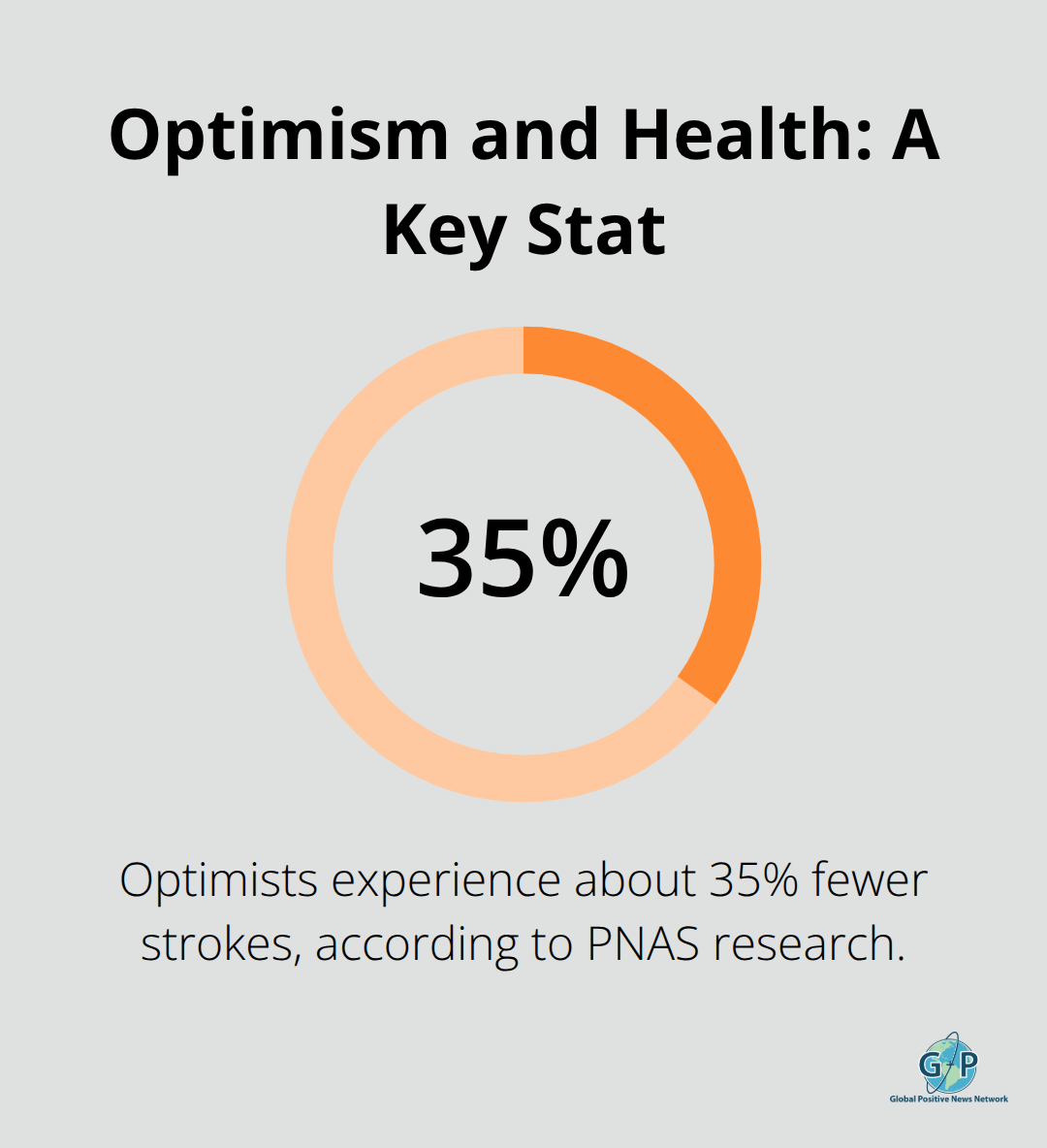
Optimism isn’t abstract philosophy-it rewires how your body functions at a cellular level. Research published in the Proceedings of the National Academy of Sciences found that optimists experience about 35% fewer strokes and live 11–15% longer than their pessimistic counterparts. The difference shows up in your cardiovascular system first. Studies on postmenopausal women revealed that optimistic outlooks slow the progression of carotid atherosclerosis, meaning your arteries stay healthier when you maintain a positive perspective.
After cardiac surgery, optimistic patients recover faster and return to daily activities sooner than those with negative outlooks. Laughter-a natural byproduct of optimism-triggers endorphin release, strengthens immune function, and improves sleep quality according to research from the University of Maryland in 2009. Exercise amplifies these benefits. A brisk 20-minute outdoor walk releases endorphins that reduce stress and shifts your perspective on challenges.
Your body doesn’t separate optimism from physical health; they’re the same system working together.
Mental Health Gains Real Traction
Optimistic individuals show significantly lower rates of depression and suicidal ideation compared to pessimists. When setbacks occur, optimists use problem-focused coping and actively seek social support rather than withdrawing. This behavioral difference matters enormously-it means optimistic people take concrete steps to solve problems instead of spiraling into avoidance.
Cancer patients with optimistic outlooks report better emotional and functional wellbeing, with some studies showing longer survival rates. Epilepsy patients with positive perspectives report substantially higher quality of life. The mechanism is straightforward: optimism promotes acceptance, humor, and positive reappraisal when problems can’t be immediately solved.
How Optimism Strengthens Your Relationships and Career
Your relationships strengthen because optimistic people attract others through their presence and energy. Pessimistic individuals drain social connections through constant negativity, while optimists build networks that provide genuine support during difficult periods. Optimism translates into tangible career outcomes through better networking, confidence, and opportunity recognition.
These physical, mental, and social benefits create a foundation for the practical strategies that actually build optimism in your daily life.
Build Optimism Through Daily Action
Train Your Brain to Notice What Works
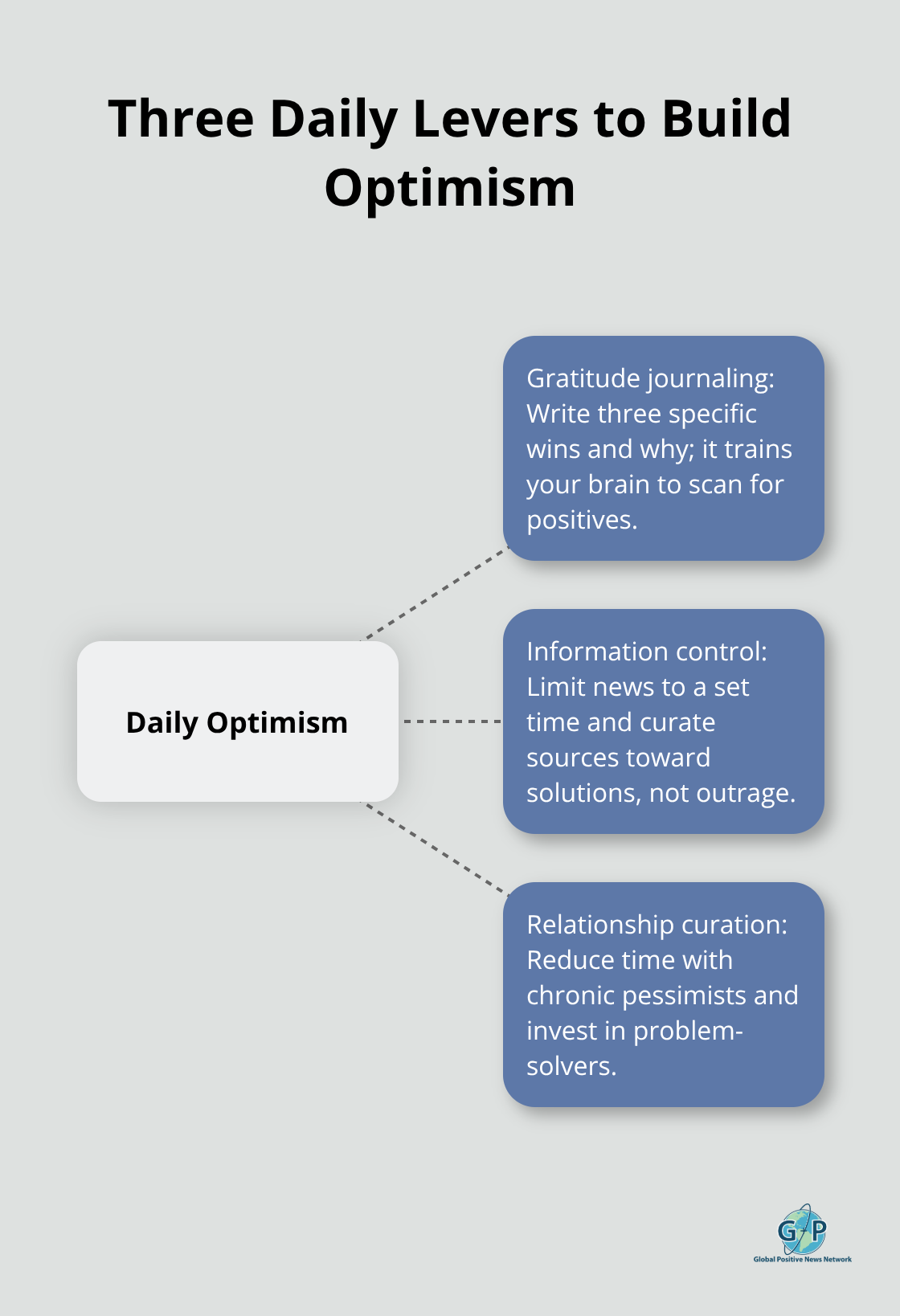
Optimism isn’t something you inherit and accept; you actively construct it through repetition and deliberate choice. The most effective way to strengthen optimism is to interrupt your brain’s natural negativity bias by training it to notice what’s working instead of what’s failing. Start with gratitude journaling, but not the vague kind. Write down three specific things that went well each day and explain why they happened. Research shows this practice trains your brain to scan for positives rather than threats.
The structure matters: include sections for your thoughts, actions you took for yourself, and what you’re thankful for. This isn’t about pretending problems don’t exist; it’s about balancing your perception so you see the complete picture. Alongside gratitude, track small wins aggressively. Tidying your desk, finishing a difficult email, or having a conversation you’d been avoiding all count. These tiny achievements create momentum that compounds over weeks. Your brain releases dopamine when you acknowledge progress, which literally changes how you approach the next challenge.
Control Your Information Diet
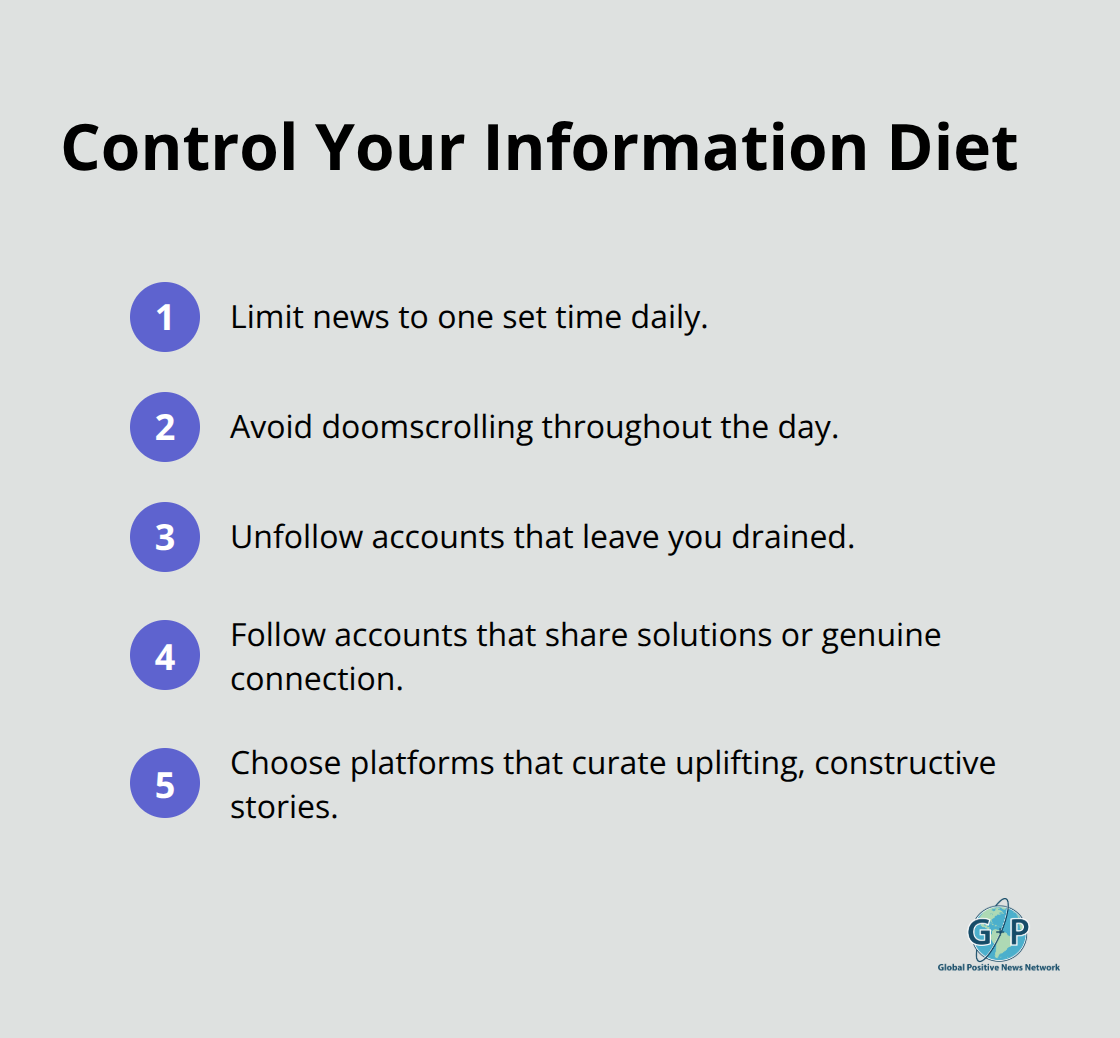
The second lever is controlling your information diet ruthlessly. Limit news consumption to one specific time daily rather than scrolling throughout the day. Research shows that excessive news exposure increases anxiety and distorts your perception of reality toward threats and catastrophe. Social media algorithms are engineered to amplify outrage, so unfollow accounts that leave you drained and follow accounts that share concrete solutions or genuine human connection.
This isn’t avoidance; it’s strategic protection. You might consider platforms that curate uplifting stories designed to help you maintain an optimistic outlook rather than feed your anxiety. The shift in your information sources directly shifts your emotional baseline.
Audit Your Relationships With Honesty
Finally, audit your relationships with brutal honesty. Identify the people who consistently drain your energy through persistent pessimism and reduce contact with them intentionally. This doesn’t require confrontation; simply spend less time with them. Simultaneously, invest more time with people who solve problems rather than rehearse complaints.
Optimism is contagious, and pessimism is too. The people you spend the most hours with shape your default outlook more than any single strategy. Choose wisely. These three practices-gratitude, information control, and relationship curation-form the foundation for what comes next: recognizing when your own internal voice works against your optimistic goals.
What’s Really Stopping Your Optimism
Your Internal Dialogue Runs on Autopilot
Your internal dialogue is the biggest obstacle to staying optimistic, and it operates on autopilot. Negative self-talk follows predictable patterns that psychologists have mapped for decades. You catastrophize minor problems into disasters, personalize neutral events as personal failures, filter out successes while magnifying mistakes, and use absolute language like always and never. Research shows these thought patterns directly predict depression and anxiety.
The first step is catching yourself mid-thought. Set phone reminders three times daily to pause and notice what you’re telling yourself. Write down the exact words for one week. Most people discover they repeat the same five to ten negative statements obsessively.
Interrupt the Pattern With Accurate Language
Once you see the pattern, you can interrupt it. When you catch yourself thinking I can’t do this, replace it immediately with I haven’t done this yet or I’ll figure out a different approach. This isn’t positive thinking fantasy; it’s accurate language that reflects reality. You’re not pretending the problem doesn’t exist; you’re describing your actual capacity to adapt.
Research on cognitive restructuring shows this practice reduces depressive symptoms when done consistently. The shift happens because you train your brain to recognize what’s actually true rather than what feels true in the moment.
Setbacks Teach You How to Respond
Setbacks and disappointments test your optimism harder than anything else because they feel like proof that optimism doesn’t work. It does work, but not as a shield against failure. Optimism is a coping strategy that determines how you respond to failure. When something doesn’t go your way, optimists ask what this situation teaches them and what opportunity it creates. Pessimists ask why this always happens to them. The difference determines whether you take action or withdraw.
After a rejection, setback, or disappointment, spend 15 minutes writing what went wrong factually, not emotionally. Then write three specific actions you’ll take differently next time. This isn’t dwelling; it’s extracting value from the experience. Resilience isn’t about bouncing back unchanged; it’s about bouncing forward with new information.
Move Your Body to Shift Your Neurochemistry
Your nervous system needs physical discharge when disappointment hits, so move your body deliberately. A 20-minute walk, a workout, or even ten minutes of stretching shifts your neurochemistry enough to think clearly. This isn’t avoidance; it’s giving yourself the biological conditions to respond thoughtfully rather than react emotionally. People who build genuine resilience don’t skip the pain; they move through it intentionally and extract lessons that make them stronger.
Final Thoughts
Staying optimistic requires daily practice that compounds over weeks and months. The strategies in this guide work because they address the actual mechanisms that drive your outlook: what you notice, what you consume, who you spend time with, and how you talk to yourself. When you practice gratitude consistently, you train your brain to scan for what’s working, and when you limit negative news and curate your relationships, you remove the constant pressure pulling you toward pessimism.
Optimistic people live 11–15% longer, experience fewer cardiovascular events, recover faster from illness, and build stronger relationships that sustain them through difficulty. They earn more, advance further in their careers, and handle setbacks as information rather than proof of failure. These outcomes aren’t luck; they’re the natural result of how optimistic people behave differently when facing challenges.
Choose one strategy from this guide and commit to it for two weeks to see what changes in how you feel and what opportunities you notice. We at Global Positive News Network share stories of real people overcoming challenges and communities creating positive change, giving you daily reminders that optimism isn’t naive but grounded in what’s actually possible when people choose to act.