

Positivity isn’t something you’re born with-it’s something you build, one day at a time. At Global Positive News Network, we’ve found that small, consistent habits create real shifts in how you experience life.
The good news is that making life more positive doesn’t require major overhauls. You can start today with simple changes that fit into your existing routine.
Simple Daily Habits That Boost Positivity
Practice Gratitude Each Morning
Gratitude works fast. Research from Sonja Lyubomirsky at the University of California shows that people who write down three things that went well for them each day report measurably higher life satisfaction within weeks. Specificity matters-not just listing items, but noting why they matter. Instead of writing “family,” write “my sister called to check in today.” This activates a different part of your brain than generic gratitude. Try three items each morning before checking your phone. The timing shapes how you interpret the rest of the day, since your first thoughts set the tone. This single habit costs nothing and takes five minutes, yet research in positive psychology identifies it as one of the most effective mood-boosters available.
Stop the News Cycle
News consumption directly tanks your mood. A study from the American Psychological Association found that people who limit news intake to 30 minutes daily report significantly lower anxiety than those who doomscroll throughout the day. The problem isn’t news itself-it’s the volume and frequency. Set a hard boundary: pick one 30-minute window to catch up, then close the app. Delete social media from your phone if you can’t control the habit. Research published in PLOS One shows that reducing screen time correlates with higher happiness and lower depression. Most people underestimate how much time they waste scrolling. Track it for three days and you’ll likely be shocked. That reclaimed time becomes available for activities that actually boost your mood.
Movement Changes Brain Chemistry
Exercise isn’t optional if you want consistent positivity. The U.S. Department of Health and Human Services Physical Activity Guidelines recommend 150 minutes of moderate activity weekly, but you don’t need a gym membership or expensive equipment. A 10-minute walk in sunlight triggers dopamine release and reduces cortisol. Breaking this into five chunks throughout your day works better than one long session for maintaining mood. Morning movement proves particularly powerful because it sets your nervous system toward calm before daily stress hits. Walking outside combines three benefits at once (sunlight exposure, physical activity, and nature exposure), all proven to lift mood. If weather prevents outdoor time, dancing to music in your living room for 10 minutes shifts your neurochemistry. Consistency matters more than intensity. Three short walks weekly beats one intense gym session you’ll abandon in two weeks.
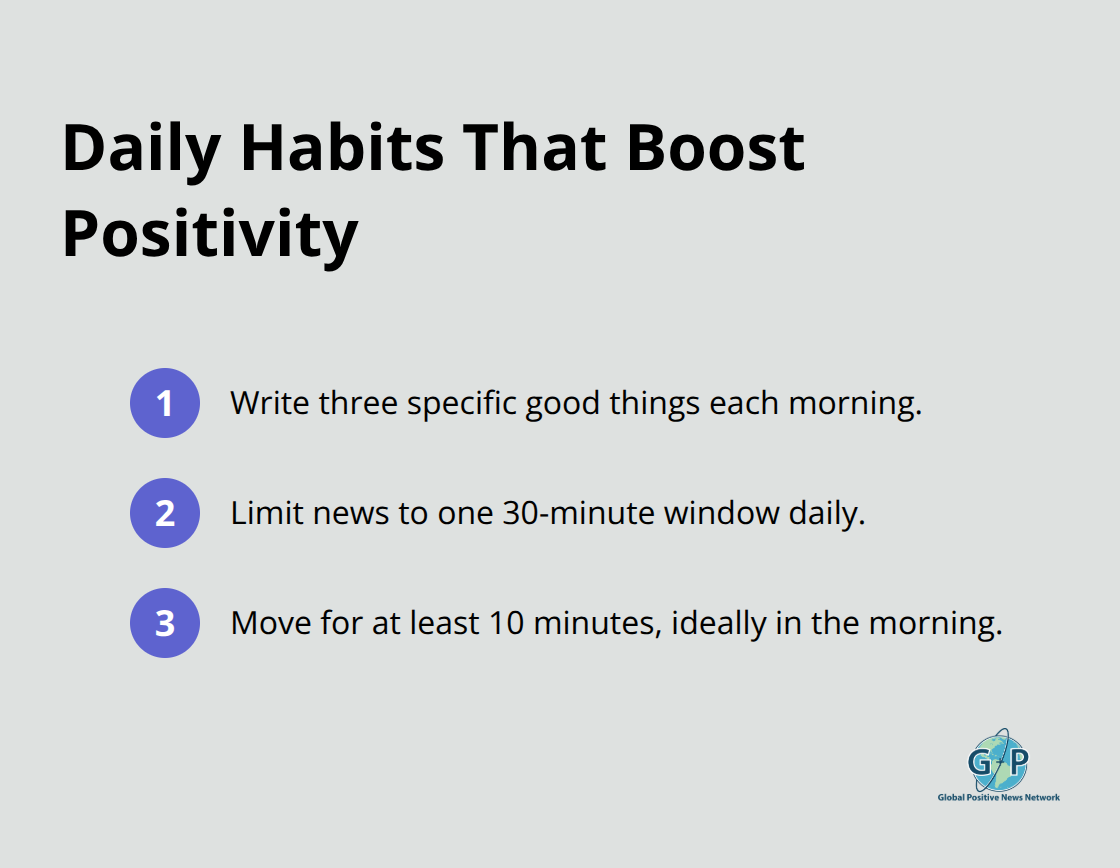
These three habits form your foundation. Once you establish them, you’re ready to strengthen the relationships that sustain long-term positivity.
Relationships Are Where Positivity Takes Root
Connection predicts health better than cholesterol
The habits you’ve built-gratitude, limiting negative news, and moving your body-create a foundation for feeling better. But positivity doesn’t stick without connection. The Harvard Study of Adult Development tracked 268 people across eight decades starting in 1938 and found something striking: close relationships with family, friends, and community predict happiness and health more strongly than money, fame, or IQ. Relationship satisfaction at age 50 predicted physical health at age 80 better than cholesterol levels. This isn’t theoretical. Quality time with the people in your life directly shapes your longevity and mood.
Most people know this intellectually but treat relationships as something to fit in around everything else. That’s backward. Schedule time with family and friends first, then build your week around those commitments. A weekly dinner, a monthly hike with a friend, or a phone call with a relative on the same day each week creates reliable moments of connection.
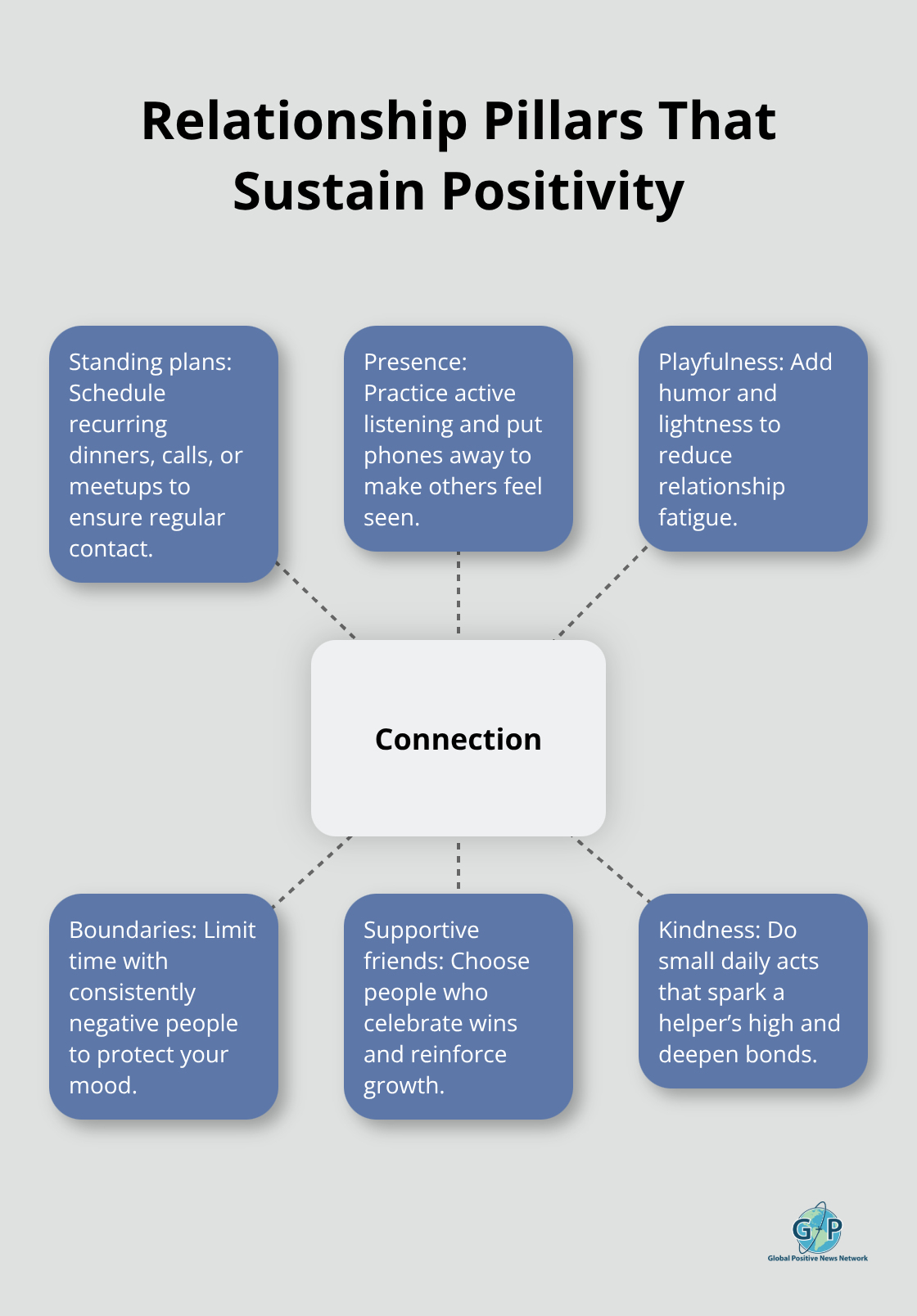
The specificity matters-standing plans work better than vague intentions to hang out sometime.
Presence and Playfulness Transform Interactions
Research from the Gottman Institute shows that playfulness energizes partners and reduces relationship fatigue. This doesn’t mean forced fun. It means allowing humor, teasing, and lightness when you’re together instead of treating every interaction as serious or obligatory.
When you’re present with someone, practice active listening. This means putting your phone away completely and responding to what they actually said, not what you planned to say next. People feel the difference immediately. The Mayo Clinic notes that loneliness impacts mortality and mental health nearly as much as smoking or alcoholism, which underscores how critical genuine attention is.
Small acts of kindness Create Momentum
Small acts of kindness accelerate connection. Helping others activates the brain’s reward system, giving you a natural ‘helper’s high’-a boost in mood and energy. These don’t require grand gestures. Send a funny text to someone who made you laugh last week. Call a relative you’ve been meaning to check in with. Leave a genuine compliment on a friend’s social media post. Pick up trash in your neighborhood. Bring coffee to someone who helped you recently.
The Big JOY Project, developed by Elissa Epel at UCSF, emphasizes that five daily acts of kindness spark ongoing joy. Track these small actions for a week and notice how your mood shifts. You’re not doing this for recognition-you’re doing it because the neurochemistry of giving activates reward pathways in your brain.
Building Your Positivity Loop
When you combine reliable time with people you care about, genuine presence during conversations, and consistent small kindnesses, you create a feedback loop that sustains positivity far better than any solo habit. This self-reinforcing cycle strengthens as you practice it. The positive relationships you nurture become the soil where lasting positivity grows, and they prepare you for the next step: shaping the physical and digital spaces where you spend your time.
Your Environment Shapes Your Mood More Than You Think
Physical Space Reduces Mental Load
Your physical space directly influences your emotional state. Physical clutter increases cortisol levels and mental load, making it harder to maintain positivity even when you’ve built strong habits and relationships. Research from Princeton University found that physical clutter competes for your brain’s attention resources, reducing focus and increasing stress. Start with one small area, not your entire home. Clear your nightstand, organize your desk drawer, or tidy the corner where you spend mornings. These micro-decluttering sessions take 10 minutes and create immediate psychological relief.
The goal isn’t perfection or minimalism. It’s removing visual noise that drains mental energy. Once you’ve cleared a space, protect it. When you sit in that organized area for your morning gratitude practice or a conversation with a friend, the calm environment amplifies the benefits of those activities. Your brain works harder against chaos than it does supporting your mood.
Content You Consume Trains Your Brain Toward Optimism or Pessimism
The content you consume shapes your internal narrative as powerfully as your physical surroundings. You already limited news to 30 minutes daily, but most people don’t audit their other media intake. Your streaming subscriptions, podcasts, YouTube recommendations, and the accounts you follow all train your brain toward either optimism or pessimism. Unfollow accounts that trigger comparison or negativity. Delete apps that waste time without adding value.
Replace doom-focused podcasts with content that prioritizes stories of impact and human resilience. Choose one streaming show that genuinely uplifts rather than drains you. The algorithm learns from what you click, so intentional choices compound over weeks. This shift takes minimal effort but produces measurable results in how you feel throughout your day.
People Around You Determine Your Emotional Trajectory
Research from the Gottman Institute shows that spending time with consistently negative people erodes your own positivity regardless of your habits. You don’t need to cut people off, but you can set boundaries. Limit time with energy-draining relationships and actively increase time with people who energize you.
Choose friends who celebrate your wins without minimizing them, who listen without trying to fix everything, and who make you feel capable rather than inadequate. These relationships act as anchors for your positivity, reinforcing the habits and mindset shifts you’ve already started. The people you spend time with either support or undermine your progress toward a more positive life.
Final Thoughts
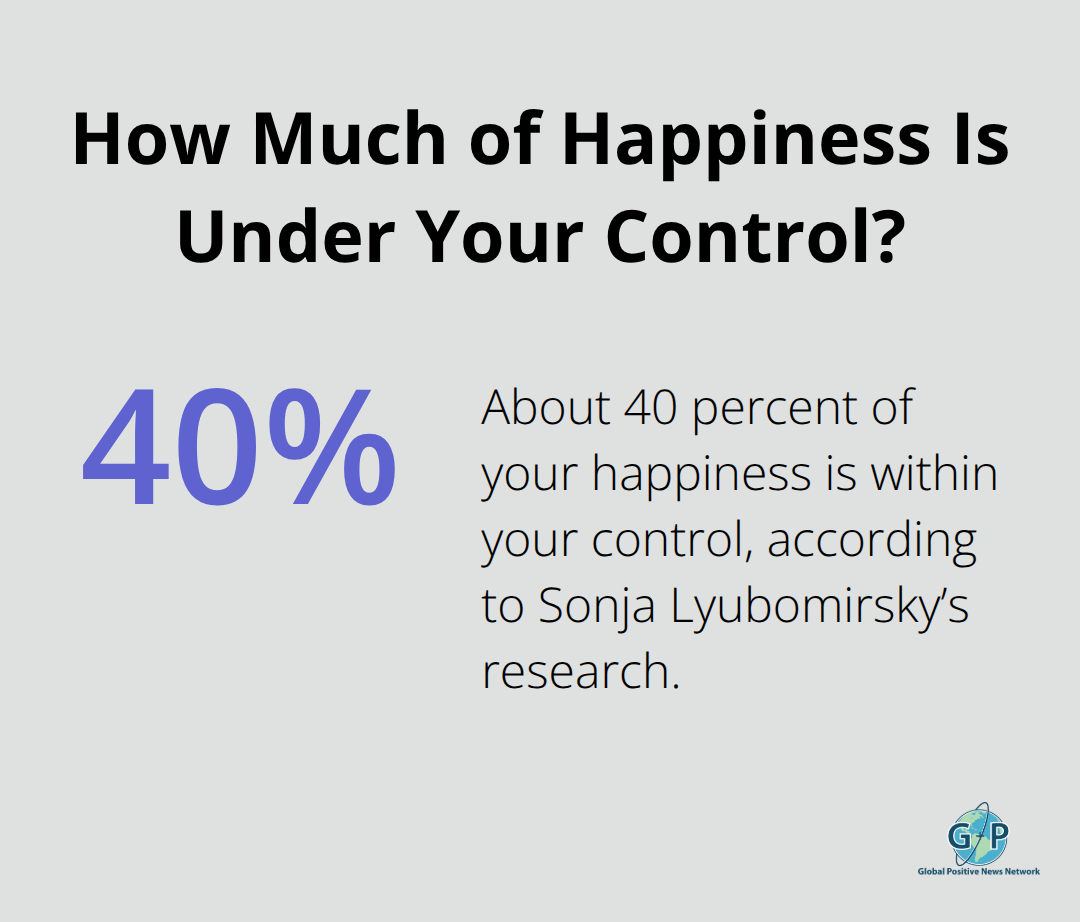
You’ve learned three foundational habits, understood why relationships matter more than money or status, and shaped your environment to support positivity. About 40 percent of your happiness sits within your control, according to Sonja Lyubomirsky’s research on well-being architecture. That means your daily choices genuinely reshape how you experience life. The gratitude practice, the news boundary, the 10-minute walk, and the phone call to a friend each move the needle toward a life that is positive and sustainable.
Most people fail because they attempt to change everything at once. They commit to all three daily habits, overhaul their social calendar, and reorganize their entire home in one week, then abandon everything by week two. Start with one habit instead. Pick the change that feels most doable right now-maybe the five-minute gratitude practice, maybe a news boundary, or maybe one meaningful conversation this week. Small wins build momentum and prove that change works, which makes the next commitment easier.
Life becomes positive when you actively shape it through deliberate choices, not when you wait for positivity to find you. We at Global Positive News Network created our platform so you can access uplifting stories, connect with others on this journey, and find resources that reinforce your commitment to a more positive life. Start today with one habit and build from there.
Enjoying stories like this?
Global Positive News Network is reader-supported. If you’d like to support the mission, you can visit the Official GPNN store.