

Living a more positive life doesn’t require a complete overhaul of your routine. Small, intentional habits compound into meaningful shifts in how you experience each day.
At Global Positive News Network, we’ve found that the most sustainable changes come from practices you can start immediately. Gratitude, meaningful connections, and consuming uplifting content are the three pillars that reshape your mindset and outlook.
Start Your Day With Gratitude
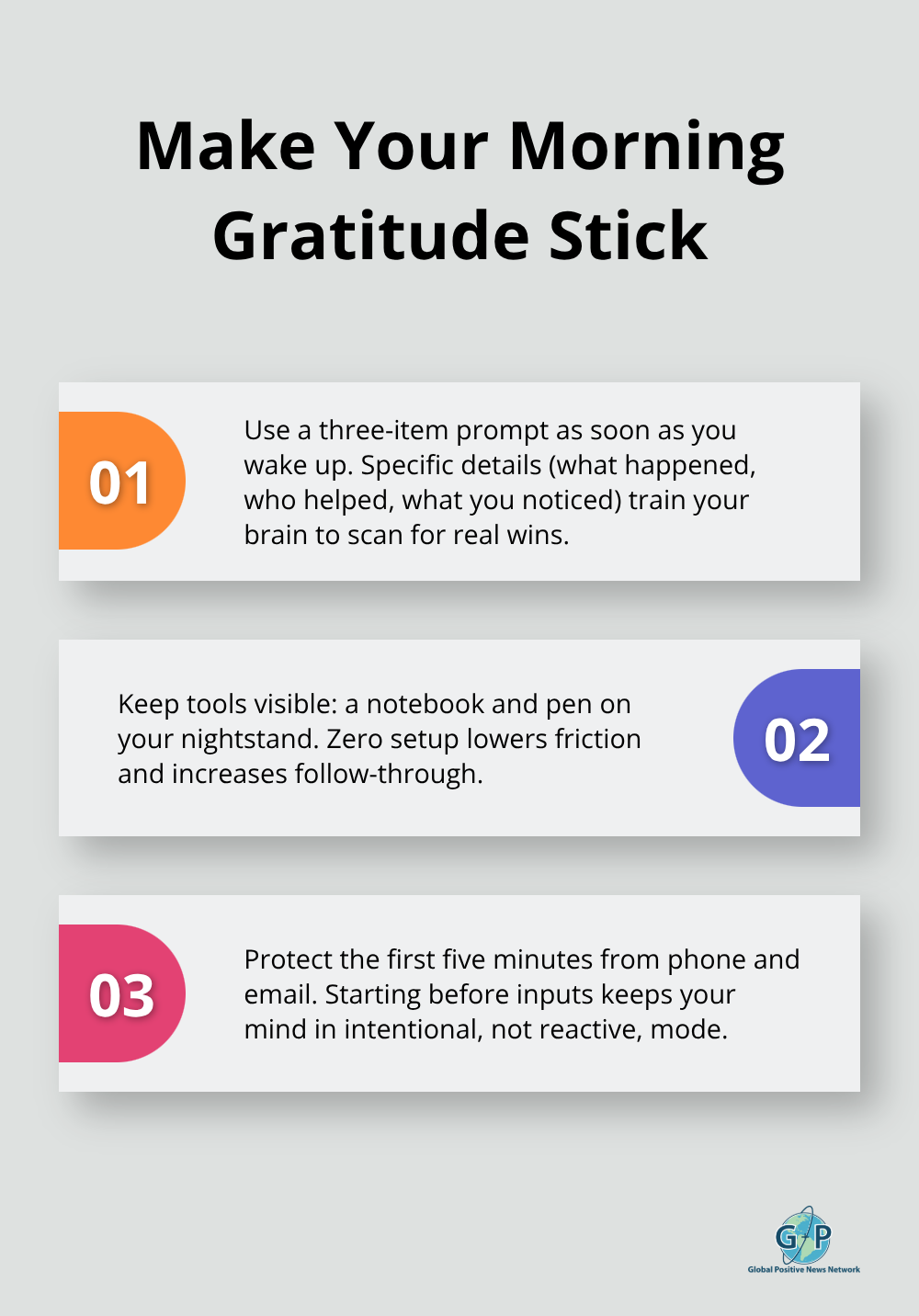
Gratitude isn’t a feel-good concept you practice once and forget. Research shows that people who maintain a consistent gratitude practice experience greater feelings of gratitude, better mental health, and measurable improvements in overall resilience. The key is making it a non-negotiable part of your morning before distractions take over. Start with a simple three-item practice: write down three specific things you’re grateful for as soon as you wake up. Not vague things like family or health, but concrete details. Instead of writing health, write that you’re grateful your legs carried you through a 20-minute walk yesterday. Instead of writing your job, write that a colleague gave you helpful feedback on a project. This specificity forces your brain to search for genuine moments of value, which strengthens the gratitude effect far more than generic statements.
The Morning Window Matters Most
The first 30 minutes after waking set your mental tone for the entire day. If you scroll through news or emails, your brain defaults to reactive mode. If you practice gratitude first, you activate a different neural pathway. Spend five minutes writing your three items before you check your phone. Keep a dedicated notebook on your nightstand so there’s zero friction. This removes the excuse that you’ll do it later, because you won’t. Consistency over perfection matters here.
Missing one day won’t undo your progress, but practicing five days weekly will show results within two weeks. Psychology research by Phillippa Lally found that habits typically take about two months of consistency before actions become automatic, so expect a genuine shift around week eight.
Appreciation Strengthens Your Relationships
Gratitude isn’t only about what you feel internally. Expressing appreciation to people in your life creates a reciprocal effect that deepens connections. Identify one person each day and tell them specifically what you appreciate about them. Not just thanks for existing, but thanks for how they handled a situation or a quality you noticed. This takes 60 seconds but registers deeply. People who receive genuine appreciation feel valued, which strengthens the relationship. The Harvard Study of Adult Development, which tracked adults for nearly 80 years, found that close relationships and satisfaction with those relationships are the strongest predictors of happiness and health. Expressing gratitude to people you care about is one of the most direct ways to invest in those relationships and simultaneously boost your own well-being. Your appreciation practice extends beyond yourself and creates positive momentum in your social circle, which sets the stage for the deeper connections we explore next.
Build Relationships That Actually Matter
Meaningful connections require consistent investment, not occasional check-ins or surface-level interactions. The Harvard Study of Adult Development tracked adults for nearly 80 years and found that close relationships and satisfaction with those relationships are the strongest predictors of happiness and health, outranking money, fame, IQ, or social class. This isn’t abstract theory. At midlife, how satisfied people were with their relationships better predicted their health at age 80 than their cholesterol levels. The research is clear: investing time in relationships that genuinely matter creates measurable returns on your well-being.
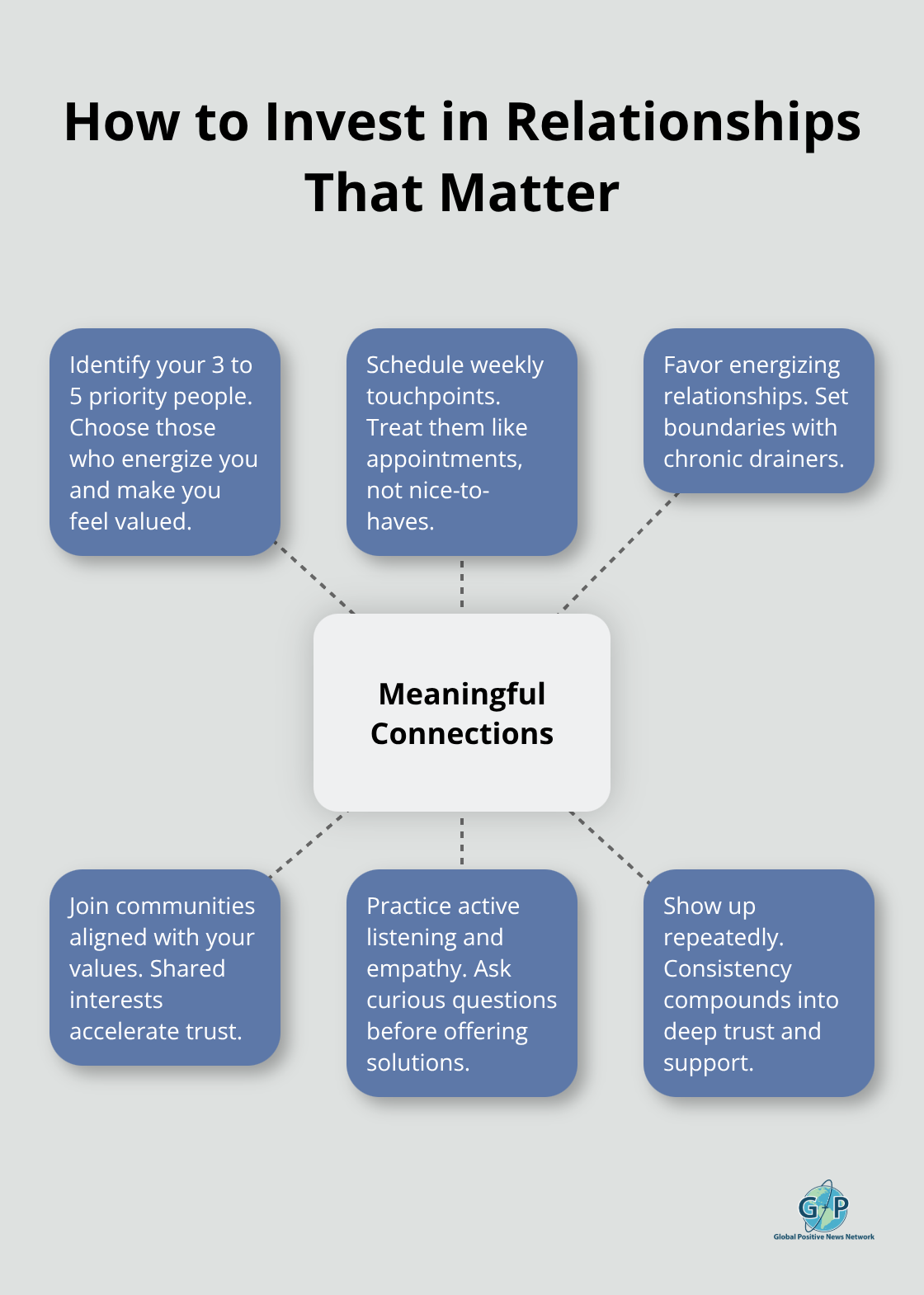
Most people acknowledge that relationships matter, yet they treat them like optional activities squeezed in when convenient. This approach fails. Treat your relationships like non-negotiable commitments, the same way you’d treat a medical appointment. Identify the three to five people who energize you and make you feel valued. These are your priority relationships. Schedule specific time with them weekly, not whenever it feels convenient. A 30-minute walk with a friend, a phone call during lunch, or a shared meal counts. The consistency matters more than the duration.
Loneliness damages mental and physical health, while robust social support protects against mental deterioration as people age. You cannot build meaningful connections passively. You need to show up repeatedly.
Who You Spend Time With Shapes Who You Become
The people in your immediate circle directly influence your mindset, habits, and outlook. If you spend most of your time with people who complain, catastrophize, or drain your energy, your own positivity will erode. Conversely, surrounding yourself with people who approach challenges constructively and maintain optimistic perspectives strengthens your own resilience. This doesn’t mean abandoning difficult relationships or only befriending cheerful people. It means being intentional about where you invest your limited time and energy.
Evaluate your current relationships honestly. Which people leave you feeling energized and capable? Which ones leave you exhausted or anxious? Protect your time with the energizing people and set boundaries with those who consistently drain you. This isn’t selfish; it’s sustainable.
Seek Communities That Align With Your Values
Additionally, you should seek out communities aligned with your values. Whether that’s a running group, a book club, a volunteer organization, or an online community around a shared interest, these spaces provide connection with people who share your priorities. Active listening and genuine empathy strengthen these bonds significantly. When someone shares a challenge or concern, resist the urge to immediately offer solutions or redirect the conversation to yourself. Instead, ask curious questions and listen to understand their perspective, not to respond. This practice deepens trust and creates reciprocal support that sustains relationships through both positive and difficult seasons.
These strong relationships form the foundation for how you consume information and the stories you allow into your life. The people around you influence what you read, watch, and believe about the world. This connection between your social circle and your media consumption shapes your overall outlook more than you might realize.
Consume Uplifting Content and News
The content flowing into your mind daily functions like nutrients entering your body. Consume junk, and your mental state deteriorates. Consume intentionally curated material, and your outlook strengthens. Most people passively absorb whatever algorithms serve them, then wonder why they feel anxious or pessimistic. This approach guarantees a distorted view of reality. News outlets profit from fear and outrage, so they amplify catastrophes and conflict while ignoring the countless acts of human kindness happening simultaneously. Studies show that people exposed to regular negative news experience higher anxiety and depression rates, yet the same individuals often feel obligated to stay informed. You don’t need to choose between awareness and mental health. Instead, actively curate your information sources to include stories of human progress, resilience, and kindness alongside necessary news.
Identify Your Current Media Diet
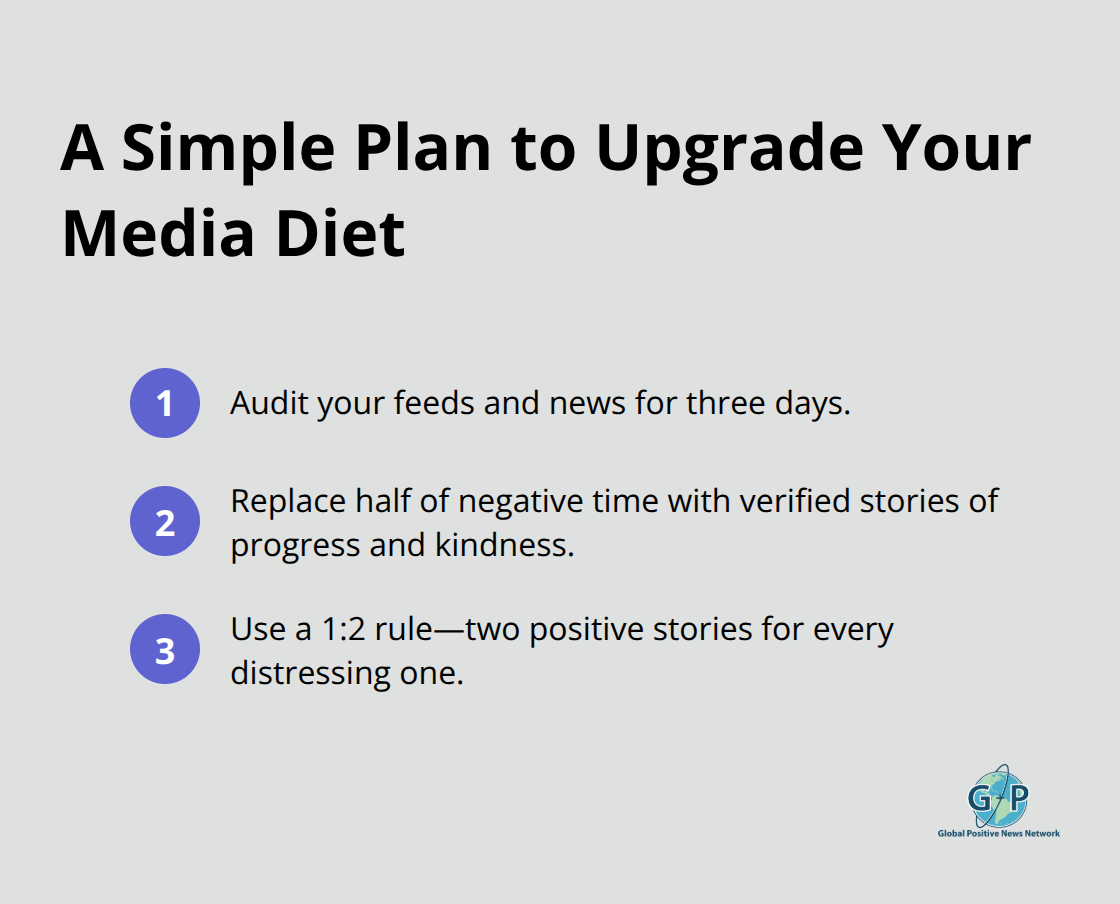
Start by identifying which platforms and publications currently occupy your attention. If you spend 30 minutes daily on social media feeds filled with complaints and crises, that’s your baseline. Track what you actually consume for three days without judgment. Most people underestimate their exposure to negative content until they measure it honestly. This awareness becomes your starting point for change.
Replace Negativity With Stories of Progress
Now replace half of that negative content time with sources dedicated to positive stories and human achievement. Environmental scientists share conservation victories, educators document student breakthroughs, and community leaders highlight neighborhood improvements. These stories exist and post regularly across multiple platforms. Global Positive News Network curates stories of personal triumphs, acts of kindness, and community impact specifically designed to help you maintain an optimistic outlook. The algorithm learns from what you interact with, so intentional engagement with constructive content gradually shifts what appears in your feed.
Set a Ratio That Works for You
Establish a specific rule: for every distressing news story you consume, read two stories of human progress or kindness. This maintains awareness without surrendering your mental health. Within three weeks of this practice, your default emotional state shifts noticeably. You’ll notice yourself reaching for uplifting sources first rather than defaulting to anxiety-inducing feeds. The shift happens gradually but compounds into a fundamentally different relationship with information.
Final Thoughts
The three practices you’ve explored-gratitude, meaningful connections, and intentional media consumption-work together to reshape how you experience each day. Gratitude anchors your attention on what’s working. Relationships provide support and perspective when challenges arise. Uplifting content reinforces the reality that progress and kindness exist everywhere, even when mainstream news suggests otherwise. Phillippa Lally’s research on habit formation shows that consistency matters far more than intensity, and you don’t need dramatic changes to build a positive life.
A five-minute gratitude practice, one meaningful conversation weekly, and deliberately choosing positive stories over anxiety-inducing feeds create measurable shifts within eight weeks. These small daily habits compound into a fundamentally different outlook. Your mindset isn’t fixed-it’s shaped by what you practice repeatedly. The thoughts you rehearse, the people you spend time with, and the stories you consume literally rewire your brain’s default patterns, which means you have genuine control over your positive life regardless of external circumstances.
Start today with one action: write three specific things you’re grateful for tomorrow morning, schedule a meaningful conversation with someone who energizes you, or spend 15 minutes exploring Global Positive News Network to experience how different your day feels when you intentionally choose uplifting stories. One action creates momentum. Momentum builds habits, and habits create the positive life you’re seeking.
Enjoying stories like this?
Global Positive News Network is reader-supported. If you’d like to support the mission, you can visit the Official GPNN store.